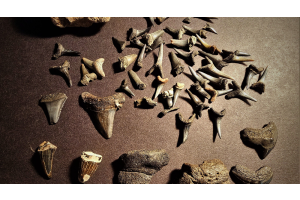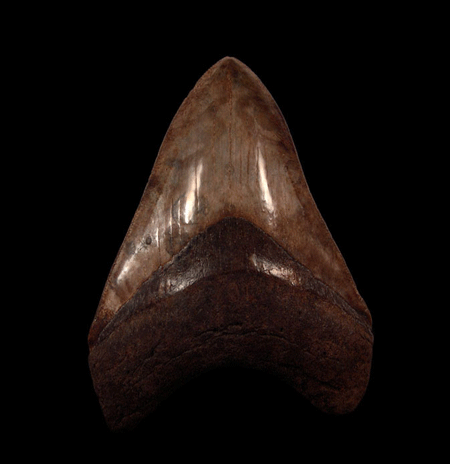
In the world of paleontology and fossil collecting, few relics capture the imagination quite like the teeth of the Megalodon. These ancient giants once ruled the oceans, and today, their fossilized teeth are among the most prized collectibles. At Buried Treasure Fossils, we understand the fascination and reverence surrounding these magnificent remnants of prehistoric life. Yet, with their rising popularity comes an important challenge for collectors and enthusiasts alike: distinguishing a real Megalodon tooth from a cleverly crafted fake.
In this blog, we’ll guide you through essential tips to help you confidently identify an authentic Megalodon tooth. From surface texture to fossilization signs, our insights aim to equip you with the knowledge needed to spot the real deal.
The Allure of Megalodon Fossils
For collectors, owning a real Megalodon tooth is like holding a slice of history. These fossils are not only visually striking with their massive size and unique coloration, but they also represent a species that once stood at the top of the oceanic food chain. As demand has grown, so has the presence of replicas, often created from resin or composite materials and aged artificially to look genuine.
Knowing what to look for can mean the difference between owning a piece of authentic natural history and being misled by a reproduction.
Surface Texture: Nature’s Signature
One of the most revealing features of a genuine Megalodon tooth is its surface texture. Authentic fossils typically have a weathered appearance, with tiny pits, natural cracks, and subtle imperfections developed over millions of years. This texture is the result of the slow fossilization process and exposure to environmental elements.
Fake teeth often fail to replicate this organic wear. They may appear overly polished, smooth, or artificially aged. When a tooth lacks the irregular texture or shows uniform coloration without natural variances, it may be a cause for concern. At Buried Treasure Fossils, we’ve handled thousands of specimens, and we’ve learned that nature never produces exact duplicates — each real Megalodon tooth tells a different story on its surface.
Weight and Density: Heft That Hints at Authenticity
Another useful method for evaluating authenticity is assessing the weight and density of the tooth. Fossilized Megalodon teeth are generally heavier than modern reproductions because of the mineralization that replaces organic material during fossilization.
When holding a suspected fossil, consider its size in relation to its weight. An unusually light tooth could signal a fake made from resin or lightweight composite. Authentic fossils have a noticeable heft, offering a tactile clue to their legitimacy. That said, weight alone isn’t a foolproof method but should be considered along with other visual and physical indicators.
Root and Blade Examination: Details Matter
The root and blade of a Megalodon tooth can provide key information about its origin. A natural root will show complex structures like nutrient foramina — small holes that served biological functions in the living animal. The root should not look artificially shaped or overly symmetrical.
The blade, or cutting edge of the tooth, should display fine serrations, a trademark feature of Megalodon teeth. These saw-like edges may be worn down due to the passage of time, but remnants often remain. If the tooth lacks serrations altogether or they appear artificially etched or overly sharp, further scrutiny is warranted.
These micro-details, although small, speak volumes about the authenticity of the tooth. At Buried Treasure Fossils, we carefully inspect every specimen to ensure these subtle yet important characteristics are present and consistent with genuine fossil features.
Signs of Fossilization: Clues from Earth’s Layers
True Megalodon teeth are often embedded with mineral deposits and sediment from their original environment. These may appear as white patches, dark veins, or color variations across the tooth’s surface — indicators of the geological conditions under which the tooth was buried and fossilized.
Look at the base of the root and the rear side of the blade. Here, you may find traces of matrix — the sedimentary rock or soil in which the tooth was found. These natural inclusions help support the authenticity of a tooth and provide insight into its provenance. Artificial replicas usually lack this level of detail and may be entirely uniform in appearance or coloration.
When in Doubt: Ask an Expert
While self-inspection can reveal many signs, consulting with a specialist is invaluable when in doubt. We at Buried Treasure Fossils have decades of experience handling Megalodon teeth, and our passion lies in helping collectors acquire only genuine fossils. Whether you are a seasoned collector or a first-time enthusiast, don’t hesitate to reach out to a trusted source for a second opinion.
There is a vast network of paleontologists and fossil experts who dedicate their time to preserving the integrity of the field. Leveraging their experience can help you build a collection with confidence and accuracy.
Why Authenticity Matters
The joy of fossil collecting lies in connecting with Earth’s ancient history. Holding a real Megalodon tooth is a tangible link to a world long gone — one filled with giants that once swam our seas. Knowing your fossil is authentic enhances that connection and adds immense educational and historical value.
At Buried Treasure Fossils, our mission is not only to offer authentic fossils but also to share our expertise so that collectors everywhere can distinguish fact from fiction. Authenticity isn’t just about value — it’s about preserving the awe and wonder that these relics inspire.
Final Thoughts
Spotting a fake Megalodon tooth can be challenging, but with careful observation and a basic understanding of natural features, you can become more confident in your assessments. Keep these factors in mind:
● Check the surface texture for natural imperfections.
● Weigh the tooth to compare density with size.
● Examine the root and blade for anatomical accuracy.
● Look for fossilization signs like mineral patches or sediment.
● Consult with experts when necessary.
As collectors, we owe it to ourselves and future generations to ensure that our passion for fossils remains rooted in authenticity and respect for Earth’s ancient history.
Ready to explore authentic Megalodon teeth?
Visit Buried Treasure Fossils and discover a world of genuine prehistoric wonders.
Disclaimer: This blog is intended for informational purposes only. It does not encourage or endorse any unethical or illegal practices related to fossil collection. Please always adhere to local laws and regulations and practice environmental responsibility.