Search results for: '文档1-7月'
- Identification Label stands$2.75
Identification Label stands. Excellent to labeling your display items.
DD50 Size: 3-1/4" W x 1-1/2" H
Learn More - Serratolamna lerichei$30.00
New Exceptionally large, GEM lower jaw - anterior teeth. These are the largest C. appendiculata teeth that I have ever seen! These anterior teeth are really difficult to find. Rare!
M158 (Right) SIZE: 1-1/16"
Learn More - Carcharias cuspidata$7.50
An EXCELLENT Carcharias shark tooth from the copper red site. Lateral position. Exceptional color. Good preservation and condition. These are Miocene age from the Pungo River Fm., Hertford Co., NC.
Learn More
NC435 SIZE: 1-1/8" - Cretolamna appendiculata$30.00
New Exceptionally large, GEM lower jaw - lateral teeth. These are the largest C. appendiculata teeth that I have ever seen! These anterior teeth are really difficult to find. Rare!
M214 (Left) SIZE: 1-1/4"
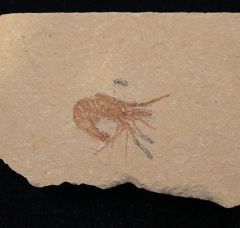
Learn More - Carpopenaeus longirostris$45.00
An excellent, Carpopenaeus longirostris, Cretaceous fossil shrimp specimen from Halouka, Lebanon. Fantastic preservation. No repair or restoration. Authenticity guaranteed.
X079 Size: 1-1/8" (straightline)
Note - Adding 12 new fossil shrimp specimens in September 2024. --> Link to fossil shrimp.
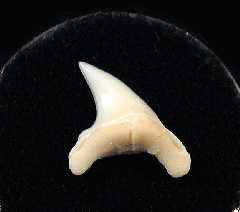
Learn More - Thresher shark : Modern$45.00
A LARGE, modern Bigeye Thresher shark tooth, Alopias superciliosus. Upper jaw tooth. Bright white color. Authenticity guaranteed. (1 Bigeye Thresher tooth available)
MBE1 SIZE: 1/2"
Note - Adding 10 new modern shark teeth in February 2025 -> Link to Modern Shark Teeth
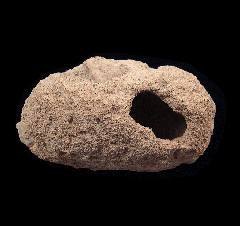
Learn More - Leptopius duponti - Fossil Weevil Cocoon$0.00
A Leptopius duponti - fossil Weevil cocoon from Eyre Pennisula, South Australia. They are known as "pixie clogs". These cacoons were spun by the weevils in their pupae stage to protect them during metamorphosis into adult beetles. Excellent preservation. Note - 1-5/16" thick. This is a late Pleistocene - Holocene trace fossil. A unique display piece!
Y074 SIZE: 2-1/4" (1-5/16" Thick)
Note - Posting 6 new "Other" fossils in January 2024. Link to Other Fossils
Learn More - Pappocetus lugardi (Ancient whale)$475.00
An Ultra Rare Pappocetus lugardi (Andrews, 1920) canine tooth from Morocco. Pappocetus was in the Protocetidae family of ancient whales . Note - this tooth is a canine with a large natural wear facet. This material is a new find and represents one of the earliest transition forms of the whale. Pappocetus is a protocetid (see discussion below) and a large amphibious aquatic carnivore. Pappocetus is also an ancestor of the Basilosaurus. This material is complete and without repair. This is an opportunity to own an incredibly rare specimen from an early evolutionary stage of the modern whale. A fantastic collector's specimen. Authenticity guaranteed.
M2104 Size: 2-7/16" (straight line)
Mid. Eocene (Bartonian) age (40 MYA)
Gueran, (25 km SE of Boujdour), Boujdour Basin
West Sahara, Morocco
Note - adding six early whale teeth in August 2023. Link to the early whales.
Learn More - Carcharocles auriculatus - So. Carolina$475.00
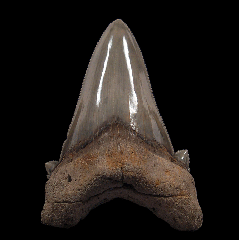
An EXTRA LARGE, Top Quality Otodus sokolovi tooth from Harleyville, So. Carolina. Otodus sokolovi is the ancestor of O. auriculatus. An excellent anterior tooth. A March Fossil of the Month. An excellent gray colored crown with a brown colored bourlette, and a brown colored root. Highest quality enamel. Excellent color & preservation. The serrations are large and razor sharp including the tip. Two large side cusps. The root is complete, extra thick (7/8"), and very well preserved. It is very hard to find these teeth in perfect condition. An excellent collector's Harleyville O. sokolovi tooth! Authenticity guaranteed. Near perfect tooth. Another well known shark tooth site that is no longer accessible to collectors. A BIG tooth!
SC402 SIZE: 3-5/16"
Note - Adding 18 Harleyville Auriculatus teeth in March 2025. Link to the Harleyville Auriculatus teeth.
Learn More - Triceratops Frill Section$0.00
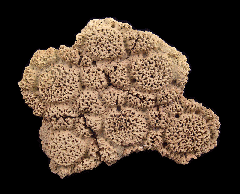
A Top Quality, Triceratops horridus frill section from the late Cretaceous of northern North America. Triceratops was a large ceratopsian dinosaur found in the Hell Creek and Lance Creek formations which is know for three horns and the large frill protecting its neck. This is a great frill section with excellent detail preserved. You can see all of the natural blood grooves across the surface of the frill. No repair or restoration. 100% natural specimen. Legally collected on private land in Garfield Co., Montana. Authenticity guaranteed.
DC50 SIZE: 3-1/4" Wide x 1-5/8" High x 1-1/4" Thick
Note - Adding 19 new Triceratops bones in May 2023. Link to Triceratops fossils catalog
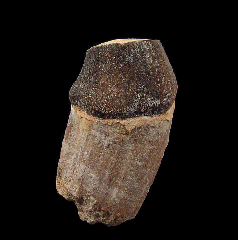
Learn More - Triceratops$450.00
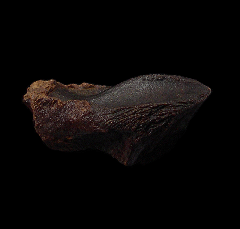
An EXTRA LARGE Top Quality, partially rootedTriceratops horridus tooth from the late Cretaceous of western North America. A maxillary (upper jaw) tooth. Triceratops is a large ceratopsian dinosaur found in the Hell Creek formation. The enamel is high quality with excellent color and patina. The chewing surface measures 1-1/4”. This tooth has no tip wear. The root surface is very gnarly. No repair or restoration. Legally collected on private land in the Hell Creek Fm., Powder River Co., Montana. Note - this tooth comes with a Riker display frame. Authenticity guaranteed. A big incredible Triceratops partially rooted tooth!
DC09 SIZE: 1-1/2"
Note - Adding 22 new Triceratops teeth in September 2023. Link to Triceratops fossils catalog
Learn More - Glyptodon reticulatus$395.00
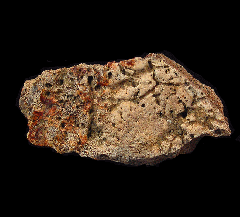
A rare LARGE, well preserved Glyptodon reticulatus scute from the Pampean region, Uruguay. A March Fossil of the Month. Glyptodon was the largest of the the oversized armadillos with a extremely thick shell. It evolved in the Pliocene and became extinct at the end of the Pleistocene in South America. This large scute is complete with no wear. Well fossilized. No repair or restoration. Authenticity guaranteed. Note - International buyers will pay a shipping supplement to free shipping. Items weighs 1.3 lbs.
X801 Size: 5-1/2" x 4-1/2" x 1-1/2"
Name: Glyptodon reticulatus
Age: Pleistocene
Location: Pampean region, Uruguay
Note - Posting 26 mammal and reptile fossils in March 2024. Link to Other Mammals
Learn More