Search results for: 'chile promedio de toed el age de calhoun ga'
- Related search terms
- age gulper parvus good
- age gulper parvu good
- age guyker parvu good
- age hill transit out species taxable in pa
- age gulper parvus good/
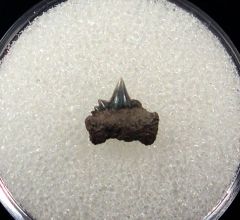
- Hexanchus collinsonae - Muddy Creek$0.00
An ultra rare, Top Quality Hexanchus collinsonae tooth, a Sixgill Cow shark, from the Muddy Creek / Fisher - Sullivan site, Virginia. A lower jaw symphyseal tooth (male species) with 6 primary cusps. Exceptional color and preservation. This is an Early Eocene (Ypresian) age, Nanjemoy Formation tooth. A special collector's rare Cow shark tooth. Authenticity guaranteed.
MC952 Size: 1/4"+
Note adding 15 Muddy Creek Cow shark teeth in June 2022. --> Link to Muddy Creek Cow Shark teeth
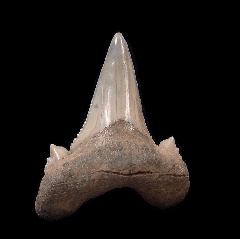
Learn More - Otodus aksuaticus (Partial serrated)$325.00
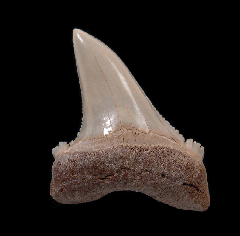
A very rare, early Otodus aksuaticus anterior tooth from Kzil-Orda, Kazakhstan. A transitional tooth leading to O. auriculatus (see detailed discussion below) which leads to Megalodon. The bourlette is complete. This tooth exhibits small serrations along the lower 1/2 of the crown and micro serrations to the tip. These teeth exhibit excellent color, gloss, and preservation. A rare, early (Ypresian) Eocene Auriculatus transition tooth. A very challenging tooth to find when building a Megalodon evolutionary set! No repair or restoration. Authenticity guaranteed. This western Kazakhstan site is one of the few places in the world where the Otodus obliquus to Otodus auriculatus transition can be found in adjacent geologic layers.
K546 SIZE: 1-9/16"
Note - Adding 24 Kazakh Auriuclatus or transition teeth in July 2024. --> Link to Kazakh Auriculatus teeth.
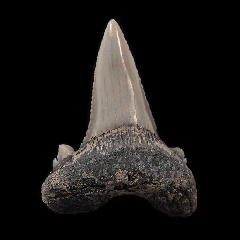
Learn More - Otodus aksuaticus (Partial serrated)$350.00
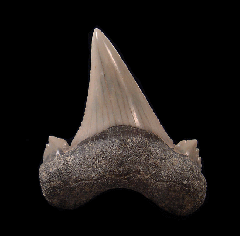
A very rare, early Otodus aksuaticus anterior tooth from Kzil-Orda, Kazakhstan. A transitional tooth leading to O. auriculatus (see detailed discussion below) which leads to Megalodon. The bourlette is complete. This tooth exhibits small serrations along the lower 1/2 of the crown and micro serrations to the tip. These teeth exhibit excellent color, gloss, and preservation. A rare, early (Ypresian) Eocene Auriculatus transition tooth. A very challenging tooth to find when building a Megalodon evolutionary set! No repair or restoration. Authenticity guaranteed. This western Kazakhstan site is one of the few places in the world where the Otodus obliquus to Otodus auriculatus transition can be found in adjacent geologic layers.
K545 SIZE: 1-3/4"
Note - Adding 24 Kazakh Auriuclatus or transition teeth in July 2024. --> Link to Kazakh Auriculatus teeth.
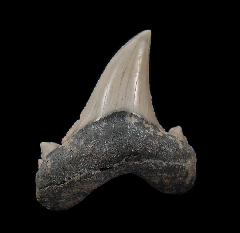
Learn More - Otodus aksuaticus (Partial serrated)$425.00
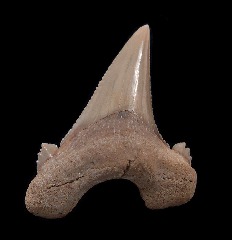
A very rare, early Otodus aksuaticus lateral tooth from Kzil-Orda, Kazakhstan. A transitional tooth leading to O. auriculatus (see detailed discussion below) which leads to Megalodon. The bourlette is complete. This tooth exhibits small serrations along the lower 1/3 of the crown and micro serrations to the tip. These teeth exhibit excellent color, gloss, and preservation. A rare, early (Ypresian) Eocene Auriculatus transition tooth. A very challenging tooth to find when building a Megalodon evolutionary set! No repair or restoration. Authenticity guaranteed. This western Kazakhstan site is one of the few places in the world where the Otodus obliquus to Otodus auriculatus transition can be found in adjacent geologic layers.
K543 SIZE: 1-7/8"
Note - Adding 24 Kazakh Auriuclatus or transition teeth in July 2024. --> Link to Kazakh Auriculatus teeth.
Learn More - Rolfodon ludvigseni$0.00
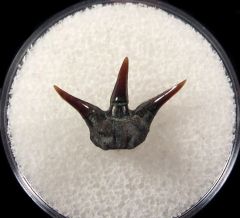
A Very Rare, Top Quality (Gem) Rolfodon ludvigseni tooth from Hornby Island, British Columbia, Canada. An August Fossil of the Month. This is a new genius of Frill shark from the Late Cretaceous deep water Northumberland Formation deposit. A unique species of Chlamydoselachiform shark, the Frill shark. These teeth exhibit classic Frill shark design with a central cusp flanked by two lateral cusps. The crown is complete and the root is complete. Note - all three crown tip ends were very neatly reattached without fill or gaps which is typical for a matrix free specimen. Crack lines are hard to see without magnification. Highest quality enamel. No repair. A very difficult tooth to locate and an excellent collector's tooth. Authenticity guaranteed. This incredible specimen is from a 20 year old collection. A fantastic Frill shark specimen!
CD90 SIZE: 5/8" Wide
Note - Adding 64 Hornby Island deep water shark teeth. -> Link to all Hornby Island shark teeth.
Learn More - Rolfodon ludvigseni$0.00
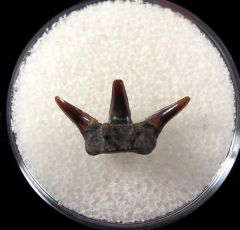
A Very Rare, Top Quality (Gem) Rolfodon ludvigseni tooth from Hornby Island, British Columbia, Canada. An August Fossil of the Month. This is a new genius of Frill shark from the Late Cretaceous deep water Northumberland Formation deposit. A unique species of Chlamydoselachiform shark, the Frill shark. These teeth exhibit classic Frill shark design with a central cusp flanked by two lateral cusps. The crown is near complete (central cusp end damage) and the root is complete. Note - two crown ends were very neatly reattached without fill or gaps which is typical for a matrix free specimen. Crack lines are hard to see without magnification. Highest quality enamel. No repair. A very difficult tooth to locate and an excellent collector's tooth. Authenticity guaranteed. This incredible specimen is from a 20 year old collection. A fantastic Frill shark specimen!
CD91 SIZE: 5/8" Wide
Note - Adding 64 Hornby Island deep water shark teeth. -> Link to all Hornby Island shark teeth.
Learn More - Rolfodon ludvigseni$0.00
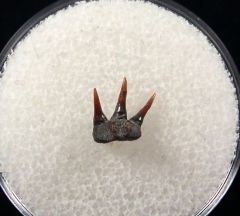
A Very Rare, Top Quality (Gem) Rolfodon ludvigseni tooth from Hornby Island, British Columbia, Canada. An August Fossil of the Month. This is a new genius from the Late Cretaceous deep water Northumberland Formation deposit. A unique species of Chlamydoselachiform shark, the Frill shark. These teeth exhibit classic Frill shark design with a central cusp flanked by two lateral cusps. A lateral tooth. The crown is complete and the root is complete. Note - two crown ends were very neatly reattached without fill or gaps which is typical for a matrix free specimen. Crack lines are hard to see without magnification. Highest quality enamel. No repair. A very difficult tooth to locate and an excellent collector's tooth. Authenticity guaranteed. This incredible specimen is from a 20 year old collection. A fantastic Frill shark specimen!
CD92 SIZE: 5/16" Wide
Note - Adding 64 Hornby Island deep water shark teeth. -> Link to all Hornby Island shark teeth.
Learn More - Rolfodon ludvigseni$0.00
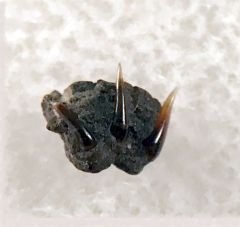
A Very Rare, Top Quality Rolfodon ludvigseni junvenile tooth from Hornby Island, British Columbia, Canada. This is a new genius of Frill shark from the Late Cretaceous deep water Northumberland Formation deposit. A unique species of Chlamydoselachiform shark, the Frill shark. (Note - the specimen is the size and character of the extremely rare Chlamydoselachus balli, but it lacks the two small acessory cusps that reside between the main cusps.) These teeth exhibit classic Frill shark design with a central cusp flanked by two lateral cusps. The crown is near complete with damage to one cusp end and the root may complete or may be missing some root end. Highest quality enamel. No repair. A very difficult tooth to locate and an excellent collector's tooth. Authenticity guaranteed. This incredible specimen is from a 20 year old collection. An excellent Frill shark specimen!
CD94 SIZE: 3/16" Wide
Note - Adding 64 Hornby Island deep water shark teeth. -> Link to all Hornby Island shark teeth.
Learn More - Otodus aksuaticus (Partial serrated)$450.00
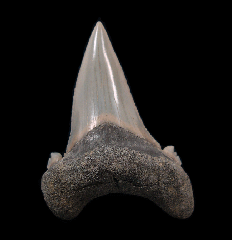
A very rare, early Otodus aksuaticus upper jaw, lateral tooth from Kzil-Orda, Kazakhstan. A transitional tooth leading to O. auriculatus (see detailed discussion below) which leads to Megalodon. A July Fossil of the Month. The bourlette is complete. This tooth exhibits small serrations along the lower 1/3 of the crown and micro serrations to the tip. These teeth exhibit excellent color, gloss, and preservation. A rare, early (Ypresian) Eocene Auriculatus transition tooth. A very challenging tooth to find when building a Megalodon evolutionary set! No repair or restoration. Authenticity guaranteed. This western Kazakhstan site is one of the few places in the world where the Otodus obliquus to Otodus auriculatus transition can be found in adjacent geologic layers.
K547 SIZE: 1-15/16"
Note - Adding 24 Kazakh Auriuclatus or transition teeth in July 2024. --> Link to Kazakh Auriculatus teeth.
Learn More - Otodus aksuaticus (Partial serrated)$425.00
A very rare, early Otodus aksuaticus lateral tooth from Kzil-Orda, Kazakhstan. A transitional tooth leading to O. auriculatus (see detailed discussion below) which leads to Megalodon. A July Fossil of the Month.The bourlette is complete. This tooth exhibits small serrations along the lower 1/2 of the crown and micro serrations to the tip. These teeth exhibit excellent color, gloss, and preservation. A rare, early (Ypresian) Eocene Auriculatus transition tooth. A very challenging tooth to find when building a Megalodon evolutionary set! No repair or restoration. Authenticity guaranteed. This western Kazakhstan site is one of the few places in the world where the Otodus obliquus to Otodus auriculatus transition can be found in adjacent geologic layers.
K544 SIZE: 1-3/4"
Note - Adding 24 Kazakh Auriuclatus or transition teeth in July 2024. --> Link to Kazakh Auriculatus teeth.
Learn More - Otodus aksuaticus (Partial serrated)$550.00
A very rare, early Otodus aksuaticus lateral tooth from Kzil-Orda, Kazakhstan. A transitional tooth leading to O. auriculatus (see detailed discussion below) which leads to Megalodon. A July Fossil of the Month. The bourlette is complete. This tooth exhibits small serrations along the lower 1/2 of the crown and micro serrations to the tip. These teeth exhibit excellent color, gloss, and preservation. A rare, early (Ypresian) Eocene Auriculatus transition tooth. A very challenging tooth to find when building a Megalodon evolutionary set! No repair or restoration. Authenticity guaranteed. This western Kazakhstan site is one of the few places in the world where the Otodus obliquus to Otodus auriculatus transition can be found in adjacent geologic layers.
K542 SIZE: 2-1/8"
Note - Adding 24 Kazakh Auriuclatus or transition teeth in July 2024. --> Link to Kazakh Auriculatus teeth.
Learn More - Otodus aksuaticus (Partial serrated)$525.00
A very rare, early Otodus aksuaticus anterior tooth from Kzil-Orda, Kazakhstan. A transitional tooth leading to O. auriculatus (see detailed discussion below) which leads to Megalodon. A July Fossil of the Month. The bourlette is complete. This tooth exhibits small serrations along the lower 1/2 of the crown and micro serrations to the tip. These teeth exhibit excellent color, gloss, and preservation. A rare, early (Ypresian) Eocene Auriculatus transition tooth. A very challenging tooth to find when building a Megalodon evolutionary set! No repair or restoration. Authenticity guaranteed. This western Kazakhstan site is one of the few places in the world where the Otodus obliquus to Otodus auriculatus transition can be found in adjacent geologic layers.
K542 SIZE: 2-3/16"
Note - Adding 24 Kazakh Auriuclatus or transition teeth in July 2024. --> Link to Kazakh Auriculatus teeth.
Learn More