
Rare Shark Teeth Species
RARE SHARK TEETH SPECIES FOR COLLECTORS
Buried Treasure Fossils offers a nice selection of rare fossil shark teeth for sale. These rare shark species include Parotodus (False Mako shark), Giant Thresher shark teeth, serrated Thresher shark teeth, Somnisus (Greenland shark), etc. These teeth are rare fossil shark teeth are seldom seen for sale! Authenticity guaranteed.
Why Collect Rare Shark Teeth Species
For collectors, rare shark teeth species offer a fascinating way to explore ancient marine ecosystems through distinctive fossil forms. Unusual tooth shapes and locality information add depth to a collection beyond appearance alone. Comparing specimens from different sharks also reveals how feeding adaptations changed through prehistoric seas.
Buried Treasure Fossils brings these prehistoric discoveries together for collectors seeking unusual additions with genuine scientific and display interest.
What to Look for When Buying Rare Shark Teeth
When examining rare shark tooth species, look closely at enamel preservation, root condition, completeness, and any visible restoration. Locality and formation information add valuable geological context, especially for specimens intended for serious collections. Buyers should also consider preparation quality and request clear details about repairs or restoration. Choosing authentic shark teeth with reliable specimen information gives collectors greater confidence in what they are adding to their collection.
Get in touch with Buried Treasure Fossils and explore the collection for your next prehistoric find.

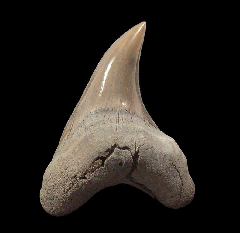
- Parotodus benedeni - Lee Creek$595.00
A TOP QUALITY very rare classic Parotodus benedeni tooth from the Lee Creek mine, Aurora, No. Carolina. Lateral tooth. The crown has sharp cutting edges. Excellent tan color with a light tan root and bourlette. The root is ~3/4" thick and shows typical hydration cracks. This Parotodus tooth was found in the Yorktown Formation (Pliocene age). Note - the left root end was repaired. A very special, rare collector's tooth. Authenticity guaranteed.
LC103 Size: 2-5/8"
Note - Adding 6 Lee Creek P benedeni teeth in March 2025. Link to LC P. benedeni teeth
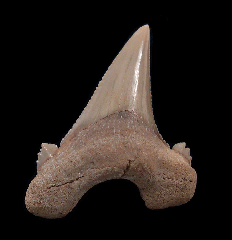
Learn More - Otodus aksuaticus (Partial serrated)$550.00
A very rare, early Otodus aksuaticus lateral tooth from Kzil-Orda, Kazakhstan. A transitional tooth leading to O. auriculatus (see detailed discussion below) which leads to Megalodon. A July Fossil of the Month. The bourlette is complete. This tooth exhibits small serrations along the lower 1/2 of the crown and micro serrations to the tip. These teeth exhibit excellent color, gloss, and preservation. A rare, early (Ypresian) Eocene Auriculatus transition tooth. A very challenging tooth to find when building a Megalodon evolutionary set! No repair or restoration. Authenticity guaranteed. This western Kazakhstan site is one of the few places in the world where the Otodus obliquus to Otodus auriculatus transition can be found in adjacent geologic layers.
K542 SIZE: 2-1/8"
Note - Adding 24 Kazakh Auriuclatus or transition teeth in July 2024. --> Link to Kazakh Auriculatus teeth.
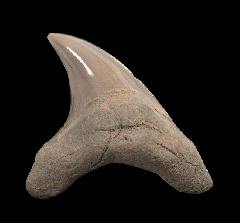
Learn More - Parotodus benedeni - Lee Creek$550.00
A TOP QUALITY very rare classic Parotodus benedeni tooth from the Lee Creek mine, Aurora, No. Carolina. Lateral tooth. The crown has sharp cutting edges. Excellent tan color with a light tan root and bourlette. The root is ~5/8" thick and shows typical hydration cracks. This Parotodus tooth was found in the Yorktown Formation (Pliocene age). No repair or restoration. A very special, rare collector's tooth. Authenticity guaranteed.
LC104 Size: 2-5/16"
Note - Adding 6 Lee Creek P benedeni teeth in March 2025. Link to LC P. benedeni teeth
Learn More - Otodus aksuaticus (Partial serrated)$525.00
A very rare, early Otodus aksuaticus anterior tooth from Kzil-Orda, Kazakhstan. A transitional tooth leading to O. auriculatus (see detailed discussion below) which leads to Megalodon. A July Fossil of the Month. The bourlette is complete. This tooth exhibits small serrations along the lower 1/2 of the crown and micro serrations to the tip. These teeth exhibit excellent color, gloss, and preservation. A rare, early (Ypresian) Eocene Auriculatus transition tooth. A very challenging tooth to find when building a Megalodon evolutionary set! No repair or restoration. Authenticity guaranteed. This western Kazakhstan site is one of the few places in the world where the Otodus obliquus to Otodus auriculatus transition can be found in adjacent geologic layers.
K542 SIZE: 2-3/16"
Note - Adding 24 Kazakh Auriuclatus or transition teeth in July 2024. --> Link to Kazakh Auriculatus teeth.
Learn More - Megamouth shark (Megachasma)$495.00
An ULTRA RARE, "Dual Crown" PATHOLOGIC Megachasma tooth, the Megamouth shark, from the Bahia Iglesa Fm., Chile. An April Fossil of the Month. The Megamouth shark is a very rare and exotic fossil shark tooth since it is rarely found in the fossil record. Megachasma teeth are one of the scarce and well preserved fossils that are unique to the Caldera Basin site in Chile! Late Miocene age. No repair or restoration. An exceptional and ultra rare collector's "Dual Crown"tooth! Authenticity guaranteed. My last and best dual crown tooth.
C558 Size: 5/8" (Base 7/16" x 7/16")
Note - Adding 8 new Chilean Megachasma teeth in April 2026 -> Link to Megachasma teeth
Learn More - Hexanchus gigas - Chile$475.00
An Ultra Rare, Hexanchus griseus symphyseal tooth from the Caldera Basin of Chile. This is complete lower jaw symphyseal tooth. A rare male shark. Superb preservation and color. Nine plus very sharp and one primary cusp surrounded by many small pathologic cusps. An excellent complete root. Authenticity guaranteed. Museum Quality collector's tooth. Unfortunately there are no more teeth coming from this site. This is a piece from an old collection.
C402L Size: 13/16" W (13/16" H)
Note - Adding 22 new Chilean Hexanchus teeth in May 2021 -> Link to Hexanchus Teeth
Learn More - Megamouth shark (Megachasma)$475.00
A LARGE, RARE, Top Quality Megachasma tooth, the Megamouth shark, from the Bahia Iglesa Fm., Chile. An April Fossil of the Month. The Megamouth shark is a very rare and exotic fossil shark tooth since it is rarely found in the fossil record. Megachasma teeth are one of the scarce and well preserved fossils that are unique to the Caldera Basin site in Chile! Late Miocene age. No repair or restoration. An exceptional and rare collector's tooth! Authenticity guaranteed.
C551 Size: 15/16" (Base 9/16" x 1/2")
Note - Adding 8 new Chilean Megachasma teeth in April 2026 -> Link to Megachasma teeth
Learn More - Otodus aksuaticus (Partial serrated)$450.00
A very rare, early Otodus aksuaticus upper jaw, lateral tooth from Kzil-Orda, Kazakhstan. A transitional tooth leading to O. auriculatus (see detailed discussion below) which leads to Megalodon. A July Fossil of the Month. The bourlette is complete. This tooth exhibits small serrations along the lower 1/3 of the crown and micro serrations to the tip. These teeth exhibit excellent color, gloss, and preservation. A rare, early (Ypresian) Eocene Auriculatus transition tooth. A very challenging tooth to find when building a Megalodon evolutionary set! No repair or restoration. Authenticity guaranteed. This western Kazakhstan site is one of the few places in the world where the Otodus obliquus to Otodus auriculatus transition can be found in adjacent geologic layers.
K547 SIZE: 1-15/16"
Note - Adding 24 Kazakh Auriuclatus or transition teeth in July 2024. --> Link to Kazakh Auriculatus teeth.
Learn More - Megamouth shark (Megachasma)$450.00
A LARGE, RARE, Top Quality Megachasma tooth, the Megamouth shark, from the Bahia Iglesa Fm., Chile. The Megamouth shark is a very rare and exotic fossil shark tooth since it is rarely found in the fossil record. Megachasma teeth are one of the scarce and well preserved fossils that are unique to the Caldera Basin site in Chile! Late Miocene age. No repair or restoration. An exceptional and rare collector's tooth! Authenticity guaranteed.
C556 Size: 15/16" (Base 9/16" x 9/16")
Note - Adding 8 new Chilean Megachasma teeth in April 2026 -> Link to Megachasma teeth
Learn More - Megamouth shark (Megachasma)$450.00
A LARGE, RARE, Top Quality Megachasma tooth, the Megamouth shark, from the Bahia Iglesa Fm., Chile. The Megamouth shark is a very rare and exotic fossil shark tooth since it is rarely found in the fossil record. Megachasma teeth are one of the scarce and well preserved fossils that are unique to the Caldera Basin site in Chile! Late Miocene age. No repair or restoration. An exceptional and rare collector's tooth! Authenticity guaranteed.
C555 Size: 15/16" (Base 9/16" x 1/2")
Note - Adding 8 new Chilean Megachasma teeth in April 2026 -> Link to Megachasma teeth
Learn More - Edestus heinrichi$450.00
A very rare, LARGE, Top Quality Edestus heinrichi shark tooth, from Herrin, Illinois. This is a Paleozoic shark that lived in swamps that our now underground coal deposits. A rare double crown section with lots of pyrite. Excellent preservation, serrations, and serration detail. The Edestus shark would have an upper and lower tooth whorl that are vertically opposed. Research showed that they could use their opposing teeth in a scissor-like motion or a vertical whipping motion to cut prey. It is the first animal to cut vertically. A very strange looking and unique acting shark. Shark recreation image is credited to Julio Lacerdo. These rare teeth are Pennsylvanian age from Illinois. No repair or restoration. Authenticity guaranteed.
I04 SIZE: 3" w/ root (1-7/8" crown)
Adding 22 Edestus shark teeth in July 2025. Link to Edestus shark.
Learn More - Otodus aksuaticus (Partial serrated)$425.00
A very rare, early Otodus aksuaticus lateral tooth from Kzil-Orda, Kazakhstan. A transitional tooth leading to O. auriculatus (see detailed discussion below) which leads to Megalodon. A July Fossil of the Month.The bourlette is complete. This tooth exhibits small serrations along the lower 1/2 of the crown and micro serrations to the tip. These teeth exhibit excellent color, gloss, and preservation. A rare, early (Ypresian) Eocene Auriculatus transition tooth. A very challenging tooth to find when building a Megalodon evolutionary set! No repair or restoration. Authenticity guaranteed. This western Kazakhstan site is one of the few places in the world where the Otodus obliquus to Otodus auriculatus transition can be found in adjacent geologic layers.
K544 SIZE: 1-3/4"
Note - Adding 24 Kazakh Auriuclatus or transition teeth in July 2024. --> Link to Kazakh Auriculatus teeth.
Learn More




Frequently Asked Questions
Does tooth size determine rarity?
Not necessarily. A large tooth may attract attention, yet size alone does not establish rarity. The shark species, geological occurrence, and preservation history often provide more meaningful context when assessing a specimen.
What should I look for in photos when buying a fossil shark tooth?
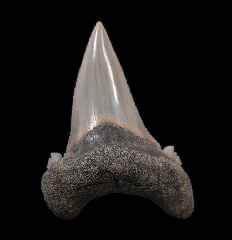
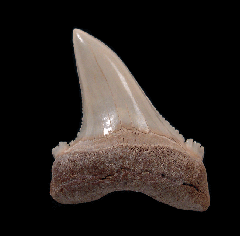
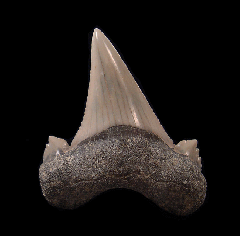
Inspect the photographs closely for the overall condition of the specimen and the amount of natural detail that remains visible. Look at the enamel surface and edges for signs of wear or restoration. High-quality images from several angles give you a clearer understanding of the tooth's shape and proportions. Pay attention to close-up views as well, since small details may not be noticeable in a standard product image.
How important are measurements when buying fossil shark teeth?
Measurements give you a practical sense of the specimen's actual size before it arrives. Product photographs can make a tooth appear larger or smaller depending on the camera angle, so checking the stated dimensions provides a more reliable reference.