
Ceratopsians / Triceratops
Genuine Ceratopsian and Triceratops Prehistoric Finds
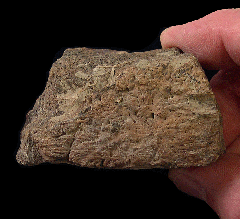
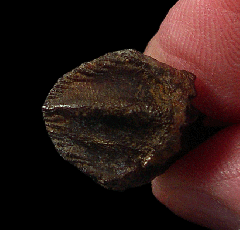
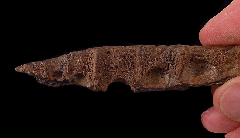
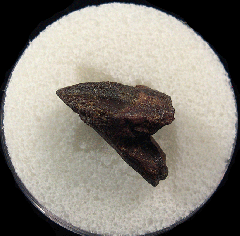
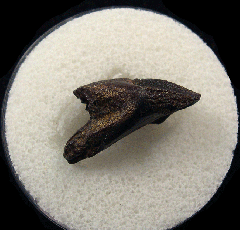
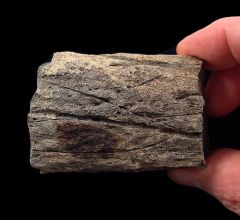
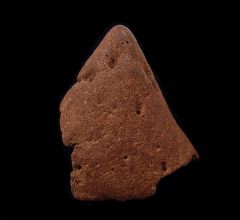
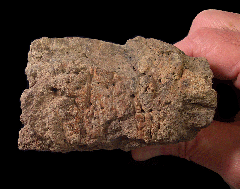
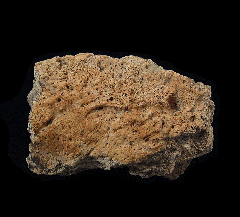
Ceratopsians are the "horn face" herbivore dinosaurs that lived throughout the Cretaceous period. They are characterized by a extraordinarily large skull, large horns over the eyes or nose or both. Ceratopsians were and quadrupeds reaching a length of ~24 feet. The most famous is the Triceratops which is often depicted fighting off a hungry T. rex dinosaur. Fossil remains include well preserved teeth, bones, frill sections, and claws. These top quality specimens were all legally collected from private lands in the northwestern US.Late Cretaceous, Hell Creek Fm. (or equivalent), 68-66 MYA.
Triceratops horridus is the large, three horned dinosaur that lived in the late Cretaceous of North America. Triceratops grew to a length of approximately 30 feet, a height of nearly 10 feet, and a weight of 26,000 lbs. This quadrupedal herbivore had beaked jaws for nipping cycads and palms, and their jaws were filled with rows of large teeth used to grind vegetation. Triceratops had large brow horns that can exceed 3 feet in length and had a large bony frill covering its neck. The large brow horns and their strength may have offered defense from their main predator Tyrannosaurus rex. There are two species of Triceratops found in the Hell Creek formation, Triceratops horridus was the more common species. Both Triceratops horridus and Triceratops prosus would have similar teeth, claws and bones.
*** New *** Leptoceratops was a genus from the family Leptoceratopsidae, an extinct family of neoceratopsian dinosaurs from Asia, North America and Europe. This is a rather rare species. It was smaller and had very small horns, and lived in the late Cretaceous with Triceratops and is found in the Hell Creek and Lance Creek Fm.
Today, we find Triceratops fossils otrother Ceratopsian teeth, unguals (claws), horns, and non-associated bones in the Hell Creek Formation. Authentiicity guaranteed.
Functional Anatomy of the Ceratopsian Frill
Solid bone frills distinguished horned ceratopsians from all other Late Cretaceous herbivores. Unlike related species with hollow frill openings, Triceratops possessed a thick, solid shield extending across the neck. Anchored muscle attachments along the margins powered powerful jaw bites to shear tough palm fronds. Fine blood vessel grooves covering the bone surface suggest these frills regulated body heat while serving as bold visual displays.
Dental Batteries and Beak Shears
Horned dinosaurs relied on double-rooted teeth stacked in deep jaw columns. As upper rows wore down, replacement crowns moved forward to maintain continuous cutting edges. While many collectors seek authentic shark teeth for their sharp points, ceratopsian teeth feature flat, angled chewing facets designed for grinding silica-heavy foliage.
Add to cart these prehistoric shield pieces to your collection today.
Frequently Asked Questions
What function did the solid bone frill serve on a Triceratops skull?
The solid frill anchored neck muscles while defending vulnerable throat joints against predators. Vascular channels along the outer surface indicate it also helped release excess heat during warm weather.
How do double-rooted Triceratops teeth differ from carnivorous dinosaur teeth?
Carnivore teeth feature single roots meant for slicing meat, whereas ceratopsian teeth developed double roots that anchored deeply into jaw sockets. This split structure sustained immense grinding forces from crushing woody stems.
Why do fossil collectors value epoccipital bones from the frill edge?
Epoccipital bones formed decorative spikes or rounded studs along the outer frill rim. Finding these isolated border elements offers collectors a compact, budget-friendly piece of recognizable horned dinosaur anatomy.
How did the brow horns of a young Triceratops change as the animal grew?
Juvenile horns curved backward toward the shoulders during early life stages. As mature muscles developed, the horn cores shifted forward over the snout to provide leverage during head-butting territory displays.
What causes the deep grooves visible on the surface of fossilized horn cores?
Living horn cores were wrapped in tough keratin sheaths nourished by extensive network capillaries. When the outer sheath rotted after death, those intricate blood vessel pathways remained permanently etched into the fossilized bone.

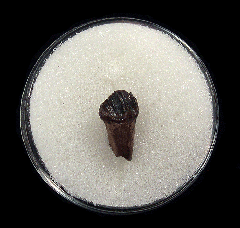
- Leptoceratops$250.00
A VERY RARE Top Quality, rooted Leptoceratops gracilis tooth from the late Cretaceous of western North America. Leptoceratops is a smaller "ceratopsian" dinosaur found in the Hell Creek and Lance formations. There small size and small horns made them relatively easy prey and their population size was quite small compared to other herbivores. The enamel is high quality with nice color and patina. The chewing surface is very well preserved. This tooth has little wear overall with one wear facet on the reverse side.. Leptoceratops commonly have wear facets on their teeth. No cracks. No restoration. Legally collected on private land in the Lance Creek Fm., Niobrara Co., Wyoming. Note - this tooth comes with a Riker display frame. Authenticity guaranteed. An excellent rooted Leptoceratops tooth!
DQ10 SIZE: 7/16"
Note - Adding 10 rare Leptoceratops teeth in May 2023. Link to Ceratopian fossils catalog
Learn More - Triceratops$245.00
A LARGE, Top Quality, rooted Triceratops horridus tooth from the late Cretaceous of western North America. A dentary (lower jaw) tooth. Triceratops is a large ceratopsian dinosaur found in the Hell Creek formation. The enamel is high quality with excellent color and patina. The chewing surface measures 1”. The tip has a natural wear facet. No repair or restoration. Legally collected on private land in the Hell Creek Fm., Powder River Co., Montana. Note - this tooth comes with a Riker frame display case. Authenticity guaranteed. A nice rooted Triceratops tooth!
DC07 SIZE: 1-7/16"
Note - Adding 24 new Triceratops teeth in August 2025. Link to Triceratops fossils catalog
Learn More - Triceratops$225.00
A Top Quality, partially rooted Triceratops horridus tooth from the late Cretaceous of western North America. Maxillary (upper jaw) tooth. Triceratops is a large ceratopsian dinosaur found in the Hell Creek formation. The enamel is high quality with nice color / patina. The chewing surface measures 5/8”. This tooth has no tip wear. The root surface is very gnarly. No cracks. No restoration. Legally collected on private land in the Hell Creek Fm., Carter Co., Montana. Note - this tooth comes with a Riker display frame. Authenticity guaranteed. An excellent partially rooted Triceratops tooth!
DC11 SIZE: 1-3/8"
Note - Adding 18 new Triceratops teeth in June 2022. Link to Triceratops fossils catalog
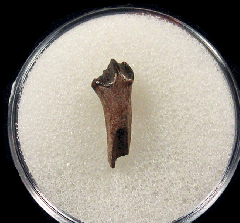
Learn More - Leptoceratops$225.00
A VERY RARE, Top Quality, rooted Leptoceratops gracilis tooth from the late Cretaceous of western North America. Leptoceratops is a smaller "ceratopsian" dinosaur found in the Hell Creek and Lance formations. There small size and small horns made them relatively easy prey and their population size was quite small compared to other herbivores. The enamel is high quality with nice color and patina. The chewing surface is well preserved with a wear facet. Leptoceratops commonly have wear facets on their teeth. No cracks. No restoration. Legally collected on private land in the Hell Creek Fm., Powder River Co., Montana. Note - this tooth comes with a Riker display frame. Authenticity guaranteed. An excellent rooted Leptoceratops tooth!
DQ08 SIZE: 1/2"
Note - Adding 10 rare Leptoceratops teeth in May 2023. Link to Ceratopian fossils catalog
Learn More - Triceratops$225.00
A Top Quality, rooted junenile Triceratops horridus tooth from the late Cretaceous of western North America. A maxillary (upper jaw) tooth. Triceratops is a large ceratopsian dinosaur found in the Hell Creek formation. The enamel is high quality with excellent color and patina. The chewing surface measures 5/8” . The tip has no wear facet. No repair or restoration. Legally collected on private land in the Hell Creek Fm., Powder River Co., Montana. Note - this tooth comes with a Gem jar display case. Authenticity guaranteed. A nice rooted Triceratops tooth!
DC14 SIZE: 1-1/16"
Note - Adding 24 new Triceratops teeth in August 2025. Link to Triceratops fossils catalog
Learn More - Triceratops Jaw Section$175.00
A Top Quality, Triceratops horridus jaw section (maxilla section) from the late Cretaceous of northern North America. Triceratops was a large ceratopsian dinosaur found in the Hell Creek formation which is known for the large frill protecting its neck. This is a great jaw section with excellent detail preserved and excellent color / patina. You can see the four complete tooth channels which are approximately 5/8" wide which is a characteristic of Triceratops and distinguishes it from a Hadrosaur which is closer to 1/4" wide. Triceratops bones are more difficult to find. No repair or restoration. 100% natural specimen. Legally collected on private land in Garfield Co., Montana. Authenticity guaranteed.
DC33 SIZE: 3-3/4" wide x 1"
Note - Adding 14 new Triceratops fossils in November 2024. Link to Triceratops fossils catalog
Learn More - Triceratops$175.00
A Top Quality, rooted juvenile Triceratops horridus tooth from the late Cretaceous of western North America. A maxillary (upper jaw) tooth. Triceratops is a large ceratopsian dinosaur found in the Hell Creek formation. The enamel is high quality with excellent color and patina. The chewing surface measures 1/2” . The tip has no natural wear facet. No repair or restoration. Legally collected on private land in the Hell Creek Fm., Carter Co., Montana. Note - this tooth comes with a Gem jar display case. Authenticity guaranteed. An excellent fully rooted juvenile Triceratops tooth!
DC18 SIZE: 1"
Note - Adding 24 new Triceratops teeth in August 2025. Link to Triceratops fossils catalog
Learn More - Triceratops$175.00
A Top Quality, rooted juvenile Triceratops horridus tooth from the late Cretaceous of western North America. A maxillary (upper jaw) tooth. Triceratops is a large ceratopsian dinosaur found in the Hell Creek formation. The enamel is high quality with excellent color and patina. The chewing surface measures 1/2” . The tip has no natural wear facet. No repair or restoration. Legally collected on private land in the Hell Creek Fm., Carter Co., Montana. Note - this tooth comes with a Gem jar display case. Authenticity guaranteed. An excellent fully rooted juvenile Triceratops tooth!
DC17 SIZE: 1"
Note - Adding 24 new Triceratops teeth in August 2025. Link to Triceratops fossils catalog
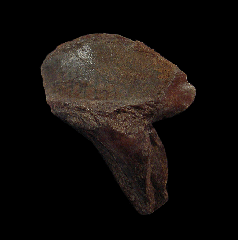
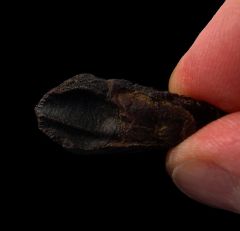
Learn More - Triceratops Brow Horn Section$175.00
A Top Quality, Triceratops horridus brow horn section from the late Cretaceous of northern North America. Triceratops was a large ceratopsian dinosaur found in the Hell Creek formation which is known for three horns and the large frill protecting its neck. This is a great brow horn wedge section with excellent detail preserved. Incredible surface and patina. You can see all of the natural blood grooves across the surface of this horn. No repair or restoration. 100% natural specimen. Legally collected on private land in Carter Co., Montana. Authenticity guaranteed.
DC55 SIZE: 2-3/4" Wide x 1-1/8" Thick
Note - Adding 15 new Triceratops bones in September 2025. Link to Triceratops fossils catalog
Learn More - Triceratops Epoccipital$175.00
A rare, Top Quality Triceratops horridus epoccipital (frill ornament) from the late Cretaceous of northern North America. Triceratops was a large ceratopsian dinosaur found in the Hell Creek formation which is known for three horns and a large frill protecting its neck. This epoccipital has excellent detail preserved and great color / patina. The epoccipitals were triangular bone ornaments that lined the top of the frill. The young Triceratops had narrow and tall epoccipitals, older juvenile Triceratops had low and wide epoccipitals, and adult Triceratops no longer had this ornament. You can see this epoccipital is narrow which is a characteristic of an younger juvenile Triceratops. No repair or restoration. 100% natural specimen. Legally collected on private land in Powder River Co., Montana. Authenticity guaranteed.
DC64 SIZE: 1-1/4" Wide x 1-5/16" Height
Note - Adding 15 new Triceratops bones in September 2025. Link to Triceratops fossils catalog
Learn More - Triceratops Frill Section$165.00
A Top Quality, Triceratops horridus frill section from the late Cretaceous of northern North America. Triceratops was a large ceratopsian dinosaur found in the Hell Creek formation which is known for three horns and the large frill protecting its neck. This is a great frill section with excellent detail preserved. You can see all of the natural blood grooves across the surface of the frill. No repair or restoration. 100% natural specimen. Legally collected on private land in Carter Co., Montana. Authenticity guaranteed. Note - this frill section is from the skull connection, and it is very thick (3") & heavy.
DC44 SIZE: 3-3/4" Wide x 2-3/8" High x 3" Thick
Note - Adding 14 new Triceratops bones in November 2024. Link to Triceratops fossils catalog
Learn More - Triceratops Frill Section$165.00
A Top Quality, Triceratops horridus frill section from the late Cretaceous of northern North America. Triceratops was a large ceratopsian dinosaur found in the Hell Creek formation which is known for three horns and the large frill protecting its neck. This is a great frill section with excellent detail preserved. You can see all of the natural blood grooves across the surface of the frill. A very thick end of frill section. No repair or restoration. 100% natural specimen. Legally collected on private land in Garfield Co., Montana. Authenticity guaranteed.
DC46 SIZE: 3-3/4" Wide x 2-1/2 High x 1-3/4" Thick
Note - Adding 19 new Triceratops bones in May 2023. Link to Triceratops fossils catalog
Learn More