

Anzu wyliei
Authentic Anzu Wyliei Claws and Bones for Sale
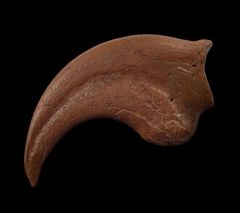
Find the fascinating world of Oviraptorosaurs with our selection of Anzu wyliei fossils. Anzu wyliei or the "feathered demon" was a very large Oviraptor that lived in the upper Cretaceous period (Hell Creek Formation), and was formally described in 2014 (see paper link in product descriptions). Anzu was nicknamed the "Chicken from Hell" since it is among the largest feathered dinosaurs ever found in North America. This dinosaur is characterized by a toothless beak, long arms ending with large claws, and long powerful legs. This raptor was most likely an omnivore feeding on small animals, vegetation, and possibly eggs. The late Cretaceous Anzu oviraptor grew to 13 feet and 600 pounds. Fossil remains include well preserved bones and large claws. Their large claws are highly prized by collectors. These top quality specimens were all legally collected from private lands in the northwestern US. Late Cretaceous, Hell Creek Fm. (or equivalent), 68-66 MYA. Note - this big Hell Creek Formation oviraptor was previously mis-identified as Chirostenotes. Authenticity guarnteed.
Image credit to Masato Hattori.
Distinguishing Manus Claws From Pes Claws
Understanding the difference between hand claws and foot claws helps collectors evaluate Anzu wyliei specimens.
Manus claws grew long and curved for grasping vegetation or small prey. These hand claws display a sharp flexor tubercle near the base where powerful muscle tendons attached. Pes claws supported the animal's weight during locomotion across the floodplain. Because of this, foot claws feature a broader base and a thicker overall cross-section to handle heavy impact.
Preservation in the Hell Creek Formation
Fossilization in ancient river deposits created the distinct tan-and-charcoal surface colors seen on these specimens. Understanding what makes fossils genuine requires looking closely at surface textures and bone density. Fine grooves along the sides allowed blood vessels to nourish the keratin sheath that once covered the living bone. These delicate surface features quickly wear away in open air, making buried riverbed discoveries exceptional finds.
Shop our inventory of these rare specimens to add to your personal collection.

Frequently Asked Questions
What causes color variations in Anzu wyliei fossil claws?
Groundwater chemistry determines whether a bone turns light tan, deep reddish-brown, or dark charcoal gray. Iron-rich sediments produce reddish tones, while dense organic clay deposits yield darker patina shades.
What did the living crest on an Anzu wyliei skull look like?
Researchers believe the high, thin crest atop the skull consisted of lightweight bone covered in bright keratin. It likely served a display role for species recognition or signaling rather than fighting off predators.
Did Anzu wyliei have true feathers like modern birds?
Yes, paleontological evidence indicates these oviraptorosaurs possessed true feathers along their forearms and body. While far too heavy for flight, their plumage likely helped with egg incubation and temperature regulation throughout their lives.
How do collectors verify the private land legal provenance of a Hell Creek fossil?
Legitimate fossil dealers track landowner agreements and precise GPS map coordinates for every field discovery. At Buried Treasure Fossils, we document private ranch origins to guarantee full compliance with federal land laws.
Why are oviraptorosaur teeth missing in the Hell Creek Formation?
Anzu wyliei evolved a specialized horn-covered beak instead of traditional teeth. Because beaks decay rapidly after death, field teams typically recover heavy jaw fragments or claws, and often metatarsals, rather than individual teeth. Beak and claw fragments are equally fascinating and greatly add to any enthusiast's collection.