Search results for: 'borrel coral socket lenexa enabl rarely'
- Related search terms
- enabl 10 of
- enabl
- borrel coral society lenexa enabl rarely
- borrel coral societi lenexa enabl rarely
- borrel coral sockets lenexa enabl rarely
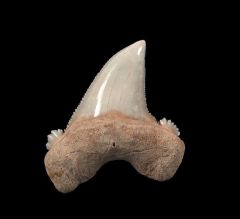
- Otodus aksuaticus (Partial serrated)$0.00
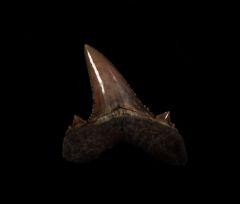
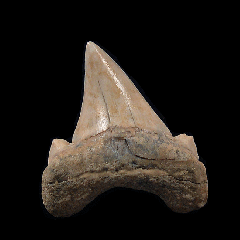
An ultra rare, early Otodus aksuaticus upper jaw, lateral tooth from western Kazakhstan. A transition tooth leading to C. auriculatus (see detailed discussion below). A May 2019 Fossil for the Month. The bourlette is large and complete. Exhibits small serrations along the lower 2/3 of the crown and weakly serrated side cusps with very irregular serrations. These teeth exhibit very good color, gloss, and preservation. A rare, early Eocene Auriculatus transition tooth. A very challenging tooth to find when building a Megalodon evolutionary set! No repair. Authenticity guaranteed.
K541 BoP SIZE: 2-1/16"
Note - Adding 13 Kazakh Auriuclatus or transition teeth in May 2019. --> Link to Kazakh Auriculatus teeth.
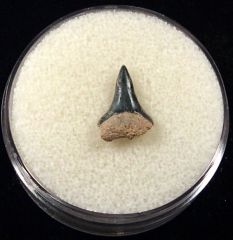
Learn More - Glyphis (Speartooth shark)$65.00
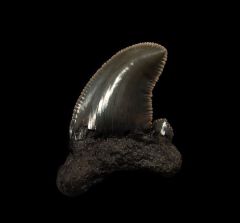
A very rare Glyphis glyphis tooth, the Speartooth shark, from Sumatra, Indonesia. These teeth were deposited in the Telisa formation - a shallow marine environment during the middle Miocene (approx. 15 million years ago.) A very unique collector's tooth. D177 is an excellent upper jaw anterior tooth. Note - "spear-like" crown development. My best upper jaw tooth! Authenticity guaranteed.
D177 SIZE: 1/2"
Note - 16 new Sumatran Glyphis glyphis teeth added in January 2018. Link to Sumatran teeth.
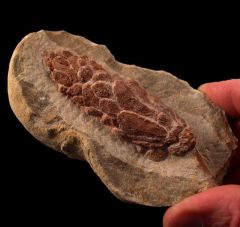
Learn More - Pinus sp.$0.00
An EXTRA LARGE Top Quality, rare Pinus sp. pine cone specimen from Germany. An October Fossil of the Month. This pine cone is fully inflated. Excellent preservation and color. The original matrix is a very hard and heavy sandstone nodule. Note – nodule matrix size is 4-3/4” x 3". Authenticity guaranteed. Note - This pine weights approximately 2 pounds. International customers will have a supplemental shipping charge.
Name: Pinus sp. Age: Upper Oligocene (32 mya) Location: Bad Kreuznach, Germany
X332 Size: 3-1/2" (1" W)
Adding 3 new Pine Cones in October 2022. --> Link to Pine Cones
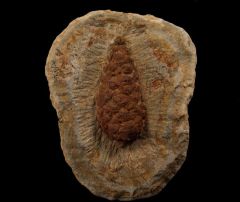
Learn More - Pinus sp.$825.00
A LARGE Top Quality, rare Pinus sp. pine cone specimen from Germany. An October Fossil of the Month. This pine cone is fully inflated. Excellent preservation and color. The original matrix is a very hard and heavy sandstone nodule. Note – nodule matrix size is 4-3/4” x 2-3/4. Authenticity guaranteed. Note - This pine weights approximately 2 pounds. International customers will have a supplemental shipping charge.
Name: Pinus sp. Age: Upper Oligocene (32 mya) Location: Bad Kreuznach, Germany
X331 Size: 2-3/4" (1-1/8" W)
Adding 3 new Pine Cones in October 2022. --> Link to Pine Cones
Learn More - Edestus heinrichi$195.00
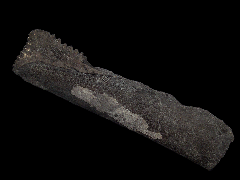
A very rare, Top Quality Edestus heinrichi shark tooth, from Herrin, Illinois. This is a Paleozoic shark that lived in swamps that our now underground coal deposits. An excellent matrix specimen that inludes the opposing tooth mold as well. Excellent preservation, serrations, and serration detail. The Edestus shark would have an upper and lower tooth whorl that are vertically opposed. Research showed that they could use their opposing teeth in a scissor-like motion or a vertical whipping motion to cut prey. It is the first animal to cut vertically. A very strange looking and unique acting shark. Shark recreation image is credited to Julio Lacerdo. These rare teeth are Pennsylvanian age from Illinois. No repair or restoration. Authenticity guaranteed. Note - shipping weight is 1.9 lbs. International "free shipping" will require supplemental postage.
I11 SIZE: 3" w/ root (1-1/2" crown) ; Matrix block is 3.5" x 3.5"
Adding 22 Edestus shark teeth in July 2025. Link to Edestus shark.
Learn More - Edestus heinrichi$175.00
A very rare, LARGE, Top Quality Edestus heinrichi shark tooth, from Herrin, Illinois. This is a Paleozoic shark that lived in swamps that our now underground coal deposits. Note - this tooth has a lot of pyrite and the tip is naturally rounded (polished) which thought to be due to the vertical whipping motion used to slice prey. Excellent preservation, serrations, and serration detail. The Edestus shark would have an upper and lower tooth whorl that are vertically opposed. Research showed that they could use their opposing teeth in a scissor-like motion or a vertical whipping motion to cut prey. It is the first animal to cut vertically. A very strange looking and unique acting shark. Shark recreation image is credited to Julio Lacerdo. These rare teeth are Pennsylvanian age from Illinois. No repair or restoration. Authenticity guaranteed.
I09 SIZE: 4-1/8" w/ root (1-7/8" crown)
Adding 22 Edestus shark teeth in July 2025. Link to Edestus shark.
Learn More - Carcharocles auriculatus - So. Carolina$145.00
"The Twist" A rare Top Quality PATHOLOGIC Auriculatus tooth from Harleyville, So. Carolina. An incredible twisted tooth. An excellent gray colored crown with a black colored bourlette, and a black colored root. Highest quality enamel. Excellent color & preservation. The serrations are large and razor sharp including the tip. One large side cusp. The root is complete and very well preserved. It is very hard to find these teeth in perfect condition. Near perfect tooth. A rare collector's Harleyville Auriculatus tooth! Authenticity guaranteed. Another prime shark tooth site that is no longer accessible to collectors.
SC421 SIZE: 1-9/16"
Note - Adding 12 Harleyville Auriculatus teeth in July 2022. Link to the Harleyville Auriculatus teeth.
Learn More - Otodus mugodzharicus (Partial serrated)$0.00
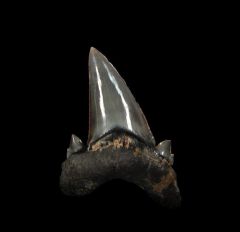
A very rare, early Otodus mugodzharicus upper jaw, lateral tooth from Aktulagay, western Kazakhstan. A transitional tooth leading to C. auriculatus (see detailed discussion below) which leads to Megalodon. The bourlette is complete. Tooth exhibits very fine serrations along the lower 1/3 of crown and micro serrations to the tip. These teeth exhibit very good color, gloss, and preservation. A rare, early Eocene Auriculatus transition tooth. A very challenging tooth to find when building a Megalodon evolutionary set! No repair. Authenticity guaranteed. Note - This western Kazakhstan site is one of the few places in the world where the Otodus to Auriculatus transition can be found in adjacent layers.
K554 SIZE: 1-1/4"
Note - Adding 18 Kazakh Auriuclatus or transition teeth in April 2020. --> Link to Kazakh Auriculatus teeth.
Learn More - Otodus mugodzharicus (Partial serrated)$0.00
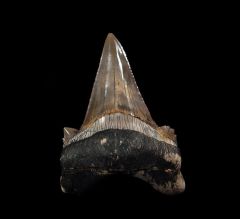
A very rare, early Otodus mugodzharicus upper jaw, lateral tooth from Aktulagay, western Kazakhstan. A transitional tooth leading to C. auriculatus (see detailed discussion below) which leads to Megalodon. The bourlette is complete. Tooth exhibits wavy serrations along the lower 1/3 of crown and small wavy serrations to the tip. These teeth exhibit very good color, gloss, and preservation. A rare, early Eocene Auriculatus transition tooth. A very challenging tooth to find when building a Megalodon evolutionary set! No repair. Authenticity guaranteed. Note - This western Kazakhstan site is one of the few places in the world where the Otodus to Auriculatus transition can be found in adjacent layers.
K553 SIZE: 1-1/2"
Note - Adding 18 Kazakh Auriuclatus or transition teeth in April 2020. --> Link to Kazakh Auriculatus teeth.
Learn More - Otodus mugodzharicus (Partial serrated)$0.00
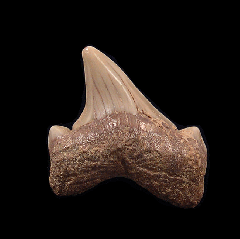
A very rare, early Otodus mugodzharicus upper jaw, anterior tooth from Aktulagay, western Kazakhstan. A transitional tooth leading to C. auriculatus (see detailed discussion below) which leads to Megalodon. The bourlette is complete. Tooth exhibits fine and wavy serrations along the lower 1/3 of crown and no serrations the tip. These teeth exhibit very good color, gloss, and preservation. A rare, early Eocene Auriculatus transition tooth. A very challenging tooth to find when building a Megalodon evolutionary set! No repair. Authenticity guaranteed. Note - This western Kazakhstan site is one of the few places in the world where the Otodus to Auriculatus transition can be found in adjacent layers.
K551 SIZE: 2-1/8"
Note - Adding 18 Kazakh Auriculatus or transition teeth in April 2020. --> Link to Kazakh Auriculatus teeth.
Learn More - Otodus obliquus (not serrated)$95.00
A very rare, early Otodus obliquus anterior tooth from Kzil-Orda Region, Kazakhstan. Otodus obliquus is the ancestor to O. auriculatus (see detailed discussion below) which leads to Megalodon. The bourlette is large and complete. Exhibits no serrations. The starting species to serrated Otodus teeth. These teeth exhibit very good color, gloss, and preservation. A rare, early Eocene (Ypresian) Auriculatus transition tooth. A very challenging tooth to find when building a Megalodon evolutionary set! No repair. Authenticity guaranteed. Note - This western Kazakhstan site is one of the few places in the world where the Otodus obliquus to Otodus auriculatus transition can be found in adjacent early Eocene formation units.
K561 SIZE: 1-1/16"
Note - Adding 24 Kazakh Auriculatus or transition teeth in July 2024. --> Link to Kazakh Auriculatus teeth.
Learn More - Otodus obliquus (not serrated)$135.00
A very rare, early Otodus obliquus anterior tooth from Kzil-Orda Region, Kazakhstan. Otodus obliquus is the ancestor to O. auriculatus (see detailed discussion below) which leads to Megalodon. The bourlette is large and complete. Exhibits no serrations. The starting species to serrated Otodus teeth. These teeth exhibit very good color, gloss, and preservation. A rare, early Eocene (Ypresian) Auriculatus transition tooth. A very challenging tooth to find when building a Megalodon evolutionary set! No repair. Authenticity guaranteed. Note - This western Kazakhstan site is one of the few places in the world where the Otodus obliquus to Otodus auriculatus transition can be found in adjacent early Eocene formation units.
K562 SIZE: 1-1/4"
Note - Adding 24 Kazakh Auriculatus or transition teeth in July 2024. --> Link to Kazakh Auriculatus teeth.
Learn More