Search results for: 'non site 4 young volleyball'
- Did you mean
- none site 4 young volleyball
- Related search terms
- site out enabl cohesive devices
- site out enabl cohesive derives
- site 2 bedroom good rd epsom
- none me of new postag by enabl lamna nasus
- none and good gem shows
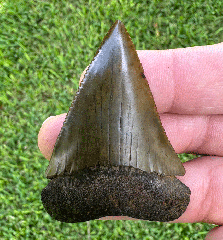
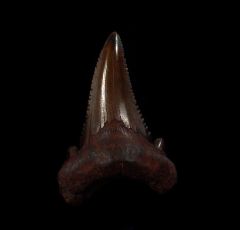
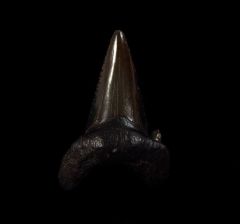
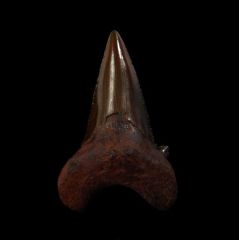
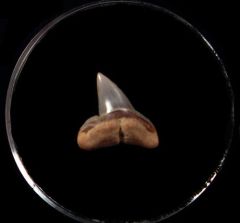
- Carcharodon carcharias$650.00
A rare EXTRA LARGE, Top Quality red site Carcharodon carcharias tooth from the Meherrin River, No Carolina. Rare GREEN with copper-red color with high gloss. High quality enamel. Extra wide root. Great preservation and condition - sharp serrations and tip. No repair or restoration. Exceptional color! An excellent, rare BIG Great White collector's tooth! Authenticity guaranteed.
NC202 SIZE: 2-11/16" (1-15/16" wide)
Note - Adding 5 copper-red Great White teeth in August 2025. --> Link to copper-red Great White
Learn More - Triceratops Epoccipital$175.00
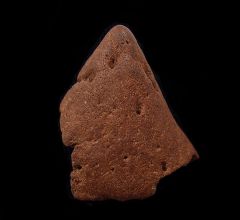
A rare, Top Quality Triceratops horridus epoccipital (frill ornament) from the late Cretaceous of northern North America. Triceratops was a large ceratopsian dinosaur found in the Hell Creek formation which is known for three horns and a large frill protecting its neck. This epoccipital has excellent detail preserved and great color / patina. The epoccipitals were triangular bone ornaments that lined the top of the frill. The young Triceratops had narrow and tall epoccipitals, older juvenile Triceratops had low and wide epoccipitals, and adult Triceratops no longer had this ornament. You can see this epoccipital is narrow which is a characteristic of an younger juvenile Triceratops. No repair or restoration. 100% natural specimen. Legally collected on private land in Powder River Co., Montana. Authenticity guaranteed.
DC64 SIZE: 1-1/4" Wide x 1-5/16" Height
Note - Adding 15 new Triceratops bones in September 2025. Link to Triceratops fossils catalog
Learn More - Triceratops Epoccipital$395.00
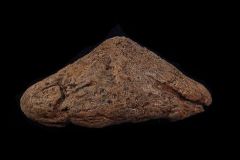
A rare, Top Quality Triceratops horridus epoccipital (frill ornament) from the late Cretaceous of northern North America. Triceratops was a large ceratopsian dinosaur found in the Hell Creek formation which is known for three horns and a large frill protecting its neck. This epoccipital has excellent detail preserved and great color / patina. The epoccipitals were triangular bone ornaments that lined the top of the frill. The young Triceratops had narrow and tall epoccipitals, older juvenile Triceratops had low and wide epoccipitals, and adult Triceratops no longer had this ornament. You can see this epoccipital is wide which is a characteristic of an older juvenile Triceratops. Some crack fill. No restoration. Legally collected on private land in Powder River Co., Montana. Authenticity guaranteed.
DC63 SIZE: 1-7/8" Wide x 1-1/4" Height
Note - Adding 15 new Triceratops bones in September 2025. Link to Triceratops fossils catalog
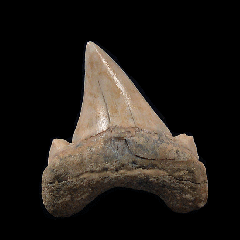
Learn More - Otodus obliquus (not serrated)$135.00
A very rare, early Otodus obliquus anterior tooth from Kzil-Orda Region, Kazakhstan. Otodus obliquus is the ancestor to O. auriculatus (see detailed discussion below) which leads to Megalodon. The bourlette is large and complete. Exhibits no serrations. The starting species to serrated Otodus teeth. These teeth exhibit very good color, gloss, and preservation. A rare, early Eocene (Ypresian) Auriculatus transition tooth. A very challenging tooth to find when building a Megalodon evolutionary set! No repair. Authenticity guaranteed. Note - This western Kazakhstan site is one of the few places in the world where the Otodus obliquus to Otodus auriculatus transition can be found in adjacent early Eocene formation units.
K562 SIZE: 1-1/4"
Note - Adding 24 Kazakh Auriculatus or transition teeth in July 2024. --> Link to Kazakh Auriculatus teeth.
Learn More - Otodus obliquus (not serrated)$200.00
A very rare, early Otodus obliquus anterior tooth from Kzil-Orda Region, Kazakhstan. Otodus obliquus is the ancestor to O. auriculatus (see detailed discussion below) which leads to Megalodon. The bourlette is large and complete. Exhibits no serrations. The starting species to serrated Otodus teeth. These teeth exhibit very good color, gloss, and preservation. A rare, early Eocene (Ypresian) Auriculatus transition tooth. A very challenging tooth to find when building a Megalodon evolutionary set! No repair. Authenticity guaranteed. Note - This western Kazakhstan site is one of the few places in the world where the Otodus obliquus to Otodus auriculatus transition can be found in adjacent early Eocene formation units.
K561 SIZE: 1-1/4"
Note - Adding 24 Kazakh Auriculatus or transition teeth in July 2024. --> Link to Kazakh Auriculatus teeth.
Learn More - Carcharhinus leucas$35.00
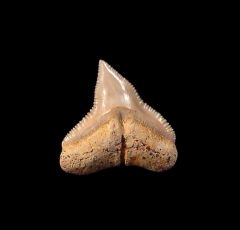
A Top Quality, Carcharhinus leucas, Bull shark, tooth from the Bahia Iglesa Fm. of Chile. The tooth is exceptionally clean and sharp. This Bull shark - Carcharhinus leucas is a from late Miocene deposit. Beautiful color and fantastic preservation! Authenticity guaranteed.
C807 SIZE: 3/4"+
Note - Adding 10 Chilean Bull shark teeth in Mar. 2020 -> Link to Chilean Bull shark teeth
Learn More - Otodus obliquus (Auriculatus ancestor)$0.00
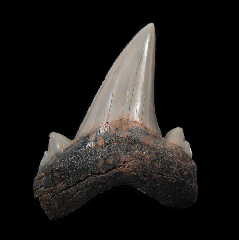
A very rare, Otodus obliquus tooth from the copper-red site of No. Carolina. The crown has no serrations. Typical Otodus side cusps. Complete root. Early Eocene - Ypresian age. A very rare collector's tooth. Very few Otodus teeth found at this site!
NC251 SIZE: 2-3/16"Note - Adding 9 early NC red site early Rics, transition teeth, and later Rics in June 2020. Link to NC Auriculatus teeth
Learn More - Otodus auriculatus (Early Eocene form)$0.00
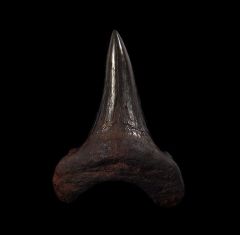
A very rare, Otodus auriculatus tooth from the copper-red site of No. Carolina. The crown has coarse serrations. The side cusps are typical of the Otodus obliquus. Complete root. Early Eocene - Ypresian age. A very rare collector's tooth. Very few Otodus auriculatus teeth (early form) found at this site!
NC253 SIZE: 2-1/2"Note - Adding 9 early NC red site early Rics, transition teeth, and later Rics in June 2020. Link to NC Auriculatus teeth
Learn More - Otodus auriculatus (Early Eocene form)$0.00
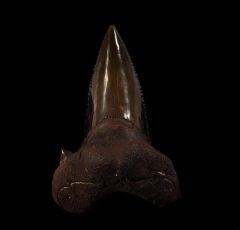
A very rare, Otodus auriculatus tooth from the copper-red site of No. Carolina. The crown has coarse serrations. The side cusps are typical of the Otodus obliquus. Complete root. Early Eocene - Ypresian age. A very rare collector's tooth. Very few Otodus auriculatus teeth (early form) found at this site!
NC254 SIZE: 2-1/16"Note - Adding 9 early NC red site early Rics, transition teeth, and later Rics in June 2020. Link to NC Auriculatus teeth
Learn More - Otodus auriculatus (Early Eocene form)$0.00
A very rare, Otodus auriculatus tooth from the copper-red site of No. Carolina. The crown has coarse serrations. The side cusps are typical of the Otodus obliquus. Complete root. Early Eocene - Ypresian age. A very rare collector's tooth. Very few Otodus auriculatus teeth (early form) found at this site!
NC255 SIZE: 1-11/16"Note - Adding 9 early NC red site early Rics, transition teeth, and later Rics in June 2020. Link to NC Auriculatus teeth
Learn More - Otodus aksuaticus (Early Eocene form)$0.00
A very rare, Otodus aksuaticus tooth from the copper-red site of No. Carolina. The crown has coarse serrations over the lower 2/3 of crown that disappear in the top 1/3 of crown. The side cusps are typical of the Otodus obliquus. Complete root. Early Eocene - Ypresian age. A very rare collector's tooth. Very few Otodus aksuaticus teeth found at this site!
NC252 SIZE: 2-3/8"Note - Adding 9 early NC red site early Rics, transition teeth, and later Rics in June 2020. Link to NC Auriculatus teeth
Learn More - Sphryna laevissimus$50.00
A GEM, LARGE Sphryna laevissimus, a Hammerhead shark tooth from Chile. One of the tougher species to find at the Bahia Inglesa Fm. site. Perfect tooth. Authenticity guaranteed. The BEST!
C800 SIZE: 1/2"
Learn More