Search results for: 'line pander first planus fish guid'
- Related search terms
- planus to good de
- line polk few planus first good
- line palm few planus first good
- guid good manu
- guid good mako
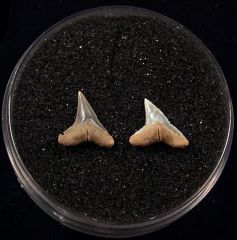
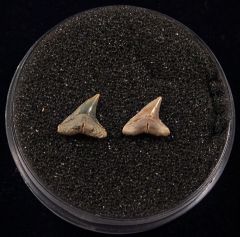
- Carcharhinus plumbeus (Sandbar shark)$17.50
A rare Carcharhinus plumbeus tooth, the Sandbar shark, from Sumatra, Indonesia. These teeth were deposited in the Telisa formation - a shallow marine environment during the middle Miocene (approx. 15 million years ago.) A very unique collector's tooth. D083 is the upper jaw tooth on the left. Authenticity guaranteed.
D083 (Left) SIZE: 7/16"+
Note - 50+ new Sumatran Carcharhinus teeth (4 species) added in January 2018. Link to Sumatran teeth.
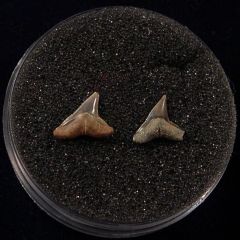
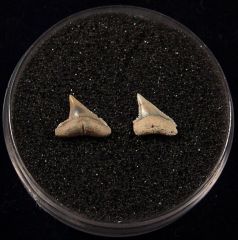
Learn More - Carcharhinus plumbeus (Sandbar shark)$4.00
A rare Carcharhinus plumbeus tooth, the Sandbar shark, from Sumatra, Indonesia. These teeth were deposited in the Telisa formation - a shallow marine environment during the middle Miocene (approx. 15 million years ago.) A very unique collector's tooth. D085 is the upper jaw tooth on the left. Authenticity guaranteed.
D085 (Left) SIZE: 7/16"
Note - 50+ new Sumatran Carcharhinus teeth (4 species) added in January 2018. Link to Sumatran teeth.
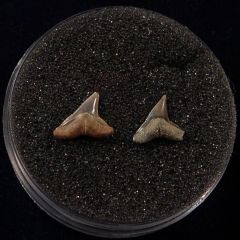
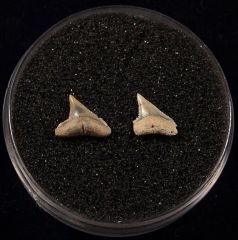
Learn More - Carcharhinus plumbeus (Sandbar shark)$12.00
A rare Carcharhinus plumbeus tooth, the Sandbar shark, from Sumatra, Indonesia. These teeth were deposited in the Telisa formation - a shallow marine environment during the middle Miocene (approx. 15 million years ago.) A very unique collector's tooth. D086 is the upper jaw tooth on the right. Authenticity guaranteed.
D086 (Right) SIZE: 7/16"
Note - 50+ new Sumatran Carcharhinus teeth (4 species) added in January 2018. Link to Sumatran teeth.
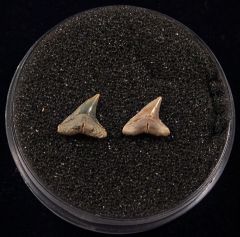
Learn More - Carcharhinus plumbeus (Sandbar shark)$12.00
A rare Carcharhinus plumbeus tooth, the Sandbar shark, from Sumatra, Indonesia. These teeth were deposited in the Telisa formation - a shallow marine environment during the middle Miocene (approx. 15 million years ago.) A very unique collector's tooth. D087 is the upper jaw tooth on the left. Authenticity guaranteed.
D087 (Left) SIZE: 3/8"
Note - 50+ new Sumatran Carcharhinus teeth (4 species) added in January 2018. Link to Sumatran teeth.
Learn More - Carcharhinus plumbeus (Sandbar shark)$12.00
A rare Carcharhinus plumbeus tooth, the Sandbar shark, from Sumatra, Indonesia. These teeth were deposited in the Telisa formation - a shallow marine environment during the middle Miocene (approx. 15 million years ago.) A very unique collector's tooth. D088 is the upper jaw tooth on the right. Authenticity guaranteed.
D088 (Right) SIZE: 3/8"
Note - 50+ new Sumatran Carcharhinus teeth (4 species) added in January 2018. Link to Sumatran teeth.
Learn More - Carcharhinus plumbeus (Sandbar shark)$12.00
A rare Carcharhinus plumbeus tooth, the Sandbar shark, from Sumatra, Indonesia. These teeth were deposited in the Telisa formation - a shallow marine environment during the middle Miocene (approx. 15 million years ago.) A very unique collector's tooth. D089 is the upper jaw tooth on the left. Authenticity guaranteed.
D089 (Left) SIZE: 3/8"
Note - 50+ new Sumatran Carcharhinus teeth (4 species) added in January 2018. Link to Sumatran teeth.
Learn More - Carcharhinus plumbeus (Sandbar shark)$8.50
A rare Carcharhinus plumbeus tooth, the Sandbar shark, from Sumatra, Indonesia. These teeth were deposited in the Telisa formation - a shallow marine environment during the middle Miocene (approx. 15 million years ago.) A very unique collector's tooth. D090 is the upper jaw tooth on the right. Authenticity guaranteed.
D090 (Right) SIZE: 3/8"
Note - 50+ new Sumatran Carcharhinus teeth (4 species) added in January 2018. Link to Sumatran teeth.
Learn More - Pappocetus lugardi (Ancient whale)$1,750.00
An Ultra Rare, Extra Large Pappocetus lugardi (Andrews, 1920) pre-molar tooth from Morocco. Pappocetus was in the Protocetidae family of ancient whales . Note - molar tooth design is one of the distinguishing features for indentifying this species. This material is a new find and represents one of the earliest transition forms of the whale. Pappocetus is a protocetid (see discussion below) and a large amphibious aquatic carnivore. Pappocetus is also an ancestor of the Basilosaurus. This material is complete and without repair. Crack fill only on some pieces. This is an opportunity to own an incredibly rare specimen from an early evolutionary stage of the modern whale. A fantastic collector's specimen. Authenticity guaranteed.
M2107 Size: 4-1/4" (straight line) (2-1/2" Width at base of crown)
Mid. Eocene (Bartonian) age (40 MYA)
Gueran, (25 km SE of Boujdour), Boujdour Basin
West Sahara, Morocco
Learn More - Triceratops Epoccipital$0.00
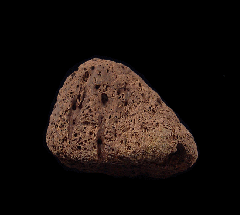
A rare, Top Quality Triceratops horridus epoccipital (frill ornament) from the late Cretaceous of northern North America. Triceratops was a large ceratopsian dinosaur found in the Hell Creek and Lance Creek formations which is know for three horns and a large frill protecting its neck. This epoccipital has excellent detail preserved and great color / patina. The epoccipitals were triangular bone ornaments that lined the top of the frill. The young Triceratops had narrow and tall epoccipitals, older juvenile Triceratops had low and wide epoccipitals, and adult Triceratops no longer had this ornament. You can see this epoccipital is narrow which are characteristics of a young Triceratops. Complete specimen. No repair or restoration. 100% natural specimen. Legally collected on private land in Garfield Co., Montana. Authenticity guaranteed.
DC65 SIZE: 1-3/8" Wide x 15/16" Height
Note - Adding 19 new Triceratops bones in May 2023. Link to Triceratops fossils catalog
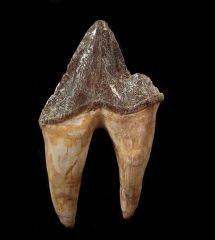
Learn More - Pappocetus lugardi (Ancient whale)$950.00
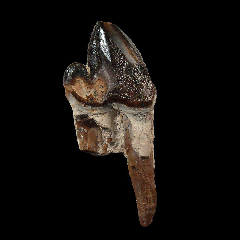
An Ultra Rare Pappocetus lugardi (Andrews, 1920) premolar tooth from Morocco. Pappocetus was in the Protocetidae family of ancient whales . Note - this tooth is a premolar with a natural wear facet and most of the root. This material is a new find and represents one of the earliest transition forms of the whale. Pappocetus is a protocetid (see discussion below) and a large amphibious aquatic carnivore. Pappocetus is also an ancestor of the Basilosaurus. This material is complete and without repair. This is an opportunity to own an incredibly rare specimen from an early evolutionary stage of the modern whale. A fantastic collector's specimen. Authenticity guaranteed.
M2101 Size: 3-5/8" (straight line)
Mid. Eocene (Bartonian) age (40 MYA)
Gueran, (25 km SE of Boujdour), Boujdour Basin
West Sahara, Morocco
Note - adding six early whale teeth in August 2023. Link to the early whales.
Learn More - Stegosaurus plate$17,500.00
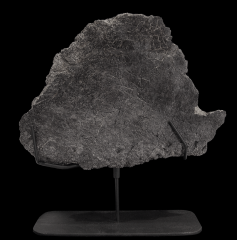
An ultra rare Top Quality, Stegosaurus plate. A February Fossil of the Month. This Stegosaurus plate is good sized and measures 17-1/2" wide x 13" high. The bone quality is exceptional with a black color. Excellent overall condition. There is limited crack fill, but there is no restoration. This is a large and all natural specimen. Stegosaurus was an iconic quadruped herbivore recognized by these plates lining its neck, back and tail during the late Jurassic. Legally collected on private land in the Morrison Fm., Bone Cabin Quarry, Albany Co., Wyoming. Authenticity guaranteed. A very rare collector's specimen! Note - This specimen has a custom steel display stand as shown. This specimen weighs 19 lbs. A supplemental shipping fee will be required for international orders.
STEG1 SIZE: 17-1/2" wide x 13" height (plate base is 2-1/2" thick) ; Height on display stand: 18"
Learn More - Triceratops Epoccipital$175.00
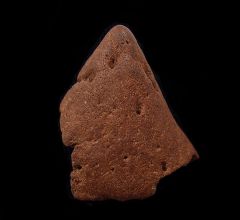
A rare, Top Quality Triceratops horridus epoccipital (frill ornament) from the late Cretaceous of northern North America. Triceratops was a large ceratopsian dinosaur found in the Hell Creek formation which is known for three horns and a large frill protecting its neck. This epoccipital has excellent detail preserved and great color / patina. The epoccipitals were triangular bone ornaments that lined the top of the frill. The young Triceratops had narrow and tall epoccipitals, older juvenile Triceratops had low and wide epoccipitals, and adult Triceratops no longer had this ornament. You can see this epoccipital is narrow which is a characteristic of an younger juvenile Triceratops. No repair or restoration. 100% natural specimen. Legally collected on private land in Powder River Co., Montana. Authenticity guaranteed.
DC64 SIZE: 1-1/4" Wide x 1-5/16" Height
Note - Adding 15 new Triceratops bones in September 2025. Link to Triceratops fossils catalog
Learn More