Search results for: 'fingernail parabolic frame detail guid'
- Did you mean
- fingernail parabolic frame detail good
- Related search terms
- fingernail parabolic flame detail good
- fingernail parabolic frame detail good
- fingernail parabolic flat deer good
- fingernail parabolic flat dure good
- fingernail parabolic flat du01 good
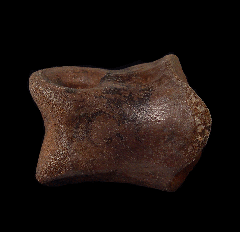
- Tyrannosaur toe bone$0.00
An ultra rare, Top Quality Tyrannosaur toe bone from the late Cretaceous (Campanian) in northern North America. Please note that this toe bone could Albertosaurus, Gorgosaurus or Daspletosaurus - see Detailed Discussion below. This toe bone measures 2-9/16" - an excellent Tyrannosaur toe bone. This could be the last or the next to last digit of the long toe (see Albertosaurus foot photo). The bone is high quality and complete with excellent color. Minor crack fill. No repair or restoration. Legally collected on private land in the Judith River Fm., Hill Co., Montana. Authenticity guaranteed. An excellent rare collector's toe bone. A rare find!
DY33 SIZE: 2-9/16" (End width: 1-3/4" & 2")
Note - Adding two rare Tyrannosaur toe bones in May 2024. Link to Tyrannosaur teeth catalog.
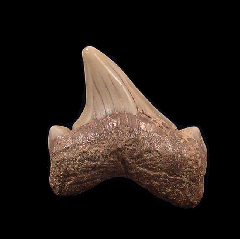
Learn More - Otodus obliquus (not serrated)$95.00
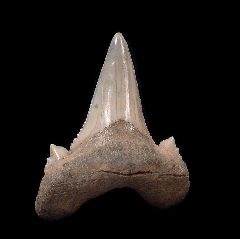
A very rare, early Otodus obliquus anterior tooth from Kzil-Orda Region, Kazakhstan. Otodus obliquus is the ancestor to O. auriculatus (see detailed discussion below) which leads to Megalodon. The bourlette is large and complete. Exhibits no serrations. The starting species to serrated Otodus teeth. These teeth exhibit very good color, gloss, and preservation. A rare, early Eocene (Ypresian) Auriculatus transition tooth. A very challenging tooth to find when building a Megalodon evolutionary set! No repair. Authenticity guaranteed. Note - This western Kazakhstan site is one of the few places in the world where the Otodus obliquus to Otodus auriculatus transition can be found in adjacent early Eocene formation units.
K561 SIZE: 1-1/16"
Note - Adding 24 Kazakh Auriculatus or transition teeth in July 2024. --> Link to Kazakh Auriculatus teeth.
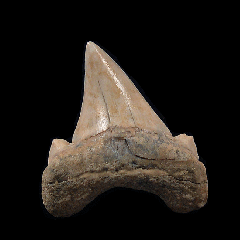
Learn More - Otodus obliquus (not serrated)$135.00
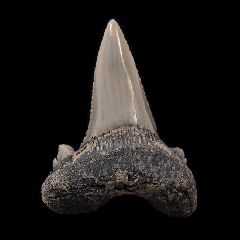
A very rare, early Otodus obliquus anterior tooth from Kzil-Orda Region, Kazakhstan. Otodus obliquus is the ancestor to O. auriculatus (see detailed discussion below) which leads to Megalodon. The bourlette is large and complete. Exhibits no serrations. The starting species to serrated Otodus teeth. These teeth exhibit very good color, gloss, and preservation. A rare, early Eocene (Ypresian) Auriculatus transition tooth. A very challenging tooth to find when building a Megalodon evolutionary set! No repair. Authenticity guaranteed. Note - This western Kazakhstan site is one of the few places in the world where the Otodus obliquus to Otodus auriculatus transition can be found in adjacent early Eocene formation units.
K562 SIZE: 1-1/4"
Note - Adding 24 Kazakh Auriculatus or transition teeth in July 2024. --> Link to Kazakh Auriculatus teeth.
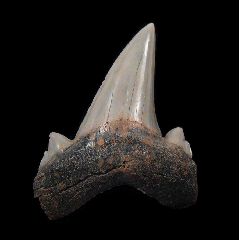
Learn More - Otodus obliquus (not serrated)$200.00
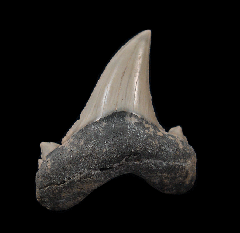
A very rare, early Otodus obliquus anterior tooth from Kzil-Orda Region, Kazakhstan. Otodus obliquus is the ancestor to O. auriculatus (see detailed discussion below) which leads to Megalodon. The bourlette is large and complete. Exhibits no serrations. The starting species to serrated Otodus teeth. These teeth exhibit very good color, gloss, and preservation. A rare, early Eocene (Ypresian) Auriculatus transition tooth. A very challenging tooth to find when building a Megalodon evolutionary set! No repair. Authenticity guaranteed. Note - This western Kazakhstan site is one of the few places in the world where the Otodus obliquus to Otodus auriculatus transition can be found in adjacent early Eocene formation units.
K561 SIZE: 1-1/4"
Note - Adding 24 Kazakh Auriculatus or transition teeth in July 2024. --> Link to Kazakh Auriculatus teeth.
Learn More - Otodus aksuaticus (Partial serrated)$325.00
A very rare, early Otodus aksuaticus anterior tooth from Kzil-Orda, Kazakhstan. A transitional tooth leading to O. auriculatus (see detailed discussion below) which leads to Megalodon. The bourlette is complete. This tooth exhibits small serrations along the lower 1/2 of the crown and micro serrations to the tip. These teeth exhibit excellent color, gloss, and preservation. A rare, early (Ypresian) Eocene Auriculatus transition tooth. A very challenging tooth to find when building a Megalodon evolutionary set! No repair or restoration. Authenticity guaranteed. This western Kazakhstan site is one of the few places in the world where the Otodus obliquus to Otodus auriculatus transition can be found in adjacent geologic layers.
K546 SIZE: 1-9/16"
Note - Adding 24 Kazakh Auriuclatus or transition teeth in July 2024. --> Link to Kazakh Auriculatus teeth.
Learn More - Otodus aksuaticus (Partial serrated)$350.00
A very rare, early Otodus aksuaticus anterior tooth from Kzil-Orda, Kazakhstan. A transitional tooth leading to O. auriculatus (see detailed discussion below) which leads to Megalodon. The bourlette is complete. This tooth exhibits small serrations along the lower 1/2 of the crown and micro serrations to the tip. These teeth exhibit excellent color, gloss, and preservation. A rare, early (Ypresian) Eocene Auriculatus transition tooth. A very challenging tooth to find when building a Megalodon evolutionary set! No repair or restoration. Authenticity guaranteed. This western Kazakhstan site is one of the few places in the world where the Otodus obliquus to Otodus auriculatus transition can be found in adjacent geologic layers.
K545 SIZE: 1-3/4"
Note - Adding 24 Kazakh Auriuclatus or transition teeth in July 2024. --> Link to Kazakh Auriculatus teeth.
Learn More - Otodus aksuaticus (Partial serrated)$425.00
A very rare, early Otodus aksuaticus lateral tooth from Kzil-Orda, Kazakhstan. A transitional tooth leading to O. auriculatus (see detailed discussion below) which leads to Megalodon. The bourlette is complete. This tooth exhibits small serrations along the lower 1/3 of the crown and micro serrations to the tip. These teeth exhibit excellent color, gloss, and preservation. A rare, early (Ypresian) Eocene Auriculatus transition tooth. A very challenging tooth to find when building a Megalodon evolutionary set! No repair or restoration. Authenticity guaranteed. This western Kazakhstan site is one of the few places in the world where the Otodus obliquus to Otodus auriculatus transition can be found in adjacent geologic layers.
K543 SIZE: 1-7/8"
Note - Adding 24 Kazakh Auriuclatus or transition teeth in July 2024. --> Link to Kazakh Auriculatus teeth.
Learn More - Triceratops Jaw Section$175.00
A Top Quality, Triceratops horridus jaw section (maxilla section) from the late Cretaceous of northern North America. Triceratops was a large ceratopsian dinosaur found in the Hell Creek formation which is known for the large frill protecting its neck. This is a great jaw section with excellent detail preserved and excellent color / patina. You can see the four complete tooth channels which are approximately 5/8" wide which is a characteristic of Triceratops and distinguishes it from a Hadrosaur which is closer to 1/4" wide. Triceratops bones are more difficult to find. No repair or restoration. 100% natural specimen. Legally collected on private land in Garfield Co., Montana. Authenticity guaranteed.
DC33 SIZE: 3-3/4" wide x 1"
Note - Adding 14 new Triceratops fossils in November 2024. Link to Triceratops fossils catalog
Learn More - Anchiceratops Epoccipital - Canada$0.00
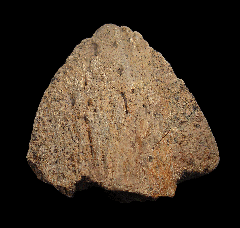
An EXTRA LARGE, rare, Top Quality Anchiceratops ornatus epoccipital (frill ornament) from the late Cretaceous of northern North America. An April Fossil of the Month. Anchiceratops was a large ceratopsian dinosaur found in the Horseshoe Canyon formation which has three horns and a large frill protecting its neck. This epoccipital has excellent detail preserved and great color / patina. The epoccipitals were triangular bone ornaments that lined the top of the frill. This epoccipital exhibits incredible detailnand is very thick & heavy. Near complete specimen with minor crack fill. No repair or restoration. Legally collected on private land in Alberta, Canada. Authenticity guaranteed. Disposition number 000028-0000029.
DC63c SIZE: 4" Height x 4" Wide x 1-7/8" Thick
Note - Adding 17 Canadian bones & teeth in April 2025. Link to Canadian Dinosaur fossils catalog
Learn More - Edestus heinrichi$70.00
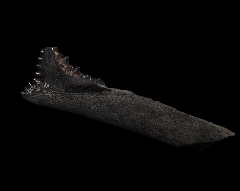
A very rare, Top Quality Edestus heinrichi shark tooth, from Herrin, Illinois. This is a Paleozoic shark that lived in swamps that our now underground coal deposits. Excellent preservation, serrations, and serration detail. The Edestus shark would have an upper and lower tooth whorl that are vertically opposed. Research showed that they could use their opposing teeth in a scissor-like motion or a vertical whipping motion to cut prey. It is the first animal to cut vertically. A very strange looking and unique acting shark. Shark recreation image is credited to Julio Lacerdo. These rare teeth are Pennsylvanian age from Illinois. No repair or restoration. Authenticity guaranteed.
I23 SIZE: 1-7/8" w/ root (7/8" crown)
Adding 22 Edestus shark specimens in July 2025. Link to Edestus shark.
Learn More - Edestus heinrichi$145.00
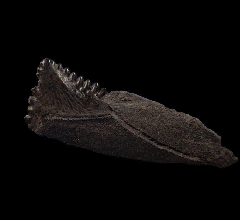
A very rare, Top Quality Edestus heinrichi shark tooth, from Herrin, Illinois. This is a Paleozoic shark that lived in swamps that our now underground coal deposits. Excellent preservation, serrations, and serration detail. The Edestus shark would have an upper and lower tooth whorl that are vertically opposed. Research showed that they could use their opposing teeth in a scissor-like motion or a vertical whipping motion to cut prey. It is the first animal to cut vertically. A very strange looking and unique acting shark. Shark recreation image is credited to Julio Lacerdo. These rare teeth are Pennsylvanian age from Illinois. No repair or restoration. Authenticity guaranteed.
I18 SIZE: 2-1/2" w/ root (1-1/4"crown)
Adding 22 Edestus shark teeth in July 2025. Link to Edestus shark.
Learn More - Edestus heinrichi$150.00
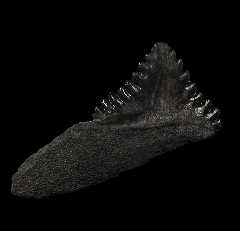
A very rare, Top Quality Edestus heinrichi shark tooth, from Herrin, Illinois. This is a Paleozoic shark that lived in swamps that our now underground coal deposits. Fantastic enamel quality. Excellent preservation, serrations, and serration detail. The Edestus shark would have an upper and lower tooth whorl that are vertically opposed. Research showed that they could use their opposing teeth in a scissor-like motion or a vertical whipping motion to cut prey. It is the first animal to cut vertically. A very strange looking and unique acting shark. Shark recreation image is credited to Julio Lacerdo. These rare teeth are Pennsylvanian age from Illinois. No repair or restoration. Authenticity guaranteed.
I17 SIZE: 1-5/8" w/ root (1-1/4"crown)
Adding 22 Edestus shark teeth in July 2025. Link to Edestus shark.
Learn More