Search results for: 'chile promedio de toed el ag de calhoun ga'
- Related search terms
- toed teeth f
- toed tooth necklac
- toed teeth f'
- toed metalico de 4 pulgadas 1 4
- chile promedio de toed el age de calhoun ga
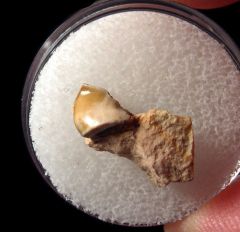
- Deltodus laminaris$45.00
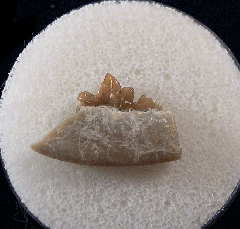
A Top Quality Deltodus laminaris tooth from the Paleozoic era in what is now Russia. Beautiful color. A well preserved specimen. No repair or restoration. Authenticity guaranteed. An excellent collector's tooth!
Age: Upper Carboniferous (310 MYA); Kasimov Fm.
Location: Achkasovo, Russia
R034 SIZE: 1/4" wide
Adding 65 Russian Paleozoic teeth in July 2021. Link to Russian Paleozoic teeth.
Learn More - Edestus heinrichi$70.00
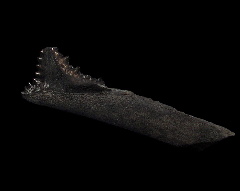
A very rare, Top Quality Edestus heinrichi shark tooth, from Herrin, Illinois. This is a Paleozoic shark that lived in swamps that our now underground coal deposits. Excellent preservation, serrations, and serration detail. The Edestus shark would have an upper and lower tooth whorl that are vertically opposed. Research showed that they could use their opposing teeth in a scissor-like motion or a vertical whipping motion to cut prey. It is the first animal to cut vertically. A very strange looking and unique acting shark. Shark recreation image is credited to Julio Lacerdo. These rare teeth are Pennsylvanian age from Illinois. No repair or restoration. Authenticity guaranteed.
I23 SIZE: 1-7/8" w/ root (7/8" crown)
Adding 22 Edestus shark specimens in July 2025. Link to Edestus shark.
Learn More - Edestus heinrichi$145.00
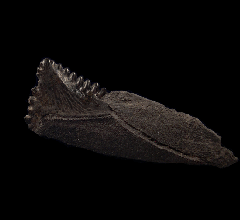
A very rare, Top Quality Edestus heinrichi shark tooth, from Herrin, Illinois. This is a Paleozoic shark that lived in swamps that our now underground coal deposits. Excellent preservation, serrations, and serration detail. The Edestus shark would have an upper and lower tooth whorl that are vertically opposed. Research showed that they could use their opposing teeth in a scissor-like motion or a vertical whipping motion to cut prey. It is the first animal to cut vertically. A very strange looking and unique acting shark. Shark recreation image is credited to Julio Lacerdo. These rare teeth are Pennsylvanian age from Illinois. No repair or restoration. Authenticity guaranteed.
I18 SIZE: 2-1/2" w/ root (1-1/4"crown)
Adding 22 Edestus shark teeth in July 2025. Link to Edestus shark.
Learn More - Edestus heinrichi$875.00
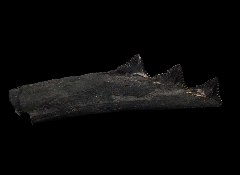
An ultra rare, LARGE, Top Quality Edestus heinrichi partial tooth whorl, from Herrin, Illinois. A July Fossil of the Month. This is a Paleozoic shark that lived in swamps that our now underground coal deposits. An ultra rare triple crown whorl section with exceptional quality crowns. Excellent preservation, serrations, and serration detail. The Edestus shark would have an upper and lower tooth whorl that are vertically opposed. Research showed that they could use their opposing teeth in a scissor-like motion or a vertical whipping motion to cut prey. It is the first animal to cut vertically. A very strange looking and unique acting shark. Shark recreation image is credited to Julio Lacerdo. These rare teeth are Pennsylvanian age from Illinois. No repair or restoration. Authenticity guaranteed.
I03 SIZE: 6-5/8" w/ root (1-7/8" crown)
Adding 22 Edestus shark teeth in July 2025. Link to Edestus shark.
Learn More - Ischyromys sp.$55.00
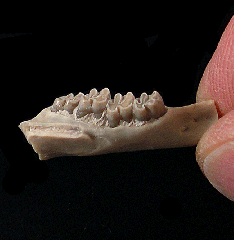
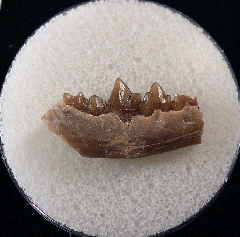
An extinct early ground squirrel jaw (Ischyromys sp.) from Sioux Co., Nebraska. Ischyromys was one of many mammals that thrived in the Early Oligocene in North America. Found in the Brule Fm. (Rupelian) 33 - 30 million years ago. A very well preserved specimen. No repair or restoration. Authenticity guaranteed. This item comes with a 2"x 2" floating frame display.
WR11 Size: 1-1/8"
Name: Ischyromys sp.
Age: Oligocene
Location: Sioux Co., Nebraska
Note - Posting 49 Oligocene Mammal fossils in January 2025. Link to Oligocene Mammal Fossils
Learn More - Hesperocyon gregarius - Extinct Dog-like Canid$75.00
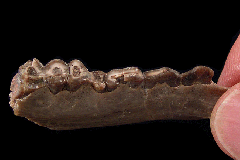
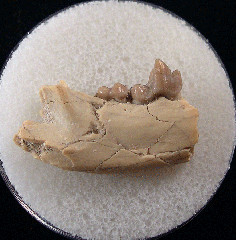
An extinct early Dog-like Canid jaw (Hesperocyon gregarius) from Sioux Co., Nebraska. Hesperocyon gregarius was one of many mammals that thrived in the Early Oligocene in North America. Found in the Brule Fm. (Rupelian) 33 - 30 million years ago. A very well preserved specimen. No repair or restoration. Authenticity guaranteed. Note - this animal was quite old and wore down its teeth.
WR47 Size: 2-3/8"
Name: Hesperocyon gregarius
Age: Oligocene
Location: Sioux Co., Nebraska
Note - Posting 49 Oligocene Mammal fossils in January 2025. Link to Oligocene Mammal Fossils
Learn More - Hesperocyon gregarius - Extinct Dog-like Canid$50.00
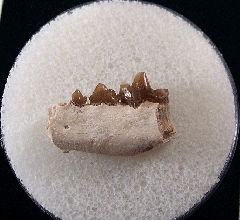
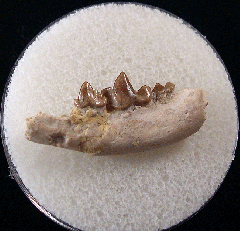
An extinct early Dog-like Canid jaw (Hesperocyon gregarius) from Sioux Co., Nebraska. Hesperocyon gregarius was one of many mammals that thrived in the Early Oligocene in North America. Found in the Brule Fm. (Rupelian) 33 - 30 million years ago. A very well preserved specimen. No repair or restoration. Authenticity guaranteed. This item comes witha 2"x 2" floating frame display.
WR46 Size: 15/16"
Name: Hesperocyon gregarius
Age: Oligocene
Location: Sioux Co., Nebraska
Note - Posting 49 Oligocene Mammal fossils in January 2025. Link to Oligocene Mammal Fossils
Learn More - Hesperocyon gregarius - Extinct Dog-like Canid$55.00
An extinct early Dog-like Canid jaw (Hesperocyon gregarius) from Sioux Co., Nebraska. Hesperocyon gregarius was one of many mammals that thrived in the Early Oligocene in North America. Found in the Brule Fm. (Rupelian) 33 - 30 million years ago. A very well preserved specimen. No repair or restoration. Authenticity guaranteed. This item comes witha 2"x 2" floating frame display.
WR44 Size: 7/8"
Name: Hesperocyon gregarius
Age: Oligocene
Location: Sioux Co., Nebraska
Note - Posting 49 Oligocene Mammal fossils in January 2025. Link to Oligocene Mammal Fossils
Learn More - Hesperocyon gregarius - Extinct Dog-like Canid$55.00
An extinct early Dog-like Canid jaw (Hesperocyon gregarius) from Sioux Co., Nebraska. Hesperocyon gregarius was one of many mammals that thrived in the Early Oligocene in North America. Found in the Brule Fm. (Rupelian) 33 - 30 million years ago. A very well preserved specimen. No repair or restoration. Authenticity guaranteed. This item comes witha 2"x 2" floating frame display.
WR43 Size: 1-1/8"
Name: Hesperocyon gregarius
Age: Oligocene
Location: Sioux Co., Nebraska
Note - Posting 49 Oligocene Mammal fossils in January 2025. Link to Oligocene Mammal Fossils
Learn More - Hesperocyon gregarius - Extinct Dog-like Canid$60.00
An extinct early Dog-like Canid jaw (Hesperocyon gregarius) from Sioux Co., Nebraska. Hesperocyon gregarius was one of many mammals that thrived in the Early Oligocene in North America. Found in the Brule Fm. (Rupelian) 33 - 30 million years ago. A very well preserved specimen. No repair or restoration. Authenticity guaranteed. This item comes witha 2"x 2" floating frame display.
WR42 Size: 1-3/16"
Name: Hesperocyon gregarius
Age: Oligocene
Location: Sioux Co., Nebraska
Note - Posting 49 Oligocene Mammal fossils in January 2025. Link to Oligocene Mammal Fossils
Learn More - Hesperocyon gregarius - Extinct Dog-like Canid$60.00
An extinct early Dog-like Canid jaw (Hesperocyon gregarius) from Sioux Co., Nebraska. Hesperocyon gregarius was one of many mammals that thrived in the Early Oligocene in North America. Found in the Brule Fm. (Rupelian) 33 - 30 million years ago. A very well preserved specimen. No repair or restoration. Authenticity guaranteed. This item comes witha 2"x 2" floating frame display.
WR41 Size: 1-1/4"
Name: Hesperocyon gregarius
Age: Oligocene
Location: Sioux Co., Nebraska
Note - Posting 49 Oligocene Mammal fossils in January 2025. Link to Oligocene Mammal Fossils
Learn More - Merycoidodon culbertson - Extinct Oreodont$250.00
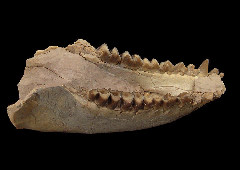
An extinct extinct Oreodont jaw (Merycoidodon culbertson) from Converse Co., Wyoming. Merycoidodon culbertson was one of many mammals that thrived in the Early Oligocene in North America. Found in the Brule Fm. (Rupelian) 33 - 30 million years ago. A very well preserved specimen. No repair or restoration. Authenticity guaranteed.
WR61 Size: 4-5/8" long x 1-1/4" wide x 1-1/2" height
Name: Merycoidodon culbertson
Age: Oligocene
Location: Converse Co., Wyoming
Note - Posting 49 Oligocene Mammal fossils in January 2025. Link to Oligocene Mammal Fossils
Learn More