Search results for: 'recurv celular peru non de 8 altu'
- Did you mean
- recurv celular peru none de 8 altu
- Related search terms
- none me of new postag by enabl lamna nasus
- none and good gem shows
- none and good gem sh02
- none and good gem sh01
- none and good gem show
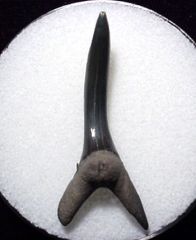
- Striatolamia macrota$20.00
An extra large anterior Striatolamia macrota tooth. This tooth is near perfect.
MC341 SIZE: 1-7/16"
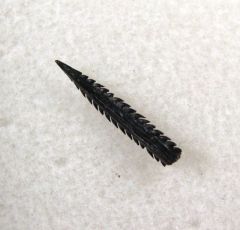
Learn More - Myliobatis latidens$35.00
A rare Myliobatis latidens stinger spine. An Eagle ray species. Needle sharp!
MC771 SIZE: 1/2"
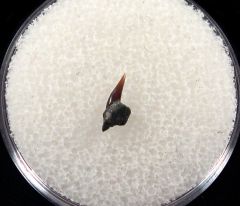
Learn More - Hexanchus microdon$95.00
A Very Rare, Top Quality Hexanchus microdon upper jaw tooth from Hornby Island, British Columbia, Canada. This is a species from the Late Cretaceous deep water Northumberland Formation deposit. A species of Hexanchiforme shark. The crown is complete and the root is complete. High quality enamel. No repair. A very difficult tooth to locate and an excellent collector's tooth. Authenticity guaranteed. This incredible specimen is from a 20 year old collection.
CD53 SIZE: 5/16"
Note - Adding 64 Hornby Island deep water shark teeth. -> Link to Hornby Island shark teeth.
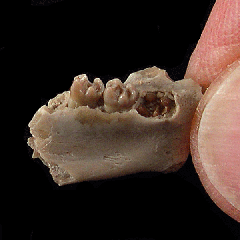
Learn More - Ischyromys sp.$35.00
An extinct early ground squirrel jaw (Ischyromys sp.) from Sioux Co., Nebraska. Ischyromys was one of many mammals that thrived in the Early Oligocene in North America. Found in the Brule Fm. (Rupelian) 33 - 30 million years ago. A very well preserved specimen. No repair or restoration. Authenticity guaranteed. This item comes with a 2"x 2" floating frame display.
WR15 Size: 13/16"
Name: Ischyromys sp.
Age: Oligocene
Location: Sioux Co., Nebraska
Note - Posting 49 Oligocene Mammal fossils in January 2025. Link to Oligocene Mammal Fossils
Learn More - Orodus sp.$65.00
A rare, Top Quality Orodus sp., an extinct Orodontiform shark tooth, from the Paleozoic era in Indiana. An excellent primary cusp. Great color and articulation. A well preserved specimen. No repair or restoration. Authenticity guaranteed. An excellent collector's tooth!
Age: Middle Mississippian (347 MYA); Harrodsburg Limestone Fm.
Location: Washington Co., Indiana
Z014 SIZE: 1/2"
Adding 30 US Paleozoic teeth in July 2025 --> Link to US Paleozoic teeth
Learn More - Triceratops Frill Section$0.00
A Top Quality, Triceratops horridus frill section from the late Cretaceous of northern North America. Triceratops was a large ceratopsian dinosaur found in the Hell Creek and Lance Creek formations which is know for three horns and the large frill protecting its neck. This is a great frill section with excellent detail preserved. You can see all of the natural blood grooves across the surface of the frill. No repair or restoration. 100% natural specimen. Legally collected on private land in Garfield Co., Montana. Authenticity guaranteed.
DC50 SIZE: 3-1/4" Wide x 1-5/8" High x 1-1/4" Thick
Note - Adding 19 new Triceratops bones in May 2023. Link to Triceratops fossils catalog
Learn More - Triceratops Brow Horn Section$175.00
A Top Quality, Triceratops horridus brow horn section from the late Cretaceous of northern North America. Triceratops was a large ceratopsian dinosaur found in the Hell Creek formation which is known for three horns and the large frill protecting its neck. This is a great brow horn wedge section with excellent detail preserved. Incredible surface and patina. You can see all of the natural blood grooves across the surface of this horn. No repair or restoration. 100% natural specimen. Legally collected on private land in Carter Co., Montana. Authenticity guaranteed.
DC55 SIZE: 2-3/4" Wide x 1-1/8" Thick
Note - Adding 15 new Triceratops bones in September 2025. Link to Triceratops fossils catalog
Learn More - Otodus pavlovi$0.00
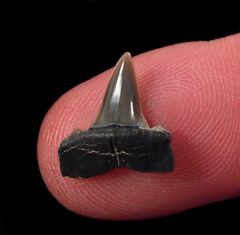
A very rare, early Otodus pavlovi upper jaw, lateral tooth from Aktulagay, western Kazakhstan. Otodus pavlovi was the smaller Otodus shark species present in this early Eocene deposit. The side cusps are large and complete. Exhibits no serrations. These teeth exhibit very good color, gloss, and preservation. No repair. Authenticity guaranteed. Perfect tooth.
K532 SIZE: 11/16"
Note - Adding 18 Kazakh Auriculatus or transition teeth in April 2020. --> Link to Kazakh Auriculatus teeth.
Learn More - Otodus pavlovi$0.00
A very rare, early Otodus pavlovi upper jaw, lateral tooth from Aktulagay, western Kazakhstan. Otodus pavlovi was the smaller Otodus shark species present in this early Eocene deposit. The side cusps are large and complete. Exhibits no serrations. These teeth exhibit very good color, gloss, and preservation. No repair. Authenticity guaranteed. Perfect tooth.
K531 SIZE: 13/16"
Note - Adding 18 Kazakh Auriculatus or transition teeth in April 2020. --> Link to Kazakh Auriculatus teeth.
Learn More - Macrorhizodus nolfi$0.00
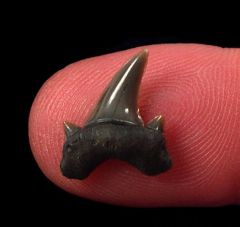
A very rare, early Macrorhizodus nolfi upper jaw, lateral tooth from Aktulagay, western Kazakhstan. Macrorhizodus nolfi is a Lamnidae shark and an early Mako shark (Isurus praecursor) relative in this early Eocene deposit. The side cusps are complete. No repair. Authenticity guaranteed. Perfect tooth.
K572 SIZE: 3/4"
Note - Adding 18 Kazakh Auriculatus or transition teeth in April 2020. --> Link to Kazakh Auriculatus teeth.
Learn More - Otodus obliquus (not serrated)$95.00
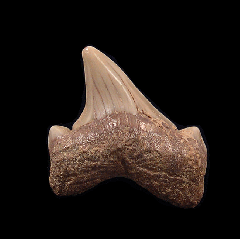
A very rare, early Otodus obliquus anterior tooth from Kzil-Orda Region, Kazakhstan. Otodus obliquus is the ancestor to O. auriculatus (see detailed discussion below) which leads to Megalodon. The bourlette is large and complete. Exhibits no serrations. The starting species to serrated Otodus teeth. These teeth exhibit very good color, gloss, and preservation. A rare, early Eocene (Ypresian) Auriculatus transition tooth. A very challenging tooth to find when building a Megalodon evolutionary set! No repair. Authenticity guaranteed. Note - This western Kazakhstan site is one of the few places in the world where the Otodus obliquus to Otodus auriculatus transition can be found in adjacent early Eocene formation units.
K561 SIZE: 1-1/16"
Note - Adding 24 Kazakh Auriculatus or transition teeth in July 2024. --> Link to Kazakh Auriculatus teeth.
Learn More - Otodus obliquus (not serrated)$135.00
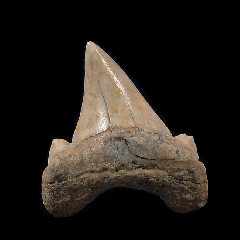
A very rare, early Otodus obliquus anterior tooth from Kzil-Orda Region, Kazakhstan. Otodus obliquus is the ancestor to O. auriculatus (see detailed discussion below) which leads to Megalodon. The bourlette is large and complete. Exhibits no serrations. The starting species to serrated Otodus teeth. These teeth exhibit very good color, gloss, and preservation. A rare, early Eocene (Ypresian) Auriculatus transition tooth. A very challenging tooth to find when building a Megalodon evolutionary set! No repair. Authenticity guaranteed. Note - This western Kazakhstan site is one of the few places in the world where the Otodus obliquus to Otodus auriculatus transition can be found in adjacent early Eocene formation units.
K562 SIZE: 1-1/4"
Note - Adding 24 Kazakh Auriculatus or transition teeth in July 2024. --> Link to Kazakh Auriculatus teeth.
Learn More