Search results for: 'ancep silver bony i non your like'
- Related search terms
- none me of new postag by enabl lamna nasus
- none and good gem shows
- none and good gem sh02
- none and good gem sh01
- none and good gem show
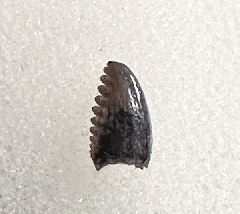
- Pectinodon bakkeri (Hell Creek Fm)$525.00
An EXTRA LARGE, RARE Pectinodon bakkeri tooth from the Hell Creek Fm. of western North America. A premaxillary tooth. Note - this tooth has the same design as Archeroraptor PM tooth (prior Zapsalis) which was thought to be used to preen feathers. An April Fossil of the Month. Pectinodon is a small Troodontid and has teeth similar to Troodon. Pectinodon are known for their very unique shaped teeth with unusually large distal serrations. The enamel is excellent with a great brown color. Excellent large posterior and no anterior serrations. No repair or restoration. Legally collected on private land in the Hell Creek Fm., Meade Co., So. Dakota. Authenticity guaranteed. This is your chance to own a rare, quality Pectinodon tooth. Near perfect tooth. Note - A gem jar will be included as photographed.
DO11 SIZE: 6 mm
Note - Adding 27 new Troodontid teeth in April 2024. Link to Pectinodon catalog.
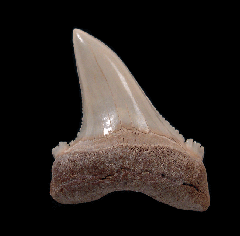
Learn More - Otodus aksuaticus (Partial serrated)$450.00
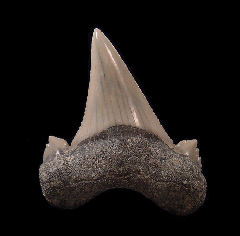
A very rare, early Otodus aksuaticus upper jaw, lateral tooth from Kzil-Orda, Kazakhstan. A transitional tooth leading to O. auriculatus (see detailed discussion below) which leads to Megalodon. A July Fossil of the Month. The bourlette is complete. This tooth exhibits small serrations along the lower 1/3 of the crown and micro serrations to the tip. These teeth exhibit excellent color, gloss, and preservation. A rare, early (Ypresian) Eocene Auriculatus transition tooth. A very challenging tooth to find when building a Megalodon evolutionary set! No repair or restoration. Authenticity guaranteed. This western Kazakhstan site is one of the few places in the world where the Otodus obliquus to Otodus auriculatus transition can be found in adjacent geologic layers.
K547 SIZE: 1-15/16"
Note - Adding 24 Kazakh Auriuclatus or transition teeth in July 2024. --> Link to Kazakh Auriculatus teeth.
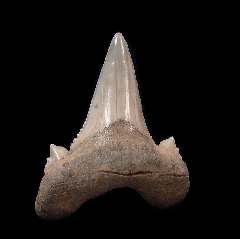
Learn More - Otodus aksuaticus (Partial serrated)$325.00
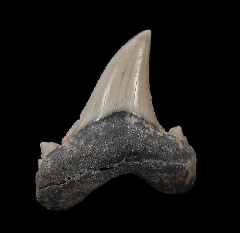
A very rare, early Otodus aksuaticus anterior tooth from Kzil-Orda, Kazakhstan. A transitional tooth leading to O. auriculatus (see detailed discussion below) which leads to Megalodon. The bourlette is complete. This tooth exhibits small serrations along the lower 1/2 of the crown and micro serrations to the tip. These teeth exhibit excellent color, gloss, and preservation. A rare, early (Ypresian) Eocene Auriculatus transition tooth. A very challenging tooth to find when building a Megalodon evolutionary set! No repair or restoration. Authenticity guaranteed. This western Kazakhstan site is one of the few places in the world where the Otodus obliquus to Otodus auriculatus transition can be found in adjacent geologic layers.
K546 SIZE: 1-9/16"
Note - Adding 24 Kazakh Auriuclatus or transition teeth in July 2024. --> Link to Kazakh Auriculatus teeth.
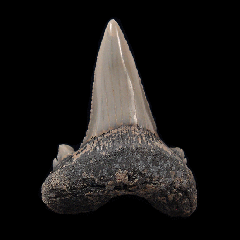
Learn More - Otodus aksuaticus (Partial serrated)$350.00
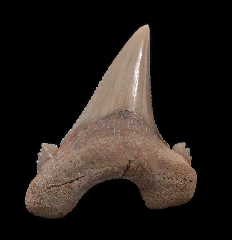
A very rare, early Otodus aksuaticus anterior tooth from Kzil-Orda, Kazakhstan. A transitional tooth leading to O. auriculatus (see detailed discussion below) which leads to Megalodon. The bourlette is complete. This tooth exhibits small serrations along the lower 1/2 of the crown and micro serrations to the tip. These teeth exhibit excellent color, gloss, and preservation. A rare, early (Ypresian) Eocene Auriculatus transition tooth. A very challenging tooth to find when building a Megalodon evolutionary set! No repair or restoration. Authenticity guaranteed. This western Kazakhstan site is one of the few places in the world where the Otodus obliquus to Otodus auriculatus transition can be found in adjacent geologic layers.
K545 SIZE: 1-3/4"
Note - Adding 24 Kazakh Auriuclatus or transition teeth in July 2024. --> Link to Kazakh Auriculatus teeth.
Learn More - Otodus aksuaticus (Partial serrated)$425.00
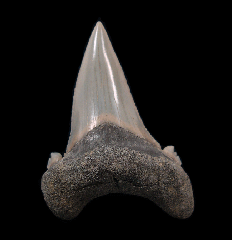
A very rare, early Otodus aksuaticus lateral tooth from Kzil-Orda, Kazakhstan. A transitional tooth leading to O. auriculatus (see detailed discussion below) which leads to Megalodon. A July Fossil of the Month.The bourlette is complete. This tooth exhibits small serrations along the lower 1/2 of the crown and micro serrations to the tip. These teeth exhibit excellent color, gloss, and preservation. A rare, early (Ypresian) Eocene Auriculatus transition tooth. A very challenging tooth to find when building a Megalodon evolutionary set! No repair or restoration. Authenticity guaranteed. This western Kazakhstan site is one of the few places in the world where the Otodus obliquus to Otodus auriculatus transition can be found in adjacent geologic layers.
K544 SIZE: 1-3/4"
Note - Adding 24 Kazakh Auriuclatus or transition teeth in July 2024. --> Link to Kazakh Auriculatus teeth.
Learn More - Otodus aksuaticus (Partial serrated)$425.00
A very rare, early Otodus aksuaticus lateral tooth from Kzil-Orda, Kazakhstan. A transitional tooth leading to O. auriculatus (see detailed discussion below) which leads to Megalodon. The bourlette is complete. This tooth exhibits small serrations along the lower 1/3 of the crown and micro serrations to the tip. These teeth exhibit excellent color, gloss, and preservation. A rare, early (Ypresian) Eocene Auriculatus transition tooth. A very challenging tooth to find when building a Megalodon evolutionary set! No repair or restoration. Authenticity guaranteed. This western Kazakhstan site is one of the few places in the world where the Otodus obliquus to Otodus auriculatus transition can be found in adjacent geologic layers.
K543 SIZE: 1-7/8"
Note - Adding 24 Kazakh Auriuclatus or transition teeth in July 2024. --> Link to Kazakh Auriculatus teeth.
Learn More - Otodus aksuaticus (Partial serrated)$550.00
A very rare, early Otodus aksuaticus lateral tooth from Kzil-Orda, Kazakhstan. A transitional tooth leading to O. auriculatus (see detailed discussion below) which leads to Megalodon. A July Fossil of the Month. The bourlette is complete. This tooth exhibits small serrations along the lower 1/2 of the crown and micro serrations to the tip. These teeth exhibit excellent color, gloss, and preservation. A rare, early (Ypresian) Eocene Auriculatus transition tooth. A very challenging tooth to find when building a Megalodon evolutionary set! No repair or restoration. Authenticity guaranteed. This western Kazakhstan site is one of the few places in the world where the Otodus obliquus to Otodus auriculatus transition can be found in adjacent geologic layers.
K542 SIZE: 2-1/8"
Note - Adding 24 Kazakh Auriuclatus or transition teeth in July 2024. --> Link to Kazakh Auriculatus teeth.
Learn More - Otodus aksuaticus (Partial serrated)$525.00
A very rare, early Otodus aksuaticus anterior tooth from Kzil-Orda, Kazakhstan. A transitional tooth leading to O. auriculatus (see detailed discussion below) which leads to Megalodon. A July Fossil of the Month. The bourlette is complete. This tooth exhibits small serrations along the lower 1/2 of the crown and micro serrations to the tip. These teeth exhibit excellent color, gloss, and preservation. A rare, early (Ypresian) Eocene Auriculatus transition tooth. A very challenging tooth to find when building a Megalodon evolutionary set! No repair or restoration. Authenticity guaranteed. This western Kazakhstan site is one of the few places in the world where the Otodus obliquus to Otodus auriculatus transition can be found in adjacent geologic layers.
K542 SIZE: 2-3/16"
Note - Adding 24 Kazakh Auriuclatus or transition teeth in July 2024. --> Link to Kazakh Auriculatus teeth.
Learn More - Edestus heinrichi$0.00
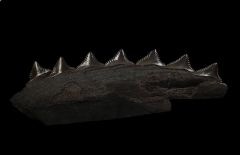
An ultra rare, LARGE Top Quality Edestus heinrichi shark whorl with 7 big crowns, from Herrin, Illinois. An October Fossil of the Month. This is a Paleozoic shark that lived in swamps that our now underground coal deposits. Excellent preservation and serrations. This whorl is incredible teeth detail - the first 5 crowns are all natural and the the last two have some top repair. One of the finest whorls that I have had. The Edestus shark would have an upper and lower tooth whorl that are vertically opposed. Research showed that they could use their opposing teeth in a scissor-like motion to cut prey. It is the first animal to cut vertically. A very strange looking and unique acting shark. Shark recreation image is credited to Julio Lacerdo. These rare teeth are Pennsylvanian age from Illinois. Note - Two crown tips were professionally retored. Authenticity guaranteed. Seven plus crown whorl sections are ultra rare! The BEST.
I01 BoP3 SIZE: 1-3/4" teeth (Whorl : 10-1/4" length)
Adding 11 Edestus shark specimens in October 2021. Link to Edestus shark.
Learn More - Otodus chubutensis$0.00
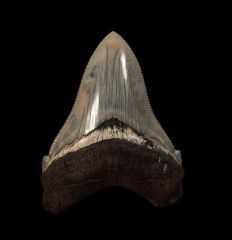
A GEM, Lee Creek Carcharocles chubutensis, a C. megalodon predecessor, from Aurora, No. Carolina. This tooth was given the name the "Oreo Chub" with its black and white bourlette. Very rare colors for Lee Creek. A May Fossil of the Month. This tooth was found in the Pungo River Formation (middle Miocene age). Note the crown exhibits large cusplike bumps at the base of the serrated edge and the root ends also show grooves where the teeth interlocked. These are characteristic traits of the Lee Creek early Meg - C. chubutensis. A gorgeous tan & blue colored crown with an incredible black & white bourlette. Fantastic serrations with a nearly perfect with damage to one. The root is dark brown with small hydration cracks. Highest quality enamel! Excellent color! No repair or restoration. Authenticity guaranteed. I have only seen one LC Chub like this one - the "Oreo Chub" is a Lee Creek rarity!
LC012 BoP Size: 3-1/16"
Note - Adding 10 New Lee Creek Megalodon & Chubutensis Teeth In May 2020. -> Link to LC Megs & Chubs
Learn More - Edestus heinrichi$950.00
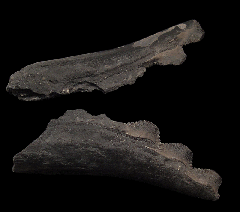
An ultra rare, Top Quality Edestus heinrichi associted pair of whorls, from Herrin, Illinois. A July Fossil of the Month. This is a Paleozoic shark that lived in swamps that our now underground coal deposits. An ultra rare assoiiated pair of tooth whorls. Note - the crown tips are naturally rounded (polished) which thought to be due to wear from the vertical whipping motion used to slice prey. Excellent preservation, serrations, and serration detail. The Edestus shark would have an upper and lower tooth whorl that are vertically opposed. Research showed that they could use their opposing teeth in a scissor-like motion or a vertical whipping motion to cut prey. It is the first animal to cut vertically. A very strange looking and unique acting shark. Shark recreation image is credited to Julio Lacerdo. These rare teeth are Pennsylvanian age from Illinois. No repair or restoration. Authenticity guaranteed. This is the first associated whorl pait that I have seen.
I02 SIZE: 5" & 4-3/4" w/ root (1-1/4"+ crowns)
Adding 22 Edestus shark teeth in July 2025. Link to Edestus shark.
Learn More - Knightia eocaena$27.50
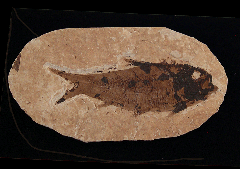
A Knightia fish from the Split-fish layer, Green River Fm., Lincoln Co. Wyoming. The Knightia eocaena is a Herring-like fish from the Eocene age (50 MYA). Very good preservation and preparation. No repair or restoration. All natural. Authenticity guaranteed. An excellent display piece!
X464b SIZE: 4"
Note - Adding 31 Green River Fm. Fossil fish in November 2024 --> Link to Fossil Fish
Learn More