Search results for: 'line latu about you veri appli'
- Related search terms
- line polk few planus first good
- line palm few planus first good
- young good the new tea thick with frame
- young good the new tea third white frame
- appli good hopei 4
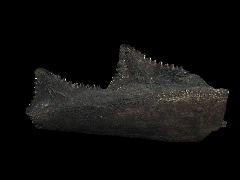
- Edestus heinrichi$450.00
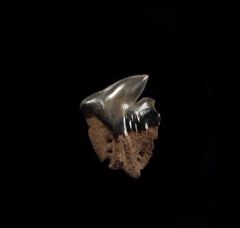
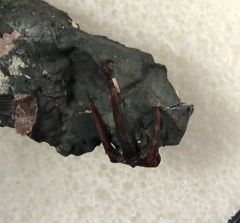
A very rare, LARGE, Top Quality Edestus heinrichi shark tooth, from Herrin, Illinois. This is a Paleozoic shark that lived in swamps that our now underground coal deposits. A rare double crown section with lots of pyrite. Excellent preservation, serrations, and serration detail. The Edestus shark would have an upper and lower tooth whorl that are vertically opposed. Research showed that they could use their opposing teeth in a scissor-like motion or a vertical whipping motion to cut prey. It is the first animal to cut vertically. A very strange looking and unique acting shark. Shark recreation image is credited to Julio Lacerdo. These rare teeth are Pennsylvanian age from Illinois. No repair or restoration. Authenticity guaranteed.
I04 SIZE: 3" w/ root (1-7/8" crown)
Adding 22 Edestus shark teeth in July 2025. Link to Edestus shark.
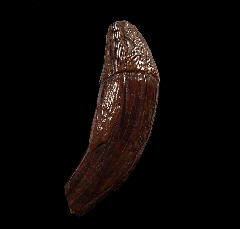
Learn More - Basilosaurus cetoides (Archaeocete whale)$895.00
An EXTRA LARGE TOP QUALITY, very rare Basilosaurus cetoides, an Archaeocete whale tooth found in the Suwanee River, Suwanee Co., Florida. An excellent canine tooth (see photo for tooth positions). A July Fossil of the Month. An excellent brown colored crown and root. Nicely articulated. Note - enamel tip shows a wear pattern on crown. Whales do not shed their teeth like the sharks so there teeth will wear with age. An Eocene age tooth (35 MYA). No repair or restoration. A great Archaeocete tooth from the Suwanee River, Florida. A very rare collector's tooth from an old collection. A massive canine tooth!
F1001 SIZE: 5-1/16" (1-1/2" wide)
Note - Adding a collection of 27 Basilosaurus teeth from Florida and Georgia in July 2023. Link to Basilosaurus teeth.
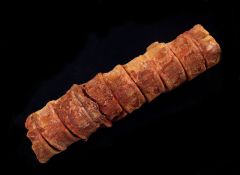
Learn More - Shark Vertebrae$0.00
A very rare, associated set of nine Cretaceous shark vertebraewith excellent color. Excellent concentric growth rings well preserved. Vertebra are 3/8" thick. The exposed centra face is clean. Cretaceous age. Excellent quality - exceptionally rare!
M1167 SIZE: 3/4" x 3-5/8" L
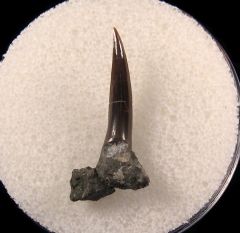
Learn More - Dykeius garethi$0.00
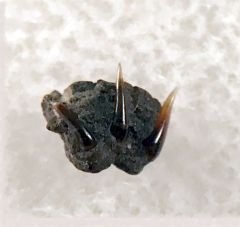
A Very Rare, EXTRA LARGE Top Quality Dykeius garethi tooth central cusp from Hornby Island, British Columbia, Canada. An August Fossil of the Month. This is a new genius of Frill shark from the Late Cretaceous deep water Northumberland Formation deposit. Another unique species of Chlamydoselachiform shark, the Frill shark. This is the largest Frill shark in the deposit with teeth over 1" tall (28.5 mm). These teeth exhibit classic Frill shark design with a central cusp flanked by two lateral cusps. Dykeius teeth are taller than wide. The crown is complete with the tip reattached. Highest quality enamel. No repair. A very difficult tooth to locate and an excellent collector's tooth. Authenticity guaranteed. This incredible specimen is from a 20 year old collection. An excellent Frill shark specimen!
CD97 SIZE: 7/8" Height
Note - Adding 64 Hornby Island deep water shark teeth. -> Link to all Hornby Island shark teeth.
Learn More - Greenland shark (Somniosus)$0.00
A GEM Greenland shark (Somniosus), an extremely rare and exotic fossil shark tooth. The best that you will find. Miocene age from Belgium. For the rare tooth collector! The BEST of the BEST!
B530 Size: 1/2" ( 3/8"W)
Learn More - Triceratops Toe Bone$395.00
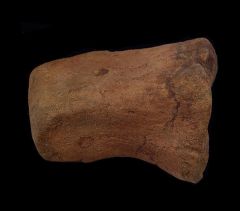
A Top Quality, Triceratops horridus toe bone (pes digit) from the late Cretaceous of northern North America. Triceratops was a large ceratopsian dinosaur found in the Hell Creek and Lance Creek formations which is know for three horns and the large frill protecting its neck. This is an excellent toe bone with excellent detail preserved and good color / patina. This is the large toe I - digit 1 bone. You can see the "mushroom" appearance of proximal ends which is a characteristic of Triceratops and distinguishes it from a Hadrosaur toe bone. Triceratops bones are more difficult to find. Minor crack fill. No repair or restoration. Legally collected on private land in Powder River Co., Montana. Authenticity guaranteed. A supplemental shipping charge will apply for international orders.
DC37 SIZE: 3-7/8" long x 1-7/8" wide x 1-5/8" height
Note - Adding 15 new Triceratops bones in September 2025. Link to Triceratops fossils catalog
Learn More - Triceratops Toe Bone$675.00
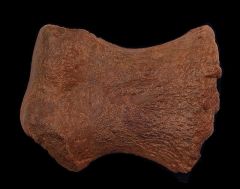
A LARGE, Top Quality, Triceratops horridus toe bone (pes digit) from the late Cretaceous of northern North America. Triceratops was a large ceratopsian dinosaur found in the Hell Creek and Lance Creek formations which is know for three horns and the large frill protecting its neck. This is an excellent toe bone with excellent detail preserved and good color / patina. This is the large toe II - digit 1 bone. You can see the "mushroom" appearance of proximal ends which is a characteristic of Triceratops and distinguishes it from a Hadrosaur toe bone. Triceratops bones are more difficult to find. Minor crack fill. No repair or restoration. Legally collected on private land in Powder River Co., Montana. Authenticity guaranteed. A supplemental shipping charge will apply for international orders.
DC35 SIZE: 4-3/4" long x 4-1/2" wide x 1-3/4" height
Note - Adding 15 new Triceratops bones in September 2025. Link to Triceratops fossils catalog
Learn More - Rolfodon ludvigseni$0.00
A Very Rare, Top Quality Rolfodon ludvigseni junvenile tooth from Hornby Island, British Columbia, Canada. This is a new genius of Frill shark from the Late Cretaceous deep water Northumberland Formation deposit. A unique species of Chlamydoselachiform shark, the Frill shark. (Note - the specimen is the size and character of the extremely rare Chlamydoselachus balli, but it lacks the two small acessory cusps that reside between the main cusps.) These teeth exhibit classic Frill shark design with a central cusp flanked by two lateral cusps. The crown is near complete with damage to one cusp end and the root may complete or may be missing some root end. Highest quality enamel. No repair. A very difficult tooth to locate and an excellent collector's tooth. Authenticity guaranteed. This incredible specimen is from a 20 year old collection. An excellent Frill shark specimen!
CD94 SIZE: 3/16" Wide
Note - Adding 64 Hornby Island deep water shark teeth. -> Link to all Hornby Island shark teeth.
Learn More - Dykeius garethi$0.00
A Very Rare, Top Quality Dykeius garethi tooth from Hornby Island, British Columbia, Canada. An August Fossil of the Month. This is a new genius of Frill shark from the Late Cretaceous deep water Northumberland Formation deposit. Another unique species of Chlamydoselachiform shark, the Frill shark. This is the largest Frill shark in the deposit with teeth over 1" tall (28.5 mm). These teeth exhibit classic Frill shark design with a central cusp flanked by two lateral cusps. Dykeius teeth are taller than wide. The crown is complete with one cusp tip reattached and the root is complete. Highest quality enamel. No repair. A very difficult tooth to locate and an excellent collector's tooth. Authenticity guaranteed. This incredible specimen is from a 20 year old collection. An excellent Frill shark specimen!
CD96 SIZE: 7/16" Height
Note - Adding 64 Hornby Island deep water shark teeth. -> Link to all Hornby Island shark teeth.
Learn More - Otodus megalodon$0.00
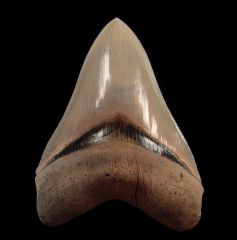
A TOP QUALITY, ~6" Classic Lee Creek Megalodon tooth - ANTERIOR tooth. Our June 2017 Fossil of the Month. This Megalodon has an incredible golden tan colored crown with an exceptional mahogany brown bourlette - essentially complete with two toned color. Highest quality enamel. Exceptional golden tan enamel! The bourlette is extra large and near perfect. The serrations are razor sharp with an exceptional tip serration. Nearly PERFECT serrations (a few serrations damaged near the base - all serrations are razor sharp. Exceptional serrations for a really big Meg! The root is an excellent tan color with very few no hydration cracks and complete. This Megalodon was found in the Yorktown Formation, Lee Creek mine, NC (Pliocene age = 4.5 MYA). The finest example of a 6" classic Lee Creek Megalodon tooth that I have seen considering the shape, color, and preservation. An exceptional collector's XXL LC tooth from the old days at Lee Creek mine! Museum Quality Megalodon. You rarely see a GEM or any 6" Lee Creek Megalodon teeth offered for sale. They just do not exist! This is the ~6" Lee Creek Meg to own if you are going to own one! Note - this is an old estate piece. Absolutely NO repair. Best of the BEST! On HOLD
LC003 Size: 5-15/6" (4-3/8" W)
Learn More - Edestus heinrichi$195.00
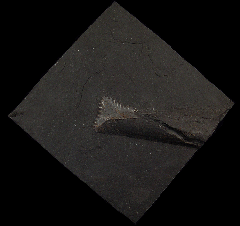
A very rare, Top Quality Edestus heinrichi shark tooth, from Herrin, Illinois. This is a Paleozoic shark that lived in swamps that our now underground coal deposits. An excellent matrix specimen that inludes the opposing tooth mold as well. Excellent preservation, serrations, and serration detail. The Edestus shark would have an upper and lower tooth whorl that are vertically opposed. Research showed that they could use their opposing teeth in a scissor-like motion or a vertical whipping motion to cut prey. It is the first animal to cut vertically. A very strange looking and unique acting shark. Shark recreation image is credited to Julio Lacerdo. These rare teeth are Pennsylvanian age from Illinois. No repair or restoration. Authenticity guaranteed. Note - shipping weight is 1.9 lbs. International "free shipping" will require supplemental postage.
I11 SIZE: 3" w/ root (1-1/2" crown) ; Matrix block is 3.5" x 3.5"
Adding 22 Edestus shark teeth in July 2025. Link to Edestus shark.
Learn More - Edestus heinrichi$175.00
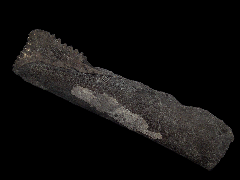
A very rare, LARGE, Top Quality Edestus heinrichi shark tooth, from Herrin, Illinois. This is a Paleozoic shark that lived in swamps that our now underground coal deposits. Note - this tooth has a lot of pyrite and the tip is naturally rounded (polished) which thought to be due to the vertical whipping motion used to slice prey. Excellent preservation, serrations, and serration detail. The Edestus shark would have an upper and lower tooth whorl that are vertically opposed. Research showed that they could use their opposing teeth in a scissor-like motion or a vertical whipping motion to cut prey. It is the first animal to cut vertically. A very strange looking and unique acting shark. Shark recreation image is credited to Julio Lacerdo. These rare teeth are Pennsylvanian age from Illinois. No repair or restoration. Authenticity guaranteed.
I09 SIZE: 4-1/8" w/ root (1-7/8" crown)
Adding 22 Edestus shark teeth in July 2025. Link to Edestus shark.
Learn More