Search results for: 'peru shark to o o'
- Related search terms
- shark enabled eagl intelligence four disaster response it stem
- shark enameloid enabl intelligence form disaster response it stem
- shark easel enabl intelligence form disaster response it stem
- shark enabl easel intelligence form disaster response it star
- shark enabled enabl intelligence form disaster response it stand
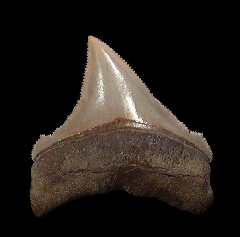
- Otodus chubutensis - Lee Creek$185.00
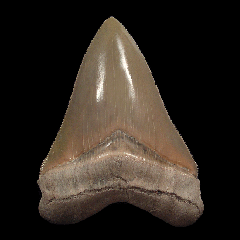
A TOP QUALITY, Lee Creek Otodus chubutensis, a O. megalodon predecessor, from Aurora, No. Carolina. This tooth was found in the Pungo River Formation (middle Miocene age). Note the crown exhibits cusplike bumps at the base of the serrated edge and the root ends also show grooves where the teeth interlocked. These are characteristic traits of the Lee Creek early Meg - Otodus chubutensis. A gorgeous blue & tan colored crown with a brown bourlette. Great serrations. The root is brown colored and complete. Highest quality enamel! Fantastic color! No repair or restoration. Authenticity guaranteed.
LC024 Size: 1-15/16"
Note - Adding 9 Lee Creek Chubutensis teeth in March 2025. Link to LC Megaodon teeth.
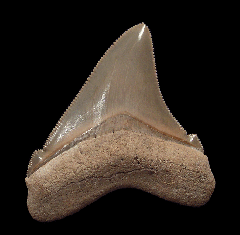
Learn More - Otodus chubutensis - Lee Creek$475.00
A TOP QUALITY, Lee Creek Otodus chubutensis, a O. megalodon predecessor, from Aurora, No. Carolina. This tooth was found in the Pungo River Formation (middle Miocene age). Note the crown exhibits cusplike bumps at the base of the serrated edge and the root ends also show grooves where the teeth interlocked. These are characteristic traits of the Lee Creek early Meg - Otodus chubutensis. A gorgeous blue & tan colored crown with a brown bourlette. Great serrations. The root is tancolored and complete. Highest quality enamel! Fantastic color! No repair or restoration. Authenticity guaranteed.
LC023 Size: 2-3/4"
Note - Adding 9 Lee Creek Chubutensis teeth in March 2025. Link to LC Megaodon teeth.
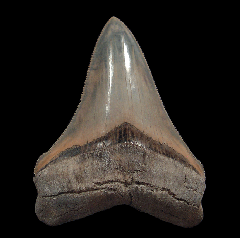
Learn More - Otodus chubutensis - Lee Creek$695.00
A TOP QUALITY, Lee Creek Otodus chubutensis, a O. megalodon predecessor, from Aurora, No. Carolina. This tooth was found in the Pungo River Formation (middle Miocene age). Note the crown exhibits cusplike bumps at the base of the serrated edge and the root ends also show grooves where the teeth interlocked. These are characteristic traits of the Lee Creek early Meg - Otodus chubutensis. A gorgeous BLUE & tan colored crown with a brown bourlette. Great serrations. The root is brown colored and complete. Highest quality enamel! Fantastic color! No repair or restoration. Authenticity guaranteed.
LC021 Size: 3-1/8"
Note - Adding 9 Lee Creek Chubutensis teeth in March 2025. Link to LC Megaodon teeth.
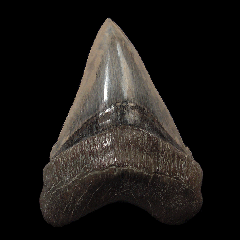
Learn More - Otodus chubutensis - Lee Creek$875.00
A TOP QUALITY, Lee Creek Otodus chubutensis, a O. megalodon predecessor, from Aurora, No. Carolina. This tooth was found in the Pungo River Formation (middle Miocene age). Note the crown exhibits cusplike bumps at the base of the serrated edge and the root ends also show grooves where the teeth interlocked. These are characteristic traits of the Lee Creek early Meg - Otodus chubutensis. A gorgeous tan colored crown with a WHITE bourlette. Great serrations. The root is WHITE colored and complete. Highest quality enamel! Fantastic color! No repair or restoration. Authenticity guaranteed.
LC018 Size: 3-1/8"
Note - Adding 9 Lee Creek Chubutensis teeth in March 2025. Link to LC Megaodon teeth.
Learn More - Otodus chubutensis - Lee Creek$895.00
A LARGE, TOP QUALITY, Lee Creek Otodus chubutensis, a O. megalodon predecessor, from Aurora, No. Carolina. This tooth was found in the Pungo River Formation (middle Miocene age). Note the crown exhibits cusplike bumps at the base of the serrated edge and the root ends also show grooves where the teeth interlocked. These are characteristic traits of the Lee Creek early Meg - Otodus chubutensis. A gorgeous BLUE & tan colored crown with a unique brown & blue bourlette. Great serrations. The root is dark brown colored and complete. Highest quality enamel! Fantastic color! No repair or restoration. Authenticity guaranteed.
LC016 Size: 3-7/8"
Note - Adding 9 Lee Creek Chubutensis teeth in March 2025. Link to LC Megaodon teeth.
Learn More - Otodus sokolovi - Kazakhstan$0.00
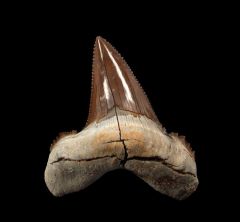
A very rare, Otodus sokolovi upper jaw, anterior tooth from Kert, Mangyshlak, western Kazakhstan. This location produces top quality teeth with brown colored enamel. The large bourlette that is near complete. Nice extra coarse serrations and killer, large side cusps with very irregular serrations. The root is and complete.These teeth exhibit exceptional color, gloss, and preservation. Lower Schorym Formation - Bartonian - 40 MYA. This is a rare, late Eocene "Auriculatus" tooth also known as Otodus sokolovi! No repair or restoration. Authenticity guaranteed. I haven't seen these BIG Kazakh teeth since 2003! My last O. sokolovi teeth to offer.
K503 BoP SIZE: 2-1/4"
Note - Adding 19 Kazakh Auriculatus or transition teeth in November 2021. --> Link to Kazakh Auriculatus teeth.
Learn More - Otodus chubutensis - Lee Creek$495.00
A TOP QUALITY, Lee Creek Otodus chubutensis, a O. megalodon predecessor, from Aurora, No. Carolina. This tooth was found in the Pungo River Formation (middle Miocene age). Note the crown exhibits cusplike bumps at the base of the serrated edge and the root ends also show grooves where the teeth interlocked. These are characteristic traits of the Lee Creek early Meg - Otodus chubutensis. A gorgeous tan colored crown with a light brown bourlette. Great serrations. The root is tan colored and complete. Note - the tip was repaired as well as the bottom ~25% of the serrations on the left side. Highest quality enamel! Fantastic color! Authenticity guaranteed.
LC017 Size: 3-1/2"
Note - Adding 9 Lee Creek Chubutensis teeth in March 2025. Link to LC Megaodon teeth.
Learn More - Otodus sokolovi - Kazakhstan$0.00
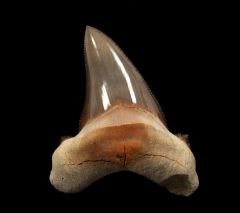
A very rare, Otodus sokolovi upper jaw, anterior tooth from Kert, Mangyshlak, western Kazakhstan. A November Fossil of the Month. This location produces top quality teeth with brown colored enamel. The extra large bourlette that is complete. Nice extra coarse serrations and killer, large side cusps with very irregular serrations. The root is and complete.These teeth exhibit exceptional color, gloss, and preservation. Lower Schorym Formation - Bartonian - 40 MYA. This is a rare, late Eocene "Auriculatus" tooth also known as Otodus sokolovi! No repair or restoration. Authenticity guaranteed. I haven't seen these BIG Kazakh teeth since 2003! My last O. sokolovi teeth to offer.
K502 BoP SIZE: 2-3/4"
Note - Adding 19 Kazakh Auriculatus or transition teeth in November 2021. --> Link to Kazakh Auriculatus teeth.
Learn More - Otodus mugodzharicus (Partial serrated)$0.00
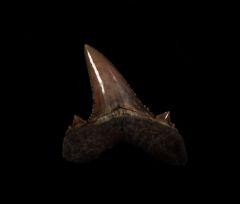
A very rare, early Otodus mugodzharicus upper jaw, lateral tooth from Aktulagay, western Kazakhstan. A transitional tooth leading to C. auriculatus (see detailed discussion below) which leads to Megalodon. The bourlette is complete. Tooth exhibits very fine serrations along the lower 1/3 of crown and micro serrations to the tip. These teeth exhibit very good color, gloss, and preservation. A rare, early Eocene Auriculatus transition tooth. A very challenging tooth to find when building a Megalodon evolutionary set! No repair. Authenticity guaranteed. Note - This western Kazakhstan site is one of the few places in the world where the Otodus to Auriculatus transition can be found in adjacent layers.
K554 SIZE: 1-1/4"
Note - Adding 18 Kazakh Auriuclatus or transition teeth in April 2020. --> Link to Kazakh Auriculatus teeth.
Learn More - Otodus mugodzharicus (Partial serrated)$0.00
A very rare, early Otodus mugodzharicus upper jaw, lateral tooth from Aktulagay, western Kazakhstan. A transitional tooth leading to C. auriculatus (see detailed discussion below) which leads to Megalodon. The bourlette is complete. Tooth exhibits wavy serrations along the lower 1/3 of crown and small wavy serrations to the tip. These teeth exhibit very good color, gloss, and preservation. A rare, early Eocene Auriculatus transition tooth. A very challenging tooth to find when building a Megalodon evolutionary set! No repair. Authenticity guaranteed. Note - This western Kazakhstan site is one of the few places in the world where the Otodus to Auriculatus transition can be found in adjacent layers.
K553 SIZE: 1-1/2"
Note - Adding 18 Kazakh Auriuclatus or transition teeth in April 2020. --> Link to Kazakh Auriculatus teeth.
Learn More - Otodus mugodzharicus (Partial serrated)$0.00
A very rare, early Otodus mugodzharicus upper jaw, lateral tooth from Aktulagay, western Kazakhstan. A transitional tooth leading to C. auriculatus (see detailed discussion below) which leads to Megalodon. A November Fossil of the Month.The bourlette is complete. Tooth exhibits "wavy serrated" edges similar to the Isurus escheri tooth. These teeth exhibit very good color, gloss, and preservation. A rare, early Eocene Auriculatus transition tooth. A very challenging tooth to find when building a Megalodon evolutionary set! No repair. Authenticity guaranteed. This western Kazakhstan site is one of the few places in the world where the Otodus to Auriculatus transition can be found in adjacent layers. Note - This is my last offering of Aktluagay teeth.
K552 SIZE: 1-9/16"
Note - Adding 19 Kazakh Auriuclatus or transition teeth in November 2021. --> Link to Kazakh Auriculatus teeth.
Learn More - Otodus mugodzharicus (Partial serrated)$0.00
A very rare, early Otodus mugodzharicus upper jaw, posterior tooth from Aktulagay, western Kazakhstan. A transitional tooth leading to C. auriculatus (see detailed discussion below) which leads to Megalodon. The bourlette is complete. Tooth exhibits very fine serrations along the inner curve of the crown only. These teeth exhibit very good color, gloss, and preservation. A rare, early Eocene Auriculatus transition tooth. A very challenging tooth to find when building a Megalodon evolutionary set! No repair. Authenticity guaranteed. Note - This western Kazakhstan site is one of the few places in the world where the Otodus to Auriculatus transition can be found in adjacent layers.
K555 SIZE: 5/8"
Note - Adding 18 Kazakh Auriculatus or transition teeth in April 2020. --> Link to Kazakh Auriculatus teeth.
Learn More