Search results for: 'andrews giant bear 19 bear site'
- Related search terms
- site out enabl cohesive devices
- site out enabl cohesive derives
- site 2 bedroom good rd epsom
- site 2 bedroom goods rd epsom
- site 2 bedroom goods rd epsom//
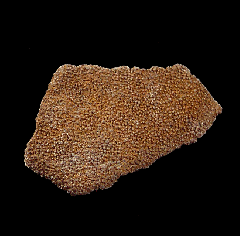
- Saltasaurus Egg Shell$55.00
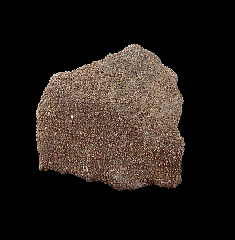
An incredibly well preserved egg shell section from a Saltasaurus, a Titantosaur sauropod, from Patagonia, Argentina. These egg shell large pieces are larger than most and are massive with a shell thickness up to 1/4". These late Cretaceous age shells were found in the Anacleto Formation (80 MYA) in the Neuquen Province, Patagonia, Argentina. All natural. No restoration. Authenticity guaranteed. You can own a rare 80 million year old sauropod egg section!
A202 Size: 1-1/16" (3/16" thick)
Note - Adding 19 Argentine Saltasaurus egg shells . -> Link to Saltasaurtus egg shells
Learn More - Saltasaurus Egg Shell$55.00
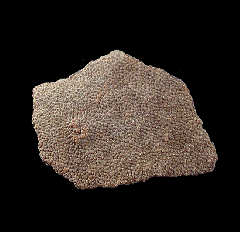
An incredibly well preserved egg shell section from a Saltasaurus, a Titantosaur sauropod, from Patagonia, Argentina. These egg shell large pieces are larger than most and are massive with a shell thickness up to 1/4". These late Cretaceous age shells were found in the Anacleto Formation (80 MYA) in the Neuquen Province, Patagonia, Argentina. All natural. No restoration. Authenticity guaranteed. You can own a rare 80 million year old sauropod egg section!
A201 Size: 1-3/8" (3/16" thick)
Note - Adding 19 Argentine Saltasaurus egg shells . -> Link to Saltasaurtus egg shells
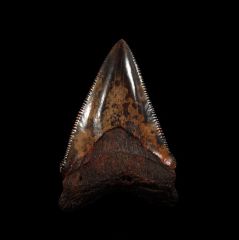
Learn More - Otodus chubutensis$0.00
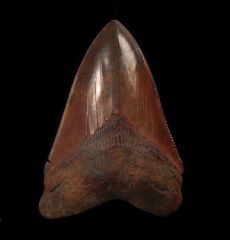
Our July FOTM week 2 offering - an ULTRA RARE, EXTRA LARGE copper red colored Chubutensis tooth - an upper jaw anterior position. A monster sized 3-3/4" Chubutensis tooth. Rare copper red colors with rich reds and red-brown colors. The bourlette is very good. The serrations are sharp with a worn tip. Excellent color! Incredible size and excellent overall condition. Of course, there is no repair or restoration. Authenticity guaranteed. An ultra rare collector's tooth from the No.Carolina copper red site. We will not see many teeth from the copper red site and no Chubs like this one!
NC052 SIZE: 3-3/4"
Learn More - Otodus sokolovi - Kazakhstan$0.00
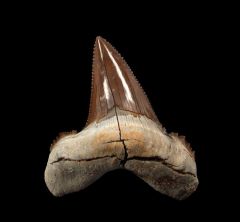
A very rare, Otodus sokolovi upper jaw, anterior tooth from Kert, Mangyshlak, western Kazakhstan. This location produces top quality teeth with brown colored enamel. The large bourlette that is near complete. Nice extra coarse serrations and killer, large side cusps with very irregular serrations. The root is and complete.These teeth exhibit exceptional color, gloss, and preservation. Lower Schorym Formation - Bartonian - 40 MYA. This is a rare, late Eocene "Auriculatus" tooth also known as Otodus sokolovi! No repair or restoration. Authenticity guaranteed. I haven't seen these BIG Kazakh teeth since 2003! My last O. sokolovi teeth to offer.
K503 BoP SIZE: 2-1/4"
Note - Adding 19 Kazakh Auriculatus or transition teeth in November 2021. --> Link to Kazakh Auriculatus teeth.
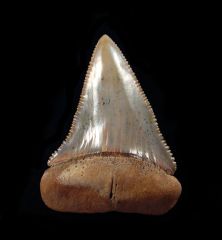
Learn More - Carcharodon carcharias$0.00
An incredibly sized GEM Great White shark tooth from Chile. This ULTRA RARE, MONSTER sized Great White tooth measures ~2-3/4" - a huge upper jaw PRINCIPAL ANTERIOR tooth. My finest remaining XL blue site tooth. The BEST of the BEST!
C1202 Size: 2-11/16" (2" W)
Learn More - Otodus chubutensis$0.00
A GORGEOUS, "Bumble Bee" Chubutensis tooth - an upper jaw anterior tooth from the Meherrin River red site in northeastern No. Carolina. The "Bumble Bee" tooth with incredible rare yellow and black colors! A January 2020 Fossil of the Month. Highest quality enamel. No enamel peel. The bourlette is composed of the lower dentin layer. The serrations are sharp and 100% complete with an excellent tip serration. Excellent side cusps. The root is gorgeous with few cracks on the face. No repair! An ultra rare Chubutensis collector's tooth with fantastic color. Definitely a top 1% red site Chub considering preservation and color! Museum Quality. Authenticity guaranteed.
NC062 BoP2 SIZE: 2-5/16"
Learn More - Saltasaurus Egg Shell$50.00
An incredibly well preserved egg shell section from a Saltasaurus, a Titantosaur sauropod, from Patagonia, Argentina. These egg shell large pieces are larger than most and are massive with a shell thickness up to 1/4". These late Cretaceous age shells were found in the Anacleto Formation (80 MYA) in the Neuquen Province, Patagonia, Argentina. All natural. No restoration. Authenticity guaranteed. You can own a rare 80 million year old sauropod egg section! The Golden egg!
A212 Size: 1-3/8" (3/16" thick)
Note - Adding 19 Argentine Saltasaurus egg shells . -> Link to Saltasaurtus egg shells
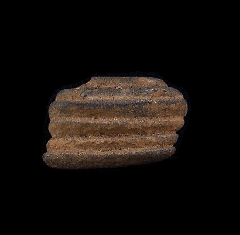
Learn More - Capybara$25.00
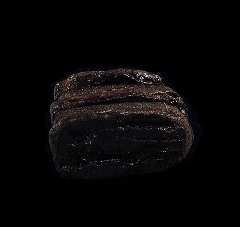
A well preservedextinct Giant Capybara molar from Edisto River, So. Carolina. The Giant Capybara was an oversized rodent that evolved in the Pleistocene and became extinct at the end of the Pleistocene in North America. This is a molar tooth with good cusp detail with little wear. Well fossilized. No repair or restoration. Authenticity guaranteed.
X822 Size: 3/4" x 1/2"
Name: Capybara sp.
Age: Pleistocene
Location: Edisto River, So. Carolina
Note - Posting 26 mammal and reptile fossils in March 2024. Link to Other Mammals
Learn More - Capybara$32.50
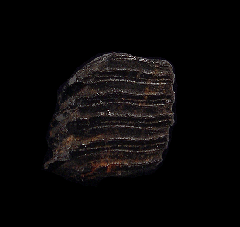
A well preserved extince Giant Capybara molar from Edisto River, So. Carolina. The Giant Capybara was an oversized rodent that evolved in the Pleistocene and became extinct at the end of the Pleistocene in North America. This is a molar tooth with good cusp detail with little wear. Well fossilized. No repair or restoration. Authenticity guaranteed.
X821 Size: 7/8" x 7/16"
Name: Capybara sp.
Age: Pleistocene
Location: Edisto River, So. Carolina
Note - Posting 26 mammal and reptile fossils in March 2024. Link to Other Mammals
Learn More - Capybara$47.50
A well preserved extinct Giant Capybara molar from Edisto River, So. Carolina. The Giant Capybara was an oversized rodent that evolved in the Pleistocene and became extinct at the end of the Pleistocene in North America. This is a molar tooth with good cusp detail with little wear. Well fossilized. No repair or restoration. Authenticity guaranteed.
X819 Size: 5/8" x 11/16"
Name: Capybara sp.
Age: Pleistocene
Location: Edisto River, So. Carolina
Note - Posting 26 mammal and reptile fossils in March 2024. Link to Other Mammals
Learn More - Parodotus Benedeni$0.00
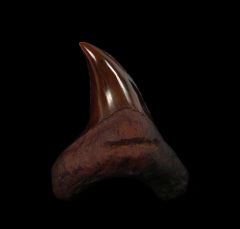
An Ultra Rare, GEM, EXTRA LARGE copper-red Parotodus benedeni tooth from the Meherrin River, No. Carolina. Rare deep copper red color with exceptional gloss. Highest quality enamel. Exceptional preservation and condition - extra sharp edges and tip - very clean. The root shows very nice detail and is complete. This tooth appears to be a Yorktown Fm., Pliocene age tooth. No repair or restoration. Exceptional color! An exceptional, rare collector's tooth! Museum Quality. Best of the BEST! Authenticity guaranteed. The red site Parotodus teeth are ultra rare! A must have collector's tooth!
NC521 BoP SIZE: 2-11/16"
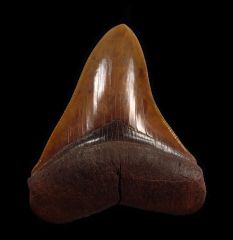
Learn More - Otodus megalodon$0.00An ultra rare, GEM North Carolina Carcharocles megalodon. A gorgeous tooth from the copper-red site. It has an incredible copper-red colored crown. The enamel is the highest possible quality with small hydration cracks. A complete dark brown bourlette. Incredible serrations and tip - 100% complete. An exceptional dark brown root with essentially no hydration cracks. A gorgeous North Carolina copper-red Megalodon shark tooth. An exceptional collector's tooth. Note - you rarely see a copper-red Megalodon shark tooth that has a top quality crown, root and serrations - a top 1% tooth from this site! The PERFECT copper-red Megalodon tooth. The finest quality copper-red Megalodon tooth that I have seen! NO repair! The BEST of the BEST! NC002 SIZE: 4-5/8" (3-7/8" W) Learn More