Search results for: 'cani bear baculum fossils from romania and australia site'
- Did you mean
- ca02 bear baculum fossils fr01 romania and australia site
- ca01 bear baculum fossils fr01 romania and australia site
- Related search terms
- bear good cave in texanus river
- bear good ca05 in texanus river
- canis good desenho
- site out enabl cohesive devices
- site out enabl cohesive derives
- Myliobatus sp. (Eagle Ray)$5.00
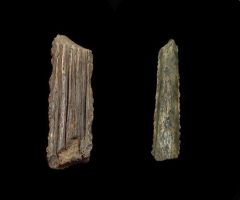
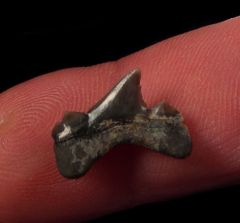
A rare Myliobatis barb section from Sumatra, Indonesia. This ray barb was deposited in the Telisa formation - a shallow marine environment during the middle Miocene (approx. 15 million years ago.) A very unique collector's fossil. D191 is the good quality stinger barb section on the left. Authenticity guaranteed.
D191 (Left) SIZE: 1-5/16"
Note - 2 new Sumatran Myliobatus barbs added in January 2018. Link to Sumatran teeth.
Learn More - Myliobatus sp. (Eagle Ray)$4.00
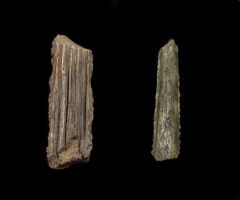
A rare Myliobatis barb section from Sumatra, Indonesia. This ray barb was deposited in the Telisa formation - a shallow marine environment during the middle Miocene (approx. 15 million years ago.) A very unique collector's fossil. D192 is the good quality stinger barb section on the right. Authenticity guaranteed.
D192 (Right) SIZE: 1-1/4"
Note - 2 new Sumatran Myliobatus barbs added in January 2018. Link to Sumatran teeth.
Learn More - Desmostylus herperus$325.00
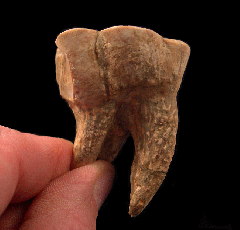
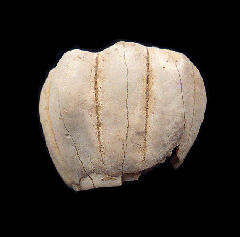
A very rare Desmostylus tooth from the Sharktooth Hill area, near Bakersfield, California. The chewing surface is incredibly preserved. A rare complete and fully rooted tooth. Excellent preservation and gorgeous color. No repair or restoration. Authenticity guaranteed. Museum Quality specimen! The Desmostylus are considered Megalodon food along with the whales.My last STH Desmostylus teeth from the Ernst collection.
ST1041 SIZE: 1-3/4" (2-1/4" Height)
Note - Adding 8 rare Sharktooth Hill mammal teeth fossils in October 2023. Link to Desmostylus fossils
Learn More - Desmostylus herperus$275.00
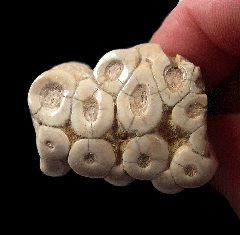
A very rare Desmostylus tooth from the Sharktooth Hill area, near Bakersfield, California. The chewing surface is incredibly preserved. A complete tooth with some root missing. Excellent preservation and gorgeous color. No repair or restoration. Authenticity guaranteed. Museum Quality specimen! The Desmostylus are considered Megalodon food along with the whales.
ST1042 SIZE: 1-5/8 (1-3/4" Height)
Note - Adding 8 rare Sharktooth Hill mammal teeth fossils in October 2023. Link to Desmostylus fossils
Learn More - Carcharodon carcharias$0.00
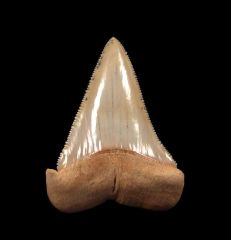
An incredibly sized, GEM Great White shark tooth from Chile. Another December 2017 Fossil of the Month.This ULTRA RARE, MONSTER sized Great White tooth measures ~2-3/4" - a huge upper jaw PRINCIPAL ANTERIOR tooth. Highest quality enamel! Excellent color. The serrations are exceptional with an excellent tip serration. Incredible, large "gum line". Extra wide root. This was a big shark. Exceptional preservation - note the preserved nutrient hole on the root. Absolutely no repair or restoration. Authenticity guaranteed. The PERFECT BIG Chilean Great White tooth. My finest remaining exceptionally large tooth. You won't see these big, top quality GW teeth any more. The BEST of the BEST!
C1201 Size: 2-11/16" (2" W)
Learn More - Otodus mugodzharicus (Partial serrated)$0.00
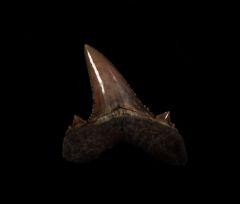
A very rare, early Otodus mugodzharicus upper jaw, posterior tooth from Aktulagay, western Kazakhstan. A transitional tooth leading to C. auriculatus (see detailed discussion below) which leads to Megalodon. The bourlette is complete. Tooth exhibits very fine serrations along the inner curve of the crown only. These teeth exhibit very good color, gloss, and preservation. A rare, early Eocene Auriculatus transition tooth. A very challenging tooth to find when building a Megalodon evolutionary set! No repair. Authenticity guaranteed. Note - This western Kazakhstan site is one of the few places in the world where the Otodus to Auriculatus transition can be found in adjacent layers.
K555 SIZE: 5/8"
Note - Adding 18 Kazakh Auriculatus or transition teeth in April 2020. --> Link to Kazakh Auriculatus teeth.
Learn More - Desmostylus herperus$185.00
A very rare Desmostylus tooth from the Sharktooth Hill area, near Bakersfield, California. This is an unerupted tooth. The chewing surface is very well preserved. A complete tooth. Excellent preservation and gorgeous color. No repair or restoration. Authenticity guaranteed. Museum Quality specimen! The Desmostylus are considered Megalodon food along with the whales.The last of the Ernst collection teeth.
ST1043 SIZE: 1-1/2" (1-1/4" Height)
Note - Adding 8 rare Sharktooth Hill mammal teeth fossils in October 2023. Link to Desmostylus fossils
Learn More - Pinus sp.$0.00
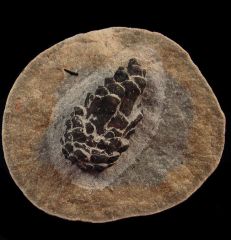
A GEM, EXTRA LARGE, rare Pinus sp. pine cone specimen from Germany. This pine cone is fully inflated. Fantastic preservation. One of the finest specimens that I have seen from the German site. It is nicely displayed in its orginal matrix. Note - nodule matrix is 3.5" long. Authenticity guaranteed. Definitely one of the BEST.
Name: Pinus sp. Age: Upper Oligocene (32 mya) Location: Bad Kreuznach, Germany
X334 Size: 2" (1-1/8" W)
Learn More - Otodus mugodzharicus (Partial serrated)$0.00
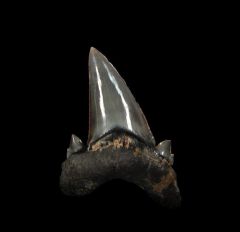
A very rare, early Otodus mugodzharicus upper jaw, lateral tooth from Aktulagay, western Kazakhstan. A transitional tooth leading to C. auriculatus (see detailed discussion below) which leads to Megalodon. The bourlette is complete. Tooth exhibits very fine serrations along the lower 1/3 of crown and micro serrations to the tip. These teeth exhibit very good color, gloss, and preservation. A rare, early Eocene Auriculatus transition tooth. A very challenging tooth to find when building a Megalodon evolutionary set! No repair. Authenticity guaranteed. Note - This western Kazakhstan site is one of the few places in the world where the Otodus to Auriculatus transition can be found in adjacent layers.
K554 SIZE: 1-1/4"
Note - Adding 18 Kazakh Auriuclatus or transition teeth in April 2020. --> Link to Kazakh Auriculatus teeth.
Learn More - Otodus mugodzharicus (Partial serrated)$0.00
A very rare, early Otodus mugodzharicus upper jaw, lateral tooth from Aktulagay, western Kazakhstan. A transitional tooth leading to C. auriculatus (see detailed discussion below) which leads to Megalodon. The bourlette is complete. Tooth exhibits wavy serrations along the lower 1/3 of crown and small wavy serrations to the tip. These teeth exhibit very good color, gloss, and preservation. A rare, early Eocene Auriculatus transition tooth. A very challenging tooth to find when building a Megalodon evolutionary set! No repair. Authenticity guaranteed. Note - This western Kazakhstan site is one of the few places in the world where the Otodus to Auriculatus transition can be found in adjacent layers.
K553 SIZE: 1-1/2"
Note - Adding 18 Kazakh Auriuclatus or transition teeth in April 2020. --> Link to Kazakh Auriculatus teeth.
Learn More - Otodus mugodzharicus (Partial serrated)$0.00
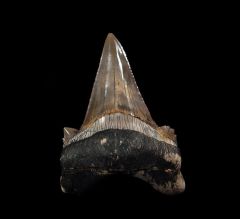
A very rare, early Otodus mugodzharicus upper jaw, anterior tooth from Aktulagay, western Kazakhstan. A transitional tooth leading to C. auriculatus (see detailed discussion below) which leads to Megalodon. The bourlette is complete. Tooth exhibits fine and wavy serrations along the lower 1/3 of crown and no serrations the tip. These teeth exhibit very good color, gloss, and preservation. A rare, early Eocene Auriculatus transition tooth. A very challenging tooth to find when building a Megalodon evolutionary set! No repair. Authenticity guaranteed. Note - This western Kazakhstan site is one of the few places in the world where the Otodus to Auriculatus transition can be found in adjacent layers.
K551 SIZE: 2-1/8"
Note - Adding 18 Kazakh Auriculatus or transition teeth in April 2020. --> Link to Kazakh Auriculatus teeth.
Learn More - Otodus obliquus (not serrated)$95.00
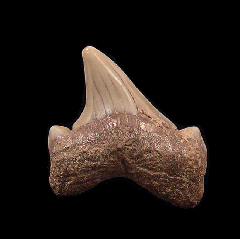
A very rare, early Otodus obliquus anterior tooth from Kzil-Orda Region, Kazakhstan. Otodus obliquus is the ancestor to O. auriculatus (see detailed discussion below) which leads to Megalodon. The bourlette is large and complete. Exhibits no serrations. The starting species to serrated Otodus teeth. These teeth exhibit very good color, gloss, and preservation. A rare, early Eocene (Ypresian) Auriculatus transition tooth. A very challenging tooth to find when building a Megalodon evolutionary set! No repair. Authenticity guaranteed. Note - This western Kazakhstan site is one of the few places in the world where the Otodus obliquus to Otodus auriculatus transition can be found in adjacent early Eocene formation units.
K561 SIZE: 1-1/16"
Note - Adding 24 Kazakh Auriculatus or transition teeth in July 2024. --> Link to Kazakh Auriculatus teeth.
Learn More