Search results for: 'check mai guid base medium 2 palm'
- Related search terms
- bases good with blue
- bases good wide blue
- bases good with blue/
- bases good with blue//
- check my good base medium 2 palm
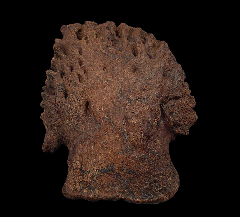
- Triceratops Pes Hoof Core$1,800.00
A rare, TOP QUALITY Triceratops horridus hoof core (pes claw) from the late Cretaceous of northern North America. Triceratops was a large ceratopsian dinosaur found in the Hell Creek formation which is known for three horns and a large frill protecting its neck. This adult hoof core has exceptional detail preserved and excellent color & patina. Note - Triceratops hoof cores are generally smaller than Hadrosaur, have a very rugous surface, have a characteristeristic "shallow ledge" on the under side, have less height than Hadrosaur, and are much more difficult to find. This hoof core has the correct features is is incredibly preserved. Legally collected on private land in Carter Co., Montana. Authenticity guaranteed. True Triceratops hoof cores are very difficult to locate, and this is a unique example!
DC61 SIZE: 3-1/4" Length x 2-3/4" Wide
Note - Adding 15 new Triceratops bones in September 2025. Link to Triceratops fossils catalog
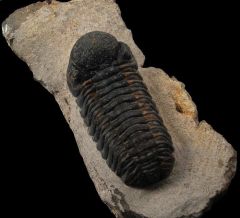
Learn More - Phacops speculator$125.00
A LARGE well prepared, Phacops speculator trilobite. A very nice specimen with good detail and completeness. It is nicely prepared for a perfect display. Compound eyes. A Middle Devonian (380 mya) trilobite from the Djebel Issoumour area, Atlas Mts., Morocco. Authenticity guaranteed.
XM21 Size: 2-1/8" (1-1/8" wide)
Adding 6 quality Moroccan trilobites in November 2022. Link to Moroccan trilobites.
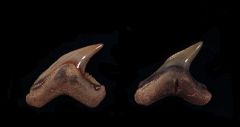
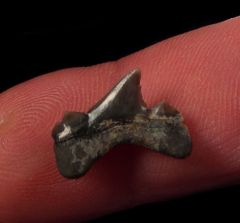
Learn More - Physogaleus contortus$12.50
An excellent Physogaleus contortus tooth from the Oligocene of Seminole Co., Florida. F737 is the tooth on the left.
F737 (Left) SIZE: 3/4"
Learn More - Otodus mugodzharicus (Partial serrated)$0.00
A very rare, early Otodus mugodzharicus upper jaw, posterior tooth from Aktulagay, western Kazakhstan. A transitional tooth leading to C. auriculatus (see detailed discussion below) which leads to Megalodon. The bourlette is complete. Tooth exhibits very fine serrations along the inner curve of the crown only. These teeth exhibit very good color, gloss, and preservation. A rare, early Eocene Auriculatus transition tooth. A very challenging tooth to find when building a Megalodon evolutionary set! No repair. Authenticity guaranteed. Note - This western Kazakhstan site is one of the few places in the world where the Otodus to Auriculatus transition can be found in adjacent layers.
K555 SIZE: 5/8"
Note - Adding 18 Kazakh Auriculatus or transition teeth in April 2020. --> Link to Kazakh Auriculatus teeth.
Learn More - Otodus pavlovi$0.00
A very rare, early Otodus pavlovi upper jaw, lateral tooth from Aktulagay, western Kazakhstan. Otodus pavlovi was the smaller Otodus shark species present in this early Eocene deposit. The side cusps are large and complete. Exhibits no serrations. These teeth exhibit very good color, gloss, and preservation. No repair. Authenticity guaranteed. Perfect tooth.
K532 SIZE: 11/16"
Note - Adding 18 Kazakh Auriculatus or transition teeth in April 2020. --> Link to Kazakh Auriculatus teeth.
Learn More - Otodus pavlovi$0.00
A very rare, early Otodus pavlovi upper jaw, lateral tooth from Aktulagay, western Kazakhstan. Otodus pavlovi was the smaller Otodus shark species present in this early Eocene deposit. The side cusps are large and complete. Exhibits no serrations. These teeth exhibit very good color, gloss, and preservation. No repair. Authenticity guaranteed. Perfect tooth.
K531 SIZE: 13/16"
Note - Adding 18 Kazakh Auriculatus or transition teeth in April 2020. --> Link to Kazakh Auriculatus teeth.
Learn More - Macrorhizodus nolfi$0.00
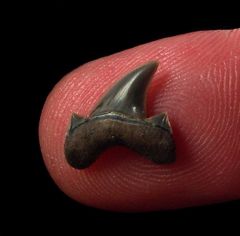
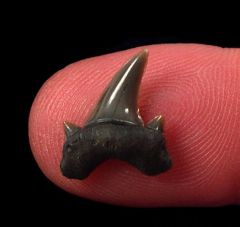
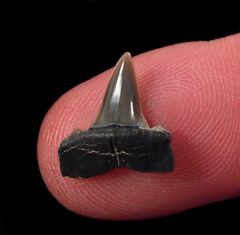
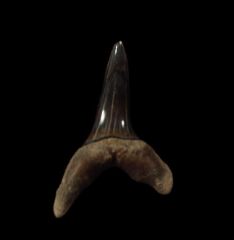
A very rare, early Macrorhizodus nolfi upper jaw, lateral tooth from Aktulagay, western Kazakhstan. Macrorhizodus nolfi is a Lamnidae shark and an early Mako shark (Isurus praecursor) relative in this early Eocene deposit. The side cusps are complete. No repair. Authenticity guaranteed. Perfect tooth.
K572 SIZE: 3/4"
Note - Adding 18 Kazakh Auriculatus or transition teeth in April 2020. --> Link to Kazakh Auriculatus teeth.
Learn More - Macrorhizodus nolfi$0.00
A very rare, early Macrorhizodus nolfi upper jaw, anterior tooth from Aktulagay, western Kazakhstan. Macrorhizodus nolfi is a Lamnidae shark and an early Mako shark (Isurus praecursor) relative in this early Eocene deposit. These teeth exhibit very good color, gloss, and preservation. A rare, early Eocene Macrorhizodus nolfi tooth. No repair. Authenticity guaranteed.
K571 SIZE: 1-3/8"
Note - Adding 18 Kazakh Auriculatus or transition teeth in April 2020. --> Link to Kazakh Auriculatus teeth.
Learn More - Otodus mugodzharicus (Partial serrated)$0.00
A very rare, early Otodus mugodzharicus upper jaw, lateral tooth from Aktulagay, western Kazakhstan. A transitional tooth leading to C. auriculatus (see detailed discussion below) which leads to Megalodon. A November Fossil of the Month.The bourlette is complete. Tooth exhibits "wavy serrated" edges similar to the Isurus escheri tooth. These teeth exhibit very good color, gloss, and preservation. A rare, early Eocene Auriculatus transition tooth. A very challenging tooth to find when building a Megalodon evolutionary set! No repair. Authenticity guaranteed. This western Kazakhstan site is one of the few places in the world where the Otodus to Auriculatus transition can be found in adjacent layers. Note - This is my last offering of Aktluagay teeth.
K552 SIZE: 1-9/16"
Note - Adding 19 Kazakh Auriuclatus or transition teeth in November 2021. --> Link to Kazakh Auriculatus teeth.
Learn More - Otodus obliquus (not serrated)$95.00
A very rare, early Otodus obliquus anterior tooth from Kzil-Orda Region, Kazakhstan. Otodus obliquus is the ancestor to O. auriculatus (see detailed discussion below) which leads to Megalodon. The bourlette is large and complete. Exhibits no serrations. The starting species to serrated Otodus teeth. These teeth exhibit very good color, gloss, and preservation. A rare, early Eocene (Ypresian) Auriculatus transition tooth. A very challenging tooth to find when building a Megalodon evolutionary set! No repair. Authenticity guaranteed. Note - This western Kazakhstan site is one of the few places in the world where the Otodus obliquus to Otodus auriculatus transition can be found in adjacent early Eocene formation units.
K561 SIZE: 1-1/16"
Note - Adding 24 Kazakh Auriculatus or transition teeth in July 2024. --> Link to Kazakh Auriculatus teeth.
Learn More - Otodus obliquus (not serrated)$200.00
A very rare, early Otodus obliquus anterior tooth from Kzil-Orda Region, Kazakhstan. Otodus obliquus is the ancestor to O. auriculatus (see detailed discussion below) which leads to Megalodon. The bourlette is large and complete. Exhibits no serrations. The starting species to serrated Otodus teeth. These teeth exhibit very good color, gloss, and preservation. A rare, early Eocene (Ypresian) Auriculatus transition tooth. A very challenging tooth to find when building a Megalodon evolutionary set! No repair. Authenticity guaranteed. Note - This western Kazakhstan site is one of the few places in the world where the Otodus obliquus to Otodus auriculatus transition can be found in adjacent early Eocene formation units.
K561 SIZE: 1-1/4"
Note - Adding 24 Kazakh Auriculatus or transition teeth in July 2024. --> Link to Kazakh Auriculatus teeth.
Learn More - Otodus aksuaticus (Partial serrated)$450.00
A very rare, early Otodus aksuaticus upper jaw, lateral tooth from Kzil-Orda, Kazakhstan. A transitional tooth leading to O. auriculatus (see detailed discussion below) which leads to Megalodon. A July Fossil of the Month. The bourlette is complete. This tooth exhibits small serrations along the lower 1/3 of the crown and micro serrations to the tip. These teeth exhibit excellent color, gloss, and preservation. A rare, early (Ypresian) Eocene Auriculatus transition tooth. A very challenging tooth to find when building a Megalodon evolutionary set! No repair or restoration. Authenticity guaranteed. This western Kazakhstan site is one of the few places in the world where the Otodus obliquus to Otodus auriculatus transition can be found in adjacent geologic layers.
K547 SIZE: 1-15/16"
Note - Adding 24 Kazakh Auriuclatus or transition teeth in July 2024. --> Link to Kazakh Auriculatus teeth.
Learn More