Search results for: 'line paleozo few planus fisheuri guid'
- Related search terms
- line polk few planus first good
- line paleozo few planus first good
- line paleob few planus first good
- guid goods ma01
- guid goods ma02
- Otodus megalodon$0.00
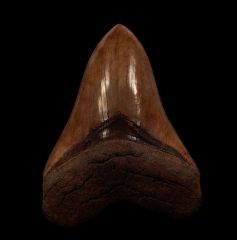
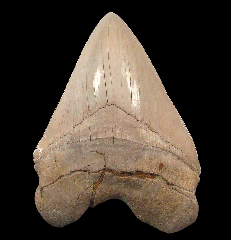
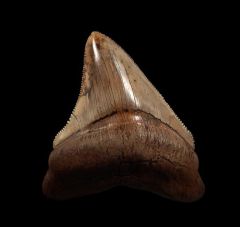
A rare, TOP QUALITY BIG "Georgia RED" Megalodon tooth from the Miocene - an upper jaw Principal Anterior tooth. A December Fossil 2019 of the Month. The enamel is the Highest Quality with a few, fine hydration cracks. The crown is a fantastic mix of red & brown color - very nice. An excellent, dark brown colored bourlette which is nearly complete. Razor sharp serrations including an excellent tip serration. The serrations are just about perfect with partial damage to two of them. Exceptional serrations for a BIG Meg tooth.The root is an excellent brown color, nicely articulated, and complete. A fantastic color combination. Note - these Georgia Megs are fantastic - essentially no sign of wear and excellent perservation. An incredible color collector's BIG Megalodon tooth from Georgia. No repair. No restoration. Authenticity guaranteed. A special tooth!
G104 BoP Size: 5-15/16" (4-1/2" W)
Learn More - Carcharocles megalodon$0.00
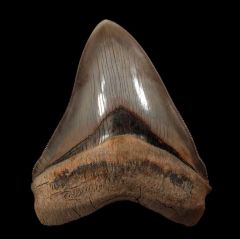
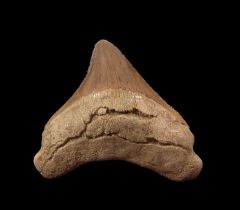
An ultra rare GEM quality, Classic Peruvian Megalodon tooth. A September Fossil of the Month. This Megalodon has an excellent blue & brown colored crown. The bourlette is a dark brown and 100% complete. The root is a light brown and complete. Incredible color! Highest quality enamel. The bourlette is excellent and 100% complete. The serrations are extra large and 100% complete. Exceptional serrations! The root is nicely articulated, extra wide, and complete with few hydration cracks. This Megalodon was found in the Ocucate area of Peru (Miocene age). No repair or restoration. One of the finest ~5" examples of a classic Peruvian Miocene Megalodon tooth considering the shape, color, and preservation. An exceptional collector's tooth from the old days! A Museum Quality Megalodon. Authenticity guaranteed. Perfect tooth. Super rare location!
P001 BoP4 Size: 4-13/16" (3-15/16" W)
Learn More - Saivodus striatus$750.00
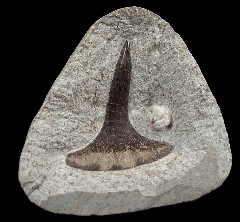
An ultra rare LARGE, Top Quality Saivodus striatus, an extinct Ctenacanth shark tooth, from the Paleozoic era in Indiana. A July Fossil of the Month. An extraordinary primary cusp with muliple cusplets. Fantastic color and articulation. A well preserved specimen. No repair or restoration. Authenticity guaranteed. An excellent collector's tooth. My favorite!
Age: Middle Mississippian (347 MYA); Harrodsburg Limestone Fm.
Location: Washington Co., Indiana
Z042 SIZE: 1-3/8" wide x 7/8"
Adding 30 US Paleozoic teeth in July 2025 --> Link to US Paleozoic teeth
Learn More - Symmorium sp.$350.00
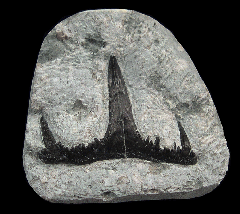
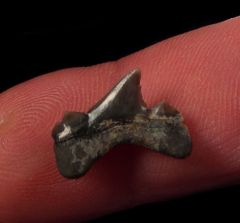
An ultra rare LARGE, Top Quality Symmorium sp., an extinct Cladodont shark tooth, from the Paleozoic era in Indiana. A July Fossil of the Month. An extraordinary primary cusp. Fantastic color and articulation. A well preserved specimen. No repair or restoration. Authenticity guaranteed. An excellent collector's tooth. My favorite!
Age: Middle Mississippian (347 MYA); Harrodsburg Limestone Fm.
Location: Washington Co., Indiana
Z043 SIZE: 1-3/16" wide x 1-1/16"
Adding 30 US Paleozoic teeth in July 2025 --> Link to US Paleozoic teeth
Learn More - Otodus mugodzharicus (Partial serrated)$0.00
A very rare, early Otodus mugodzharicus upper jaw, posterior tooth from Aktulagay, western Kazakhstan. A transitional tooth leading to C. auriculatus (see detailed discussion below) which leads to Megalodon. The bourlette is complete. Tooth exhibits very fine serrations along the inner curve of the crown only. These teeth exhibit very good color, gloss, and preservation. A rare, early Eocene Auriculatus transition tooth. A very challenging tooth to find when building a Megalodon evolutionary set! No repair. Authenticity guaranteed. Note - This western Kazakhstan site is one of the few places in the world where the Otodus to Auriculatus transition can be found in adjacent layers.
K555 SIZE: 5/8"
Note - Adding 18 Kazakh Auriculatus or transition teeth in April 2020. --> Link to Kazakh Auriculatus teeth.
Learn More - Otodus chubutensis$0.00
A TOP QUALITY, 3" Classic Lee Creek Chubutensis tooth (predecessor of Megalodon) - ANTERIOR tooth. This Chubutensis has an incredible light tan colored crown with a light brown bourlette. Highest quality enamel with a few hydration cracks. Excellent color! The bourlette is excellent. The serrations are razor sharp - near perfect with needle-like tip serration. Excellent serrations - razor sharp! The root is an excellent light tan color and absolutely complete. This Chubutensis was found in the Pungo River Formation, Lee Creek mine, NC (Miocene age = 14.5 MYA). An excellent example of a classic Lee Creek Megs considering the shape, color, and preservation. An exceptional collector's tooth from the old days at Lee Creek mine! NO repair or restoration. Authenticity guaranteed.
LC077 Size: 3"
Learn More - Edestus heinrichi$950.00
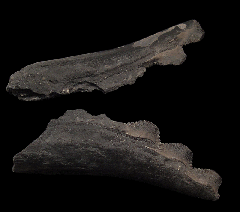
An ultra rare, Top Quality Edestus heinrichi associted pair of whorls, from Herrin, Illinois. A July Fossil of the Month. This is a Paleozoic shark that lived in swamps that our now underground coal deposits. An ultra rare assoiiated pair of tooth whorls. Note - the crown tips are naturally rounded (polished) which thought to be due to wear from the vertical whipping motion used to slice prey. Excellent preservation, serrations, and serration detail. The Edestus shark would have an upper and lower tooth whorl that are vertically opposed. Research showed that they could use their opposing teeth in a scissor-like motion or a vertical whipping motion to cut prey. It is the first animal to cut vertically. A very strange looking and unique acting shark. Shark recreation image is credited to Julio Lacerdo. These rare teeth are Pennsylvanian age from Illinois. No repair or restoration. Authenticity guaranteed. This is the first associated whorl pait that I have seen.
I02 SIZE: 5" & 4-3/4" w/ root (1-1/4"+ crowns)
Adding 22 Edestus shark teeth in July 2025. Link to Edestus shark.
Learn More - Carcharocles megalodon$4,250.00
An Ultra Rare, LARGE Top Quality Sharktooth Hill Megalodon tooth found in the Round Mountain silt near Bakersfield, California. A location that produces very few Megalodon teeth and one of the toughest Meg teeth to locate. This "Bakersfield white" tooth was found in Ernst "whale quarry". Highest quality enamel with a great light tan color. The bourlette is a white color and mostly dentin layer. The serrations are extra large and 100% complete with a great tip. The root is nicely articulated and complete. Also note the grooves on the root ends - a Miocene trait. Note - This is a middle Miocene Meg has tip repair. You will not see large middle Miocene Sharktooth Hill Megs from Bakersfield, California very often. One of the rarest Megs! Authenticity guaranteed. An incredible rare "white" Meg collector's tooth! A custom display stand is included.
ST452 Size: 5-5/8" (4-1/8" wide)
Note - Adding two Sharktooth Hill Meg teeth in October 2025. Link to Sharktooth Hill Meg Teeth.
Learn More - Edestus heinrichi$0.00
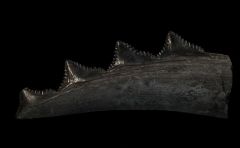
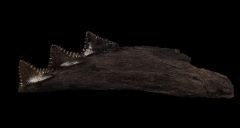
An ultra rare, Top Quality EXTRA LARGE Edestus heinrichi shark whorl section with 4 big crowns, from Sparta, Illinois. An August Fossil of the Month. This is a Paleozoic shark that lived in swamps that our now underground coal deposits. Excellent preservation and serrations. Note - extra long root whorl section with 4 extra large crowns - very rare. The Edestus shark would have an upper and lower tooth whorl that are vertically opposed. Research showed that they could use their opposing teeth in a scissor-like motion to cut prey. It is the first animal to cut vertically. A very strange looking and unique acting shark. Shark recreation image is credited to Julio Lacerdo. These rare teeth are Pennsylvanian age from Illinois. No repair or restoration. Authenticity guaranteed. Four crown whorl sections are extremely rare!
I01 BoP SIZE: 2" teeth (Whorl 6")
Adding 15 Edestus shark specimens in August 2020. Link to Edestus shark.
Learn More - Edestus heinrichi$0.00
An ultra rare, Top Quality EXTRA LARGE Edestus heinrichi shark whorl section with 3 big crowns, from Herrin, Illinois. An April Fossil of the Month. This is a Paleozoic shark that lived in swamps that our now underground coal deposits. Excellent preservation and serrations. Note - extra long root whorl section with 3 extra large crowns - very rare. The Edestus shark would have an upper and lower tooth whorl that are vertically opposed. Research showed that they could use their opposing teeth in a scissor-like motion to cut prey. It is the first animal to cut vertically. A very strange looking and unique acting shark. Shark recreation image is credited to Julio Lacerdo. These rare teeth are Pennsylvanian age from Illinois. Note - Two crown tips were professionally retored. Authenticity guaranteed. Three crown whorl sections are rare!
I01 BoP2 SIZE: 1-3/4" teeth (Whorl 7-1/4")
Adding 15 Edestus shark specimens in April 2021. Link to Edestus shark.
Learn More - Carcharocles megalodon$0.00
An Ultra Rare, Top Quality Sharktooth Hill Megalodon tooth from Pyramid Hill, Kern County, California. A location that produces very few Megalodon teeth and one of the toughest Megs to locate. A February Fossil of the Month. Highest quality enamel with a great brown and charcoal colors. The bourlette is a tan color and is nearly complete. The serrations are extra large & sharp and complete with a big tip serration. The root is nicely articulated and complete. Note the large grooves on the root ends - an early Miocene trait. This is a rare early Miocene (22 MYA) Meg from the Jewitt Sand Fm.- very unique! You never see these early Miocene Megs from Bakersfield, California. One of the rarest Megs! No repair or restoration. Authenticity guaranteed. A incredibly rare collector's piece that came out of a 25 year old old collection. My last Pyramid Hill / Jewitt Sand Fm. Meg tooth!
ST453 Size: 3-1/2"
Note - Adding two Sharktooth Hill area Meg teeth in February 2022. Link to Sharktooth Hill Meg Teeth.
Learn More - Carcharocles megalodon$0.00
An Ultra Rare, High Quality Sharktooth Hill Megalodon tooth found in the Round Mountain Silt near Bakersfield, California. A location that produces very few Megalodon teeth and one of the toughest Megs to locate. Good quality enamel with a great light tan color. The bourlette is a near white color and complete. The serrations are sharp and near complete with a rounded tip. The root is nicely articulated and complete. Also note the large groove on the root ends - a Miocene trait. This is a middle Miocene Meg - very unique! 100% natural. No repair or restoration. You will not see these middle Miocene Sharktooth Hill Megs from Bakersfield, California very often. One of the rarest Megs! Authenticity guaranteed. A great collector piece that came out of a 25 year old old collection!
ST454 Size: 2-3/8"
Note - Adding four Sharktooth Hill Meg teeth in November 2020. Link to Sharktooth Hill Meg Teeth.
Learn More