Search results for: 'liop pander few planus first guid'
- Related search terms
- liops rose and apartments vienna enabl
- liops root and apartments vienna enabl
- liops russia and apartments vienna enabl
- liops rows and apartments vienna enabl
- liops rossica and apartments vienna enabl
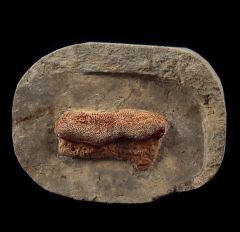
- Unknown species$65.00
A rare, Top Quality Unknown species tooth from the Paleozoic era in what is now Russia. A nice crusher tooth that was not named in the early 2000s. It could be named today. Someone's reserach project. No repair or restoration. Authenticity guaranteed. A unique collector's tooth!
Age: Lower Permian (284 MYA); Arty Fm.
Location: Krasnoufimsk, Russia
R190 SIZE: 11/16" wide
Adding 65 Russian Paleozoic teeth in July 2021. Link to Russian Paleozoic teeth.
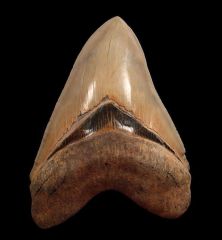
Learn More - Otodus megalodon$0.00
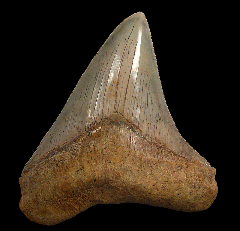
A HIGH QUALITY, 6-1/4" No. Carolina Megalodon tooth - ANTERIOR tooth. This Megalodon has an incredible tan colored crown which turns to orange at the base of the crown. It has an exceptional mahogany brown bourlette with a natural two toned color. Highest quality enamel. Incredible tan and orange color! The serrations are razor sharp with an excellent tip serration. Excellent serrations for a really big Meg! The root is an excellent tan color with very few no hydration cracks and complete. This Megalodon was found offshore of Wilmington, No. Carolina. Megalodon teeth from this locations are typically damaged and worn due to ocean currents and rarely rate above commercial grade. This BIG Meg is an exception. It has excellent enamel, serrations, and color! A very rare find for this this location. It does have two small aesthetic repair s done. On the right of the tip (short side) the serrated edge was restored and the very top of the bourlette was restored. The end result is a very attractive and affordable BIG Meg tooth which will fit as the center piece of someone's collection. You are not going to find a more attractive 6-1/4" Megalodon tooth and never one from Wilmington, NC. A great buy!
NC001 Size: 6-1/4" (4-7/16" W)
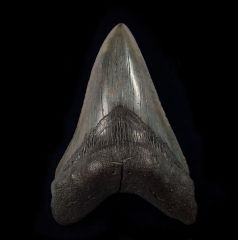
Learn More - Megalodon$0.00
A Large, GRAY colored Megalodon tooth for sale from So. Carolina - a "spike-like" lower anterior tooth. Good quality enamel with no significant damage. The black bourlette is extra large and complete. Fair serrations, but worn. The root is complete with few hydration cracks. No repair or restoration. Authenticity guaranteed. An excellent, large Megalodon tooth which is complete & natural tooth.
SC116 Size: 4-7/16"
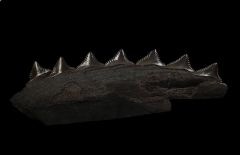
Learn More - Edestus heinrichi$0.00
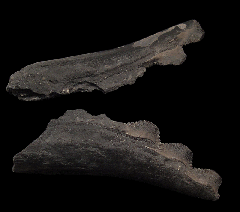
An ultra rare, LARGE Top Quality Edestus heinrichi shark whorl with 7 big crowns, from Herrin, Illinois. An October Fossil of the Month. This is a Paleozoic shark that lived in swamps that our now underground coal deposits. Excellent preservation and serrations. This whorl is incredible teeth detail - the first 5 crowns are all natural and the the last two have some top repair. One of the finest whorls that I have had. The Edestus shark would have an upper and lower tooth whorl that are vertically opposed. Research showed that they could use their opposing teeth in a scissor-like motion to cut prey. It is the first animal to cut vertically. A very strange looking and unique acting shark. Shark recreation image is credited to Julio Lacerdo. These rare teeth are Pennsylvanian age from Illinois. Note - Two crown tips were professionally retored. Authenticity guaranteed. Seven plus crown whorl sections are ultra rare! The BEST.
I01 BoP3 SIZE: 1-3/4" teeth (Whorl : 10-1/4" length)
Adding 11 Edestus shark specimens in October 2021. Link to Edestus shark.
Learn More - Edestus heinrichi$950.00
An ultra rare, Top Quality Edestus heinrichi associted pair of whorls, from Herrin, Illinois. A July Fossil of the Month. This is a Paleozoic shark that lived in swamps that our now underground coal deposits. An ultra rare assoiiated pair of tooth whorls. Note - the crown tips are naturally rounded (polished) which thought to be due to wear from the vertical whipping motion used to slice prey. Excellent preservation, serrations, and serration detail. The Edestus shark would have an upper and lower tooth whorl that are vertically opposed. Research showed that they could use their opposing teeth in a scissor-like motion or a vertical whipping motion to cut prey. It is the first animal to cut vertically. A very strange looking and unique acting shark. Shark recreation image is credited to Julio Lacerdo. These rare teeth are Pennsylvanian age from Illinois. No repair or restoration. Authenticity guaranteed. This is the first associated whorl pait that I have seen.
I02 SIZE: 5" & 4-3/4" w/ root (1-1/4"+ crowns)
Adding 22 Edestus shark teeth in July 2025. Link to Edestus shark.
Learn More - Otodus megalodon - Sharktooth Hill$0.00
An ultra rare, top quality 5-3/4" Sharktooth Hill Megalodon tooth found in the Round Mountain Silt near Bakersfield, California. A location that produces very few Megalodon teeth and one of the toughest Megs to locate. This tooth was found in the Ernst West quarry. An October Fossil of the Month. This Megalodon tooth has the highest quality enamel with a great Blue & Tan color. The bourlette is a brown color and nearly complete. The root is nicely articulated and complete. The serrations are complete with a good tip serration - incredible serrations for a large Sharktooth Hill Meg tooth! This is a middle Miocene Meg. Note - the grooves on the root ends and the small root "ears" at the top of the root - a Miocene Meg tooth feature! Note - a 3/8" enamel section pooped off and was reattached on the right side (1/2" from the root). You do not see large middle Miocene Sharktooth Hill Megs from Bakersfield, California very often. One of the rarest Megs! Authenticity guaranteed. An incredible Museum Quality Sharktooth Hill Megalodon tooth that came out of a 25 year old old collection! A custom display stand is included. You rarely see a 5"+ Top Quality STH Meg tooth for sale - an extremely rare piece. The largest STH Meg tooth that I have had!
ST451 Size: 5-3/4" (4-3/4" wide)
Note - Adding two Sharktooth Hill Meg teeth in October 2025. Link to Sharktooth Hill Meg Teeth.
Learn More - Paleolagus haydeni (Rabbit)$0.00
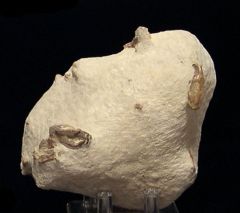
A TOP QUALITY Paleolagus haydeni, fossil rabbit, mortality piece from the White River Badlands, Brule Formation, South Dakota. The mortality rock contains three skulls and parts of a few bodies. Most likely these rabbits died in their burrow. Excellent color and preservation. Exceptional preparation to expose the multiple speciments. A scarce mortality rock with White River rabbit skulls and an incredible display piece. Authenticity guaranteed.
WR002 SIZE: 5" x 4" x 3-7/8"
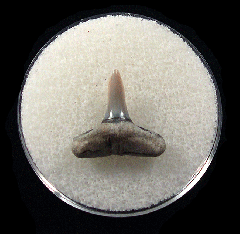
Learn More - Negaprion eurbathrodon$45.00
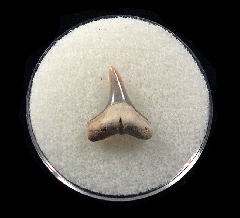
A Top Quality, Negaprion tooth, the Lemon shark, for sale from the Lee Creek mine, Aurora, No. Carolina. Excellent color and condition. These teeth are Miocene age from the Pungo River Formation. Perfect tooth. An excellent collector's tooth. Authenticity guaranteed. Few teeth from this species are found in the Lee Creek mine.
LC842 SIZE: 9/16"
Note - Adding 2 Lee Creek Negaprion shark teeth in February 2023. Link to Lee Creek Negaprion shark teeth.
Learn More - Negaprion eurbathrodon$45.00
A Top Quality, Negaprion tooth, the Lemon shark, for sale from the Lee Creek mine, Aurora, No. Carolina. Excellent color and condition. These teeth are Miocene age from the Pungo River Formation. Near perfect tooth. An excellent collector's tooth. Authenticity guaranteed. Few teeth from this species are found in the Lee Creek mine.
LC841 SIZE: 5/8"
Note - Adding 2 Lee Creek Negaprion shark teeth in February 2023. Link to Lee Creek Negaprion shark teeth.
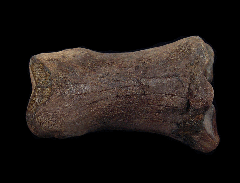
Learn More - Equus sp. Toe bone$22.50
A well preserved horse toe bone (Equus sp. ) from Northern Florida. This is the first toe bone (phalanx). The horse arrived in North America during the late Pliocene and became extinct at the end of the Pleistocene. A well fossilized specimen. No repair or restoration. Authenticity guaranteed.
XH24 Size: 3-7/8"
Name: Equus sp.
Age: Pleistocene
Location: Northern Florida
Note - Posting 23 horse fossils in December 2024. Link to Horse Fossils
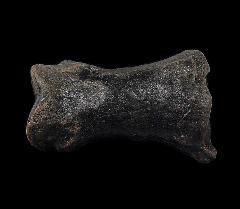
Learn More - Equus sp. Toe bone$32.50
A well preserved horse toe bone (Equus sp. ) from Northern Florida. This is the first toe bone (phalanx). The horse arrived in North America during the late Pliocene and became extinct at the end of the Pleistocene. A well fossilized specimen. No repair or restoration. Authenticity guaranteed.
XH23 Size: 3-7/8"
Name: Equus sp.
Age: Pleistocene
Location: Northern Florida
Note - Posting 23 horse fossils in December 2024. Link to Horse Fossils
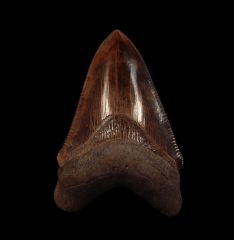
Learn More - Otodus chubutensis$0.00
A GORGEOUS, Extra Large copper red colored Chubutensis tooth - an upper jaw anterior tooth from the Meherrin River in northeastern No. Carolina. Incredible rare copper red colors! Highest quality enamel. Excellent copper colors. No enamel peel. The bourlette is excellent. The serrations are sharp and large tip serration. Excellent side cusps. The root is gorgeous with few cracks on the face. No repair! A rare Chubutensis collector's tooth. Museum quality. Authenticity guaranteed.
NC061 BoP SIZE: 3"
Learn More