Search results for: 'niceden enabl lower/'
- Did you mean
- niceden enamel lower
- niceden eagl lower
- Related search terms
- enabl 10 of
- enabl 10 of/
- enabl 10 of//
- enabl 10 of///
- enabl
- Edestus heinrichi$950.00
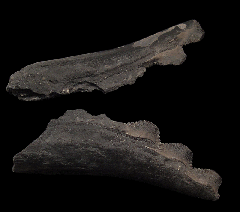
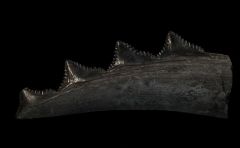
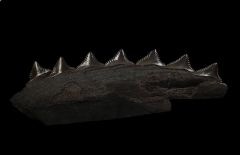
An ultra rare, Top Quality Edestus heinrichi associted pair of whorls, from Herrin, Illinois. A July Fossil of the Month. This is a Paleozoic shark that lived in swamps that our now underground coal deposits. An ultra rare assoiiated pair of tooth whorls. Note - the crown tips are naturally rounded (polished) which thought to be due to wear from the vertical whipping motion used to slice prey. Excellent preservation, serrations, and serration detail. The Edestus shark would have an upper and lower tooth whorl that are vertically opposed. Research showed that they could use their opposing teeth in a scissor-like motion or a vertical whipping motion to cut prey. It is the first animal to cut vertically. A very strange looking and unique acting shark. Shark recreation image is credited to Julio Lacerdo. These rare teeth are Pennsylvanian age from Illinois. No repair or restoration. Authenticity guaranteed. This is the first associated whorl pait that I have seen.
I02 SIZE: 5" & 4-3/4" w/ root (1-1/4"+ crowns)
Adding 22 Edestus shark teeth in July 2025. Link to Edestus shark.
Learn More - Otodus megalodon Indonesia$575.00
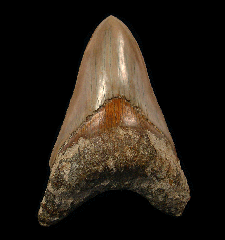
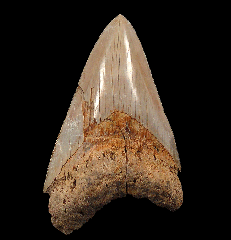
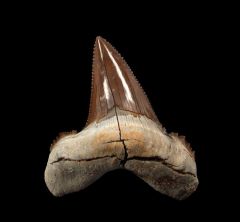
A HIGH QUALITY Megalodon - lower jaw tooth from West Java, Indonesia. This Megalodon has an incredible brown colored crown with red-brown colored bourlette. Highest quality enamel. Great color! The serrations are razor sharp with an excellent tip serration. The root is near complete with some pits that happens with some West Java Megs. Miocene Age. No repair or restoration. Authenticity Guaranteed.
IN61 Size: 5"
Note - Adding 12 High Quality Indonesian Megalodon Teeth in July 2023. -> Link to HQ Indonesian Megs
Learn More - Otodus mugodzharicus (Partial serrated)$0.00
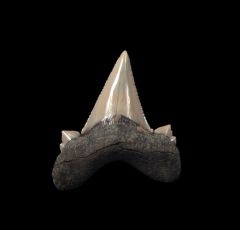
A very rare, early Otodus mugodzharicus upper jaw, lateral tooth from western Kazakhstan. A transition tooth leading to C. auriculatus (see detailed discussion below). The bourlette is large and complete. Exhibits very fine serrations along the lower 2/3 of the crown and weakly serrated side cusps with very irregular serrations. These teeth exhibit very good color, gloss, and preservation. A rare, early Eocene Auriculatus transition tooth. A very challenging tooth to find when building a Megalodon evolutionary set! No repair. Authenticity guaranteed.
K552 BoP SIZE: 1-1/2"
Note - Adding 16 Kazakh Auriuclatus or transition teeth in December 2018. --> Link to Kazakh Auriculatus teeth.
Learn More - Otodus aksuaticus (Partial serrated)$0.00
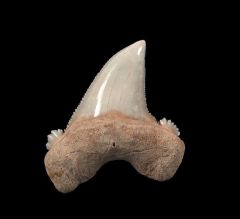
An ultra rare, early Otodus aksuaticus upper jaw, lateral tooth from western Kazakhstan. A transition tooth leading to C. auriculatus (see detailed discussion below). A May 2019 Fossil for the Month. The bourlette is large and complete. Exhibits small serrations along the lower 2/3 of the crown and weakly serrated side cusps with very irregular serrations. These teeth exhibit very good color, gloss, and preservation. A rare, early Eocene Auriculatus transition tooth. A very challenging tooth to find when building a Megalodon evolutionary set! No repair. Authenticity guaranteed.
K541 BoP SIZE: 2-1/16"
Note - Adding 13 Kazakh Auriuclatus or transition teeth in May 2019. --> Link to Kazakh Auriculatus teeth.
Learn More - Edestus heinrichi$0.00
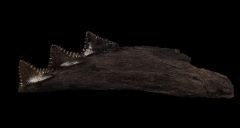
An ultra rare, Top Quality EXTRA LARGE Edestus heinrichi shark whorl section with 4 big crowns, from Sparta, Illinois. An August Fossil of the Month. This is a Paleozoic shark that lived in swamps that our now underground coal deposits. Excellent preservation and serrations. Note - extra long root whorl section with 4 extra large crowns - very rare. The Edestus shark would have an upper and lower tooth whorl that are vertically opposed. Research showed that they could use their opposing teeth in a scissor-like motion to cut prey. It is the first animal to cut vertically. A very strange looking and unique acting shark. Shark recreation image is credited to Julio Lacerdo. These rare teeth are Pennsylvanian age from Illinois. No repair or restoration. Authenticity guaranteed. Four crown whorl sections are extremely rare!
I01 BoP SIZE: 2" teeth (Whorl 6")
Adding 15 Edestus shark specimens in August 2020. Link to Edestus shark.
Learn More - Edestus heinrichi$0.00
An ultra rare, Top Quality EXTRA LARGE Edestus heinrichi shark whorl section with 3 big crowns, from Herrin, Illinois. An April Fossil of the Month. This is a Paleozoic shark that lived in swamps that our now underground coal deposits. Excellent preservation and serrations. Note - extra long root whorl section with 3 extra large crowns - very rare. The Edestus shark would have an upper and lower tooth whorl that are vertically opposed. Research showed that they could use their opposing teeth in a scissor-like motion to cut prey. It is the first animal to cut vertically. A very strange looking and unique acting shark. Shark recreation image is credited to Julio Lacerdo. These rare teeth are Pennsylvanian age from Illinois. Note - Two crown tips were professionally retored. Authenticity guaranteed. Three crown whorl sections are rare!
I01 BoP2 SIZE: 1-3/4" teeth (Whorl 7-1/4")
Adding 15 Edestus shark specimens in April 2021. Link to Edestus shark.
Learn More - Otodus megalodon Indonesia$295.00
A HIGH QUALITY Megalodon - lower jaw tooth from West Java, Indonesia. This Megalodon has an excellent Tan with light brown highlights colored crown with a large tan colored bourlette. Highest quality enamel. Very good color! The serrations are razor sharp with a great tip. The root has erosion which happens with most West Java Megs. Tooth has one crack. No restoration. Miocene Age. No restoration. Authenticity Guaranteed.
IN59 Size: 4-11/16"
Note - Adding 14 HQ Indonesian Megalodon Teeth in November 2025. -> Link to HQ Indonesian Megs
Learn More - Crioceras loryi$0.00
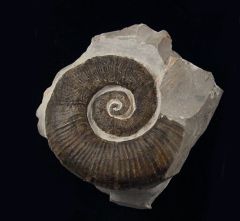
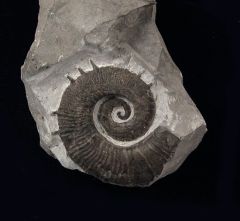
A gorgeous, very rare early Cretaceous Crioceras ammonite specimen from France.
FR306 Size: 2-1/8"
Learn More - Crioceras loryi$0.00
A gorgeous, very rare early Cretaceous Crioceras ammonite specimen from France.
FR308 Size: 2"
Learn More - Edestus heinrichi$0.00
An ultra rare, LARGE Top Quality Edestus heinrichi shark whorl with 7 big crowns, from Herrin, Illinois. An October Fossil of the Month. This is a Paleozoic shark that lived in swamps that our now underground coal deposits. Excellent preservation and serrations. This whorl is incredible teeth detail - the first 5 crowns are all natural and the the last two have some top repair. One of the finest whorls that I have had. The Edestus shark would have an upper and lower tooth whorl that are vertically opposed. Research showed that they could use their opposing teeth in a scissor-like motion to cut prey. It is the first animal to cut vertically. A very strange looking and unique acting shark. Shark recreation image is credited to Julio Lacerdo. These rare teeth are Pennsylvanian age from Illinois. Note - Two crown tips were professionally retored. Authenticity guaranteed. Seven plus crown whorl sections are ultra rare! The BEST.
I01 BoP3 SIZE: 1-3/4" teeth (Whorl : 10-1/4" length)
Adding 11 Edestus shark specimens in October 2021. Link to Edestus shark.
Learn More - Hollardops mesocristata$250.00
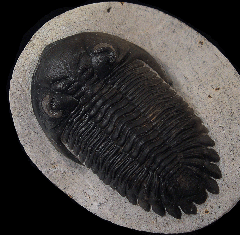
An EXTRA LARGE, Hollardops mesocristata trilobite from the Djebel Issoumour (Maider area), Atlas Mts., Morocco. The preparation is German with all original colors and no restoration. Excellent preservation and condition. The compound eyes have exceptional detail. A Lower Devonian (395 mya). Authenticity guaranteed.
XM09 Size: 2-3/4" (1-11/16" wide)
Note - Posted 16 Moroccan trilobites in May 2024 --> Link to Moroccan Trilobites
Learn More - Otodus sokolovi - Kazakhstan$0.00
A very rare, Otodus sokolovi upper jaw, anterior tooth from Kert, Mangyshlak, western Kazakhstan. This location produces top quality teeth with brown colored enamel. The large bourlette that is near complete. Nice extra coarse serrations and killer, large side cusps with very irregular serrations. The root is and complete.These teeth exhibit exceptional color, gloss, and preservation. Lower Schorym Formation - Bartonian - 40 MYA. This is a rare, late Eocene "Auriculatus" tooth also known as Otodus sokolovi! No repair or restoration. Authenticity guaranteed. I haven't seen these BIG Kazakh teeth since 2003! My last O. sokolovi teeth to offer.
K503 BoP SIZE: 2-1/4"
Note - Adding 19 Kazakh Auriculatus or transition teeth in November 2021. --> Link to Kazakh Auriculatus teeth.
Learn More