Search results for: 'scute fern in dung non va olive'
- Related search terms
- dung seven enabl liops
- dung seven enabl liops/
- dung seven enabl liops//
- none and good gem shows
- none and good gem show
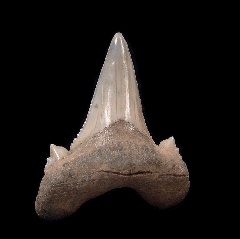
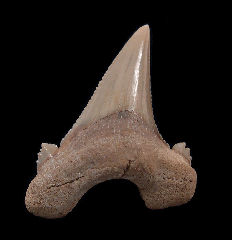
- Otodus aksuaticus (Partial serrated)$325.00
A very rare, early Otodus aksuaticus anterior tooth from Kzil-Orda, Kazakhstan. A transitional tooth leading to O. auriculatus (see detailed discussion below) which leads to Megalodon. The bourlette is complete. This tooth exhibits small serrations along the lower 1/2 of the crown and micro serrations to the tip. These teeth exhibit excellent color, gloss, and preservation. A rare, early (Ypresian) Eocene Auriculatus transition tooth. A very challenging tooth to find when building a Megalodon evolutionary set! No repair or restoration. Authenticity guaranteed. This western Kazakhstan site is one of the few places in the world where the Otodus obliquus to Otodus auriculatus transition can be found in adjacent geologic layers.
K546 SIZE: 1-9/16"
Note - Adding 24 Kazakh Auriuclatus or transition teeth in July 2024. --> Link to Kazakh Auriculatus teeth.
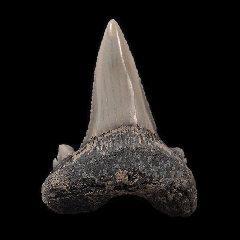
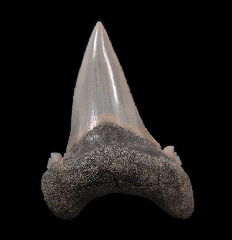
Learn More - Otodus aksuaticus (Partial serrated)$350.00
A very rare, early Otodus aksuaticus anterior tooth from Kzil-Orda, Kazakhstan. A transitional tooth leading to O. auriculatus (see detailed discussion below) which leads to Megalodon. The bourlette is complete. This tooth exhibits small serrations along the lower 1/2 of the crown and micro serrations to the tip. These teeth exhibit excellent color, gloss, and preservation. A rare, early (Ypresian) Eocene Auriculatus transition tooth. A very challenging tooth to find when building a Megalodon evolutionary set! No repair or restoration. Authenticity guaranteed. This western Kazakhstan site is one of the few places in the world where the Otodus obliquus to Otodus auriculatus transition can be found in adjacent geologic layers.
K545 SIZE: 1-3/4"
Note - Adding 24 Kazakh Auriuclatus or transition teeth in July 2024. --> Link to Kazakh Auriculatus teeth.
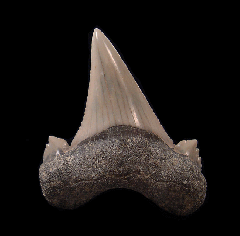
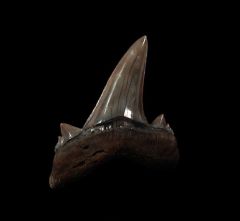
Learn More - Otodus aksuaticus (Partial serrated)$425.00
A very rare, early Otodus aksuaticus lateral tooth from Kzil-Orda, Kazakhstan. A transitional tooth leading to O. auriculatus (see detailed discussion below) which leads to Megalodon. A July Fossil of the Month.The bourlette is complete. This tooth exhibits small serrations along the lower 1/2 of the crown and micro serrations to the tip. These teeth exhibit excellent color, gloss, and preservation. A rare, early (Ypresian) Eocene Auriculatus transition tooth. A very challenging tooth to find when building a Megalodon evolutionary set! No repair or restoration. Authenticity guaranteed. This western Kazakhstan site is one of the few places in the world where the Otodus obliquus to Otodus auriculatus transition can be found in adjacent geologic layers.
K544 SIZE: 1-3/4"
Note - Adding 24 Kazakh Auriuclatus or transition teeth in July 2024. --> Link to Kazakh Auriculatus teeth.
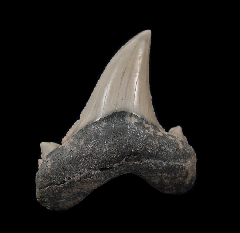
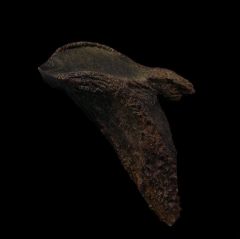
Learn More - Otodus aksuaticus (Partial serrated)$425.00
A very rare, early Otodus aksuaticus lateral tooth from Kzil-Orda, Kazakhstan. A transitional tooth leading to O. auriculatus (see detailed discussion below) which leads to Megalodon. The bourlette is complete. This tooth exhibits small serrations along the lower 1/3 of the crown and micro serrations to the tip. These teeth exhibit excellent color, gloss, and preservation. A rare, early (Ypresian) Eocene Auriculatus transition tooth. A very challenging tooth to find when building a Megalodon evolutionary set! No repair or restoration. Authenticity guaranteed. This western Kazakhstan site is one of the few places in the world where the Otodus obliquus to Otodus auriculatus transition can be found in adjacent geologic layers.
K543 SIZE: 1-7/8"
Note - Adding 24 Kazakh Auriuclatus or transition teeth in July 2024. --> Link to Kazakh Auriculatus teeth.
Learn More - Otodus aksuaticus (Partial serrated)$550.00
A very rare, early Otodus aksuaticus lateral tooth from Kzil-Orda, Kazakhstan. A transitional tooth leading to O. auriculatus (see detailed discussion below) which leads to Megalodon. A July Fossil of the Month. The bourlette is complete. This tooth exhibits small serrations along the lower 1/2 of the crown and micro serrations to the tip. These teeth exhibit excellent color, gloss, and preservation. A rare, early (Ypresian) Eocene Auriculatus transition tooth. A very challenging tooth to find when building a Megalodon evolutionary set! No repair or restoration. Authenticity guaranteed. This western Kazakhstan site is one of the few places in the world where the Otodus obliquus to Otodus auriculatus transition can be found in adjacent geologic layers.
K542 SIZE: 2-1/8"
Note - Adding 24 Kazakh Auriuclatus or transition teeth in July 2024. --> Link to Kazakh Auriculatus teeth.
Learn More - Otodus aksuaticus (Partial serrated)$525.00
A very rare, early Otodus aksuaticus anterior tooth from Kzil-Orda, Kazakhstan. A transitional tooth leading to O. auriculatus (see detailed discussion below) which leads to Megalodon. A July Fossil of the Month. The bourlette is complete. This tooth exhibits small serrations along the lower 1/2 of the crown and micro serrations to the tip. These teeth exhibit excellent color, gloss, and preservation. A rare, early (Ypresian) Eocene Auriculatus transition tooth. A very challenging tooth to find when building a Megalodon evolutionary set! No repair or restoration. Authenticity guaranteed. This western Kazakhstan site is one of the few places in the world where the Otodus obliquus to Otodus auriculatus transition can be found in adjacent geologic layers.
K542 SIZE: 2-3/16"
Note - Adding 24 Kazakh Auriuclatus or transition teeth in July 2024. --> Link to Kazakh Auriculatus teeth.
Learn More - Otodus mugodzharicus (Partial serrated)$0.00
A very rare, early Otodus mugodzharicus upper jaw, lateral tooth from Aktulagay, western Kazakhstan. A transitional tooth leading to C. auriculatus (see detailed discussion below) which leads to Megalodon. A November Fossil of the Month.The bourlette is complete. Tooth exhibits "wavy serrated" edges similar to the Isurus escheri tooth. These teeth exhibit very good color, gloss, and preservation. A rare, early Eocene Auriculatus transition tooth. A very challenging tooth to find when building a Megalodon evolutionary set! No repair. Authenticity guaranteed. This western Kazakhstan site is one of the few places in the world where the Otodus to Auriculatus transition can be found in adjacent layers. Note - This is my last offering of Aktluagay teeth.
K552 SIZE: 1-9/16"
Note - Adding 19 Kazakh Auriuclatus or transition teeth in November 2021. --> Link to Kazakh Auriculatus teeth.
Learn More - Triceratops$0.00
A rare, Top Quality Triceratops horridus rooted tooth from the late Cretaceous of northern North America. Another July 2018 Fossil of the Month. Triceratops is a large ceratopsian dinosaur found in the Hell Creek formation. The enamel is excellent quality with excellent color / patina. Extra large root which is quite rare. Incredible preservation of the crown and root that shows their intricate detail. The chewing surface measures 1-1/14” with a very high ridge. This is a recently erupted tooth that has slight tip wear. No cracks or restoration. A rare rooted, extra large Triceratops tooth! Legally collected on private land in the Hell Creek Fm., Carter Co., Montana. An excellent collector's quality Triceratops tooth. Note - tooth comes with a Riker type frame. Authenticity guaranteed. My largest and best triceratops tooth!
DC01 BoP SIZE: 2-1/4"
Note - Adding new Triceratops fossils in July 2018. Link to Triceratops fossils catalog
Learn More - Triceratops Frill Section$0.00
A Top Quality, Triceratops horridus frill section from the late Cretaceous of northern North America. Triceratops was a large ceratopsian dinosaur found in the Hell Creek and Lance Creek formations which is know for three horns and the large frill protecting its neck. This is a great frill section with excellent detail preserved. You can see all of the natural blood grooves across the surface of the frill. No repair or restoration. 100% natural specimen. Legally collected on private land in Garfield Co., Montana. Authenticity guaranteed.
DC50 SIZE: 3-1/4" Wide x 1-5/8" High x 1-1/4" Thick
Note - Adding 19 new Triceratops bones in May 2023. Link to Triceratops fossils catalog
Learn More - Triceratops Frill Section$125.00
A Top Quality, Triceratops horridus frill section from the late Cretaceous of northern North America. Triceratops was a large ceratopsian dinosaur found in the Hell Creek formation which is known for three horns and the large frill protecting its neck. This is a great frill section with excellent detail preserved. You can see all of the natural blood grooves across the surface of the frill. No repair or restoration. 100% natural specimen. Legally collected on private land in Garfield Co., Montana. Authenticity guaranteed.
DC49 SIZE: 3-5/8" Wide x 2-1/4" High x 1-1/8" Thick
Note - Adding 19 new Triceratops bones in May 2023. Link to Triceratops fossils catalog
Learn More - Triceratops Frill Section$165.00
A Top Quality, Triceratops horridus frill section from the late Cretaceous of northern North America. Triceratops was a large ceratopsian dinosaur found in the Hell Creek formation which is known for three horns and the large frill protecting its neck. This is a great frill section with excellent detail preserved. You can see all of the natural blood grooves across the surface of the frill. A very thick end of frill section. No repair or restoration. 100% natural specimen. Legally collected on private land in Garfield Co., Montana. Authenticity guaranteed.
DC46 SIZE: 3-3/4" Wide x 2-1/2 High x 1-3/4" Thick
Note - Adding 19 new Triceratops bones in May 2023. Link to Triceratops fossils catalog
Learn More - Triceratops Epoccipital$0.00
A rare, Top Quality Triceratops horridus epoccipital (frill ornament) from the late Cretaceous of northern North America. Triceratops was a large ceratopsian dinosaur found in the Hell Creek and Lance Creek formations which is know for three horns and a large frill protecting its neck. This epoccipital has excellent detail preserved and great color / patina. The epoccipitals were triangular bone ornaments that lined the top of the frill. The young Triceratops had narrow and tall epoccipitals, older juvenile Triceratops had low and wide epoccipitals, and adult Triceratops no longer had this ornament. You can see this epoccipital is narrow which are characteristics of a young Triceratops. Complete specimen. No repair or restoration. 100% natural specimen. Legally collected on private land in Garfield Co., Montana. Authenticity guaranteed.
DC65 SIZE: 1-3/8" Wide x 15/16" Height
Note - Adding 19 new Triceratops bones in May 2023. Link to Triceratops fossils catalog
Learn More