Search results for: 'with+good+cani'
- Did you mean
- wide good cani
- with good ca02
- Related search terms
- with+good+cani/
- with+good+cani//
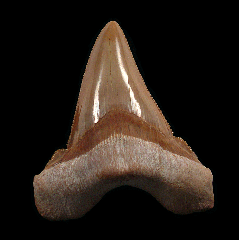
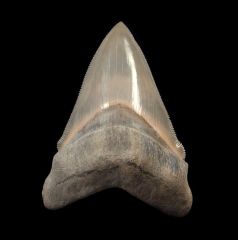
- Otodus sokolovi - Morocco$695.00
An EXTRA LARGE, rare, Top Quality Otodus sokolovi tooth from Boujdour, Western Sahara, Morocco. Enamel quality is excellent with an excellent large bourlette. The serrations are very sharp - razor sharp. The side cusps are complete with uniform serrations. The root is massive and complete. Exceptional preservation. This tooth is a Late Eocene age, Aridal Formation (approx. 42 million years ago). No repair or restoration. Authenticity guaranteed.
M042 SIZE: 3-7/16"
Adding 12 Otodus sokolovi teeth in October 2023. Link to Moroccan Otodus sokolovi teeth.
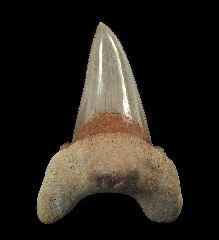
Learn More - Otodus sokolovi - Morocco$625.00
An EXTRA LARGE, rare, Top Quality Otodus sokolovi tooth from Boujdour, Western Sahara, Morocco. Anterior tooth. Enamel quality is excellent with an excellent large bourlette. The serrations are very sharp - razor sharp. The side cusps are complete with uniform serrations. The root is massive and complete. Exceptional preservation. This tooth is a Late Eocene age, Aridal Formation (approx. 42 million years ago). No repair or restoration. Authenticity guaranteed.
M041 SIZE: 3-7/16"
Adding 12 Otodus sokolovi teeth in October 2023. Link to Moroccan Otodus sokolovi teeth.
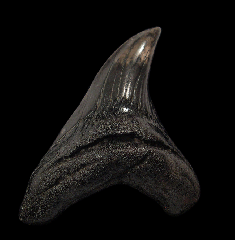
Learn More - Parotodus benedeni - South Carolina$350.00
A LARGE, very rare, Top Quality Parotodus benedeni tooth with a massive root from the Cooper River, So. Carolina. A Miocene-Pliocene age tooth from the Hawthorne Fm. Nice BLACK color. Lateral tooth. High quality enamel with sharp edges and tip. Root is complete, thick (3/4"), nicely articulated, and a typical hydration crack. No repair or restoration. Authenticity guaranteed. A very difficult tooth to locate.
SC870 SIZE: 2-11/16"
Adding 15 So. Caroilna Parotodus benedeni teeth in May 2025. -> Link to SC Parotodus benedeni teeth.
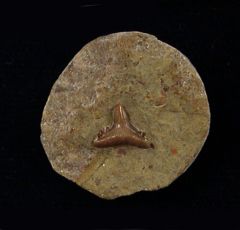
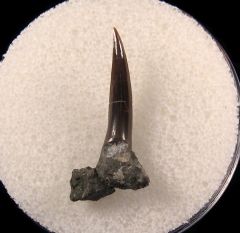
Learn More - Hybodus longiconus$45.00
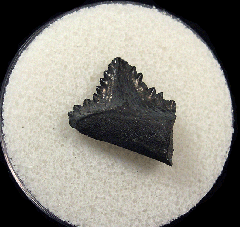
A rare Hybodus longiconus tooth with well developed side cusps. This tooth is from Muschelkalk limestone - middle Triassic age (240 million years old).
FR235 SIZE: 1/4+"
Learn More - Otodus chubutensis$0.00
An EXTRA LARGE, TOP QUALITY, classic Lee Creek Chubutensis tooth (predecessor of Megalodon) - upper jaw ANTERIOR tooth. Another December 2017 Fossil fo the Month.This Chubutensis has an incredible light gray colored crown with fades to a golden tan. The bourlette is essentially complete and a great light brown color. Highest quality enamel with a no hydration cracks. Exceptional color! The serrations are razor sharp - near perfect with a needle-like tip serration. The root is an excellent light tan color and absolutely complete. This Chubutensis was found in the Pungo River Formation, Lee Creek mine, NC (Miocene age = 14.5 MYA). NO repair! Authenticity guaranteeed. One of the finest examples of a classic Lee Creek Megs considering the shape, color, and preservation. Incredible size and eye appeal. An exceptional collector's tooth from the old days at Lee Creek mine!
LC024 BoP Size: 3-7/16"
Learn More - Dykeius garethi$0.00
A Very Rare, EXTRA LARGE Top Quality Dykeius garethi tooth central cusp from Hornby Island, British Columbia, Canada. An August Fossil of the Month. This is a new genius of Frill shark from the Late Cretaceous deep water Northumberland Formation deposit. Another unique species of Chlamydoselachiform shark, the Frill shark. This is the largest Frill shark in the deposit with teeth over 1" tall (28.5 mm). These teeth exhibit classic Frill shark design with a central cusp flanked by two lateral cusps. Dykeius teeth are taller than wide. The crown is complete with the tip reattached. Highest quality enamel. No repair. A very difficult tooth to locate and an excellent collector's tooth. Authenticity guaranteed. This incredible specimen is from a 20 year old collection. An excellent Frill shark specimen!
CD97 SIZE: 7/8" Height
Note - Adding 64 Hornby Island deep water shark teeth. -> Link to all Hornby Island shark teeth.
Learn More - Orcinus sp. - Killer Whale$695.00
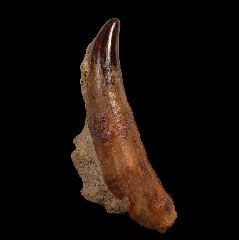
An ultra rare Orcinus sp., a Killer whale, tooth from Caldera area of Chile. An incredible late Miocene Killer whale tooth from the Bahia Inglesa Fm. A MArch Fossil of the Momth. This tooth has incredible preservation and fantastic brown color. No repair or restoration. Authenticity guaranteed. Unfortunately there are no teeth coming from this site 19 years! This is the only Killer whale tooth that I have seen from this deposit. Orcinus sp., a Killer whale, evolved in the early Miocene, and is quite challenging to find in the fossil record. *** No discounts. ***
C713 SIZE: 3-3/8" (7/8" wide)
Note - Adding 16 Chilean Sperm whale fossils in March 2025. -> Link to Whale teeth.
Learn More - Edestus heinrichi$85.00
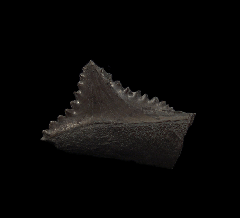
A very rare, Top Quality Edestus heinrichi shark tooth, from Herrin, Illinois. This is a Paleozoic shark that lived in swamps that our now underground coal deposits. Excellent preservation, serrations, and serration detail. The Edestus shark would have an upper and lower tooth whorl that are vertically opposed. Research showed that they could use their opposing teeth in a scissor-like motion to cut prey. It is the first animal to cut vertically. A very strange looking and unique acting shark. Shark recreation image is credited to Julio Lacerdo. These rare teeth are Pennsylvanian age from Illinois. No repair or restoration. Authenticity guaranteed.
I15 SIZE: 1-1/4"
Adding 14 Edestus shark specimens in January 2023. Link to Edestus shark.
Learn More - Edestus heinrichi$47.50
A very rare, Top Quality Edestus heinrichi shark tooth, from Herrin, Illinois. This is a Paleozoic shark that lived in swamps that our now underground coal deposits. Excellent preservation, serrations, and serration detail. The Edestus shark would have an upper and lower tooth whorl that are vertically opposed. Research showed that they could use their opposing teeth in a scissor-like motion or a vertical whipping motion to cut prey. It is the first animal to cut vertically. A very strange looking and unique acting shark. Shark recreation image is credited to Julio Lacerdo. These rare teeth are Pennsylvanian age from Illinois. No repair or restoration. Authenticity guaranteed.
I24 SIZE: 2-5/8" w/ root
Adding 22 Edestus shark specimens in July 2025. Link to Edestus shark.
Learn More - Edestus heinrichi$70.00
A very rare, Top Quality Edestus heinrichi shark tooth, from Herrin, Illinois. This is a Paleozoic shark that lived in swamps that our now underground coal deposits. Excellent preservation, serrations, and serration detail. The Edestus shark would have an upper and lower tooth whorl that are vertically opposed. Research showed that they could use their opposing teeth in a scissor-like motion or a vertical whipping motion to cut prey. It is the first animal to cut vertically. A very strange looking and unique acting shark. Shark recreation image is credited to Julio Lacerdo. These rare teeth are Pennsylvanian age from Illinois. No repair or restoration. Authenticity guaranteed.
I23 SIZE: 1-7/8" w/ root (7/8" crown)
Adding 22 Edestus shark specimens in July 2025. Link to Edestus shark.
Learn More - Edestus heinrichi$65.00
A very rare, Top Quality Edestus heinrichi shark tooth, from Herrin, Illinois. This is a Paleozoic shark that lived in swamps that our now underground coal deposits. Excellent preservation, serrations, and serration detail. The Edestus shark would have an upper and lower tooth whorl that are vertically opposed. Research showed that they could use their opposing teeth in a scissor-like motion or a vertical whipping motion to cut prey. It is the first animal to cut vertically. A very strange looking and unique acting shark. Shark recreation image is credited to Julio Lacerdo. These rare teeth are Pennsylvanian age from Illinois. No repair or restoration. Authenticity guaranteed.
I22 SIZE: 1--1/4" crown
Adding 22 Edestus shark specimens in July 2025. Link to Edestus shark.
Learn More - Edestus heinrichi$95.00
A very rare, Top Quality Edestus heinrichi shark tooth, from Herrin, Illinois. This is a Paleozoic shark that lived in swamps that our now underground coal deposits. Excellent preservation, serrations, and serration detail. The Edestus shark would have an upper and lower tooth whorl that are vertically opposed. Research showed that they could use their opposing teeth in a scissor-like motion or a vertical whipping motion to cut prey. It is the first animal to cut vertically. A very strange looking and unique acting shark. Shark recreation image is credited to Julio Lacerdo. These rare teeth are Pennsylvanian age from Illinois. No repair or restoration. Authenticity guaranteed.
I21 SIZE: 3/4" crown
Adding 22 Edestus shark specimens in July 2025. Link to Edestus shark.
Learn More