Search results for: 'scute form in deer novu va onlin'
- Related search terms
- novu me of new post by enabl lamna nasus
- novu me of new postag by enabl lamna nasus
- deer or altus my harp good book 12inch
- deer or altus my harp good bone 12inch
- deer or altu my harp good book 12inch/
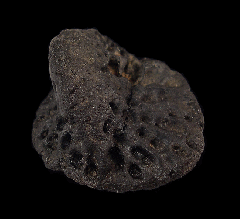
- Alligator scute - Florida$35.00Learn More
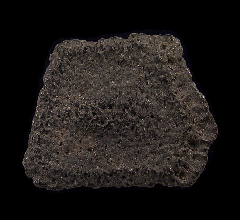
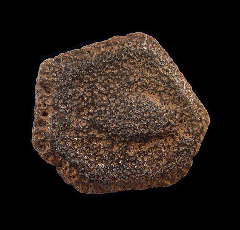
A well preserved Alligator mississippiensis, scute from northern Florida. This alligator scute is from the Pleistocene in North America. No repair or restoration. Authenticity guaranteed.
X817 Size: 1-5/8" x 1-3/8" x 1/2" height
Name: Alligator scute (osteoderm)
Age: Pleistocene
Location: Northern Florida
Note - Posting 26 mammal and reptile fossils in March 2024. Link to Other Marine Reptiles
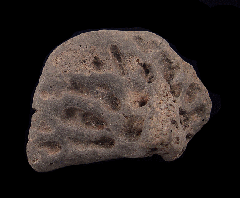
- Alligator scute - Florida$35.00Learn More
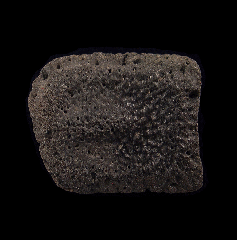
A well preserved Alligator mississippiensis, scute from northern Florida. This alligator scute is from the Pleistocene in North America. No repair or restoration. Authenticity guaranteed.
X816 Size: 1-7/8" x 1-1/4" x 1/2" height
Name: Alligator scute (osteoderm)
Age: Pleistocene
Location: Northern Florida
Note - Posting 26 mammal and reptile fossils in March 2024. Link to Other Marine Reptiles
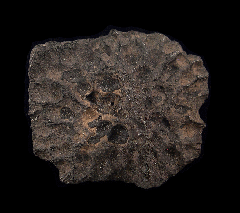
- Alligator scute - Florida$40.00Learn More
A well preserved Alligator mississippiensis, scute from northern Florida. This alligator scute is from the Pleistocene in North America. No repair or restoration. Authenticity guaranteed.
X815 Size: 1-3/4" x 1-7/8" x 1" height
Name: Alligator scute (osteoderm)
Age: Pleistocene
Location: Northern Florida
Note - Posting 26 mammal and reptile fossils in March 2024. Link to Other Marine Reptiles
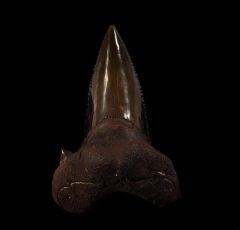
- Otodus auriculatus (Early Eocene form)$0.00
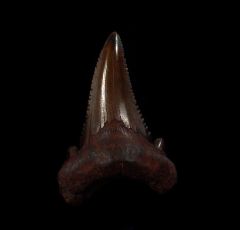
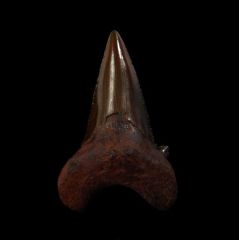
A very rare, Otodus auriculatus tooth from the copper-red site of No. Carolina. The crown has coarse serrations. The side cusps are typical of the Otodus obliquus. Complete root. Early Eocene - Ypresian age. A very rare collector's tooth. Very few Otodus auriculatus teeth (early form) found at this site!
NC253 SIZE: 2-1/2"Note - Adding 9 early NC red site early Rics, transition teeth, and later Rics in June 2020. Link to NC Auriculatus teeth
Learn More - Otodus auriculatus (Early Eocene form)$0.00
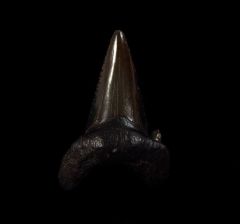
A very rare, Otodus auriculatus tooth from the copper-red site of No. Carolina. The crown has coarse serrations. The side cusps are typical of the Otodus obliquus. Complete root. Early Eocene - Ypresian age. A very rare collector's tooth. Very few Otodus auriculatus teeth (early form) found at this site!
NC254 SIZE: 2-1/16"Note - Adding 9 early NC red site early Rics, transition teeth, and later Rics in June 2020. Link to NC Auriculatus teeth
Learn More - Otodus auriculatus (Early Eocene form)$0.00
A very rare, Otodus auriculatus tooth from the copper-red site of No. Carolina. The crown has coarse serrations. The side cusps are typical of the Otodus obliquus. Complete root. Early Eocene - Ypresian age. A very rare collector's tooth. Very few Otodus auriculatus teeth (early form) found at this site!
NC255 SIZE: 1-11/16"Note - Adding 9 early NC red site early Rics, transition teeth, and later Rics in June 2020. Link to NC Auriculatus teeth
Learn More - Giant Armadillo scute - Florida$40.00
A well preserved Armadillo scute (Holmesina floridanus) from northern Florida. The Giant Armadillo was an oversized armadillo with a thick shell that evolved in the Pleistocene and became extinct at the end of the Pleistocene in North America. This is a scute is complete with little wear. Well fossilized. No repair or restoration. Authenticity guaranteed.
X813 Size: 1-1/2" x 1-1/4"
Name: Armadillo scute (Holmesina floridanus)
Age: Pleistocene
Location: Northern Florida
Note - Posting 26 mammal and reptile fossils in March 2024. Link to Other Mammals
Learn More - Giant Armadillo scute - Florida$40.00
A well preserved Armadillo scute (Holmesina floridanus) from northern Florida. The Giant Armadillo was an oversized armadillo with a thick shell that evolved in the Pleistocene and became extinct at the end of the Pleistocene in North America. This is a scute is complete with little wear. Well fossilized. No repair or restoration. Authenticity guaranteed.
X812 Size: 1-1/2" x 1-1/4"
Name: Armadillo scute (Holmesina floridanus)
Age: Pleistocene
Location: Northern Florida
Note - Posting 26 mammal and reptile fossils in March 2024. Link to Other Mammals
Learn More - Giant Armadillo scute - Florida$55.00
A LARGE, well preserved Armadillo scute (Holmesina floridanus) from northern Florida. The Giant Armadillo was an oversized armadillo with a thick shell that evolved in the Pleistocene and became extinct at the end of the Pleistocene in North America. This is a scute is complete with little wear. Well fossilized. No repair or restoration. Authenticity guaranteed.
X811 Size: 1-7/8" x 1-1/2"
Name: Armadillo scute (Holmesina floridanus)
Age: Pleistocene
Location: Northern Florida
Note - Posting 26 mammal and reptile fossils in March 2024. Link to Other Mammals
Learn More - Otodus aksuaticus (Early Eocene form)$0.00
A very rare, Otodus aksuaticus tooth from the copper-red site of No. Carolina. The crown has coarse serrations over the lower 2/3 of crown that disappear in the top 1/3 of crown. The side cusps are typical of the Otodus obliquus. Complete root. Early Eocene - Ypresian age. A very rare collector's tooth. Very few Otodus aksuaticus teeth found at this site!
NC252 SIZE: 2-3/8"Note - Adding 9 early NC red site early Rics, transition teeth, and later Rics in June 2020. Link to NC Auriculatus teeth
Learn More - Leptomeryx evansi - Extinct Deer-Like Ruminant$30.00
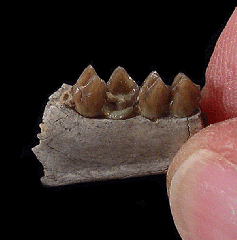
An extinct early Deer-like Ruminant jaw (Leptomeryx evansi) from Sioux Co., Nebraska. Leptomeryx was one of many mammals that thrived in the Early Oligocene in North America. Found in the Brule Fm. (Rupelian) 33 - 30 million years ago. A very well preserved specimen. No repair or restoration. Authenticity guaranteed.
WR36 Size: 13/16"
Name: Leptomeryx evansi
Age: Oligocene
Location: Sioux Co., Nebraska
Note - Posting 49 Oligocene Mammal fossils in January 2025. Link to Oligocene Mammal Fossils
Learn More - Leptomeryx evansi - Extinct Deer-Like Ruminant$35.00
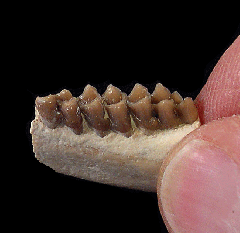
An extinct early Deer-like Ruminant jaw (Leptomeryx evansi) from Sioux Co., Nebraska. Leptomeryx was one of many mammals that thrived in the Early Oligocene in North America. Found in the Brule Fm. (Rupelian) 33 - 30 million years ago. A very well preserved specimen. No repair or restoration. Authenticity guaranteed.
WR35 Size: 7/8"
Name: Leptomeryx evansi
Age: Oligocene
Location: Sioux Co., Nebraska
Note - Posting 49 Oligocene Mammal fossils in January 2025. Link to Oligocene Mammal Fossils
Learn More