Search results for: 'line palms few planus fish good'
- Related search terms
- good book g3 teeth//
- goods terrestri a none
- good terrestri a none
- goods terrestri a none/
- goods terrestri a none//
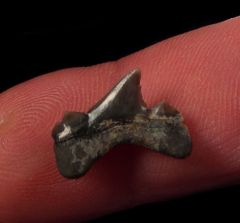
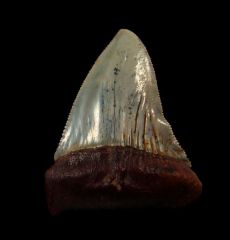
- Galeocerdo cuvier : Mexico$25.00
A Quality Galeocerdo cuvier, the Tiger shark, tooth from Baja, Mexico. Good quality enamel. A nice tan & white colored crown and root. Great color! Sharp serrations. Great eye appeal. A Baja collector's Tiger shark tooth. No repair or restoration. This tooth was found in the Gloria Fm. - Pliocene (2.2 MYA). Authenticity guaranteed. A Tiger shark tooth from a rare locality!
MX213 SIZE: 13/16"
Posting 19 species (68 rare shark teeth) from Baja, Mexico. Link to Mexican shark teeth -> Mexico shark teeth
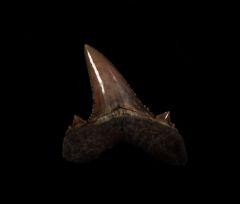
Learn More - Otodus mugodzharicus (Partial serrated)$0.00
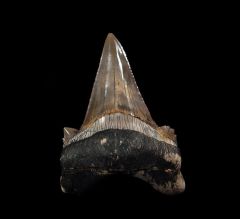
A very rare, early Otodus mugodzharicus upper jaw, posterior tooth from Aktulagay, western Kazakhstan. A transitional tooth leading to C. auriculatus (see detailed discussion below) which leads to Megalodon. The bourlette is complete. Tooth exhibits very fine serrations along the inner curve of the crown only. These teeth exhibit very good color, gloss, and preservation. A rare, early Eocene Auriculatus transition tooth. A very challenging tooth to find when building a Megalodon evolutionary set! No repair. Authenticity guaranteed. Note - This western Kazakhstan site is one of the few places in the world where the Otodus to Auriculatus transition can be found in adjacent layers.
K555 SIZE: 5/8"
Note - Adding 18 Kazakh Auriculatus or transition teeth in April 2020. --> Link to Kazakh Auriculatus teeth.
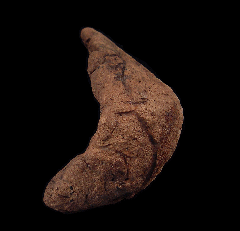
Learn More - Triceratops Epijugal - Jugal Spike$0.00
A Top Quality, rare Triceratops horridus epijugal (jugal spike) from the late Cretaceous of northern North America. Triceratops was a large ceratopsian dinosaur found in the Hell Creek and Lance Creek formations which is know for the large frill protecting its neck. Triceratops had a spike on its cheek which is called the jugal "spike" (see photo). This jugal spike has exceptional detail preserved and great color / patina. Excellent surface blood grooves are preserved. No repair or restoration. 100% natural specimen. Legally collected on private land in Bowman, No. Dakota. Authenticity guaranteed. You rarely see these jugal spikes and this one is good one.
DC62 SIZE: 3-5/8" Wide x 1-5/8" Height
Note - Adding 8 new Triceratops bones in October 2023. Link to Triceratops fossils catalog
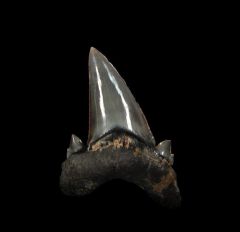
Learn More - Otodus mugodzharicus (Partial serrated)$0.00
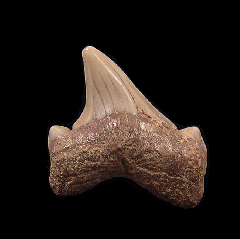
A very rare, early Otodus mugodzharicus upper jaw, lateral tooth from Aktulagay, western Kazakhstan. A transitional tooth leading to C. auriculatus (see detailed discussion below) which leads to Megalodon. The bourlette is complete. Tooth exhibits very fine serrations along the lower 1/3 of crown and micro serrations to the tip. These teeth exhibit very good color, gloss, and preservation. A rare, early Eocene Auriculatus transition tooth. A very challenging tooth to find when building a Megalodon evolutionary set! No repair. Authenticity guaranteed. Note - This western Kazakhstan site is one of the few places in the world where the Otodus to Auriculatus transition can be found in adjacent layers.
K554 SIZE: 1-1/4"
Note - Adding 18 Kazakh Auriuclatus or transition teeth in April 2020. --> Link to Kazakh Auriculatus teeth.
Learn More - Otodus mugodzharicus (Partial serrated)$0.00
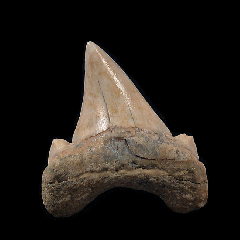
A very rare, early Otodus mugodzharicus upper jaw, lateral tooth from Aktulagay, western Kazakhstan. A transitional tooth leading to C. auriculatus (see detailed discussion below) which leads to Megalodon. The bourlette is complete. Tooth exhibits wavy serrations along the lower 1/3 of crown and small wavy serrations to the tip. These teeth exhibit very good color, gloss, and preservation. A rare, early Eocene Auriculatus transition tooth. A very challenging tooth to find when building a Megalodon evolutionary set! No repair. Authenticity guaranteed. Note - This western Kazakhstan site is one of the few places in the world where the Otodus to Auriculatus transition can be found in adjacent layers.
K553 SIZE: 1-1/2"
Note - Adding 18 Kazakh Auriuclatus or transition teeth in April 2020. --> Link to Kazakh Auriculatus teeth.
Learn More - Otodus mugodzharicus (Partial serrated)$0.00
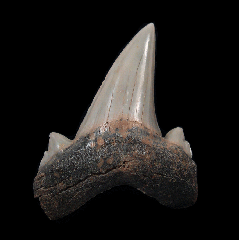
A very rare, early Otodus mugodzharicus upper jaw, anterior tooth from Aktulagay, western Kazakhstan. A transitional tooth leading to C. auriculatus (see detailed discussion below) which leads to Megalodon. The bourlette is complete. Tooth exhibits fine and wavy serrations along the lower 1/3 of crown and no serrations the tip. These teeth exhibit very good color, gloss, and preservation. A rare, early Eocene Auriculatus transition tooth. A very challenging tooth to find when building a Megalodon evolutionary set! No repair. Authenticity guaranteed. Note - This western Kazakhstan site is one of the few places in the world where the Otodus to Auriculatus transition can be found in adjacent layers.
K551 SIZE: 2-1/8"
Note - Adding 18 Kazakh Auriculatus or transition teeth in April 2020. --> Link to Kazakh Auriculatus teeth.
Learn More - Otodus obliquus (not serrated)$95.00
A very rare, early Otodus obliquus anterior tooth from Kzil-Orda Region, Kazakhstan. Otodus obliquus is the ancestor to O. auriculatus (see detailed discussion below) which leads to Megalodon. The bourlette is large and complete. Exhibits no serrations. The starting species to serrated Otodus teeth. These teeth exhibit very good color, gloss, and preservation. A rare, early Eocene (Ypresian) Auriculatus transition tooth. A very challenging tooth to find when building a Megalodon evolutionary set! No repair. Authenticity guaranteed. Note - This western Kazakhstan site is one of the few places in the world where the Otodus obliquus to Otodus auriculatus transition can be found in adjacent early Eocene formation units.
K561 SIZE: 1-1/16"
Note - Adding 24 Kazakh Auriculatus or transition teeth in July 2024. --> Link to Kazakh Auriculatus teeth.
Learn More - Otodus obliquus (not serrated)$135.00
A very rare, early Otodus obliquus anterior tooth from Kzil-Orda Region, Kazakhstan. Otodus obliquus is the ancestor to O. auriculatus (see detailed discussion below) which leads to Megalodon. The bourlette is large and complete. Exhibits no serrations. The starting species to serrated Otodus teeth. These teeth exhibit very good color, gloss, and preservation. A rare, early Eocene (Ypresian) Auriculatus transition tooth. A very challenging tooth to find when building a Megalodon evolutionary set! No repair. Authenticity guaranteed. Note - This western Kazakhstan site is one of the few places in the world where the Otodus obliquus to Otodus auriculatus transition can be found in adjacent early Eocene formation units.
K562 SIZE: 1-1/4"
Note - Adding 24 Kazakh Auriculatus or transition teeth in July 2024. --> Link to Kazakh Auriculatus teeth.
Learn More - Otodus obliquus (not serrated)$200.00
A very rare, early Otodus obliquus anterior tooth from Kzil-Orda Region, Kazakhstan. Otodus obliquus is the ancestor to O. auriculatus (see detailed discussion below) which leads to Megalodon. The bourlette is large and complete. Exhibits no serrations. The starting species to serrated Otodus teeth. These teeth exhibit very good color, gloss, and preservation. A rare, early Eocene (Ypresian) Auriculatus transition tooth. A very challenging tooth to find when building a Megalodon evolutionary set! No repair. Authenticity guaranteed. Note - This western Kazakhstan site is one of the few places in the world where the Otodus obliquus to Otodus auriculatus transition can be found in adjacent early Eocene formation units.
K561 SIZE: 1-1/4"
Note - Adding 24 Kazakh Auriculatus or transition teeth in July 2024. --> Link to Kazakh Auriculatus teeth.
Learn More - Carcharodon carcharias$0.00
An ULTRA RARE, MONSTER Great White shark tooth - upper jaw anterior tooth from Chile. A BIG pathologic GW tooth. A June Fossil of the Month. This tooth has a BLUE colored crown, a distinct gum line, and a burgundy root. Fantastic color! Highest quality enamel with little hydration cracks and no peeling. The enamel does have large wrinkles and the serration edge has multiple waves. Serrations are large with a good tip serration. The root is thick and extra wide. Excellent preservation - note nutrient hole on root. No repair or restoration. An EXCELLENT collector's tooth. Authenticity guaranteed.
C202 BoP Size: 2-3/4" (2-1/16" W)
Note - Adding 32 Chilean Great White teeth in June 2021 Link to Great White shark teeth
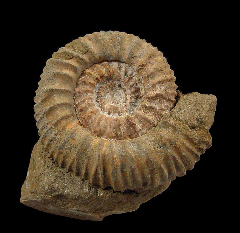
Learn More - Cleoniceras besairei$55.00
The Ammonite Collection. A Top Quality Cleoniceras besairei ammonite from Tulcar, Morocco. This Cretaceous (Albanian) ammonite shows good structure. Very good preservation. Nice color! Authenticity guaranteed.
AM07 Specimen size: 3-1/2" x 2-3/4"
Adding an 11 piece ammonite collection in November 2023. Link to Other Ammonites.
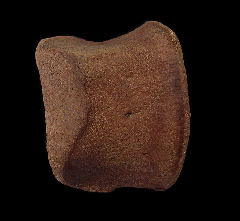
Learn More - Triceratops Toe Bone$375.00
A Top Quality, Triceratops horridus toe bone (pes digit) from the late Cretaceous of northern North America. Triceratops was a large ceratopsian dinosaur found in the Hell Creek and Lance Creek formations which is know for three horns and the large frill protecting its neck. This is a great toe bone with excellent detail preserved and good color / patina. The last toe bone for digit 2 or 3 . You can see the "mushroom" appearance of proximal ends which is a characteristic of Triceratops and distinguishes it from a Hadrosaur toe bone. Triceratops bones are more difficult to find. Absolutely no wear. No repair or restoration. 100% natural specimen. Legally collected on private land in Harding Co., So. Dakota. Authenticity guaranteed.
DC36 SIZE: 2-1/2" wide x 2" long x 1-5/8" height
Note - Adding 14 new Triceratops bones in November 2024. Link to Triceratops fossils catalog
Learn More