Search results for: 'marin with fossils'
- Did you mean
- marin wide fossils
- marin with fossil
- Related search terms
- marine good none my deer
- marine good none my di02
- marine good none my di01
- marine good none my di02/
- marine good none my du01
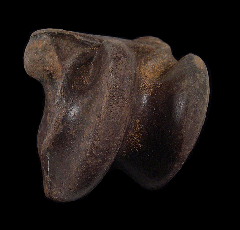
- Equus sp. Astragalus bone$25.00
A LARGE, well preserved horse astragalus bone (Equus sp. ) from Northern Florida. The astragalus is the ankle bone. The horse arrived in North America during the late Pliocene and became extinct at the end of the Pleistocene. A well fossilized specimen. No repair or restoration. Authenticity guaranteed.
XH31 Size: 2-1/2"
Name: Equus sp.
Age: Pleistocene
Location: Northern Florida
Note - Posting 23 horse fossils in December 2024. Link to Horse Fossils
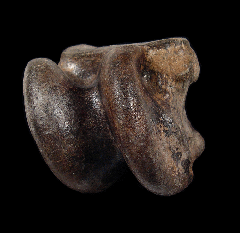
Learn More - Equus sp. Astragalus bone$32.50
A LARGE, well preserved horse astragalus bone (Equus sp. ) from Northern Florida. The astragalus is the ankle bone. The horse arrived in North America during the late Pliocene and became extinct at the end of the Pleistocene. A well fossilized specimen. No repair or restoration. Authenticity guaranteed.
XH30 Size: 2-5/8"
Name: Equus sp.
Age: Pleistocene
Location: Northern Florida
Note - Posting 23 horse fossils in December 2024. Link to Horse Fossils
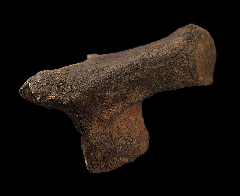
Learn More - Equus sp. Caleaneus bone$25.00
A LARGE, well preserved horse caleaneus bone (Equus sp. ) from Northern Florida. The caleaneus is the heel bone. The horse arrived in North America during the late Pliocene and became extinct at the end of the Pleistocene. A well fossilized specimen. No repair or restoration. Authenticity guaranteed.
XH29 Size: 3-3/4"
Name: Equus sp.
Age: Pleistocene
Location: Northern Florida
Note - Posting 23 horse fossils in December 2024. Link to Horse Fossils
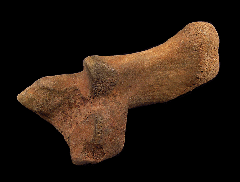
Learn More - Equus sp. Caleaneus bone$35.00
A LARGE, well preserved horse caleaneus bone (Equus sp. ) from Northern Florida. The caleaneus is the heel bone. The horse arrived in North America during the late Pliocene and became extinct at the end of the Pleistocene. A well fossilized specimen. No repair or restoration. Authenticity guaranteed.
XH28 Size: 4-3/4"
Name: Equus sp.
Age: Pleistocene
Location: Northern Florida
Note - Posting 23 horse fossils in December 2024. Link to Horse Fossils
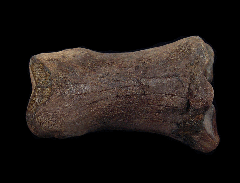
Learn More - Equus sp. Toe bone$22.50
A well preserved horse toe bone (Equus sp. ) from Northern Florida. This is the first toe bone (phalanx). The horse arrived in North America during the late Pliocene and became extinct at the end of the Pleistocene. A well fossilized specimen. No repair or restoration. Authenticity guaranteed.
XH24 Size: 3-7/8"
Name: Equus sp.
Age: Pleistocene
Location: Northern Florida
Note - Posting 23 horse fossils in December 2024. Link to Horse Fossils
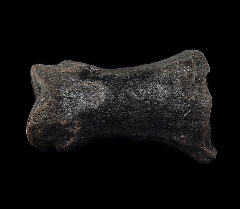
Learn More - Equus sp. Toe bone$32.50
A well preserved horse toe bone (Equus sp. ) from Northern Florida. This is the first toe bone (phalanx). The horse arrived in North America during the late Pliocene and became extinct at the end of the Pleistocene. A well fossilized specimen. No repair or restoration. Authenticity guaranteed.
XH23 Size: 3-7/8"
Name: Equus sp.
Age: Pleistocene
Location: Northern Florida
Note - Posting 23 horse fossils in December 2024. Link to Horse Fossils
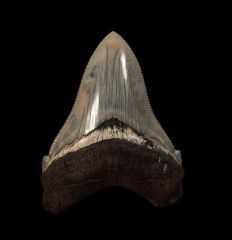
Learn More - Otodus chubutensis$0.00
A GEM, Lee Creek Carcharocles chubutensis, a C. megalodon predecessor, from Aurora, No. Carolina. This tooth was given the name the "Oreo Chub" with its black and white bourlette. Very rare colors for Lee Creek. A May Fossil of the Month. This tooth was found in the Pungo River Formation (middle Miocene age). Note the crown exhibits large cusplike bumps at the base of the serrated edge and the root ends also show grooves where the teeth interlocked. These are characteristic traits of the Lee Creek early Meg - C. chubutensis. A gorgeous tan & blue colored crown with an incredible black & white bourlette. Fantastic serrations with a nearly perfect with damage to one. The root is dark brown with small hydration cracks. Highest quality enamel! Excellent color! No repair or restoration. Authenticity guaranteed. I have only seen one LC Chub like this one - the "Oreo Chub" is a Lee Creek rarity!
LC012 BoP Size: 3-1/16"
Note - Adding 10 New Lee Creek Megalodon & Chubutensis Teeth In May 2020. -> Link to LC Megs & Chubs
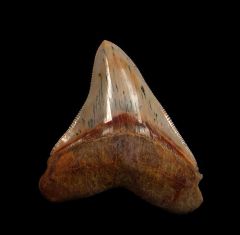
Learn More - Carcharocles megalodon$0.00
An Ultra Rare, GEM Quality Sharktooth Hill Megalodon tooth found in the Round Mountain silt near Bakersfield, California. A location that produces very few Megalodon teeth and one of the toughest Meg teeth to locate. A March 2021 Fossil of the Month. This colorful tooth was found in a "fire zone" site south of the Kern River. Highest quality enamel with a great tan and golden tan colors with charcoal highlights. The bourlette is a red color and 100% complete. The serrations are extra large and 100% complete with a great tip. The root is nicely articulated and complete. Also note the grooves on the root ends - a Miocene trait. This is a middle Miocene Meg - very unique! 100% natural. No repair or restoration. You will not see these middle Miocene Sharktooth Hill Megs from Bakersfield, California very often. One of the rarest Megs! Authenticity guaranteed. Museum Quality. An incredible color Meg collector piece! The BEST.
ST452 BoP Size: 3-7/8"
Note - Adding three Sharktooth Hill Meg teeth in March 2021. Link to Sharktooth Hill Meg Teeth.
Learn More - Dromaeosaurus albertensis$0.00
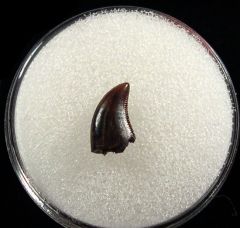
A RARE, Top Quality Dromaeosaurus albertensis (raptor) tooth from the Judith River Fm. of Montana. An August Fossil of the Month. This tooth is 3/8" which is a typical size. The enamel is excellent with a great brown color. This species is known for large posterior serrations that will turn upwards. Excellent large posterior (distal) and small anterior (mesial) serrations. No cracks. No repair. Legally collected on private land in the Judith River Fm., Wheatstone Co., Montana. Authenticity guaranteed. This is your chance to own a rare, top quality Dromaeosaurus albertensis tooth. Note - A gem jar will be included as photographed.
DG10 BoP SIZE: 3/8"
Note - Adding 2 new Dromaeosaurus teeth in August 2022 Link to Raptor (Dromaeosaur) catalog.
Learn More - Speartooth Shark - Modern$0.00
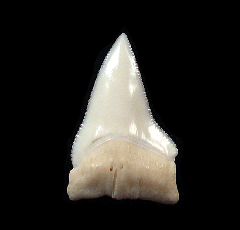
An EXTRA LARGE, GEM modern Speartooth shark, Glyphis glyphis. The Speartooth shark gets its name from the unique spear-like shape of its lower jaw teeth. Upper jaw tooth. A completely serrated tooth. Bright white color. Perfect tooth. Authenticity guaranteed. (2 Speartooth teeth available) A very unusual shark species!
MS01 SIZE: 1-3/16"
Note - Adding 15 new modern shark species in January 2024 -> Link to modern shark teeth
Learn More - Speartooth Shark - Modern$0.00
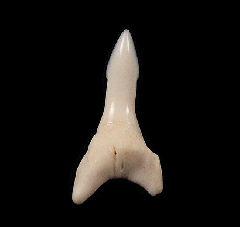
An EXTRA LARGE, GEM modern Speartooth shark, Glyphis glyphis. The Speartooth shark gets its name from the unique spear-like shape of its lower jaw teeth. Lower jaw tooth. The top of crown is serrated. Bright white color. Perfect tooth. Authenticity guaranteed. (4 Speartooth teeth available) A very unusual shark species! My of my favorite teeth!
MS02 SIZE: 1-1/4"
Note - Adding 15 new modern shark species in January 2024 -> Link to modern Blacktip shark teeth
Learn More - Seal - Monachus sp.$125.00
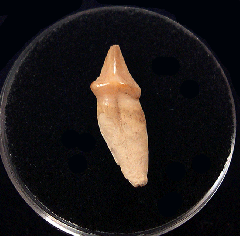
A rare, TOP QUALITY Monachus monachus seal molar tooth. Monachus is a late Miocene age seal from the Bahia Inglesa Fm., Copiapo, Chile. A near PERFECT tooth. Incredible root preservation and color. A great collector's tooth. Authenticity guaranteed.
C751 Size: 13/16"
Note - Adding 66 Chilean mammal fossils in March 2025. Link -> Chilean Seal fossils
Learn More