Search results for: 'crown crown bear lower flint teeth fossil'
- Related search terms
- fossil finder id good
- fossil fish id good
- fossil fisher id good/
- fossil fish id good/
- bear good cave in texanus river
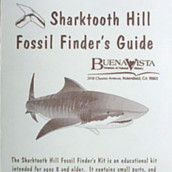
- Sharktooth Hill Fossil Finder's Guide By Hodson, et. al.$9.50
The Buena Vista Museum publishes an excellent guide to the fossil sharks of Sharktooth Hill. Out of print. REDUCED
BB10 Size: 5-1/2" x 8-1/2"
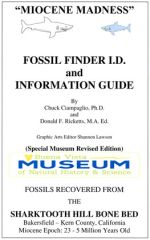
Learn More - Sharktooth Hill Fossil Finder's and Information Guide By Ciampaglio & Ricketts$20.00
The Buena Vista Museum publishes a new and improved guide to the fossil sharks of Sharktooth Hill. This guide has been expanded to 35 pages and now includes color photos of all of teeth. A must have for the Miocene fossil collector of California. Great value!
BB14 Size: 5-1/2" x 8-1/2"
Learn More - Ice Age Gray Wolf - Canis lupus$395.00
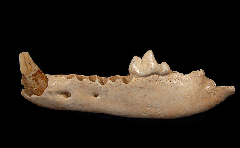
A Top Quality fossil Gray Wolf (Canis lupus) lower jaw with two teeth from southern Germany. These large wolves lived in the mountain caves from central Europe to Russia during the Ice Age. This jaw contains the canine and a large molar. No repair or restoration. Authenticity guaranteed. You can own a rare and wonderful story piece from the Ice Age!
Name: Canis lupus Age: Late Pleistocene
Location: Zoolithen cave, Bavaria, Germany
R574 SIZE: 5-3/4"
Note: Added 17 Ice Age / Cave Bear items in October 2024. Link -> Ice Age Fossils
Learn More - Edestus heinrichi$0.00
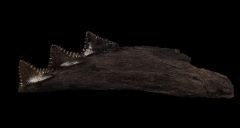
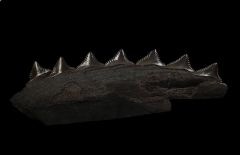
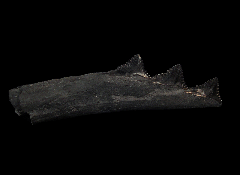
An ultra rare, Top Quality EXTRA LARGE Edestus heinrichi shark whorl section with 3 big crowns, from Herrin, Illinois. An April Fossil of the Month. This is a Paleozoic shark that lived in swamps that our now underground coal deposits. Excellent preservation and serrations. Note - extra long root whorl section with 3 extra large crowns - very rare. The Edestus shark would have an upper and lower tooth whorl that are vertically opposed. Research showed that they could use their opposing teeth in a scissor-like motion to cut prey. It is the first animal to cut vertically. A very strange looking and unique acting shark. Shark recreation image is credited to Julio Lacerdo. These rare teeth are Pennsylvanian age from Illinois. Note - Two crown tips were professionally retored. Authenticity guaranteed. Three crown whorl sections are rare!
I01 BoP2 SIZE: 1-3/4" teeth (Whorl 7-1/4")
Adding 15 Edestus shark specimens in April 2021. Link to Edestus shark.
Learn More - Edestus heinrichi$0.00
An ultra rare, LARGE Top Quality Edestus heinrichi shark whorl with 7 big crowns, from Herrin, Illinois. An October Fossil of the Month. This is a Paleozoic shark that lived in swamps that our now underground coal deposits. Excellent preservation and serrations. This whorl is incredible teeth detail - the first 5 crowns are all natural and the the last two have some top repair. One of the finest whorls that I have had. The Edestus shark would have an upper and lower tooth whorl that are vertically opposed. Research showed that they could use their opposing teeth in a scissor-like motion to cut prey. It is the first animal to cut vertically. A very strange looking and unique acting shark. Shark recreation image is credited to Julio Lacerdo. These rare teeth are Pennsylvanian age from Illinois. Note - Two crown tips were professionally retored. Authenticity guaranteed. Seven plus crown whorl sections are ultra rare! The BEST.
I01 BoP3 SIZE: 1-3/4" teeth (Whorl : 10-1/4" length)
Adding 11 Edestus shark specimens in October 2021. Link to Edestus shark.
Learn More - Edestus heinrichi$875.00
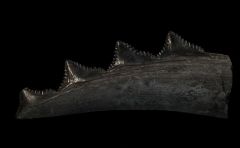
An ultra rare, LARGE, Top Quality Edestus heinrichi partial tooth whorl, from Herrin, Illinois. A July Fossil of the Month. This is a Paleozoic shark that lived in swamps that our now underground coal deposits. An ultra rare triple crown whorl section with exceptional quality crowns. Excellent preservation, serrations, and serration detail. The Edestus shark would have an upper and lower tooth whorl that are vertically opposed. Research showed that they could use their opposing teeth in a scissor-like motion or a vertical whipping motion to cut prey. It is the first animal to cut vertically. A very strange looking and unique acting shark. Shark recreation image is credited to Julio Lacerdo. These rare teeth are Pennsylvanian age from Illinois. No repair or restoration. Authenticity guaranteed.
I03 SIZE: 6-5/8" w/ root (1-7/8" crown)
Adding 22 Edestus shark teeth in July 2025. Link to Edestus shark.
Learn More - Edestus heinrichi$0.00
An ultra rare, Top Quality EXTRA LARGE Edestus heinrichi shark whorl section with 4 big crowns, from Sparta, Illinois. An August Fossil of the Month. This is a Paleozoic shark that lived in swamps that our now underground coal deposits. Excellent preservation and serrations. Note - extra long root whorl section with 4 extra large crowns - very rare. The Edestus shark would have an upper and lower tooth whorl that are vertically opposed. Research showed that they could use their opposing teeth in a scissor-like motion to cut prey. It is the first animal to cut vertically. A very strange looking and unique acting shark. Shark recreation image is credited to Julio Lacerdo. These rare teeth are Pennsylvanian age from Illinois. No repair or restoration. Authenticity guaranteed. Four crown whorl sections are extremely rare!
I01 BoP SIZE: 2" teeth (Whorl 6")
Adding 15 Edestus shark specimens in August 2020. Link to Edestus shark.
Learn More - Edestus heinrichi$1,495.00
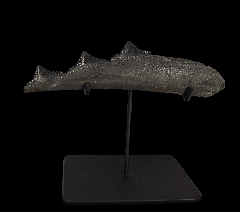
An ultra rare, Top Quality Edestus heinrichi, a complete whorl with three crowns from Herrin, Illinois. A July Fossil of the Month. This is a Paleozoic shark that lived in swamp that our now underground coal deposits. Exceptional preservation, serrations, and serration detail. The Edestus shark would have an upper and lower tooth whorl that are vertically opposed. Research showed that they could use their opposing teeth in a scissor-like motion to cut prey. It is the first animal to cut vertically with linear tooth whorls. A very strange looking and unique acting shark. This whorl is incredibly massive at 6" long with three crowns. The whorl body is well perserved with an excellent bright line of pyrite below the crown enamel. The crowns are large at 1-5/8" wide and look fantastic. Note - One crown tip has a small professional repair (~1/8") which is very common for a whorl. Pennsylvanian age from Illinois. Authenticity guaranteed. The Edestus shark recreation image is credited to Julio Lacerdo. These Edestus whorls are extremely rare. This whorl comes with a custon steel stand and makes a fantastic display piece. My lowest price ever for a complete whorl!
I01 SIZE: 6" whorl (1-5/8"+ crowns) ; Height is 4-1/8" on stand.
Adding 22 Edestus shark teeth in July 2025. Link to Edestus shark.
Learn More - Canis familiaris - Roman Period Dog$495.00
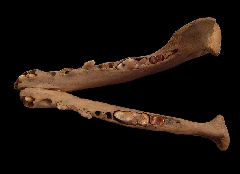
An exceptionally preserved, fossil dog jaw (Canis familiaris). This is a complete lower jaw with ten teeth from Austria. An October Fossil of the Month. This early dog is from the La Tene period (Younger Iron Time) and is 2300 years old during the Roman Period. Dogs were domesticated from the wolves by man for hunting & protection. These two mandibles contain a total of ten teeth. New find. No repair or restoration. Authenticity guaranteed. You can own a rare fossil dog jaw and wonderful story piece from the Roman Period. The BEST!
Name: Canis familiaris Age: Late Pleistocene
Location: Hauptmannbach cave, Muhlbach, Austria
R581 SIZE: 5-3/8"
Note: Added 17 Ice Age / Cave Bear items in October 2024. Link -> Ice Age Fossils
Learn More - The Collector's Guide to Fossil Sharks and Rays By Welton & Farrish$75.00
"The Collector's Guide to Fossil Sharks and Rays From the Cretaceous of Texas" is a must have book for collectors and professionals for the Cretaceous teeth of Texas and elsewhere. Very comprehensive with incredible photos. 204 pages. One of my favorites! Note - an intenational shipping surcharge will be required for qualified free shipping orders.
BB12 Size: 8-1/2" x 11"
Learn More - Otodus aksuaticus (Early Eocene form)$0.00
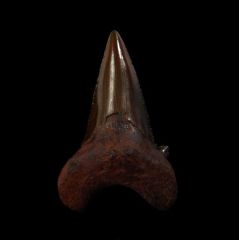
A very rare, Otodus aksuaticus tooth from the copper-red site of No. Carolina. The crown has coarse serrations over the lower 2/3 of crown that disappear in the top 1/3 of crown. The side cusps are typical of the Otodus obliquus. Complete root. Early Eocene - Ypresian age. A very rare collector's tooth. Very few Otodus aksuaticus teeth found at this site!
NC252 SIZE: 2-3/8"Note - Adding 9 early NC red site early Rics, transition teeth, and later Rics in June 2020. Link to NC Auriculatus teeth
Learn More - Fossil Collector's Guidebook to the North Sulfur River By McKinzie, et. al.$0.00
An excellent guide to the late Cretaceous and Pleistocene fossils of the N. Sulfur River of Texas. An exceptional guide to the N. Sulfur River teeth and other Cretaceous sites. Out of print.
BB05 SIZE: 8-1/2" x 11"
Learn More