Search results for: 'lion palms few planus first good'
- Related search terms
- goods terrestri a none
- good terrestri a none
- good terrestri a none/
- good terrestri a none//
- goods terrestri a none//
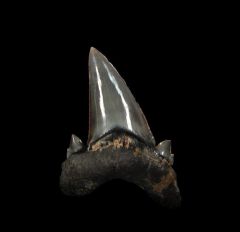
- Otodus mugodzharicus (Partial serrated)$0.00
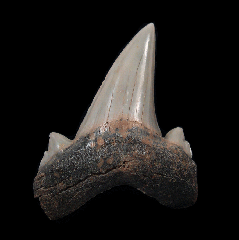
A very rare, early Otodus mugodzharicus upper jaw, lateral tooth from Aktulagay, western Kazakhstan. A transitional tooth leading to C. auriculatus (see detailed discussion below) which leads to Megalodon. The bourlette is complete. Tooth exhibits wavy serrations along the lower 1/3 of crown and small wavy serrations to the tip. These teeth exhibit very good color, gloss, and preservation. A rare, early Eocene Auriculatus transition tooth. A very challenging tooth to find when building a Megalodon evolutionary set! No repair. Authenticity guaranteed. Note - This western Kazakhstan site is one of the few places in the world where the Otodus to Auriculatus transition can be found in adjacent layers.
K553 SIZE: 1-1/2"
Note - Adding 18 Kazakh Auriuclatus or transition teeth in April 2020. --> Link to Kazakh Auriculatus teeth.
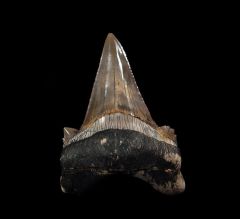
Learn More - Otodus mugodzharicus (Partial serrated)$0.00
A very rare, early Otodus mugodzharicus upper jaw, anterior tooth from Aktulagay, western Kazakhstan. A transitional tooth leading to C. auriculatus (see detailed discussion below) which leads to Megalodon. The bourlette is complete. Tooth exhibits fine and wavy serrations along the lower 1/3 of crown and no serrations the tip. These teeth exhibit very good color, gloss, and preservation. A rare, early Eocene Auriculatus transition tooth. A very challenging tooth to find when building a Megalodon evolutionary set! No repair. Authenticity guaranteed. Note - This western Kazakhstan site is one of the few places in the world where the Otodus to Auriculatus transition can be found in adjacent layers.
K551 SIZE: 2-1/8"
Note - Adding 18 Kazakh Auriculatus or transition teeth in April 2020. --> Link to Kazakh Auriculatus teeth.
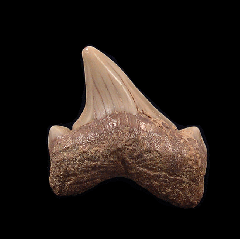
Learn More - Otodus obliquus (not serrated)$95.00
A very rare, early Otodus obliquus anterior tooth from Kzil-Orda Region, Kazakhstan. Otodus obliquus is the ancestor to O. auriculatus (see detailed discussion below) which leads to Megalodon. The bourlette is large and complete. Exhibits no serrations. The starting species to serrated Otodus teeth. These teeth exhibit very good color, gloss, and preservation. A rare, early Eocene (Ypresian) Auriculatus transition tooth. A very challenging tooth to find when building a Megalodon evolutionary set! No repair. Authenticity guaranteed. Note - This western Kazakhstan site is one of the few places in the world where the Otodus obliquus to Otodus auriculatus transition can be found in adjacent early Eocene formation units.
K561 SIZE: 1-1/16"
Note - Adding 24 Kazakh Auriculatus or transition teeth in July 2024. --> Link to Kazakh Auriculatus teeth.
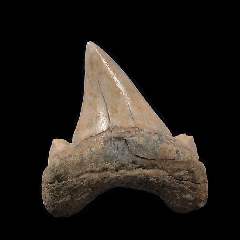
Learn More - Otodus obliquus (not serrated)$135.00
A very rare, early Otodus obliquus anterior tooth from Kzil-Orda Region, Kazakhstan. Otodus obliquus is the ancestor to O. auriculatus (see detailed discussion below) which leads to Megalodon. The bourlette is large and complete. Exhibits no serrations. The starting species to serrated Otodus teeth. These teeth exhibit very good color, gloss, and preservation. A rare, early Eocene (Ypresian) Auriculatus transition tooth. A very challenging tooth to find when building a Megalodon evolutionary set! No repair. Authenticity guaranteed. Note - This western Kazakhstan site is one of the few places in the world where the Otodus obliquus to Otodus auriculatus transition can be found in adjacent early Eocene formation units.
K562 SIZE: 1-1/4"
Note - Adding 24 Kazakh Auriculatus or transition teeth in July 2024. --> Link to Kazakh Auriculatus teeth.
Learn More - Otodus obliquus (not serrated)$200.00
A very rare, early Otodus obliquus anterior tooth from Kzil-Orda Region, Kazakhstan. Otodus obliquus is the ancestor to O. auriculatus (see detailed discussion below) which leads to Megalodon. The bourlette is large and complete. Exhibits no serrations. The starting species to serrated Otodus teeth. These teeth exhibit very good color, gloss, and preservation. A rare, early Eocene (Ypresian) Auriculatus transition tooth. A very challenging tooth to find when building a Megalodon evolutionary set! No repair. Authenticity guaranteed. Note - This western Kazakhstan site is one of the few places in the world where the Otodus obliquus to Otodus auriculatus transition can be found in adjacent early Eocene formation units.
K561 SIZE: 1-1/4"
Note - Adding 24 Kazakh Auriculatus or transition teeth in July 2024. --> Link to Kazakh Auriculatus teeth.
Learn More - Chomatodus sp.$40.00
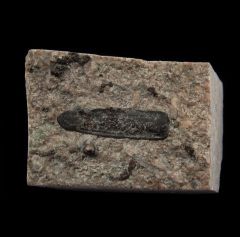
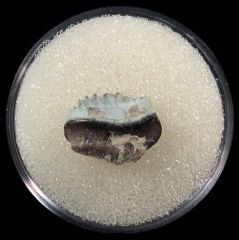
A LARGE rare, Top Quality Chomatodus sp., an extinct Petalodont shark tooth, from the Paleozoic era in Indiana. Good color. A well preserved specimen. No repair or restoration. Authenticity guaranteed. An excellent collector's tooth!
Age: Upper Mississippian (330 MYA); Indian Springs Shale Fm.
Location: Crawford Co., Indiana
Z047 SIZE: 1"
Adding 55 US Paleozoic teeth in May 2022 --> Link to US Paleozoic teeth
Learn More - Chomatodus sp.$30.00
A rare, Top Quality Chomatodus sp., an extinct primitive shark tooth, from the Paleozoic era in Kentucky. Good color. A well preserved specimen. No repair or restoration. Authenticity guaranteed. An excellent collector's tooth!
Age: Upper Mississippian (330 MYA); Muldraugh Fm.
Location: Hardin Co., Kentucky
Z023 SIZE: 3/4"
Adding 55 US Paleozoic teeth in May 2022 --> Link to US Paleozoic teeth
Learn More - Triceratops Toe Bone$375.00
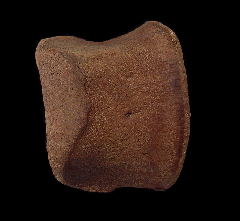
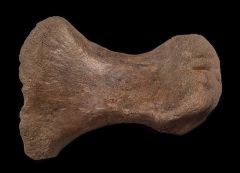
A Top Quality, Triceratops horridus toe bone (pes digit) from the late Cretaceous of northern North America. Triceratops was a large ceratopsian dinosaur found in the Hell Creek and Lance Creek formations which is know for three horns and the large frill protecting its neck. This is a great toe bone with excellent detail preserved and good color / patina. The last toe bone for digit 2 or 3 . You can see the "mushroom" appearance of proximal ends which is a characteristic of Triceratops and distinguishes it from a Hadrosaur toe bone. Triceratops bones are more difficult to find. Absolutely no wear. No repair or restoration. 100% natural specimen. Legally collected on private land in Harding Co., So. Dakota. Authenticity guaranteed.
DC36 SIZE: 2-1/2" wide x 2" long x 1-5/8" height
Note - Adding 14 new Triceratops bones in November 2024. Link to Triceratops fossils catalog
Learn More - Triceratops Metatarsal$975.00
A Top Quality, Triceratops horridus toe bone (metatarsal) from the late Cretaceous of northern North America. Triceratops was a large ceratopsian dinosaur found in the Hell Creek formation which is known for three horns and the large frill protecting its neck. This is a great toe bone with exceptional detail preserved and good color / patina. This is the metatarsal IV bone. You can see the "mushroom" appearance of proximal ends which is a characteristic of Triceratops and distinguishes it from a Hadrosaur toe bone. Triceratops bones are more difficult to find. No repair or restoration. Legally collected on private land in Powder River Co., Montana. Authenticity guaranteed. This is a heavy bone (1.8 lbs shipping weight). An international shipping supplement may apply.
DC34 SIZE: 6" long Ends: 3-7/8" wide & 23-1/2" wide
Note - Adding 15 new Triceratops bones in November 2024. Link to Triceratops fossils catalog
Learn More - Chomatodus sp.$50.00
An EXTRA LARGE rare, Top Quality Chomatodus sp., an extinct Petalodont shark tooth, from the Paleozoic era in Indiana. Good color. A well preserved specimen. No repair or restoration. Authenticity guaranteed. An excellent collector's tooth!
Age: Upper Mississippian (330 MYA); Indian Springs Shale Fm.
Location: Crawford Co., Indiana
Z046 SIZE: 1-3/16"
Adding 55 US Paleozoic teeth in May 2022 --> Link to US Paleozoic teeth
Learn More - Paleozoic Shark Dorsal Spine$25.00
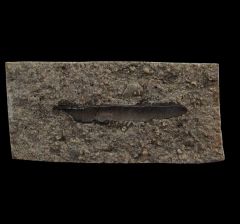
A rare, Top Quality Paleozoic shark dorsal spine from an extinct primitive shark, from the Paleozoic era in Indiana. Good color. A well preserved specimen. No repair or restoration. Authenticity guaranteed. An excellent collector's spine!
Age: Upper Mississippian (330 MYA); Indian Springs Shale Fm.
Location: Crawford Co., Indiana
Z045 SIZE: 1/4"
Adding 55 US Paleozoic teeth in May 2022 --> Link to US Paleozoic teeth
Learn More - Ctenoptychius sp.$0.00
A very rare, Top Quality Ctenoptychius sp., an extinct primitive shark tooth, from the Paleozoic era in Nebraska. Matrix free specimen. Good color. A very well preserved specimen. No repair or restoration. Authenticity guaranteed. A rare excellent collector's tooth!
Age: Upper Pennsylvanian (295 MYA); Stanton Fm.
Location: Cass Co., Nebraska
Z007 SIZE: 1/2"
Adding 55 US Paleozoic teeth in May 2022 --> Link to US Paleozoic teeth
Learn More