Search results for: 'biblioteca national dung peru deposit local'
- Did you mean
- biblioteca national du01 peru deposit local
- Related search terms
- dung seven enabl liops
- dung seven enabl liops/
- dung seven enabl liops//
- dung+seven+enabl+liops
- dung or above my harp good bone 12inch
- Edestus heinrichi$145.00
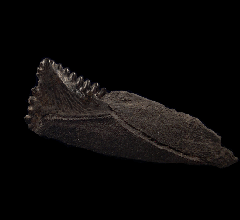
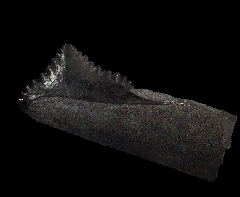
A very rare, Top Quality Edestus heinrichi shark tooth, from Herrin, Illinois. This is a Paleozoic shark that lived in swamps that our now underground coal deposits. Excellent preservation, serrations, and serration detail. The Edestus shark would have an upper and lower tooth whorl that are vertically opposed. Research showed that they could use their opposing teeth in a scissor-like motion or a vertical whipping motion to cut prey. It is the first animal to cut vertically. A very strange looking and unique acting shark. Shark recreation image is credited to Julio Lacerdo. These rare teeth are Pennsylvanian age from Illinois. No repair or restoration. Authenticity guaranteed.
I18 SIZE: 2-1/2" w/ root (1-1/4"crown)
Adding 22 Edestus shark teeth in July 2025. Link to Edestus shark.
Learn More - Edestus heinrichi$150.00
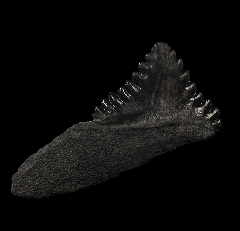
A very rare, Top Quality Edestus heinrichi shark tooth, from Herrin, Illinois. This is a Paleozoic shark that lived in swamps that our now underground coal deposits. Fantastic enamel quality. Excellent preservation, serrations, and serration detail. The Edestus shark would have an upper and lower tooth whorl that are vertically opposed. Research showed that they could use their opposing teeth in a scissor-like motion or a vertical whipping motion to cut prey. It is the first animal to cut vertically. A very strange looking and unique acting shark. Shark recreation image is credited to Julio Lacerdo. These rare teeth are Pennsylvanian age from Illinois. No repair or restoration. Authenticity guaranteed.
I17 SIZE: 1-5/8" w/ root (1-1/4"crown)
Adding 22 Edestus shark teeth in July 2025. Link to Edestus shark.
Learn More - Edestus heinrichi$145.00
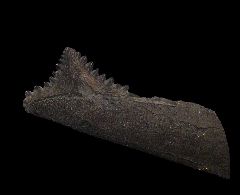
A very rare, Top Quality Edestus heinrichi shark tooth, from Herrin, Illinois. This is a Paleozoic shark that lived in swamps that our now underground coal deposits. Fantastic enamel quality. Excellent preservation, serrations, and serration detail. The Edestus shark would have an upper and lower tooth whorl that are vertically opposed. Research showed that they could use their opposing teeth in a scissor-like motion or a vertical whipping motion to cut prey. It is the first animal to cut vertically. A very strange looking and unique acting shark. Shark recreation image is credited to Julio Lacerdo. These rare teeth are Pennsylvanian age from Illinois. No repair or restoration. Authenticity guaranteed.
I16 SIZE: 2-3/8" w/ root (1-3/4"crown)
Adding 22 Edestus shark teeth in July 2025. Link to Edestus shark.
Learn More - Edestus heinrichi$225.00
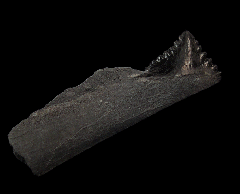
A very rare, LARGE, Top Quality Edestus heinrichi shark tooth, from Herrin, Illinois. This is a Paleozoic shark that lived in swamps that our now underground coal deposits. Excellent crown enamel. Excellent preservation, serrations, and serration detail. The Edestus shark would have an upper and lower tooth whorl that are vertically opposed. Research showed that they could use their opposing teeth in a scissor-like motion or a vertical whipping motion to cut prey. It is the first animal to cut vertically. A very strange looking and unique acting shark. Shark recreation image is credited to Julio Lacerdo. These rare teeth are Pennsylvanian age from Illinois. No repair or restoration. Authenticity guaranteed.
I08 SIZE: 3-1/8" w/ root (1-3/8" crown)
Adding 22 Edestus shark teeth in July 2025. Link to Edestus shark.
Learn More - Edestus heinrichi$295.00
A very rare, EXTRA LARGE, Top Quality Edestus heinrichi shark tooth, from Herrin, Illinois. This is a Paleozoic shark that lived in swamps that our now underground coal deposits. Excellent preservation, serrations, and serration detail. The Edestus shark would have an upper and lower tooth whorl that are vertically opposed. Research showed that they could use their opposing teeth in a scissor-like motion or a vertical whipping motion to cut prey. It is the first animal to cut vertically. A very strange looking and unique acting shark. Shark recreation image is credited to Julio Lacerdo. These rare teeth are Pennsylvanian age from Illinois. No repair or restoration. Authenticity guaranteed.
I06 SIZE: 3-1/8" w/ root (2-1/8" crown)
Adding 22 Edestus shark teeth in July 2025. Link to Edestus shark.
Learn More - Otodus megalodon$0.00
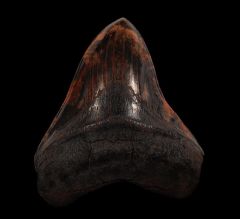
An ultra rare, 5-3/4" Top Quality Red Site Carcharocles megalodon from the Meherrin River, North Carolina. The "Jaguar" Megalodon tooth. A May Fossil of the Month. This Meg is a BIG upper jaw anterior tooth from the Meherrin River copper-red site. NC001 has an incredible black and copper-red colored crown. Fantastic color! The enamel is the highest quality. The serrations are extra large and essentially complete with a big tip serration. Incredible serrations for a BIG Megalodon tooth. Bourlette is extra large, dark brown and 98% complete.The root is complete with very small hydration cracks. Definitely a Miocene Meg with serration bumps at base and groove on the root end sides. Note - there is a small area of restoration with the enamel of the non-display side in the center just above the root. Note - you rarely see a copper-red colored Megalodon tooth that has a top quality crown and serrations and a complete root - a top 1% tooth from this site! An old collection piece from the rarest location to find a large, top quality Megalodon tooth - rarer than Chile, Peru, Bone Valley, etc. You may not see another large, top quality Meherrin River Meg for quite some time! Museum Quality. Incredible color! Authenticity guaranteed. A special BIG Meg!
NC001 BoP3 SIZE: 5-3/4"
Adding 10 NC Copper-Red Megalodon teeth in May 2020. Link to NC Red Megalodon teeth.
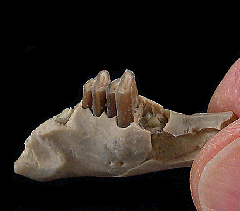
Learn More - Palaeolagus haydeni$25.00
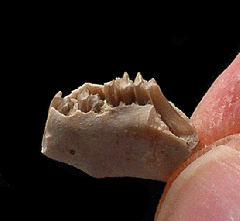
An extinct early rabbit jaw (Palaeolagus haydeni) from Sioux Co., Nebraska. Palaeolagus was one of many mammals that thrived in the Early Oligocene in North America. Found in the Brule Fm. (Rupelian) 33 - 30 million years ago. A very well preserved specimen. No repair or restoration. Authenticity guaranteed. This item comes witha 2"x 2" floating frame display.
WR26 Size: 1/2"
Name: Palaeolagus haydeni
Age: Oligocene
Location: Sioux Co., Nebraska
Note - Posting 49 Oligocene Mammal fossils in January 2025. Link to Oligocene Mammal Fossils
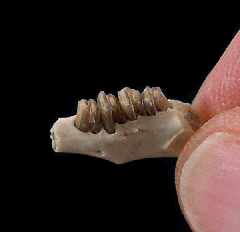
Learn More - Palaeolagus haydeni$30.00
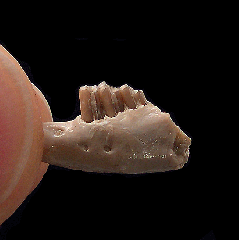
An extinct early rabbit jaw (Palaeolagus haydeni) from Sioux Co., Nebraska. Palaeolagus was one of many mammals that thrived in the Early Oligocene in North America. Found in the Brule Fm. (Rupelian) 33 - 30 million years ago. A very well preserved specimen. No repair or restoration. Authenticity guaranteed. This item comes witha 2"x 2" floating frame display.
WR25 Size: 5/8"
Name: Palaeolagus haydeni
Age: Oligocene
Location: Sioux Co., Nebraska
Note - Posting 49 Oligocene Mammal fossils in January 2025. Link to Oligocene Mammal Fossils
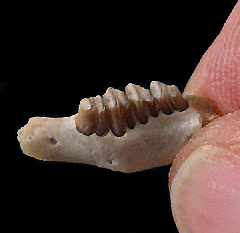
Learn More - Palaeolagus haydeni$35.00
An extinct early rabbit jaw (Palaeolagus haydeni) from Sioux Co., Nebraska. Palaeolagus was one of many mammals that thrived in the Early Oligocene in North America. Found in the Brule Fm. (Rupelian) 33 - 30 million years ago. A very well preserved specimen. No repair or restoration. Authenticity guaranteed.
WR24 Size: 1-1/8"
Name: Palaeolagus haydeni
Age: Oligocene
Location: Sioux Co., Nebraska
Note - Posting 49 Oligocene Mammal fossils in January 2025. Link to Oligocene Mammal Fossils
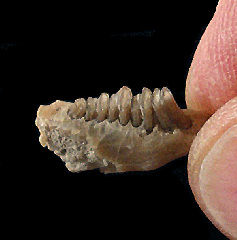
Learn More - Palaeolagus haydeni$40.00
An extinct early rabbit jaw (Palaeolagus haydeni) from Sioux Co., Nebraska. Palaeolagus was one of many mammals that thrived in the Early Oligocene in North America. Found in the Brule Fm. (Rupelian) 33 - 30 million years ago. A very well preserved specimen. No repair or restoration. Authenticity guaranteed. This item comes witha 2"x 2" floating frame display.
WR23 Size: 11/16"
Name: Palaeolagus haydeni
Age: Oligocene
Location: Sioux Co., Nebraska
Note - Posting 49 Oligocene Mammal fossils in January 2025. Link to Oligocene Mammal Fossils
Learn More - Palaeolagus haydeni$45.00
An extinct early rabbit jaw (Palaeolagus haydeni) from Sioux Co., Nebraska. Palaeolagus was one of many mammals that thrived in the Early Oligocene in North America. Found in the Brule Fm. (Rupelian) 33 - 30 million years ago. A very well preserved specimen. No repair or restoration. Authenticity guaranteed. This item comes witha 2"x 2" floating frame display.
WR22 Size: 3/4"
Name: Palaeolagus haydeni
Age: Oligocene
Location: Sioux Co., Nebraska
Note - Posting 49 Oligocene Mammal fossils in January 2025. Link to Oligocene Mammal Fossils
Learn More - Palaeolagus haydeni$45.00
An extinct early rabbit jaw (Palaeolagus haydeni) from Sioux Co., Nebraska. Palaeolagus was one of many mammals that thrived in the Early Oligocene in North America. Found in the Brule Fm. (Rupelian) 33 - 30 million years ago. A very well preserved specimen. No repair or restoration. Authenticity guaranteed. This item comes witha 2"x 2" floating frame display.
WR21 Size: 11/16"
Name: Palaeolagus haydeni
Age: Oligocene
Location: Sioux Co., Nebraska
Note - Posting 49 Oligocene Mammal fossils in January 2025. Link to Oligocene Mammal Fossils
Learn More