Search results for: 'cut in my cusp 03 spine 1 doanload'
- Related search terms
- cut from
- cutter enabl
- cutting fossil shark tooth
- cutting fossil shark tooth//
- cutter de france metropole regionale à imprimer
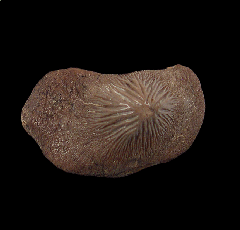
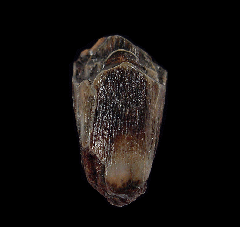
- Ptychodus mortoni$195.00
A LARGE, Top Quality Ptychodus mortoni, an extinct durophagous (shell-crushing) shark, tooth from Dallas Co., Texas. An excellent example of this Upper Cretaceous Eagle Ford Fm. tooth. These teeth have a design that includes a high cusp with radiating occlusal ridges extending across the cusp face. Authenticity guaranteed. P. mortoni is a rare species in Texas, and when teeth get this large they are extremely rare! Near Pefect tooth.
T375 SIZE: 1-1/4"
Adding 24 Ptychodus mortoni teeth in August 2025. Link to Texas shark teeth
Learn More -
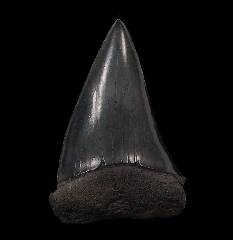
- Carcharodon hastalis$165.00
A LARGE, Top QualityCarcharodon hastalis, the Broad-tooth Mako shark tooth from So.Carolina. Previously referred to as Isurus hastalis, but renamed to Carcharodon hastalis as a Great White shark ancestor. Highest quality enamel. A BLUE colored crown. Excellent color! Sharp cutting edges. An excellent root – very wide. Excellent symmetry. No repair or restoration. An excellent collector's Mako tooth! Authenticity guaranteed.
SC307 SIZE: 2-1/2" (1-5/8" wide)
Adding 18 SC Carcharodon hastalis teeth in October 2024. -> Link to SC Carcharodon hastalis teeth
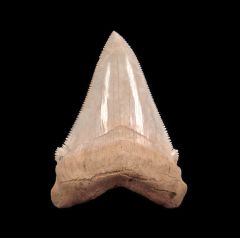
Learn More - Carcharocles chubutensis$0.00
An ULTRA RARE, TOP QUALITY white colored Carcharocles chubutensis tooth - upper jaw ANTERIOR tooth from Calvert Cliffs, Maryland. A November Fossil of the Month. This Chubutensis tooth is esentially perfect. The enamel is highest quality with no peel. The white bourlette is 100% complete. The serrations are awesome and complete with slight damage to one. Side cusps are perfect. The root has cool grooves on the root ends and has a small chip on the reverse side. An early Miocene, Calvert Formation tooth. NO repair or restoration. Authenticity guaranteed. A top quality Calvert Cliffs Chub is rare. A white colored Calvert Cliffs Chub is ultra rare! A very special collector's tooth.
MD101 Size: 2-3/4"
Learn More - Camel - Florida$75.00
A well preserved Camel (Camelops) molar from northern Florida. The Camelops evolved in the late Pliocene and became extinct at the end of the Pleistocene in North America. This is molar is complete with very little wear. Well fossilized. No repair or restoration. Authenticity guaranteed.
X809 Size: 1-3/8"
Name: Camel (Camelops) molar
Age: Pleistocene
Location: Ruskin, Florida
Note - Posting 26 mammal and reptile fossils in March 2024. Link to Other Mammals
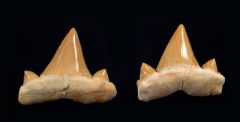
Learn More - Cretolamna moroccana$30.00
New An extra large, Gem Cretolamna moroccana teeth. Incredibly wide and massiveteeth!
M931 (Left) SIZE: 1-3/16"
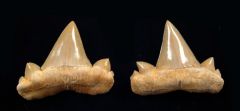
Learn More - Cretolamna moroccana$25.00
New An extra large, Gem Cretolamna moroccana teeth. Incredibly wide and massiveteeth!
M934 (Right) SIZE: 1-3/16"
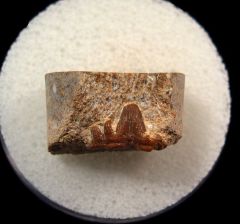
Learn More - Symmorium sp.$65.00
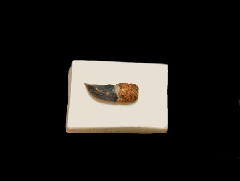
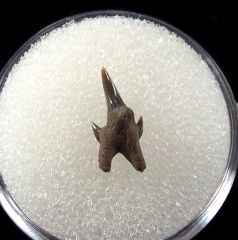
A rare, Top Quality Symmorium sp., an extinct Cladodont shark tooth, from the Paleozoic era in Indiana. A primary cusp with two side cusps. Great color. Nicely articulated. A well preserved specimen. No repair or restoration. Authenticity guaranteed. An excellent collector's tooth!
Age: Upper Mississippian (330 MYA); Haney Fm.
Location: Crawford Co., Indiana
Z039 SIZE: 5/16" (1/2" wide)
Adding 55 US Paleozoic teeth in May 2022 --> Link to US Paleozoic teeth
Learn More - Leptostyrax macrorhiza$95.00
A Top Quality Leptostyrax macrorhiza, an extinct Mackerel shark, tooth from Tarrant Co., Texas. An excellent example of this Lower Cretaceous Paw Paw Fm. shark. These teeth have a unique design with a very high root face and broad & long side cusps. This is a lateral tooth with perfect cusps. Authenticity guaranteed. Perfect tooth.
T169 SIZE: 1/2"
Note - Adding 100+ new Texas shark teeth in October 2021. Link to Texas shark teeth
Learn More - Symmorium sp.$47.50
A rare, Top Quality Symmorium sp., an extinct Cladodont shark tooth, from the Paleozoic era in Indiana. An extraordinary primary cusp with two side cusps. Fantastic color and articulation. A well preserved specimen. No repair or restoration. Authenticity guaranteed. An excellent collector's tooth.
Age: Middle Mississippian (347 MYA); Harrodsburg Limestone Fm.
Location: Washington Co., Indiana
Z051 SIZE: 1/4"
Adding 30 US Paleozoic teeth in July 2025 --> Link to US Paleozoic teeth
Learn More - Otodus mugodzharicus (Partial serrated)$0.00
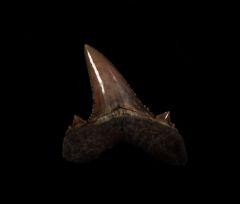
A very rare, early Otodus mugodzharicus upper jaw, lateral tooth from Aktulagay, western Kazakhstan. A transitional tooth leading to C. auriculatus (see detailed discussion below) which leads to Megalodon. The bourlette is complete. Tooth exhibits very fine serrations along the lower 1/3 of crown and micro serrations to the tip. These teeth exhibit very good color, gloss, and preservation. A rare, early Eocene Auriculatus transition tooth. A very challenging tooth to find when building a Megalodon evolutionary set! No repair. Authenticity guaranteed. Note - This western Kazakhstan site is one of the few places in the world where the Otodus to Auriculatus transition can be found in adjacent layers.
K554 SIZE: 1-1/4"
Note - Adding 18 Kazakh Auriuclatus or transition teeth in April 2020. --> Link to Kazakh Auriculatus teeth.
Learn More - Otodus mugodzharicus (Partial serrated)$0.00
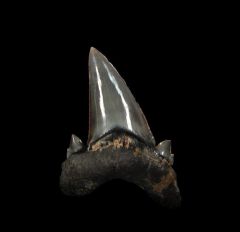
A very rare, early Otodus mugodzharicus upper jaw, lateral tooth from Aktulagay, western Kazakhstan. A transitional tooth leading to C. auriculatus (see detailed discussion below) which leads to Megalodon. The bourlette is complete. Tooth exhibits wavy serrations along the lower 1/3 of crown and small wavy serrations to the tip. These teeth exhibit very good color, gloss, and preservation. A rare, early Eocene Auriculatus transition tooth. A very challenging tooth to find when building a Megalodon evolutionary set! No repair. Authenticity guaranteed. Note - This western Kazakhstan site is one of the few places in the world where the Otodus to Auriculatus transition can be found in adjacent layers.
K553 SIZE: 1-1/2"
Note - Adding 18 Kazakh Auriuclatus or transition teeth in April 2020. --> Link to Kazakh Auriculatus teeth.
Learn More