Search results for: 'perverse size stock zungein dreckigen time in arch see'
- Did you mean
- perverse site stone zungein dreckigen tiger in arcto sea
- perverse site stone zungein dreckigen tree in arcto sea
- Related search terms
- seen cave cottage good mn
- seen ca01 cottage good mn
- seen ca02 cottage good mn
- seen cave cottage good mn/
- seen ca01 cottage good mn/
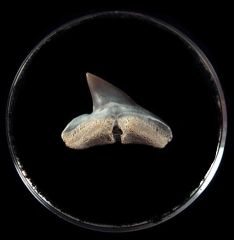
- Sphyrna zygaena : Peru$45.00
A Top Quality Sphyrna zygaena, Hammerhead shark tooth from the Ica region of Peru. High quality enamel. Excellent color. Pisco formation, Miocene age. A desert shark from the deserts of Peru! No repair or restoration. Authenticity guaranteed. You don't see these teeth any more.
P661 SIZE: 9/16"
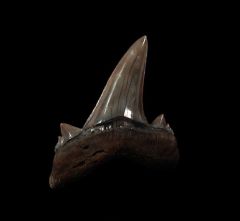
Learn More - Otodus mugodzharicus (Partial serrated)$0.00
A very rare, early Otodus mugodzharicus upper jaw, lateral tooth from Aktulagay, western Kazakhstan. A transitional tooth leading to C. auriculatus (see detailed discussion below) which leads to Megalodon. A November Fossil of the Month.The bourlette is complete. Tooth exhibits "wavy serrated" edges similar to the Isurus escheri tooth. These teeth exhibit very good color, gloss, and preservation. A rare, early Eocene Auriculatus transition tooth. A very challenging tooth to find when building a Megalodon evolutionary set! No repair. Authenticity guaranteed. This western Kazakhstan site is one of the few places in the world where the Otodus to Auriculatus transition can be found in adjacent layers. Note - This is my last offering of Aktluagay teeth.
K552 SIZE: 1-9/16"
Note - Adding 19 Kazakh Auriuclatus or transition teeth in November 2021. --> Link to Kazakh Auriculatus teeth.
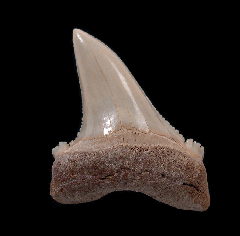
Learn More - Otodus aksuaticus (Partial serrated)$450.00
A very rare, early Otodus aksuaticus upper jaw, lateral tooth from Kzil-Orda, Kazakhstan. A transitional tooth leading to O. auriculatus (see detailed discussion below) which leads to Megalodon. A July Fossil of the Month. The bourlette is complete. This tooth exhibits small serrations along the lower 1/3 of the crown and micro serrations to the tip. These teeth exhibit excellent color, gloss, and preservation. A rare, early (Ypresian) Eocene Auriculatus transition tooth. A very challenging tooth to find when building a Megalodon evolutionary set! No repair or restoration. Authenticity guaranteed. This western Kazakhstan site is one of the few places in the world where the Otodus obliquus to Otodus auriculatus transition can be found in adjacent geologic layers.
K547 SIZE: 1-15/16"
Note - Adding 24 Kazakh Auriuclatus or transition teeth in July 2024. --> Link to Kazakh Auriculatus teeth.
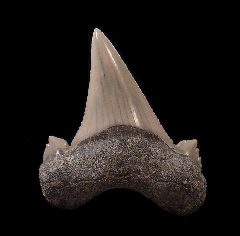
Learn More - Otodus aksuaticus (Partial serrated)$425.00
A very rare, early Otodus aksuaticus lateral tooth from Kzil-Orda, Kazakhstan. A transitional tooth leading to O. auriculatus (see detailed discussion below) which leads to Megalodon. A July Fossil of the Month.The bourlette is complete. This tooth exhibits small serrations along the lower 1/2 of the crown and micro serrations to the tip. These teeth exhibit excellent color, gloss, and preservation. A rare, early (Ypresian) Eocene Auriculatus transition tooth. A very challenging tooth to find when building a Megalodon evolutionary set! No repair or restoration. Authenticity guaranteed. This western Kazakhstan site is one of the few places in the world where the Otodus obliquus to Otodus auriculatus transition can be found in adjacent geologic layers.
K544 SIZE: 1-3/4"
Note - Adding 24 Kazakh Auriuclatus or transition teeth in July 2024. --> Link to Kazakh Auriculatus teeth.
Learn More - Otodus aksuaticus (Partial serrated)$550.00
A very rare, early Otodus aksuaticus lateral tooth from Kzil-Orda, Kazakhstan. A transitional tooth leading to O. auriculatus (see detailed discussion below) which leads to Megalodon. A July Fossil of the Month. The bourlette is complete. This tooth exhibits small serrations along the lower 1/2 of the crown and micro serrations to the tip. These teeth exhibit excellent color, gloss, and preservation. A rare, early (Ypresian) Eocene Auriculatus transition tooth. A very challenging tooth to find when building a Megalodon evolutionary set! No repair or restoration. Authenticity guaranteed. This western Kazakhstan site is one of the few places in the world where the Otodus obliquus to Otodus auriculatus transition can be found in adjacent geologic layers.
K542 SIZE: 2-1/8"
Note - Adding 24 Kazakh Auriuclatus or transition teeth in July 2024. --> Link to Kazakh Auriculatus teeth.
Learn More - Otodus aksuaticus (Partial serrated)$525.00
A very rare, early Otodus aksuaticus anterior tooth from Kzil-Orda, Kazakhstan. A transitional tooth leading to O. auriculatus (see detailed discussion below) which leads to Megalodon. A July Fossil of the Month. The bourlette is complete. This tooth exhibits small serrations along the lower 1/2 of the crown and micro serrations to the tip. These teeth exhibit excellent color, gloss, and preservation. A rare, early (Ypresian) Eocene Auriculatus transition tooth. A very challenging tooth to find when building a Megalodon evolutionary set! No repair or restoration. Authenticity guaranteed. This western Kazakhstan site is one of the few places in the world where the Otodus obliquus to Otodus auriculatus transition can be found in adjacent geologic layers.
K542 SIZE: 2-3/16"
Note - Adding 24 Kazakh Auriuclatus or transition teeth in July 2024. --> Link to Kazakh Auriculatus teeth.
Learn More - Triceratops Epijugal - Jugal Spike$0.00
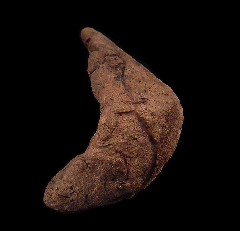
A Top Quality, rare Triceratops horridus epijugal (jugal spike) from the late Cretaceous of northern North America. Triceratops was a large ceratopsian dinosaur found in the Hell Creek and Lance Creek formations which is know for the large frill protecting its neck. Triceratops had a spike on its cheek which is called the jugal "spike" (see photo). This jugal spike has exceptional detail preserved and great color / patina. Excellent surface blood grooves are preserved. No repair or restoration. 100% natural specimen. Legally collected on private land in Bowman, No. Dakota. Authenticity guaranteed. You rarely see these jugal spikes and this one is good one.
DC62 SIZE: 3-5/8" Wide x 1-5/8" Height
Note - Adding 8 new Triceratops bones in October 2023. Link to Triceratops fossils catalog
Learn More - Carcharocles chubutensis$0.00
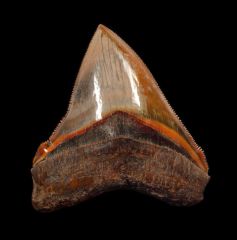
A TOP QUALITY Chubutensis tooth from Peru - an upper jaw tooth. Another February Fossil of the Month. An incredible tan and red colored crown with no peel. Highest quality enamel. Fantastic extra large side cusps. Extra large and sharp serrations are incredible including a good tip serration. The bourlette is a light tan color and 100% complete. Extra wide. The root is excellent brown color, nicely articulated, and nearly complete The only challenge with this tooth is some minor root repair at the very base of the root (see black colored area). An incredibly colored, extra large Peruvian Chubutensis tooth! You won't see any more like this Chub. Authenticity guaranteed.
P031 BoP SIZE: 3-1/4"
Note - Adding 7 new Peruvian Chubutensis teeth in February 2018 Link to Peruvian Chubutensis teeth
Learn More - Acheroraptor temertyorum (Raptor)$265.00
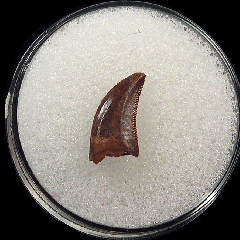
A LARGE RARE, Top Quality Acheroraptor temertyorum (raptor) tooth from So. Dakota. Acheroraptor temertyorum is one of two recently described Hell Creek Fm. raptors, and it is a close relative of Velociraptor. This tooth is 1/2" which is a large size. The enamel is excellent with a great brown color. Multiple prominent longitudinal "ribs" run the length of the crown. Excellent large posterior and small anterior serrations. There is a natural wear facet on the tip. See unique crown characteristic discussion below. No repair or restoration. Legally collected on private land in the Hell Creek Fm., Harding Co., So. Dakota. Note - the 2013 Acheroraptor description paper is available upon request. Authenticity guaranteed. This is your chance to own a rare, top quality Acheroraptor temertyorum tooth. Note - A gem jar will be included as photographed.
DR12 SIZE: 1/2"
Note - Adding 10 new Acheroraptor teeth in May 2025 Link to Raptor (Dromaeosaur) catalog.
Learn More - Acheroraptor temertyorum (Raptor)$275.00
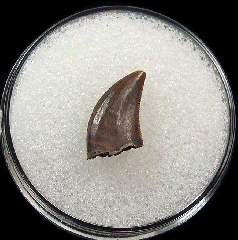
A LARGE RARE, Top Quality Acheroraptor temertyorum (raptor) tooth from So. Dakota. Acheroraptor temertyorum is one of two recently described Hell Creek Fm. raptors, and it is a close relative of Velociraptor. This tooth is 1/2" which is a large size. The enamel is excellent with a great brown color. Multiple prominent longitudinal "ribs" run the length of the crown. Excellent large posterior and small anterior serrations. There is a small natural wear facet on the tip. See unique crown characteristic discussion below. No repair or restoration. Legally collected on private land in the Hell Creek Fm., Harding Co., So. Dakota. Note - the 2013 Acheroraptor description paper is available upon request. Authenticity guaranteed. This is your chance to own a rare, top quality Acheroraptor temertyorum tooth. Note - A gem jar will be included as photographed.
DR11 SIZE: 1/2"
Note - Adding 10 new Acheroraptor teeth in May 2025 Link to Raptor (Dromaeosaur) catalog.
Learn More - Isurus hastalis (Cosmopolitodus hastalis)$0.00
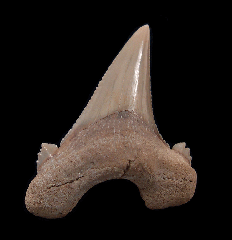
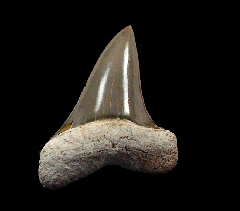
A Top Quality Broad-tooth Mako shark tooth - upper jaw anterior tooth from Lee Creek, No. Carolina. This tooth has a rich blue & tan crown and a brown colored root. Excellent colors! Razor sharp cutting edge. Excellent preservation - note nutrient hole on root. Near perfect tooth. A fantastic collector's tooth. Authenticity guaranteed.
LC331 Size: 1-1/2"+
Note - Adding 30 new Lee Creek Big "Mako" teeth in April 2018. Link to Lee Creek Broad Form Mako Teeth.
Learn More - Isurus hastalis (Carcharodon hastalis)$45.00
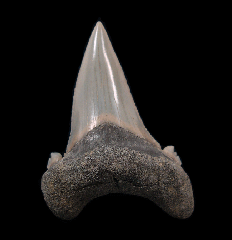
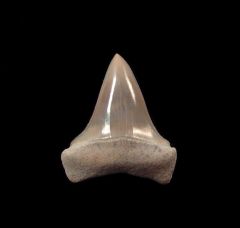
A Top Quality, Carcharodon hastalis, Mako shark tooth (upper jaw tooth) from the Lee Creek mine, Aurora, No. Carolina. This tooth has a rich blue & tan crown and a tancolored root. Excellent colors! Razor sharp cutting edge. Excellent preservation - note nutrient hole on root. It is a Miocene tooth from the Pungo River Fm. An excellent collector's tooth. Authenticity guaranteed.
LC330 Size: 1-11/16"
Note - Adding 30 new Lee Creek Big "Mako" teeth in February 2023. Link to Lee Creek Mako Teeth.
Learn More