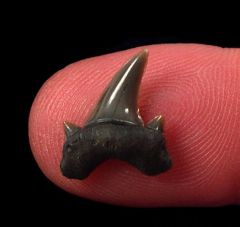
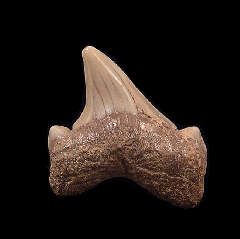
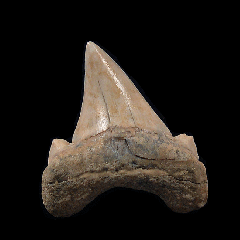
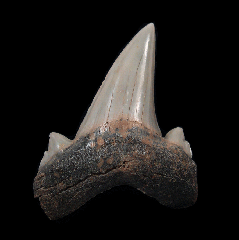
Kazakhstan Fossil Shark Teeth
Buried Treasure Fossils offers incredible Kazakhstan fossil shark teeth for sale including ultra rare early Auriculatus and Otodus teeth. An area of badlands in western Kazakhstan is yielding exquisite middle Eocene age (Upper Shorym age / Bartonian; approx. 37 million years ago) shark teeth. The fossil teeth from this area exhibit superb preservation and coloration. The exquisite detail shown by these teeth are rapidly making this shark tooth site world famous. Being land sites, the detail and preservation exhibited by these shark teeth are nothing less than outstanding - some of the finest marine fossils known. The exceptional and rare teeth from this unique location are a must for every collection. In fact, this area has produced the finest examples of many shark species including the rare and highly sought after transitional Otodus teeth (serrated) which is the precursor to the Carcharocles genus. This is an incredibly rare occurrence of the earliest ancestors to the Megalodon. Authenticity guaranteed. Have a look.

- Otodus sokolovi - Kazakhstan$0.00
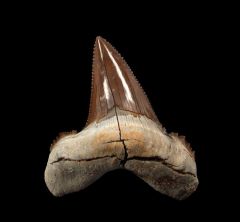
A very rare, Otodus sokolovi upper jaw, anterior tooth from Kert, Mangyshlak, western Kazakhstan. This location produces top quality teeth with brown colored enamel. The large bourlette that is near complete. Nice extra coarse serrations and killer, large side cusps with very irregular serrations. The root is and complete.These teeth exhibit exceptional color, gloss, and preservation. Lower Schorym Formation - Bartonian - 40 MYA. This is a rare, late Eocene "Auriculatus" tooth also known as Otodus sokolovi! No repair or restoration. Authenticity guaranteed. I haven't seen these BIG Kazakh teeth since 2003! My last O. sokolovi teeth to offer.
K503 BoP SIZE: 2-1/4"
Note - Adding 19 Kazakh Auriculatus or transition teeth in November 2021. --> Link to Kazakh Auriculatus teeth.
Learn More - Otodus sokolovi - Kazakhstan$0.00
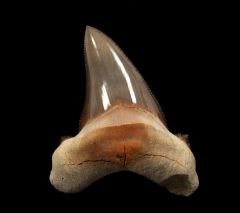
A very rare, Otodus sokolovi upper jaw, anterior tooth from Kert, Mangyshlak, western Kazakhstan. A November Fossil of the Month. This location produces top quality teeth with brown colored enamel. The extra large bourlette that is complete. Nice extra coarse serrations and killer, large side cusps with very irregular serrations. The root is and complete.These teeth exhibit exceptional color, gloss, and preservation. Lower Schorym Formation - Bartonian - 40 MYA. This is a rare, late Eocene "Auriculatus" tooth also known as Otodus sokolovi! No repair or restoration. Authenticity guaranteed. I haven't seen these BIG Kazakh teeth since 2003! My last O. sokolovi teeth to offer.
K502 BoP SIZE: 2-3/4"
Note - Adding 19 Kazakh Auriculatus or transition teeth in November 2021. --> Link to Kazakh Auriculatus teeth.
Learn More - Otodus sokolovi - Kazakhstan$0.00
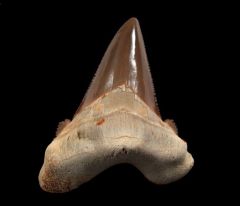
A very rare, EXTRA LARGE Otodus sokolovi upper jaw, anterior tooth from Kert, Mangyshlak, western Kazakhstan. A November Fossil of the Month. This location produces top quality teeth with brown colored enamel. The extra large bourlette that is complete. Nice extra coarse serrations and killer, large side cusps with very irregular serrations. The root is very thivh (~1-1/8") and complete.These teeth exhibit exceptional color, gloss, and preservation. Lower Schorym Formation - Bartonian - 40 MYA. This is a rare, late Eocene "Auriculatus" tooth also known as Otodus sokolovi! No repair or restoration. Authenticity guaranteed. I haven't seen these BIG Kazakh teeth since 2003! My last O. sokolovi teeth to offer.
K501 BoP SIZE: 3-7/16"
Note - Adding 19 Kazakh Auriculatus or transition teeth in November 2021. --> Link to Kazakh Auriculatus teeth.
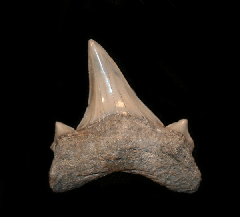
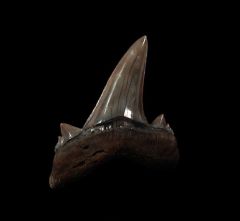
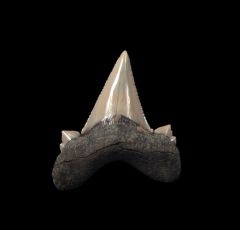
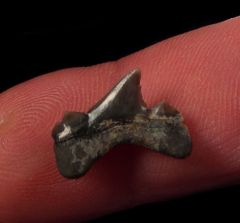
Learn More - Otodus pavlovi$0.00
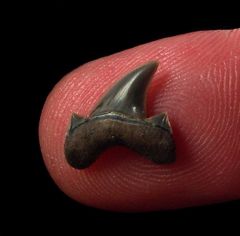
A very rare, early Otodus pavlovi upper jaw, lateral tooth from Aktulagay, western Kazakhstan. Otodus pavlovi was the smaller Otodus shark species present in this early Eocene deposit. The side cusps are large and complete. Exhibits no serrations. These teeth exhibit very good color, gloss, and preservation. No repair. Authenticity guaranteed. Perfect tooth.
K532 SIZE: 11/16"
Note - Adding 18 Kazakh Auriculatus or transition teeth in April 2020. --> Link to Kazakh Auriculatus teeth.
Learn More - Otodus pavlovi$0.00
A very rare, early Otodus pavlovi upper jaw, lateral tooth from Aktulagay, western Kazakhstan. Otodus pavlovi was the smaller Otodus shark species present in this early Eocene deposit. The side cusps are large and complete. Exhibits no serrations. These teeth exhibit very good color, gloss, and preservation. No repair. Authenticity guaranteed. Perfect tooth.
K531 SIZE: 13/16"
Note - Adding 18 Kazakh Auriculatus or transition teeth in April 2020. --> Link to Kazakh Auriculatus teeth.
Learn More - Otodus obliquus (not serrated)$95.00
A very rare, early Otodus obliquus anterior tooth from Kzil-Orda Region, Kazakhstan. Otodus obliquus is the ancestor to O. auriculatus (see detailed discussion below) which leads to Megalodon. The bourlette is large and complete. Exhibits no serrations. The starting species to serrated Otodus teeth. These teeth exhibit very good color, gloss, and preservation. A rare, early Eocene (Ypresian) Auriculatus transition tooth. A very challenging tooth to find when building a Megalodon evolutionary set! No repair. Authenticity guaranteed. Note - This western Kazakhstan site is one of the few places in the world where the Otodus obliquus to Otodus auriculatus transition can be found in adjacent early Eocene formation units.
K561 SIZE: 1-1/16"
Note - Adding 24 Kazakh Auriculatus or transition teeth in July 2024. --> Link to Kazakh Auriculatus teeth.
Learn More - Otodus obliquus (not serrated)$135.00
A very rare, early Otodus obliquus anterior tooth from Kzil-Orda Region, Kazakhstan. Otodus obliquus is the ancestor to O. auriculatus (see detailed discussion below) which leads to Megalodon. The bourlette is large and complete. Exhibits no serrations. The starting species to serrated Otodus teeth. These teeth exhibit very good color, gloss, and preservation. A rare, early Eocene (Ypresian) Auriculatus transition tooth. A very challenging tooth to find when building a Megalodon evolutionary set! No repair. Authenticity guaranteed. Note - This western Kazakhstan site is one of the few places in the world where the Otodus obliquus to Otodus auriculatus transition can be found in adjacent early Eocene formation units.
K562 SIZE: 1-1/4"
Note - Adding 24 Kazakh Auriculatus or transition teeth in July 2024. --> Link to Kazakh Auriculatus teeth.
Learn More - Otodus obliquus (not serrated)$200.00
A very rare, early Otodus obliquus anterior tooth from Kzil-Orda Region, Kazakhstan. Otodus obliquus is the ancestor to O. auriculatus (see detailed discussion below) which leads to Megalodon. The bourlette is large and complete. Exhibits no serrations. The starting species to serrated Otodus teeth. These teeth exhibit very good color, gloss, and preservation. A rare, early Eocene (Ypresian) Auriculatus transition tooth. A very challenging tooth to find when building a Megalodon evolutionary set! No repair. Authenticity guaranteed. Note - This western Kazakhstan site is one of the few places in the world where the Otodus obliquus to Otodus auriculatus transition can be found in adjacent early Eocene formation units.
K561 SIZE: 1-1/4"
Note - Adding 24 Kazakh Auriculatus or transition teeth in July 2024. --> Link to Kazakh Auriculatus teeth.
Learn More - Otodus obliquus (Non-Serrate)$0.00
A very rare Otodus obliquus tooth with light tan color. Upper jaw anterior tooth. No serrations. There are very few Otodus obliquus teeth are found in Kazakhstan. A great tooth for your evolution set from this location. Found in the Kzil-Orda region, W. Kazakhstan.
K551 BoP SIZE: 1-1/2"
Learn More - Otodus mugodzharicus (Partial serrated)$0.00
A very rare, early Otodus mugodzharicus upper jaw, lateral tooth from Aktulagay, western Kazakhstan. A transitional tooth leading to C. auriculatus (see detailed discussion below) which leads to Megalodon. A November Fossil of the Month.The bourlette is complete. Tooth exhibits "wavy serrated" edges similar to the Isurus escheri tooth. These teeth exhibit very good color, gloss, and preservation. A rare, early Eocene Auriculatus transition tooth. A very challenging tooth to find when building a Megalodon evolutionary set! No repair. Authenticity guaranteed. This western Kazakhstan site is one of the few places in the world where the Otodus to Auriculatus transition can be found in adjacent layers. Note - This is my last offering of Aktluagay teeth.
K552 SIZE: 1-9/16"
Note - Adding 19 Kazakh Auriuclatus or transition teeth in November 2021. --> Link to Kazakh Auriculatus teeth.
Learn More - Otodus mugodzharicus (Partial serrated)$0.00
A very rare, early Otodus mugodzharicus upper jaw, lateral tooth from western Kazakhstan. A transition tooth leading to C. auriculatus (see detailed discussion below). The bourlette is large and complete. Exhibits very fine serrations along the lower 2/3 of the crown and weakly serrated side cusps with very irregular serrations. These teeth exhibit very good color, gloss, and preservation. A rare, early Eocene Auriculatus transition tooth. A very challenging tooth to find when building a Megalodon evolutionary set! No repair. Authenticity guaranteed.
K552 BoP SIZE: 1-1/2"
Note - Adding 16 Kazakh Auriuclatus or transition teeth in December 2018. --> Link to Kazakh Auriculatus teeth.
Learn More - Otodus mugodzharicus (Partial serrated)$0.00
A very rare, early Otodus mugodzharicus upper jaw, posterior tooth from Aktulagay, western Kazakhstan. A transitional tooth leading to C. auriculatus (see detailed discussion below) which leads to Megalodon. The bourlette is complete. Tooth exhibits very fine serrations along the inner curve of the crown only. These teeth exhibit very good color, gloss, and preservation. A rare, early Eocene Auriculatus transition tooth. A very challenging tooth to find when building a Megalodon evolutionary set! No repair. Authenticity guaranteed. Note - This western Kazakhstan site is one of the few places in the world where the Otodus to Auriculatus transition can be found in adjacent layers.
K555 SIZE: 5/8"
Note - Adding 18 Kazakh Auriculatus or transition teeth in April 2020. --> Link to Kazakh Auriculatus teeth.
Learn More