
Rare Shark Teeth Species
RARE SHARK TEETH SPECIES FOR COLLECTORS
Buried Treasure Fossils offers a nice selection of rare fossil shark teeth for sale. These rare shark species include Parotodus (False Mako shark), Giant Thresher shark teeth, serrated Thresher shark teeth, Somnisus (Greenland shark), etc. These teeth are rare fossil shark teeth are seldom seen for sale! Authenticity guaranteed.
Why Collect Rare Shark Teeth Species
For collectors, rare shark teeth species offer a fascinating way to explore ancient marine ecosystems through distinctive fossil forms. Unusual tooth shapes and locality information add depth to a collection beyond appearance alone. Comparing specimens from different sharks also reveals how feeding adaptations changed through prehistoric seas.
Buried Treasure Fossils brings these prehistoric discoveries together for collectors seeking unusual additions with genuine scientific and display interest.
What to Look for When Buying Rare Shark Teeth
When examining rare shark tooth species, look closely at enamel preservation, root condition, completeness, and any visible restoration. Locality and formation information add valuable geological context, especially for specimens intended for serious collections. Buyers should also consider preparation quality and request clear details about repairs or restoration. Choosing authentic shark teeth with reliable specimen information gives collectors greater confidence in what they are adding to their collection.
Get in touch with Buried Treasure Fossils and explore the collection for your next prehistoric find.

- Parotodus benedeni$0.00
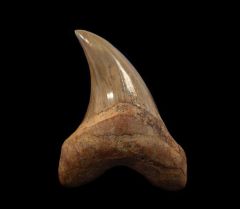
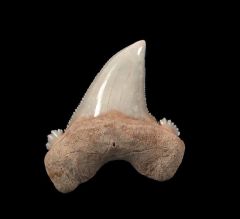
An ULTRA Rare, TOP QUALITY Parotodus benedeni, the False Mako, tooth from Sharktooth Hill, near Bakersfield, California. This tooth has an excellent tan colored enamel and a very massive root. The crown enamel has very good luster and very sharp edges. Highest quality enamel. Note - a small (~1/16") tip repair was professionally done. No restoration. An extremely difficult tooth to locate! Authenticity guaranteed. One of the rarest P. benedeni teeth.
ST403 SIZE: 2-1/4"
Posting two Sharktooth Hill Parotodus benedeni teeth in December 2022. Link to Sharktooth Hill P. benedeni teeth
Learn More - Parotodus benedeni$0.00
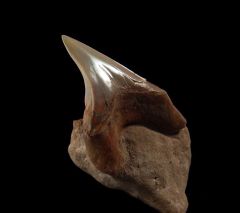
An ULTRA Rare, TOP QUALITY Parotodus benedeni tooth from Sharktooth Hill, near Bakersfield California. A December 2022 Fossil of the Month. This tooth has a highly desirable light tan enamel and a very massive root. This Parotodus benedeni tooth remains mounted on the original Round Mountain Silt matrix and it is sitting on a chunk of whale bone. The crown enamel has very good luster and very sharp edges. Highest quality enamel! Note - a small (~1/8") tip repair was professionally done. A very difficult tooth to locate and an EXCEPTIONAL Collector's tooth! Authenticity guaranteed. One of the rarest P. benedeni teeth. This incredible display piece came out of a 25 year old old collection.
ST402 SIZE: 2-1/2"
Posting two Sharktooth Hill Parotodus benedeni teeth in December 2022. Link to Sharktooth Hill P. benedeni teeth
Learn More - Trigonotodus serratus (Serrated Giant Thresher)$0.00
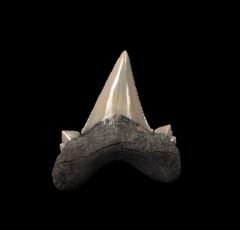
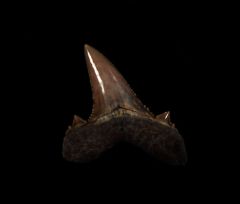
An EXTRA LARGE, ultra rare, GEM Trigonotodus serratus shark tooth, the extinct serrated Giant Thresher from southern Virginia. Another January 2018 Fossil of the Month offering. Incredible preservation and condition. This tooth is middle Miocene age, York Co., VA. These teeth are rarely found and rarely seen. An ultra rare collectors' tooth in top quality condition. Try finding one of these teeth! One of the rarest species to source. Authenticity guaranteed.
V102 SIZE: 1-7/8"
Learn More - Trigonotodus serratus (Serrated Giant Thresher)$0.00
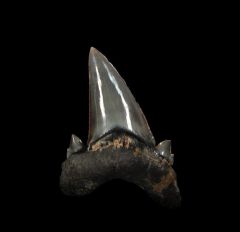
A LARGE, ultra rare, GEM Trigonotodus serratus shark tooth, the extinct serrated Giant Thresher from southern Virginia. Our last January 2018 Fossil of the Month offering. Fantastic copper red color. Incredible preservation and condition. This tooth is middle Miocene age, York Co., VA. These teeth are rarely found and rarely seen. An ultra rare collectors' tooth in top quality condition. Try finding one of these teeth! One of the rarest species to source. My last one to offer. Authenticity guaranteed.
V103 SIZE: 1-5/16"
Learn More - Seven-Gill Cow shark (Notorhynchus symphyseal)$0.00
A GEM Seven-Gill Cow shark (Notorhynchus) - Lower Jaw Symphyseal (very rare position) fossil shark tooth from Belgium. A female shark. The best that you will find. Miocene age from the Antwerp Sand. Gorgeous tooth for the rare tooth collector! Essentially perfect tooth. Authenticity guaranteed. The BEST of the BEST!
B526 Size: 1/2" W
Learn More - Seven-Gill Cow shark (Notorhynchus symphyseal)$0.00
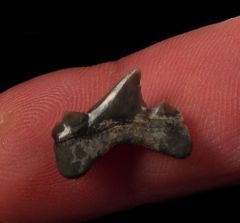
A Top Quality Seven-Gill Cow shark (Notorhynchus) - Lower Jaw Symphyseal (very rare position) fossil shark tooth from Calvert Cliffs, Maryland. A female shark. Razor and complete sharp cusps. Miocene age from the Calvert Formation. Gorgeous tooth for the rare tooth collector! Near perfect tooth. Authenticity guaranteed.
MD011 Size: 9/16" W
Learn More - Seven-Gill Cow shark (Notorhynchus symphyseal)$0.00
A Top Quality Seven-Gill Cow shark (Notorhynchus) - Lower Jaw Symphyseal (very rare position) fossil shark tooth from Calvert Cliffs, Maryland. A female shark. Razor and complete sharp cusps. Miocene age from the Calvert Formation. Gorgeous tooth for the rare tooth collector! Near complete tooth. Authenticity guaranteed.
MD012 Size: 9/16" W
Learn More - Otodus mugodzharicus (Partial serrated)$0.00
A very rare, early Otodus mugodzharicus upper jaw, lateral tooth from western Kazakhstan. A transition tooth leading to C. auriculatus (see detailed discussion below). The bourlette is large and complete. Exhibits very fine serrations along the lower 2/3 of the crown and weakly serrated side cusps with very irregular serrations. These teeth exhibit very good color, gloss, and preservation. A rare, early Eocene Auriculatus transition tooth. A very challenging tooth to find when building a Megalodon evolutionary set! No repair. Authenticity guaranteed.
K552 BoP SIZE: 1-1/2"
Note - Adding 16 Kazakh Auriuclatus or transition teeth in December 2018. --> Link to Kazakh Auriculatus teeth.
Learn More - Otodus aksuaticus (Partial serrated)$0.00
An ultra rare, early Otodus aksuaticus upper jaw, lateral tooth from western Kazakhstan. A transition tooth leading to C. auriculatus (see detailed discussion below). A May 2019 Fossil for the Month. The bourlette is large and complete. Exhibits small serrations along the lower 2/3 of the crown and weakly serrated side cusps with very irregular serrations. These teeth exhibit very good color, gloss, and preservation. A rare, early Eocene Auriculatus transition tooth. A very challenging tooth to find when building a Megalodon evolutionary set! No repair. Authenticity guaranteed.
K541 BoP SIZE: 2-1/16"
Note - Adding 13 Kazakh Auriuclatus or transition teeth in May 2019. --> Link to Kazakh Auriculatus teeth.
Learn More - Otodus mugodzharicus (Partial serrated)$0.00
A very rare, early Otodus mugodzharicus upper jaw, posterior tooth from Aktulagay, western Kazakhstan. A transitional tooth leading to C. auriculatus (see detailed discussion below) which leads to Megalodon. The bourlette is complete. Tooth exhibits very fine serrations along the inner curve of the crown only. These teeth exhibit very good color, gloss, and preservation. A rare, early Eocene Auriculatus transition tooth. A very challenging tooth to find when building a Megalodon evolutionary set! No repair. Authenticity guaranteed. Note - This western Kazakhstan site is one of the few places in the world where the Otodus to Auriculatus transition can be found in adjacent layers.
K555 SIZE: 5/8"
Note - Adding 18 Kazakh Auriculatus or transition teeth in April 2020. --> Link to Kazakh Auriculatus teeth.
Learn More - Otodus mugodzharicus (Partial serrated)$0.00
A very rare, early Otodus mugodzharicus upper jaw, lateral tooth from Aktulagay, western Kazakhstan. A transitional tooth leading to C. auriculatus (see detailed discussion below) which leads to Megalodon. The bourlette is complete. Tooth exhibits very fine serrations along the lower 1/3 of crown and micro serrations to the tip. These teeth exhibit very good color, gloss, and preservation. A rare, early Eocene Auriculatus transition tooth. A very challenging tooth to find when building a Megalodon evolutionary set! No repair. Authenticity guaranteed. Note - This western Kazakhstan site is one of the few places in the world where the Otodus to Auriculatus transition can be found in adjacent layers.
K554 SIZE: 1-1/4"
Note - Adding 18 Kazakh Auriuclatus or transition teeth in April 2020. --> Link to Kazakh Auriculatus teeth.
Learn More - Otodus mugodzharicus (Partial serrated)$0.00
A very rare, early Otodus mugodzharicus upper jaw, lateral tooth from Aktulagay, western Kazakhstan. A transitional tooth leading to C. auriculatus (see detailed discussion below) which leads to Megalodon. The bourlette is complete. Tooth exhibits wavy serrations along the lower 1/3 of crown and small wavy serrations to the tip. These teeth exhibit very good color, gloss, and preservation. A rare, early Eocene Auriculatus transition tooth. A very challenging tooth to find when building a Megalodon evolutionary set! No repair. Authenticity guaranteed. Note - This western Kazakhstan site is one of the few places in the world where the Otodus to Auriculatus transition can be found in adjacent layers.
K553 SIZE: 1-1/2"
Note - Adding 18 Kazakh Auriuclatus or transition teeth in April 2020. --> Link to Kazakh Auriculatus teeth.
Learn More


Frequently Asked Questions
Does tooth size determine rarity?
Not necessarily. A large tooth may attract attention, yet size alone does not establish rarity. The shark species, geological occurrence, and preservation history often provide more meaningful context when assessing a specimen.
What should I look for in photos when buying a fossil shark tooth?
Inspect the photographs closely for the overall condition of the specimen and the amount of natural detail that remains visible. Look at the enamel surface and edges for signs of wear or restoration. High-quality images from several angles give you a clearer understanding of the tooth's shape and proportions. Pay attention to close-up views as well, since small details may not be noticeable in a standard product image.
How important are measurements when buying fossil shark teeth?
Measurements give you a practical sense of the specimen's actual size before it arrives. Product photographs can make a tooth appear larger or smaller depending on the camera angle, so checking the stated dimensions provides a more reliable reference.