Search results for: 'bone evolution paleozo à frill revêtue'
- Related search terms
- bone good white blue
- bone state vs none damag good preview
- bone scute vs none damag good preview
- bone site vs none damag good preview
- bone stand vs none damag good preview
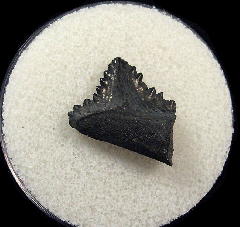
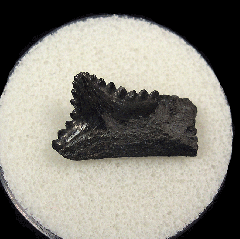
- Edestus minor$75.00
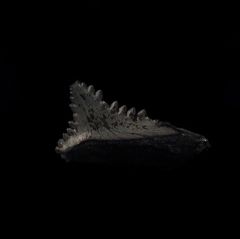
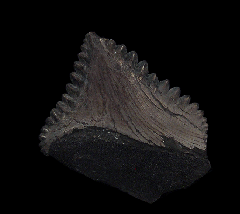
A very rare Edestus heinrichi shark tooth, from Herrin, Illinois. This is a Paleozoic shark that lived in swamps that our now underground coal deposits. Very good preservation with excellent serrations. The Edestus shark would have an upper and lower tooth whorl that are vertically opposed. Research showed that they could use their opposing teeth in a scissor-like motion to cut prey. It is the first animal to cut vertically. A very strange looking and unique acting shark. Shark recreation image is credited to Julio Lacerdo. These rare teeth are Pennsylvanian age from Illinois. No repair or restoration. Authenticity guaranteed.
I014 SIZE: 7/8"
Adding 15 Edestus shark specimens in April 2021. Link to Edestus shark.
Learn More - Nodosaur Body Spike - Judith River$0.00
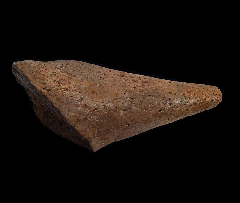
An ultra rare, Top Quality Judith River Nodosaur body spike from the late Cretaceous of North America. AJune Fossil of the Month. The Campanian age Nodosaurs grew to 22 feet and 6000 pounds, and a body covered with this bony armor with body spikes along the edge of the body (see Edmontonia photo). Edmontonia is the named Two Medicine Fm. Nodosaur which is a good proxy to the currently undescribed Judith River Fm. Nodosaur. The bone is excellent quality with excellent color / patina. A complete side armor spike from a large Nodosaur. ~72 MYA. Note - there is less than 10% professional restoration in small areas for aesthetic purposes at the base. Legally collected on private land in the Judith River Fm., Hill Co., Montana. Authenticity guaranteed. An ultra rare collector's quality Ankylosaur body spike. I have only seen two of the spikes available in the market place. Incredibly rare and super cool. It was found in the 1940s!
DK29 BoP SIZE: 5-1/2" (Base: 3" x 2-3/8")
Note - Adding 9 new Ankylosaur - Nodosaur fossils in Juine 2024. Link to Ankylosaur fossils catalog.
Learn More - Carcharodon (Isurus) hastalis$0.00
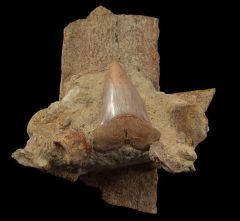
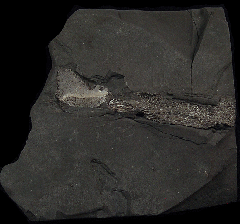
An Extra Large, TOP QUALITY, 3" Carcharodon (Isurus) hastalis tooth with an excellent blue & tan colored crown. A March Fossil of the Month. This is a natural matrix specimen sitting with many whale bones in the original Round Mountain Silt matrix block. The large whale bone at base is 5-3/4" x 3". Plus there are four more whale bones and a shark vertebra exposed in this matrix block. This is a 100% natural matrix piece - nothing added or glued. 100% natural. The root is very well preserved with a nice brown color. Very clean crown. Excellent overall preservation. A fantastic large, quality Mako tooth from the Ernst West quarry which produced the finest teeth with exceptional preservation, high quality, and great color. No repair or restoration. Authenticity guaranteed. A very special display piece.
ST001 BoP2 SIZE: 2-3/4" Matrix block size = 6" x 5.5" x 3" height
Note - Adding 20 Sharktooth Hill Hastalis teeth in March 2021. Link to STH Hastalis teeth.
Learn More - Stegoceras validum - Skull Dome$4,250.00
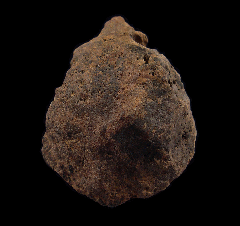
An ultra rare Top Quality Stegoceras validum dome (frontoparietal skull bone) from the late Cretaceous of northern North America. An April Fossil of the Month. Stegoceras is a smaller sized pachycephalosaurid dinosaur, and like Pachycephalosaurus, it is a dinosaur which is famous for its large domed head surrounded by spikes. This is excellent quality juvenile dome with good color / patina. No cracks or restoration. There is a small sheer on the left side that occured prior to fossilization since it has the natural patina. Otherwise a complete dome. An ultra rare Stegoceras dome! Legally collected on private land in the Judith River Fm., Hill Co., Montana. An excellent collector's quality Stegoceras dome. Comes with a Riker display case. Authenticity guaranteed. You don't see Stegoceras domes very often. This is a very special, prefect little dome! (Photo series = top, bottom, right side, left side, and rear).
DP50 SIZE: 2-5/8" x 2" (1-1/2" thick)
Note - Adding 13 new Pachy spikes, claws and teeth in April 2023. Link to Pachy fossils catalog
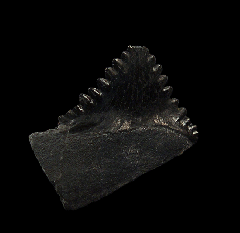
Learn More - Edestus heinrichi$95.00
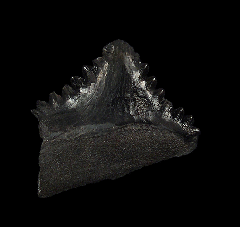
A very rare, LARGE, Top Quality Edestus heinrichi shark tooth, from Herrin, Illinois. This is a Paleozoic shark that lived in swamps that our now underground coal deposits. Excellent preservation, serrations, and serration detail. The Edestus shark would have an upper and lower tooth whorl that are vertically opposed. Research showed that they could use their opposing teeth in a scissor-like motion or a vertical whipping motion to cut prey. It is the first animal to cut vertically. A very strange looking and unique acting shark. Shark recreation image is credited to Julio Lacerdo. These rare teeth are Pennsylvanian age from Illinois. No repair or restoration. Authenticity guaranteed.
I13 SIZE: 1-1/4"crown
Adding 22 Edestus shark teeth in July 2025. Link to Edestus shark.
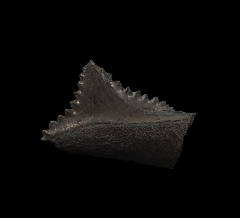
Learn More - Edestus heinrichi$85.00
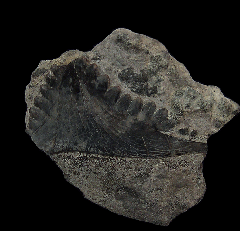
A very rare, LARGE, Top Quality Edestus heinrichi shark tooth, from Herrin, Illinois. This is a Paleozoic shark that lived in swamps that our now underground coal deposits. Excellent preservation, serrations, and serration detail. The Edestus shark would have an upper and lower tooth whorl that are vertically opposed. Research showed that they could use their opposing teeth in a scissor-like motion or a vertical whipping motion to cut prey. It is the first animal to cut vertically. A very strange looking and unique acting shark. Shark recreation image is credited to Julio Lacerdo. These rare teeth are Pennsylvanian age from Illinois. No repair or restoration. Authenticity guaranteed.
I12 SIZE: 1-1/2"crown
Adding 22 Edestus shark teeth in July 2025. Link to Edestus shark.
Learn More - Edestus heinrichi$47.50
A very rare, Top Quality Edestus heinrichi shark tooth, from Herrin, Illinois. This is a Paleozoic shark that lived in swamps that our now underground coal deposits. Excellent preservation, serrations, and serration detail. The Edestus shark would have an upper and lower tooth whorl that are vertically opposed. Research showed that they could use their opposing teeth in a scissor-like motion or a vertical whipping motion to cut prey. It is the first animal to cut vertically. A very strange looking and unique acting shark. Shark recreation image is credited to Julio Lacerdo. These rare teeth are Pennsylvanian age from Illinois. No repair or restoration. Authenticity guaranteed.
I24 SIZE: 2-5/8" w/ root
Adding 22 Edestus shark specimens in July 2025. Link to Edestus shark.
Learn More - Edestus heinrichi$65.00
A very rare, Top Quality Edestus heinrichi shark tooth, from Herrin, Illinois. This is a Paleozoic shark that lived in swamps that our now underground coal deposits. Excellent preservation, serrations, and serration detail. The Edestus shark would have an upper and lower tooth whorl that are vertically opposed. Research showed that they could use their opposing teeth in a scissor-like motion or a vertical whipping motion to cut prey. It is the first animal to cut vertically. A very strange looking and unique acting shark. Shark recreation image is credited to Julio Lacerdo. These rare teeth are Pennsylvanian age from Illinois. No repair or restoration. Authenticity guaranteed.
I22 SIZE: 1--1/4" crown
Adding 22 Edestus shark specimens in July 2025. Link to Edestus shark.
Learn More - Edestus heinrichi$95.00
A very rare, Top Quality Edestus heinrichi shark tooth, from Herrin, Illinois. This is a Paleozoic shark that lived in swamps that our now underground coal deposits. Excellent preservation, serrations, and serration detail. The Edestus shark would have an upper and lower tooth whorl that are vertically opposed. Research showed that they could use their opposing teeth in a scissor-like motion or a vertical whipping motion to cut prey. It is the first animal to cut vertically. A very strange looking and unique acting shark. Shark recreation image is credited to Julio Lacerdo. These rare teeth are Pennsylvanian age from Illinois. No repair or restoration. Authenticity guaranteed.
I21 SIZE: 3/4" crown
Adding 22 Edestus shark specimens in July 2025. Link to Edestus shark.
Learn More - Edestus heinrichi$125.00
A very rare, Top Quality Edestus heinrichi shark tooth, from Herrin, Illinois. This is a Paleozoic shark that lived in swamps that our now underground coal deposits. Excellent preservation, serrations, and serration detail. The Edestus shark would have an upper and lower tooth whorl that are vertically opposed. Research showed that they could use their opposing teeth in a scissor-like motion or a vertical whipping motion to cut prey. It is the first animal to cut vertically. A very strange looking and unique acting shark. Shark recreation image is credited to Julio Lacerdo. These rare teeth are Pennsylvanian age from Illinois. No repair or restoration. Authenticity guaranteed.
I20 SIZE: 1" crown
Adding 22 Edestus shark specimens in July 2025. Link to Edestus shark.
Learn More - Edestus heinrichi$85.00
A very rare, Top Quality Edestus heinrichi shark tooth, from Herrin, Illinois. This is a Paleozoic shark that lived in swamps that our now underground coal deposits. Excellent preservation, serrations, and serration detail. The Edestus shark would have an upper and lower tooth whorl that are vertically opposed. Research showed that they could use their opposing teeth in a scissor-like motion or a vertical whipping motion to cut prey. It is the first animal to cut vertically. A very strange looking and unique acting shark. Shark recreation image is credited to Julio Lacerdo. These rare teeth are Pennsylvanian age from Illinois. No repair or restoration. Authenticity guaranteed.
I19 SIZE: 1-3/16" crown
Adding 22 Edestus shark specimens in July 2025. Link to Edestus shark.
Learn More - Edestus heinrichi$85.00
A very rare, Top Quality Edestus heinrichi shark tooth, from Herrin, Illinois. This is a Paleozoic shark that lived in swamps that our now underground coal deposits. Excellent preservation, serrations, and serration detail. The Edestus shark would have an upper and lower tooth whorl that are vertically opposed. Research showed that they could use their opposing teeth in a scissor-like motion to cut prey. It is the first animal to cut vertically. A very strange looking and unique acting shark. Shark recreation image is credited to Julio Lacerdo. These rare teeth are Pennsylvanian age from Illinois. No repair or restoration. Authenticity guaranteed.
I15 SIZE: 1-1/4"
Adding 14 Edestus shark specimens in January 2023. Link to Edestus shark.
Learn More