Search results for: 'group of tsushima base stand kingi'
- Related search terms
- bases good with blue
- bases good wide blue
- bases good white blue
- group good we planu rays 34
- group good we planu rana 34
- Otodus megalodon$0.00
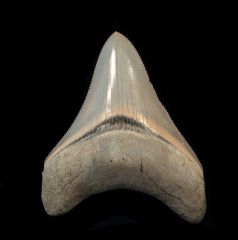
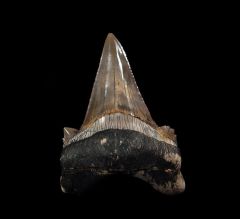
A TOP QUALITY, 3-3/16" Classic Lee Creek Megalodon tooth - ANTERIOR tooth. This Megalodon has an incredible light blue colored crown with an excellent two tone brown bourlette. Highest quality enamel. Excellent color! The bourlette is excellent and perfect. The serrations are razor sharp with an excellent tip serration. Excellent serrations - razor sharp! The root is an excellent light tan color with essentially no hydration cracks, very wide, and absolutely complete. This Megalodon was found in the Pungo River Formation, Lee Creek mine, NC (Miocene age = 14.5 MYA). One of the finest examples of a classic Lee Creek Megs considering the shape, color, and preservation. An exceptional collector's tooth from the old days at Lee Creek mine! No repair or restoration. Authenticity guaranteed.
LC075 Size: 3-3/16"
Learn More - Otodus chubutensis$0.00
A TOP QUALITY, 3" Classic Lee Creek Chubutensis tooth (predecessor of Megalodon) - ANTERIOR tooth. This Chubutensis has an incredible light tan colored crown with a light brown bourlette. Highest quality enamel with a few hydration cracks. Excellent color! The bourlette is excellent. The serrations are razor sharp - near perfect with needle-like tip serration. Excellent serrations - razor sharp! The root is an excellent light tan color and absolutely complete. This Chubutensis was found in the Pungo River Formation, Lee Creek mine, NC (Miocene age = 14.5 MYA). An excellent example of a classic Lee Creek Megs considering the shape, color, and preservation. An exceptional collector's tooth from the old days at Lee Creek mine! NO repair or restoration. Authenticity guaranteed.
LC077 Size: 3"
Learn More - Otodus mugodzharicus (Partial serrated)$0.00
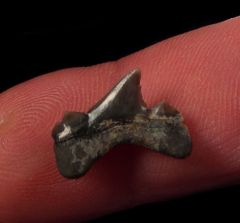
A very rare, early Otodus mugodzharicus upper jaw, posterior tooth from Aktulagay, western Kazakhstan. A transitional tooth leading to C. auriculatus (see detailed discussion below) which leads to Megalodon. The bourlette is complete. Tooth exhibits very fine serrations along the inner curve of the crown only. These teeth exhibit very good color, gloss, and preservation. A rare, early Eocene Auriculatus transition tooth. A very challenging tooth to find when building a Megalodon evolutionary set! No repair. Authenticity guaranteed. Note - This western Kazakhstan site is one of the few places in the world where the Otodus to Auriculatus transition can be found in adjacent layers.
K555 SIZE: 5/8"
Note - Adding 18 Kazakh Auriculatus or transition teeth in April 2020. --> Link to Kazakh Auriculatus teeth.
Learn More - Otodus mugodzharicus (Partial serrated)$0.00
A very rare, early Otodus mugodzharicus upper jaw, lateral tooth from Aktulagay, western Kazakhstan. A transitional tooth leading to C. auriculatus (see detailed discussion below) which leads to Megalodon. The bourlette is complete. Tooth exhibits very fine serrations along the lower 1/3 of crown and micro serrations to the tip. These teeth exhibit very good color, gloss, and preservation. A rare, early Eocene Auriculatus transition tooth. A very challenging tooth to find when building a Megalodon evolutionary set! No repair. Authenticity guaranteed. Note - This western Kazakhstan site is one of the few places in the world where the Otodus to Auriculatus transition can be found in adjacent layers.
K554 SIZE: 1-1/4"
Note - Adding 18 Kazakh Auriuclatus or transition teeth in April 2020. --> Link to Kazakh Auriculatus teeth.
Learn More - Otodus mugodzharicus (Partial serrated)$0.00
A very rare, early Otodus mugodzharicus upper jaw, lateral tooth from Aktulagay, western Kazakhstan. A transitional tooth leading to C. auriculatus (see detailed discussion below) which leads to Megalodon. The bourlette is complete. Tooth exhibits wavy serrations along the lower 1/3 of crown and small wavy serrations to the tip. These teeth exhibit very good color, gloss, and preservation. A rare, early Eocene Auriculatus transition tooth. A very challenging tooth to find when building a Megalodon evolutionary set! No repair. Authenticity guaranteed. Note - This western Kazakhstan site is one of the few places in the world where the Otodus to Auriculatus transition can be found in adjacent layers.
K553 SIZE: 1-1/2"
Note - Adding 18 Kazakh Auriuclatus or transition teeth in April 2020. --> Link to Kazakh Auriculatus teeth.
Learn More - Otodus mugodzharicus (Partial serrated)$0.00
A very rare, early Otodus mugodzharicus upper jaw, anterior tooth from Aktulagay, western Kazakhstan. A transitional tooth leading to C. auriculatus (see detailed discussion below) which leads to Megalodon. The bourlette is complete. Tooth exhibits fine and wavy serrations along the lower 1/3 of crown and no serrations the tip. These teeth exhibit very good color, gloss, and preservation. A rare, early Eocene Auriculatus transition tooth. A very challenging tooth to find when building a Megalodon evolutionary set! No repair. Authenticity guaranteed. Note - This western Kazakhstan site is one of the few places in the world where the Otodus to Auriculatus transition can be found in adjacent layers.
K551 SIZE: 2-1/8"
Note - Adding 18 Kazakh Auriculatus or transition teeth in April 2020. --> Link to Kazakh Auriculatus teeth.
Learn More - Otodus pavlovi$0.00
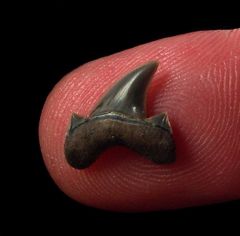
A very rare, early Otodus pavlovi upper jaw, lateral tooth from Aktulagay, western Kazakhstan. Otodus pavlovi was the smaller Otodus shark species present in this early Eocene deposit. The side cusps are large and complete. Exhibits no serrations. These teeth exhibit very good color, gloss, and preservation. No repair. Authenticity guaranteed. Perfect tooth.
K532 SIZE: 11/16"
Note - Adding 18 Kazakh Auriculatus or transition teeth in April 2020. --> Link to Kazakh Auriculatus teeth.
Learn More - Otodus pavlovi$0.00
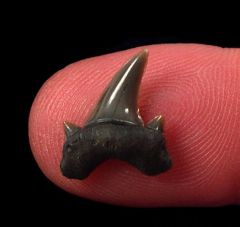
A very rare, early Otodus pavlovi upper jaw, lateral tooth from Aktulagay, western Kazakhstan. Otodus pavlovi was the smaller Otodus shark species present in this early Eocene deposit. The side cusps are large and complete. Exhibits no serrations. These teeth exhibit very good color, gloss, and preservation. No repair. Authenticity guaranteed. Perfect tooth.
K531 SIZE: 13/16"
Note - Adding 18 Kazakh Auriculatus or transition teeth in April 2020. --> Link to Kazakh Auriculatus teeth.
Learn More - Macrorhizodus nolfi$0.00
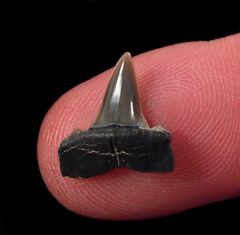
A very rare, early Macrorhizodus nolfi upper jaw, lateral tooth from Aktulagay, western Kazakhstan. Macrorhizodus nolfi is a Lamnidae shark and an early Mako shark (Isurus praecursor) relative in this early Eocene deposit. The side cusps are complete. No repair. Authenticity guaranteed. Perfect tooth.
K572 SIZE: 3/4"
Note - Adding 18 Kazakh Auriculatus or transition teeth in April 2020. --> Link to Kazakh Auriculatus teeth.
Learn More - Macrorhizodus nolfi$0.00
A very rare, early Macrorhizodus nolfi upper jaw, anterior tooth from Aktulagay, western Kazakhstan. Macrorhizodus nolfi is a Lamnidae shark and an early Mako shark (Isurus praecursor) relative in this early Eocene deposit. These teeth exhibit very good color, gloss, and preservation. A rare, early Eocene Macrorhizodus nolfi tooth. No repair. Authenticity guaranteed.
K571 SIZE: 1-3/8"
Note - Adding 18 Kazakh Auriculatus or transition teeth in April 2020. --> Link to Kazakh Auriculatus teeth.
Learn More - Otodus obliquus (not serrated)$95.00
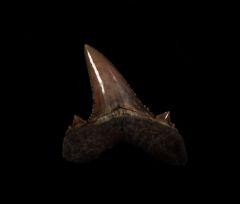
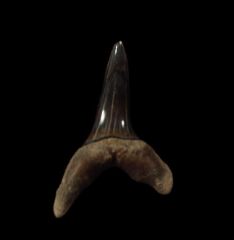
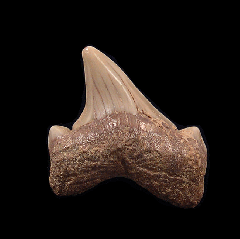
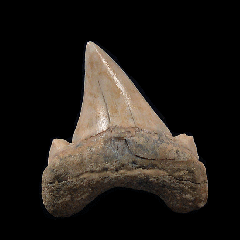
A very rare, early Otodus obliquus anterior tooth from Kzil-Orda Region, Kazakhstan. Otodus obliquus is the ancestor to O. auriculatus (see detailed discussion below) which leads to Megalodon. The bourlette is large and complete. Exhibits no serrations. The starting species to serrated Otodus teeth. These teeth exhibit very good color, gloss, and preservation. A rare, early Eocene (Ypresian) Auriculatus transition tooth. A very challenging tooth to find when building a Megalodon evolutionary set! No repair. Authenticity guaranteed. Note - This western Kazakhstan site is one of the few places in the world where the Otodus obliquus to Otodus auriculatus transition can be found in adjacent early Eocene formation units.
K561 SIZE: 1-1/16"
Note - Adding 24 Kazakh Auriculatus or transition teeth in July 2024. --> Link to Kazakh Auriculatus teeth.
Learn More - Otodus obliquus (not serrated)$135.00
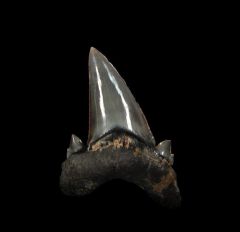
A very rare, early Otodus obliquus anterior tooth from Kzil-Orda Region, Kazakhstan. Otodus obliquus is the ancestor to O. auriculatus (see detailed discussion below) which leads to Megalodon. The bourlette is large and complete. Exhibits no serrations. The starting species to serrated Otodus teeth. These teeth exhibit very good color, gloss, and preservation. A rare, early Eocene (Ypresian) Auriculatus transition tooth. A very challenging tooth to find when building a Megalodon evolutionary set! No repair. Authenticity guaranteed. Note - This western Kazakhstan site is one of the few places in the world where the Otodus obliquus to Otodus auriculatus transition can be found in adjacent early Eocene formation units.
K562 SIZE: 1-1/4"
Note - Adding 24 Kazakh Auriculatus or transition teeth in July 2024. --> Link to Kazakh Auriculatus teeth.
Learn More