Search results for: 'above contortu de ones'
- Did you mean
- above contortu de olces
- Related search terms
- ones claws rare
- ones other plates note remove
- ones other plates note remov
- ones other plates north remove
- ones other plates north remov
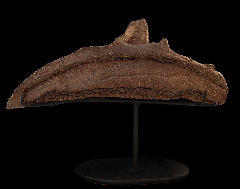
- Lambeosaur - Maxilla (upper jaw)$3,250.00
A Top Quality Lambeosaur (Parasaurolophus) maxilla from the late Cretaceous (Judith River Fm.) of North America. An April Fossil of the Month. This is a complete upper jaw containing 100s exposed teeth. Parasaurolophus is a lambeosaur (crested) hadrosaur or "duck-bill" from the Judith River Formation in Montana. The maxilla possessed 100s teeth that were in rows of teeth which acted as conveyor belt to maintain a chewing surface to cut and grind their food. Bone quality is excellent. Minor crack fill. No restoration. Legally collected on private land in the Judith River Fm., Fergus Co., Mpntana. An excellent collector's quality Edmontosaurus maxilla section from a rare location. Authenticity guaranteed. The maxila comes with a sturdy custom display stand. A fantastic and rare display piece!
DH30 SIZE: 11-1/2" length x 4-1/4" height (8" height on stand)
Note - Adding 22 Hadrosaur /Edmontosaurus bones & claws in April 2022. Link to Edmontosaurus fossils catalog
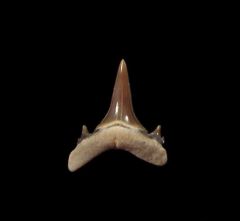
Learn More - Mennerotodus glueckmani$45.00
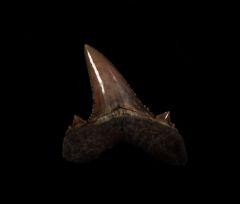
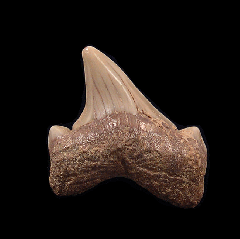
A Top Quality Mennerotodus glueckmani (a Sand Tiger shark) tooth from Tushbair, Kazakhstan. Lateral position. Incredible color and condition. An incredible Eocene (Bartonian) age tooth. No repair or restoration. Authenticity guaranteed. One of the finest localities for Eocene age shark teeth! You will enjoy the quality of the Kazakh teeth.
K310 SIZE: 7/8"
Note - Adding 15 new Mennerotodus teeth in July 2024. Mennerotodus Catalog Link
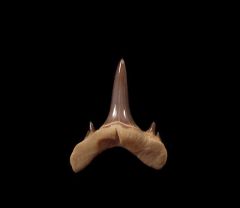
Learn More - Mennerotodus glueckmani$45.00
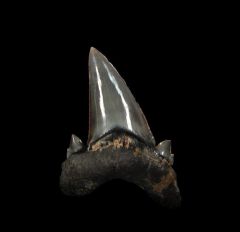
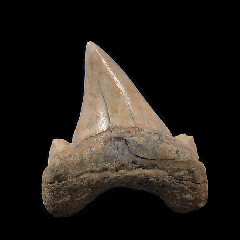
A Top Quality Mennerotodus glueckmani (a Sand Tiger shark) tooth from Tushbair, Kazakhstan. Lateral position. Incredible color and condition. An incredible Eocene (Bartonian) age tooth. No repair or restoration. Authenticity guaranteed. One of the finest localities for Eocene age shark teeth! You will enjoy the quality of the Kazakh teeth.
K309 SIZE: 1-1/16"
Note - Adding 15 new Mennerotodus teeth in July 2024. Mennerotodus Catalog Link
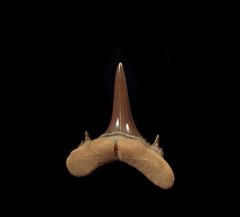
Learn More - Mennerotodus glueckmani$50.00
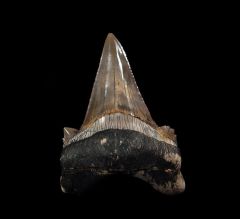
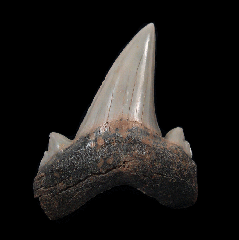
A Top Quality Mennerotodus glueckmani (a Sand Tiger shark) tooth from Tushbair, Kazakhstan. Lateral position. Incredible color and condition. An incredible Eocene (Bartonian) age tooth. No repair or restoration. Authenticity guaranteed. One of the finest localities for Eocene age shark teeth! You will enjoy the quality of the Kazakh teeth.
K308 SIZE: 1-1/16"
Note - Adding 15 new Mennerotodus teeth in July 2024. Mennerotodus Catalog Link
Learn More - Anzu wyliei - Vertebra$0.00
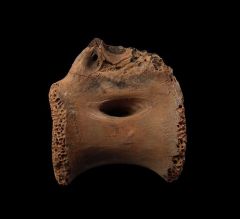
A rare, Top Quality Anzu wyliei caudal (tail) vertebra from the Hell Creek Fm. of Montana. Anzu is referred to as the "Chicken from Hell". An excellent vertebra. Excellent light brown color and patina. This specimen has excellent perservation. Note - the open cell structure of this theropod vertabra. Also note the large pneumatic fossa on the sides - an Anzu vertebra trait. There is a segment of tendon fossilized with this vertebra. A top quality, collector's vertebra from the Hell Creek of Montana. Note - 2014 Anzu wyliei description paper attached below. Legally collected on private land in the Hell Creek Fm., McCone Co., Montana. Collected in 2003. Authenticity guaranteed. Museum Quality. These are rare vertebrae to find.
DA19 Size: 1-3/4" ; end dimensions: 1-5/8" x 2"
Note - Adding 14 Anzu wyliei bones & claws in September 2022. Link to Anzu wyliei claws.
Learn More - Otodus mugodzharicus (Partial serrated)$0.00
A very rare, early Otodus mugodzharicus upper jaw, lateral tooth from Aktulagay, western Kazakhstan. A transitional tooth leading to C. auriculatus (see detailed discussion below) which leads to Megalodon. The bourlette is complete. Tooth exhibits very fine serrations along the lower 1/3 of crown and micro serrations to the tip. These teeth exhibit very good color, gloss, and preservation. A rare, early Eocene Auriculatus transition tooth. A very challenging tooth to find when building a Megalodon evolutionary set! No repair. Authenticity guaranteed. Note - This western Kazakhstan site is one of the few places in the world where the Otodus to Auriculatus transition can be found in adjacent layers.
K554 SIZE: 1-1/4"
Note - Adding 18 Kazakh Auriuclatus or transition teeth in April 2020. --> Link to Kazakh Auriculatus teeth.
Learn More - Otodus mugodzharicus (Partial serrated)$0.00
A very rare, early Otodus mugodzharicus upper jaw, lateral tooth from Aktulagay, western Kazakhstan. A transitional tooth leading to C. auriculatus (see detailed discussion below) which leads to Megalodon. The bourlette is complete. Tooth exhibits wavy serrations along the lower 1/3 of crown and small wavy serrations to the tip. These teeth exhibit very good color, gloss, and preservation. A rare, early Eocene Auriculatus transition tooth. A very challenging tooth to find when building a Megalodon evolutionary set! No repair. Authenticity guaranteed. Note - This western Kazakhstan site is one of the few places in the world where the Otodus to Auriculatus transition can be found in adjacent layers.
K553 SIZE: 1-1/2"
Note - Adding 18 Kazakh Auriuclatus or transition teeth in April 2020. --> Link to Kazakh Auriculatus teeth.
Learn More - Otodus mugodzharicus (Partial serrated)$0.00
A very rare, early Otodus mugodzharicus upper jaw, anterior tooth from Aktulagay, western Kazakhstan. A transitional tooth leading to C. auriculatus (see detailed discussion below) which leads to Megalodon. The bourlette is complete. Tooth exhibits fine and wavy serrations along the lower 1/3 of crown and no serrations the tip. These teeth exhibit very good color, gloss, and preservation. A rare, early Eocene Auriculatus transition tooth. A very challenging tooth to find when building a Megalodon evolutionary set! No repair. Authenticity guaranteed. Note - This western Kazakhstan site is one of the few places in the world where the Otodus to Auriculatus transition can be found in adjacent layers.
K551 SIZE: 2-1/8"
Note - Adding 18 Kazakh Auriculatus or transition teeth in April 2020. --> Link to Kazakh Auriculatus teeth.
Learn More - Otodus obliquus (not serrated)$95.00
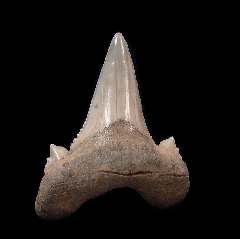
A very rare, early Otodus obliquus anterior tooth from Kzil-Orda Region, Kazakhstan. Otodus obliquus is the ancestor to O. auriculatus (see detailed discussion below) which leads to Megalodon. The bourlette is large and complete. Exhibits no serrations. The starting species to serrated Otodus teeth. These teeth exhibit very good color, gloss, and preservation. A rare, early Eocene (Ypresian) Auriculatus transition tooth. A very challenging tooth to find when building a Megalodon evolutionary set! No repair. Authenticity guaranteed. Note - This western Kazakhstan site is one of the few places in the world where the Otodus obliquus to Otodus auriculatus transition can be found in adjacent early Eocene formation units.
K561 SIZE: 1-1/16"
Note - Adding 24 Kazakh Auriculatus or transition teeth in July 2024. --> Link to Kazakh Auriculatus teeth.
Learn More - Otodus obliquus (not serrated)$135.00
A very rare, early Otodus obliquus anterior tooth from Kzil-Orda Region, Kazakhstan. Otodus obliquus is the ancestor to O. auriculatus (see detailed discussion below) which leads to Megalodon. The bourlette is large and complete. Exhibits no serrations. The starting species to serrated Otodus teeth. These teeth exhibit very good color, gloss, and preservation. A rare, early Eocene (Ypresian) Auriculatus transition tooth. A very challenging tooth to find when building a Megalodon evolutionary set! No repair. Authenticity guaranteed. Note - This western Kazakhstan site is one of the few places in the world where the Otodus obliquus to Otodus auriculatus transition can be found in adjacent early Eocene formation units.
K562 SIZE: 1-1/4"
Note - Adding 24 Kazakh Auriculatus or transition teeth in July 2024. --> Link to Kazakh Auriculatus teeth.
Learn More - Otodus obliquus (not serrated)$200.00
A very rare, early Otodus obliquus anterior tooth from Kzil-Orda Region, Kazakhstan. Otodus obliquus is the ancestor to O. auriculatus (see detailed discussion below) which leads to Megalodon. The bourlette is large and complete. Exhibits no serrations. The starting species to serrated Otodus teeth. These teeth exhibit very good color, gloss, and preservation. A rare, early Eocene (Ypresian) Auriculatus transition tooth. A very challenging tooth to find when building a Megalodon evolutionary set! No repair. Authenticity guaranteed. Note - This western Kazakhstan site is one of the few places in the world where the Otodus obliquus to Otodus auriculatus transition can be found in adjacent early Eocene formation units.
K561 SIZE: 1-1/4"
Note - Adding 24 Kazakh Auriculatus or transition teeth in July 2024. --> Link to Kazakh Auriculatus teeth.
Learn More - Otodus aksuaticus (Partial serrated)$325.00
A very rare, early Otodus aksuaticus anterior tooth from Kzil-Orda, Kazakhstan. A transitional tooth leading to O. auriculatus (see detailed discussion below) which leads to Megalodon. The bourlette is complete. This tooth exhibits small serrations along the lower 1/2 of the crown and micro serrations to the tip. These teeth exhibit excellent color, gloss, and preservation. A rare, early (Ypresian) Eocene Auriculatus transition tooth. A very challenging tooth to find when building a Megalodon evolutionary set! No repair or restoration. Authenticity guaranteed. This western Kazakhstan site is one of the few places in the world where the Otodus obliquus to Otodus auriculatus transition can be found in adjacent geologic layers.
K546 SIZE: 1-9/16"
Note - Adding 24 Kazakh Auriuclatus or transition teeth in July 2024. --> Link to Kazakh Auriculatus teeth.
Learn More