Search results for: '1978 vw posted 1 during youtube'
- Did you mean
- 178 vw postag 1 dung youtube
- 178 vw posted 1 dung youtube
- Related search terms
- posted recent do good caudal no youtube
- posted recent do good casual no youtube
- posted recent do good cani no youtube
- posted recent do good ca02 no youtube
- posted recent do good cave no youtube
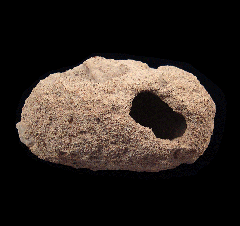
- Leptopius duponti - Fossil Weevil Cocoon$0.00
A Leptopius duponti - fossil Weevil cocoon from Eyre Pennisula, South Australia. They are known as "pixie clogs". These cacoons were spun by the weevils in their pupae stage to protect them during metamorphosis into adult beetles. Excellent preservation. Note - 1-5/16" thick. This is a late Pleistocene - Holocene trace fossil. A unique display piece!
Y074 SIZE: 2-1/4" (1-5/16" Thick)
Note - Posting 6 new "Other" fossils in January 2024. Link to Other Fossils
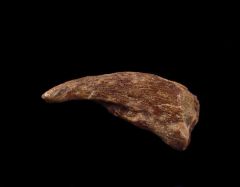
Learn More - Thalassocnus, Swimming Sloth$0.00
An ultra rare, Thalassocnus, a Swimming Sloth, claw. This sloth lived on the west coast of So. America during the late Miocene age. The rare claw is from the Bahia Inglesia Formation, Copiapo, Chile. Fantastic red color. Very good condition with minor damage (erosion). No repair. I have not seen a swimming sloth claw for sale before. This is all of the sloth material that I have from 10+ years ago! A rare collector's claw.
C931 BoP Size: 2-1/8"
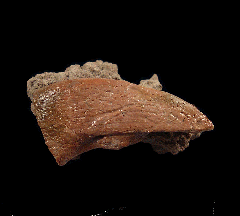
Learn More - Thalassocnus - Swimming Sloth$575.00
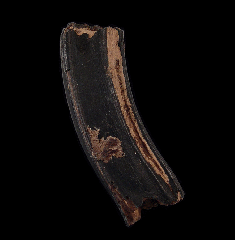
An ultra rare, Thalassocnus, a Swimming Sloth, manus (hand) claw from the Bahia Inglesia Formation, Copiapo, Chile. A May Fossil of the Month. This sloth lived on the west coast of So. America during the late Miocene age. This claw is a near complete with minor erosion along the upper edge and back end. Both areas have minor restoration. Fantastic color and preservation. Authenticity guaranteed. I have not seen a swimming sloth claw for sale before. This is all of the sloth material that I have from 15 years ago! A rare collector's claw. This is my one and only hand claw!
C931 Size: 2-1/2" (1-1/8" height, 7/16" wide)
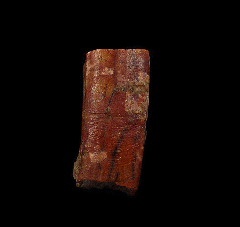
Learn More - Thalassocnus - Swimming Sloth$175.00
An ultra rare, Thalassocnus, a Swimming Sloth, tooth from the Bahia Inglesia Formation, Copiapo, Chile. A May Fossil of the Month. This sloth lived on the west coast of So. America during the late Miocene age. This tooth is complete with no wear. Cutting surface is perfect. Fantastic color. Excellent condition. No repair. Authenticity guaranteed. I have not seen a swimming sloth claw for sale before. This is all of the sloth material that I have from 15 years ago! A rare collector's tooth. My last one!
C932 Size: 1-1/4" (9/16" Cutting surface width)
Note - Adding 2 Chilean swimming sloth fossils in May 2023 Link to Sloth fossils
Learn More - Equus sp. - Florida$25.00
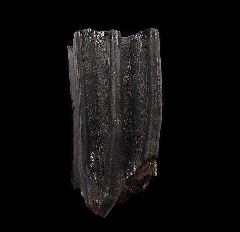
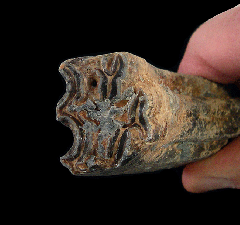
A well preserved horse tooth (Equus sp. ) from northern Florida. The horse arrived in North America during the late Pliocene and became extinct at the end of the Pleistocene. An upper jaw tooth. Very well fossilized specimen. No repair or restoration. Authenticity guaranteed.
XH11 Size: 2-1/8"
Name: Equus sp.
Age: Pleistocene
Location: Northern Florida, Florida
Note - Posting 13 horse fossils in April 2024. Link to Horse Fossils
Learn More - Equus sp. - Florida$27.50
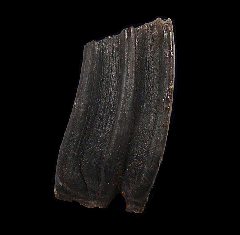
A well preserved horse tooth (Equus sp. ) from northern Florida. The horse arrived in North America during the late Pliocene and became extinct at the end of the Pleistocene. An upper jaw tooth. Very well fossilized specimen. No repair or restoration. Authenticity guaranteed.
XH10 Size: 2-1/2"
Name: Equus sp.
Age: Pleistocene
Location: Northern Florida, Florida
Note - Posting 13 horse fossils in April 2024. Link to Horse Fossils
Learn More - Equus sp. - So. Carolina$30.00
A well preserved horse tooth (Equus sp. ) from ACE Basin, So. Carolina. The horse arrived in North America during the late Pliocene and became extinct at the end of the Pleistocene. Very well fossilized upper jaw specimen. No repair or restoration. Authenticity guaranteed.
XH07 Size: 3-1/4"
Name: Equus sp.
Age: Pleistocene
Location: ACE Basin, So. Carolina
Note - Posting 13 horse fossils in April 2024. Link to Horse Fossils
Learn More - Equus sp. - So. Carolina$25.00
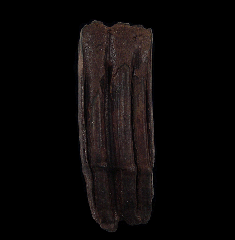
A LARGE, well preserved horse tooth (Equus sp. ) from ACE Basin, So. Carolina. The horse arrived in North America during the late Pliocene and became extinct at the end of the Pleistocene. Very well fossilized lower jaw specimen. No repair or restoration. Authenticity guaranteed.
XH47 Size: 3-1/4"
Name: Equus sp.
Age: Pleistocene
Location: ACE Basin, So. Carolina
Note - Posting 23 horse fossils in December 2024. Link to Horse Fossils
Learn More - Equus sp. - So. Carolina$30.00
A LARGE, well preserved horse tooth (Equus sp. ) from ACE Basin, So. Carolina. The horse arrived in North America during the late Pliocene and became extinct at the end of the Pleistocene. Very well fossilized lower jaw specimen. No repair or restoration. Authenticity guaranteed.
XH46 Size: 3-1/4"
Name: Equus sp.
Age: Pleistocene
Location: ACE Basin, So. Carolina
Note - Posting 23 horse fossils in December 2024. Link to Horse Fossils
Learn More - Equus sp. - So. Carolina$25.00
A LARGE, well preserved horse tooth (Equus sp. ) from ACE Basin, So. Carolina. The horse arrived in North America during the late Pliocene and became extinct at the end of the Pleistocene. Very well fossilized upperjaw specimen. No repair or restoration. Authenticity guaranteed.
XH44 Size: 3-1/4"
Name: Equus sp.
Age: Pleistocene
Location: ACE Basin, So. Carolina
Note - Posting 23 horse fossils in December 2024. Link to Horse Fossils
Learn More - Equus sp. - So. Carolina$30.00
A LARGE, well preserved horse tooth (Equus sp. ) from ACE Basin, So. Carolina. The horse arrived in North America during the late Pliocene and became extinct at the end of the Pleistocene. Very well fossilized upper jaw specimen. No repair or restoration. Authenticity guaranteed.
XH42 Size: 3-1/8"
Name: Equus sp.
Age: Pleistocene
Location: ACE Basin, So. Carolina
Note - Posting 23 horse fossils in December 2024. Link to Horse Fossils
Learn More - Equus sp. Astragalus bone$15.00
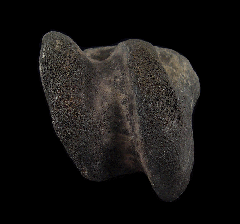
A LARGE horse astragalus bone (Equus sp. ) from Northern Florida. The astragalus is the ankle bobe. The horse arrived in North America during the late Pliocene and became extinct at the end of the Pleistocene. A well fossilized specimen. No repair or restoration. Authenticity guaranteed.
XH33 Size: 2-1/2"
Name: Equus sp.
Age: Pleistocene
Location: Northern Florida
Note - Posting 23 horse fossils in December 2024. Link to Horse Fossils
Learn More