Search results for: 'long sleeper liop kimono shark many'
- Related search terms
- shark enameloid enabl intelligence form disaster response it stem
- shark easel enabl intelligence four disaster response it steg1
- shark enabled enamel intelligence form disaster response it star
- shark enabl enabl intelligence form disaster response it star
- shark enabled enabl intelligence form disaster response it stand
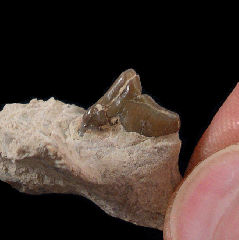
- Hesperocyon gregarius - Extinct Dog-like Canid$45.00
An extinct early Dog-like Canid molar (Hesperocyon gregarius) from Sioux Co., Nebraska. Hesperocyon gregarius was one of many mammals that thrived in the Early Oligocene in North America. Found in the Brule Fm. (Rupelian) 33 - 30 million years ago. A very well preserved specimen. No repair or restoration. Authenticity guaranteed.
WR48 Size: 1-1/4"
Name: Hesperocyon gregarius
Age: Oligocene
Location: Sioux Co., Nebraska
Note - Posting 49 Oligocene Mammal fossils in January 2025. Link to Oligocene Mammal Fossils
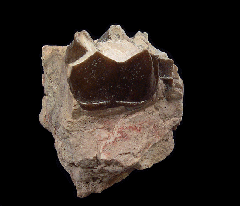
Learn More - Hyracodon nebraskensis - Extinct Running Rhinoceras$20.00
An extinct early Running Rhinoceras tooth (Hyracodon nebraskensis) from Sioux Co., Nebraska. Hyracodon nebraskensis was one of many mammals that thrived in the Early Oligocene in North America. Found in the Brule Fm. (Rupelian) 33 - 30 million years ago. A very well preserved specimen. No repair or restoration. Authenticity guaranteed.
WR55 Size: 1-1/2"
Name: Hyracodon nebraskensis
Age: Oligocene
Location: Sioux Co., Nebraska
Note - Posting 49 Oligocene Mammal fossils in January 2025. Link to Oligocene Mammal Fossils
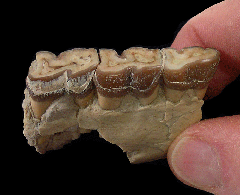
Learn More - Hyracodon nebraskensis - Extinct Running Rhinoceras$55.00
An extinct early Running Rhinoceras jaw (Hyracodon nebraskensis) from Sioux Co., Nebraska. Hyracodon nebraskensis was one of many mammals that thrived in the Early Oligocene in North America. Found in the Brule Fm. (Rupelian) 33 - 30 million years ago. A very well preserved specimen. No repair or restoration. Authenticity guaranteed.
WR54 Size: 2-1/8"
Name: Hyracodon nebraskensis
Age: Oligocene
Location: Sioux Co., Nebraska
Note - Posting 49 Oligocene Mammal fossils in January 2025. Link to Oligocene Mammal Fossils
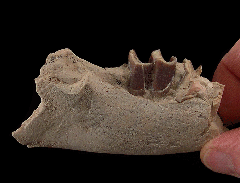
Learn More - Hyracodon nebraskensis - Extinct Running Rhinoceras$55.00
An extinct early Running Rhinoceras jaw (Hyracodon nebraskensis) from Sioux Co., Nebraska. Hyracodon nebraskensis was one of many mammals that thrived in the Early Oligocene in North America. Found in the Brule Fm. (Rupelian) 33 - 30 million years ago. A very well preserved specimen. No repair or restoration. Authenticity guaranteed.
WR53 Size: 3-1/4"
Name: Hyracodon nebraskensis
Age: Oligocene
Location: Sioux Co., Nebraska
Note - Posting 49 Oligocene Mammal fossils in January 2025. Link to Oligocene Mammal Fossils
Learn More - Hyracodon nebraskensis - Extinct Running Rhinoceras$85.00
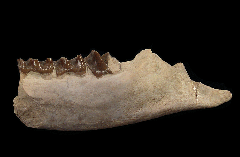
An extinct early Running Rhinoceras jaw (Hyracodon nebraskensis) from Sioux Co., Nebraska. Hyracodon nebraskensis was one of many mammals that thrived in the Early Oligocene in North America. Found in the Brule Fm. (Rupelian) 33 - 30 million years ago. A very well preserved specimen. No repair or restoration. Authenticity guaranteed.
WR52 Size: 5"
Name: Hyracodon nebraskensis
Age: Oligocene
Location: Sioux Co., Nebraska
Note - Posting 49 Oligocene Mammal fossils in January 2025. Link to Oligocene Mammal Fossils
Learn More - Hyracodon nebraskensis - Extinct Running Rhinoceras$95.00
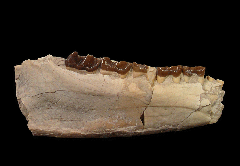
An extinct early Running Rhinoceras jaw (Hyracodon nebraskensis) from Sioux Co., Nebraska. Hyracodon nebraskensis was one of many mammals that thrived in the Early Oligocene in North America. Found in the Brule Fm. (Rupelian) 33 - 30 million years ago. A very well preserved specimen. No repair or restoration. Authenticity guaranteed.
WR51 Size: 5-3/8"
Name: Hyracodon nebraskensis
Age: Oligocene
Location: Sioux Co., Nebraska
Note - Posting 49 Oligocene Mammal fossils in January 2025. Link to Oligocene Mammal Fossils
Learn More - Sphenodus stschurowskii$65.00
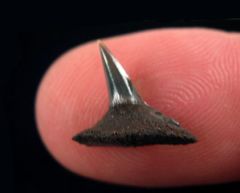
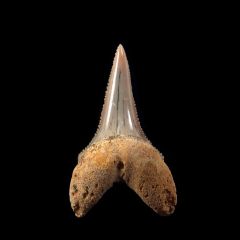
A very rare, Sphenodus tooth, from a very early shark. Absolutely great preservation - excellent condition with extra sharp cutting edges. These are Upper Jurassic age from Voskresensk, Russia. Note - there appears to be very minor repair (patch) on the rear of root (1/16" sliver area); left hand corner of the root of this tooth (rear side). Repair not visible front the display side. Bargain priced for a rare, killer Sphenodus tooth!
R209 SIZE: 5/8"
Learn More - Edestus heinrichi$195.00
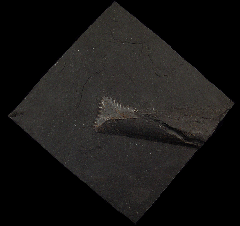
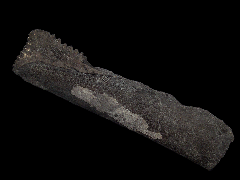
A very rare, Top Quality Edestus heinrichi shark tooth, from Herrin, Illinois. This is a Paleozoic shark that lived in swamps that our now underground coal deposits. An excellent matrix specimen that inludes the opposing tooth mold as well. Excellent preservation, serrations, and serration detail. The Edestus shark would have an upper and lower tooth whorl that are vertically opposed. Research showed that they could use their opposing teeth in a scissor-like motion or a vertical whipping motion to cut prey. It is the first animal to cut vertically. A very strange looking and unique acting shark. Shark recreation image is credited to Julio Lacerdo. These rare teeth are Pennsylvanian age from Illinois. No repair or restoration. Authenticity guaranteed. Note - shipping weight is 1.9 lbs. International "free shipping" will require supplemental postage.
I11 SIZE: 3" w/ root (1-1/2" crown) ; Matrix block is 3.5" x 3.5"
Adding 22 Edestus shark teeth in July 2025. Link to Edestus shark.
Learn More - Edestus heinrichi$175.00
A very rare, LARGE, Top Quality Edestus heinrichi shark tooth, from Herrin, Illinois. This is a Paleozoic shark that lived in swamps that our now underground coal deposits. Note - this tooth has a lot of pyrite and the tip is naturally rounded (polished) which thought to be due to the vertical whipping motion used to slice prey. Excellent preservation, serrations, and serration detail. The Edestus shark would have an upper and lower tooth whorl that are vertically opposed. Research showed that they could use their opposing teeth in a scissor-like motion or a vertical whipping motion to cut prey. It is the first animal to cut vertically. A very strange looking and unique acting shark. Shark recreation image is credited to Julio Lacerdo. These rare teeth are Pennsylvanian age from Illinois. No repair or restoration. Authenticity guaranteed.
I09 SIZE: 4-1/8" w/ root (1-7/8" crown)
Adding 22 Edestus shark teeth in July 2025. Link to Edestus shark.
Learn More - Carcharodon carcharias : Mexico$55.00
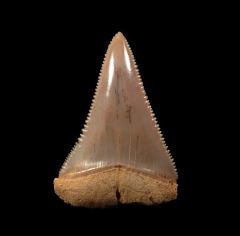
A Quality Great White shark tooth - lower jaw anterior tooth from Baja, Mexico. This tooth has a nice tan colored crown and a tan root. Great color! High quality enamel with no hydration cracks or peeling. Very glossy. Serrations are sharp with a strong tip serration. Excellent preservation - note nutrient hole on root. This is a Pliocene tooth from Tirabuzon Fm. An excellent collector's Great White shark tooth from a rare locality. No repair or restoration. Authenticity guaranteed. A rare GW tooth!
MX402 Size: 1-1/4"
Learn More - Carcharodon carcharias : Mexico$75.00
A Quality Great White shark tooth - upper jaw anterior tooth from Baja, Mexico. This tooth has a rich tan colored crown and a tan root. Great color! Highest quality enamel with no hydration cracks or peeling. Very glossy. Serrations are sharp with a strong tip serration. Excellent preservation with some root erosion. This is a Pliocene tooth from Tirabuzon Fm. An excellent collector's Great White shark tooth from a rare locality. No repair or restoration. Authenticity guaranteed. A rare GW tooth!
MX401 Size: 1-9/16"
Learn More - Edestus heinrichi$875.00
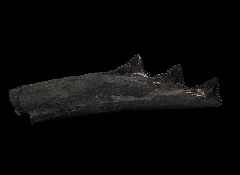
An ultra rare, LARGE, Top Quality Edestus heinrichi partial tooth whorl, from Herrin, Illinois. A July Fossil of the Month. This is a Paleozoic shark that lived in swamps that our now underground coal deposits. An ultra rare triple crown whorl section with exceptional quality crowns. Excellent preservation, serrations, and serration detail. The Edestus shark would have an upper and lower tooth whorl that are vertically opposed. Research showed that they could use their opposing teeth in a scissor-like motion or a vertical whipping motion to cut prey. It is the first animal to cut vertically. A very strange looking and unique acting shark. Shark recreation image is credited to Julio Lacerdo. These rare teeth are Pennsylvanian age from Illinois. No repair or restoration. Authenticity guaranteed.
I03 SIZE: 6-5/8" w/ root (1-7/8" crown)
Adding 22 Edestus shark teeth in July 2025. Link to Edestus shark.
Learn More