Search results for: 'ca01 tooth 5'
- Did you mean
- cave tooth 5
- call tooth 5
- Related search terms
- ca01 of good fortune film/
- ca01 good desenho
- ca01 good desenho/
- ca01 good desenho//
- ca01 good desenho///
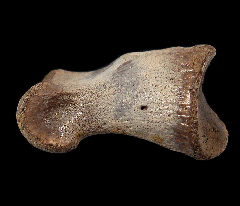
- Tyrannosaur toe bone$795.00
An ultra rare, GEM Quality Tyrannosaur hand bone from the late Cretaceous (Campanian) in northern North America. Please note that this toe bone could Gorgosaurus or Daspletosaurus - see Detailed Discussion below. An October Fossil of the Month. This hand bone measures 1-7/16" - an exceptional quality, juvenileTyrannosaur hand bone. The bone is the highest quality and complete with excellent color. It has the characteristic hump on top. No cracks. No repair or restoration. Legally collected on private land in the Judith River Fm., Winifred Co., Montana. Authenticity guaranteed. An excellent, rare collector's hand bone. A very rare find! A Riker display case is included.
DY32 SIZE: 1-7/16" (Proximal End size: 13/16" x 3/4")
Link to Tyrannosaur teeth catalog.
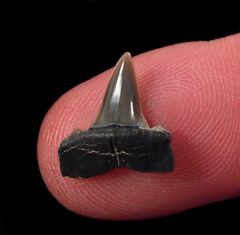
Learn More - Macrorhizodus nolfi$0.00
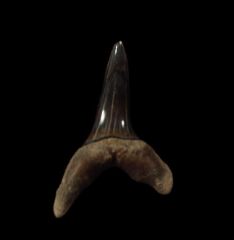
A very rare, early Macrorhizodus nolfi upper jaw, lateral tooth from Aktulagay, western Kazakhstan. Macrorhizodus nolfi is a Lamnidae shark and an early Mako shark (Isurus praecursor) relative in this early Eocene deposit. The side cusps are complete. No repair. Authenticity guaranteed. Perfect tooth.
K572 SIZE: 3/4"
Note - Adding 18 Kazakh Auriculatus or transition teeth in April 2020. --> Link to Kazakh Auriculatus teeth.
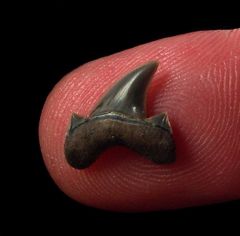
Learn More - Otodus pavlovi$0.00
A very rare, early Otodus pavlovi upper jaw, lateral tooth from Aktulagay, western Kazakhstan. Otodus pavlovi was the smaller Otodus shark species present in this early Eocene deposit. The side cusps are large and complete. Exhibits no serrations. These teeth exhibit very good color, gloss, and preservation. No repair. Authenticity guaranteed. Perfect tooth.
K532 SIZE: 11/16"
Note - Adding 18 Kazakh Auriculatus or transition teeth in April 2020. --> Link to Kazakh Auriculatus teeth.
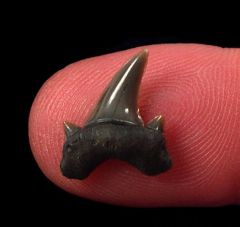
Learn More - Otodus pavlovi$0.00
A very rare, early Otodus pavlovi upper jaw, lateral tooth from Aktulagay, western Kazakhstan. Otodus pavlovi was the smaller Otodus shark species present in this early Eocene deposit. The side cusps are large and complete. Exhibits no serrations. These teeth exhibit very good color, gloss, and preservation. No repair. Authenticity guaranteed. Perfect tooth.
K531 SIZE: 13/16"
Note - Adding 18 Kazakh Auriculatus or transition teeth in April 2020. --> Link to Kazakh Auriculatus teeth.
Learn More - Macrorhizodus nolfi$0.00
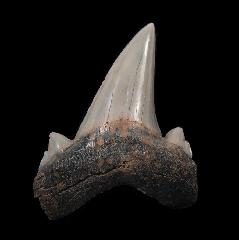
A very rare, early Macrorhizodus nolfi upper jaw, anterior tooth from Aktulagay, western Kazakhstan. Macrorhizodus nolfi is a Lamnidae shark and an early Mako shark (Isurus praecursor) relative in this early Eocene deposit. These teeth exhibit very good color, gloss, and preservation. A rare, early Eocene Macrorhizodus nolfi tooth. No repair. Authenticity guaranteed.
K571 SIZE: 1-3/8"
Note - Adding 18 Kazakh Auriculatus or transition teeth in April 2020. --> Link to Kazakh Auriculatus teeth.
Learn More - Paleolagus haydeni (Rabbit)$0.00
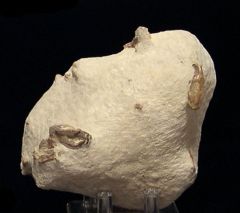
A TOP QUALITY Paleolagus haydeni, fossil rabbit, mortality piece from the White River Badlands, Brule Formation, South Dakota. The mortality rock contains three skulls and parts of a few bodies. Most likely these rabbits died in their burrow. Excellent color and preservation. Exceptional preparation to expose the multiple speciments. A scarce mortality rock with White River rabbit skulls and an incredible display piece. Authenticity guaranteed.
WR002 SIZE: 5" x 4" x 3-7/8"
Learn More - Otodus obliquus (not serrated)$95.00
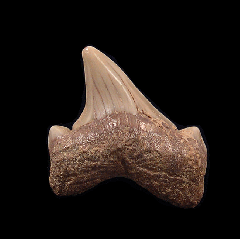
A very rare, early Otodus obliquus anterior tooth from Kzil-Orda Region, Kazakhstan. Otodus obliquus is the ancestor to O. auriculatus (see detailed discussion below) which leads to Megalodon. The bourlette is large and complete. Exhibits no serrations. The starting species to serrated Otodus teeth. These teeth exhibit very good color, gloss, and preservation. A rare, early Eocene (Ypresian) Auriculatus transition tooth. A very challenging tooth to find when building a Megalodon evolutionary set! No repair. Authenticity guaranteed. Note - This western Kazakhstan site is one of the few places in the world where the Otodus obliquus to Otodus auriculatus transition can be found in adjacent early Eocene formation units.
K561 SIZE: 1-1/16"
Note - Adding 24 Kazakh Auriculatus or transition teeth in July 2024. --> Link to Kazakh Auriculatus teeth.
Learn More - Otodus obliquus (not serrated)$135.00
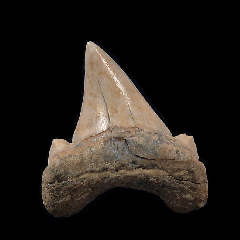
A very rare, early Otodus obliquus anterior tooth from Kzil-Orda Region, Kazakhstan. Otodus obliquus is the ancestor to O. auriculatus (see detailed discussion below) which leads to Megalodon. The bourlette is large and complete. Exhibits no serrations. The starting species to serrated Otodus teeth. These teeth exhibit very good color, gloss, and preservation. A rare, early Eocene (Ypresian) Auriculatus transition tooth. A very challenging tooth to find when building a Megalodon evolutionary set! No repair. Authenticity guaranteed. Note - This western Kazakhstan site is one of the few places in the world where the Otodus obliquus to Otodus auriculatus transition can be found in adjacent early Eocene formation units.
K562 SIZE: 1-1/4"
Note - Adding 24 Kazakh Auriculatus or transition teeth in July 2024. --> Link to Kazakh Auriculatus teeth.
Learn More - Otodus obliquus (not serrated)$200.00
A very rare, early Otodus obliquus anterior tooth from Kzil-Orda Region, Kazakhstan. Otodus obliquus is the ancestor to O. auriculatus (see detailed discussion below) which leads to Megalodon. The bourlette is large and complete. Exhibits no serrations. The starting species to serrated Otodus teeth. These teeth exhibit very good color, gloss, and preservation. A rare, early Eocene (Ypresian) Auriculatus transition tooth. A very challenging tooth to find when building a Megalodon evolutionary set! No repair. Authenticity guaranteed. Note - This western Kazakhstan site is one of the few places in the world where the Otodus obliquus to Otodus auriculatus transition can be found in adjacent early Eocene formation units.
K561 SIZE: 1-1/4"
Note - Adding 24 Kazakh Auriculatus or transition teeth in July 2024. --> Link to Kazakh Auriculatus teeth.
Learn More - Glyphis (Speartooth shark)$40.00
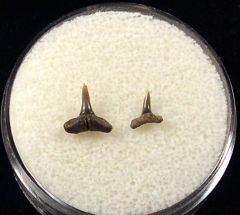
A very rare Glyphis glyphis tooth, the Speartooth shark, from Sumatra, Indonesia. These teeth were deposited in the Telisa formation - a shallow marine environment during the middle Miocene (approx. 15 million years ago.) A very unique collector's tooth. D173 is the lower lateral tooth on the left. Authenticity guaranteed.
D173 (Left) SIZE: 5/16"
Note - 16 new Sumatran Glyphis glyphis teeth added in January 2018. Link to Sumatran teeth.
Learn More - Carcharhinus macloti (Hardnose shark)$12.50
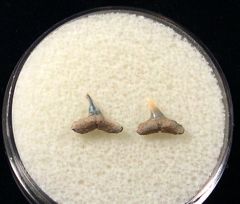
A rare Carcharhinus macloti tooth, the Hardnose shark, from Sumatra, Indonesia. These teeth were deposited in the Telisa formation - a shallow marine environment during the middle Miocene (approx. 15 million years ago.) A very unique collector's tooth. D121 is the upper jaw tooth on the left. Authenticity guaranteed.
D121 (Left) SIZE: 5/16"
Note - 50+ new Sumatran Carcharhinus teeth (4 species) added in January 2018. Link to Sumatran teeth.
Learn More - Carcharhinus macloti (Hardnose shark)$15.00
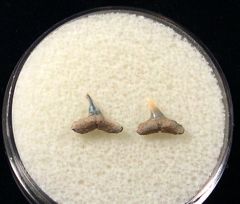
A rare Carcharhinus macloti tooth, the Hardnose shark, from Sumatra, Indonesia. These teeth were deposited in the Telisa formation - a shallow marine environment during the middle Miocene (approx. 15 million years ago.) A very unique collector's tooth. D122 is the upper jaw tooth on the right. Authenticity guaranteed.
D122 (Right) SIZE: 5/16"
Note - 50+ new Sumatran Carcharhinus teeth (4 species) added in January 2018. Link to Sumatran teeth.
Learn More