Search results for: 'extinct mucilage fr01 pedalium murex'
- Related search terms
- fr01 à vapeur
- extinct mucilage from pedalium mark
- extinct mucilage from pedalium muddi
- extinct mucilage from pedalium mani
- extinct mucilage from pedalium mako
- Equus sp. - Florida$47.50
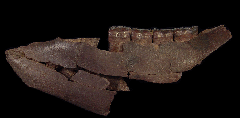
A LARGE, well preserved horse lower jaw section (Equus sp. ) from northern Florida. The horse arrived in North America during the late Pliocene and became extinct at the end of the Pleistocene. Lower jaw section with tooth. Very well fossilized specimen. No repair or restoration. Authenticity guaranteed.
XH03 Size: 5-1/2"
Name: Equus sp.
Age: Pleistocene
Location: Northern Florida
Note - Posting 13 horse fossils in April 2024. Link to Horse Fossils
Learn More - Equus sp. - Florida$115.00
A LARGE, well preserved horse lower jaw section (Equus sp. ) from northern Florida. The horse arrived in North America during the late Pliocene and became extinct at the end of the Pleistocene. Lower jaw section with 4 top quality molar teeth. Very well fossilized specimen. No repair or restoration. Authenticity guaranteed.
XH02 Size: 10"
Name: Equus sp.
Age: Pleistocene
Location: Northern Florida
Note - Posting 13 horse fossils in April 2024. Link to Horse Fossils
Learn More - Ptychodus decurrens$50.00
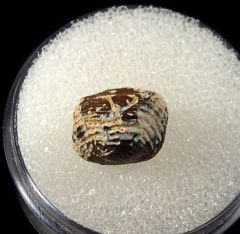
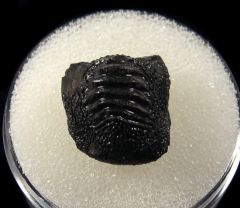
A Top Quality Ptychodus decurrens, an extinct durophagous (shell-crushing) shark, tooth from Travis Co., Texas. An excellent example of this Upper Cretaceous So. Bosque Shale Fm. tooth. These massive teeth have a design with transverse ridges extending across the cusp face and the margins. Authenticity guaranteed. Near perfect tooth. A rare species.
T105 SIZE: 3/8"
Note - Adding 100+ new Texas shark teeth in October 2021. Link to Texas shark teeth
Learn More - Ptychodus latissimus$65.00
A Top Quality Ptychodus latissimus, an extinct durophagous (shell-crushing) shark, tooth from Ellis Co., Texas. An excellent example of this Upper Cretaceous Atco Fm. tooth. These massive teeth have a design with 5 to 6 strong transverse ridges extending across the cusp face and granular margins. Authenticity guaranteed. Near perfect tooth - some root loss.
T292 SIZE: 5/8"
Note - Adding 100+ new Texas shark teeth in October 2021. Link to Texas shark teeth
Learn More - Ptychodus whipplei (Specimen)$35.00
A Top Quality Ptychodus whipplei, an extinct durophagous (shell-crushing) shark, tooth from Dallas Co., Texas. An excellent example of this Upper Cretaceous Atco Fm. tooth. These massive teeth have a design with a very tall conical cusp with transverse ridges extending across the cusp face, but typically do not reach the margin. Authenticity guaranteed.
T033 SIZE: 5/8"
Note - Adding 100+ new Texas shark teeth in October 2021. Link to Texas shark teeth
Learn More - Equus sp. - So. Carolina$30.00
A LARGE, well preserved horse tooth (Equus sp. ) from ACE Basin, So. Carolina. The horse arrived in North America during the late Pliocene and became extinct at the end of the Pleistocene. Very well fossilized lower jaw specimen. No repair or restoration. Authenticity guaranteed.
XH49 Size: 3-1/16"
Name: Equus sp.
Age: Pleistocene
Location: ACE Basin, So. Carolina
Note - Note - Posting 23 horse fossils in December 2024. Link to Horse Fossils
Learn More - Equus sp. Astragalus bone$25.00
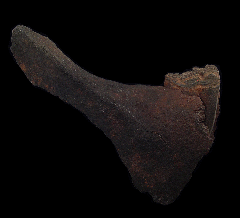
A LARGE, well preserved horse astragalus bone (Equus sp. ) from Northern Florida. The astragalus is the ankle bone. The horse arrived in North America during the late Pliocene and became extinct at the end of the Pleistocene. A well fossilized specimen. No repair or restoration. Authenticity guaranteed.
XH32 Size: 2-1/2"
Name: Equus sp.
Age: Pleistocene
Location: Northern Florida
Note - Posting 23 horse fossils in December 2024. Link to Horse Fossils
Learn More - Equus sp. Astragalus bone$25.00
A LARGE, well preserved horse astragalus bone (Equus sp. ) from Northern Florida. The astragalus is the ankle bone. The horse arrived in North America during the late Pliocene and became extinct at the end of the Pleistocene. A well fossilized specimen. No repair or restoration. Authenticity guaranteed.
XH31 Size: 2-1/2"
Name: Equus sp.
Age: Pleistocene
Location: Northern Florida
Note - Posting 23 horse fossils in December 2024. Link to Horse Fossils
Learn More - Equus sp. Astragalus bone$32.50
A LARGE, well preserved horse astragalus bone (Equus sp. ) from Northern Florida. The astragalus is the ankle bone. The horse arrived in North America during the late Pliocene and became extinct at the end of the Pleistocene. A well fossilized specimen. No repair or restoration. Authenticity guaranteed.
XH30 Size: 2-5/8"
Name: Equus sp.
Age: Pleistocene
Location: Northern Florida
Note - Posting 23 horse fossils in December 2024. Link to Horse Fossils
Learn More - Equus sp. Caleaneus bone$25.00
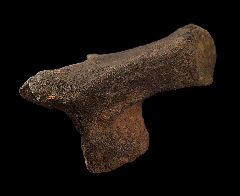
A LARGE, well preserved horse caleaneus bone (Equus sp. ) from Northern Florida. The caleaneus is the heel bone. The horse arrived in North America during the late Pliocene and became extinct at the end of the Pleistocene. A well fossilized specimen. No repair or restoration. Authenticity guaranteed.
XH29 Size: 3-3/4"
Name: Equus sp.
Age: Pleistocene
Location: Northern Florida
Note - Posting 23 horse fossils in December 2024. Link to Horse Fossils
Learn More - Equus sp. Caleaneus bone$35.00
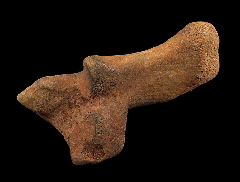
A LARGE, well preserved horse caleaneus bone (Equus sp. ) from Northern Florida. The caleaneus is the heel bone. The horse arrived in North America during the late Pliocene and became extinct at the end of the Pleistocene. A well fossilized specimen. No repair or restoration. Authenticity guaranteed.
XH28 Size: 4-3/4"
Name: Equus sp.
Age: Pleistocene
Location: Northern Florida
Note - Posting 23 horse fossils in December 2024. Link to Horse Fossils
Learn More - Equus sp. Toe bone$22.50
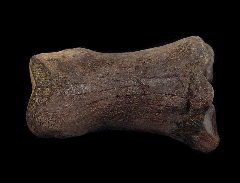
A well preserved horse toe bone (Equus sp. ) from Northern Florida. This is the first toe bone (phalanx). The horse arrived in North America during the late Pliocene and became extinct at the end of the Pleistocene. A well fossilized specimen. No repair or restoration. Authenticity guaranteed.
XH24 Size: 3-7/8"
Name: Equus sp.
Age: Pleistocene
Location: Northern Florida
Note - Posting 23 horse fossils in December 2024. Link to Horse Fossils
Learn More