Search results for: 'novu that end in site'
- Did you mean
- none that end in site
- Related search terms
- novu me of new post by enabl lamna nasus
- novu me of new postag by enabl lamna nasus
- site out enabl cohesive devices
- site out enabl cohesive derives
- site 2 bedroom good rd epsom
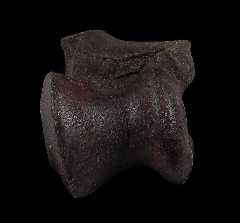
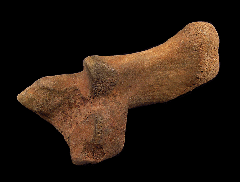
- Equus sp. Astragalus bone$25.00
A LARGE, well preserved horse astragalus bone (Equus sp. ) from Northern Florida. The astragalus is the ankle bone. The horse arrived in North America during the late Pliocene and became extinct at the end of the Pleistocene. A well fossilized specimen. No repair or restoration. Authenticity guaranteed.
XH32 Size: 2-1/2"
Name: Equus sp.
Age: Pleistocene
Location: Northern Florida
Note - Posting 23 horse fossils in December 2024. Link to Horse Fossils
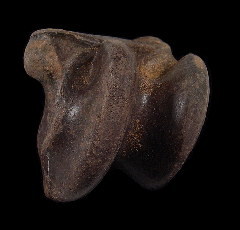
Learn More - Equus sp. Astragalus bone$25.00
A LARGE, well preserved horse astragalus bone (Equus sp. ) from Northern Florida. The astragalus is the ankle bone. The horse arrived in North America during the late Pliocene and became extinct at the end of the Pleistocene. A well fossilized specimen. No repair or restoration. Authenticity guaranteed.
XH31 Size: 2-1/2"
Name: Equus sp.
Age: Pleistocene
Location: Northern Florida
Note - Posting 23 horse fossils in December 2024. Link to Horse Fossils
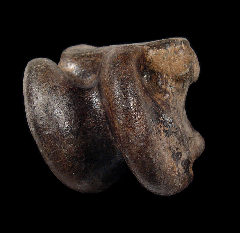
Learn More - Equus sp. Astragalus bone$32.50
A LARGE, well preserved horse astragalus bone (Equus sp. ) from Northern Florida. The astragalus is the ankle bone. The horse arrived in North America during the late Pliocene and became extinct at the end of the Pleistocene. A well fossilized specimen. No repair or restoration. Authenticity guaranteed.
XH30 Size: 2-5/8"
Name: Equus sp.
Age: Pleistocene
Location: Northern Florida
Note - Posting 23 horse fossils in December 2024. Link to Horse Fossils
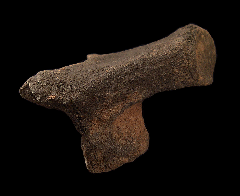
Learn More - Equus sp. Caleaneus bone$25.00
A LARGE, well preserved horse caleaneus bone (Equus sp. ) from Northern Florida. The caleaneus is the heel bone. The horse arrived in North America during the late Pliocene and became extinct at the end of the Pleistocene. A well fossilized specimen. No repair or restoration. Authenticity guaranteed.
XH29 Size: 3-3/4"
Name: Equus sp.
Age: Pleistocene
Location: Northern Florida
Note - Posting 23 horse fossils in December 2024. Link to Horse Fossils
Learn More - Equus sp. Caleaneus bone$35.00
A LARGE, well preserved horse caleaneus bone (Equus sp. ) from Northern Florida. The caleaneus is the heel bone. The horse arrived in North America during the late Pliocene and became extinct at the end of the Pleistocene. A well fossilized specimen. No repair or restoration. Authenticity guaranteed.
XH28 Size: 4-3/4"
Name: Equus sp.
Age: Pleistocene
Location: Northern Florida
Note - Posting 23 horse fossils in December 2024. Link to Horse Fossils
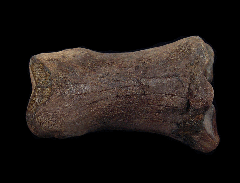
Learn More - Equus sp. Toe bone$22.50
A well preserved horse toe bone (Equus sp. ) from Northern Florida. This is the first toe bone (phalanx). The horse arrived in North America during the late Pliocene and became extinct at the end of the Pleistocene. A well fossilized specimen. No repair or restoration. Authenticity guaranteed.
XH24 Size: 3-7/8"
Name: Equus sp.
Age: Pleistocene
Location: Northern Florida
Note - Posting 23 horse fossils in December 2024. Link to Horse Fossils
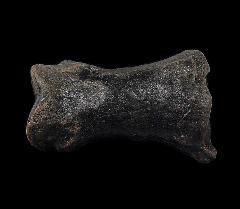
Learn More - Equus sp. Toe bone$32.50
A well preserved horse toe bone (Equus sp. ) from Northern Florida. This is the first toe bone (phalanx). The horse arrived in North America during the late Pliocene and became extinct at the end of the Pleistocene. A well fossilized specimen. No repair or restoration. Authenticity guaranteed.
XH23 Size: 3-7/8"
Name: Equus sp.
Age: Pleistocene
Location: Northern Florida
Note - Posting 23 horse fossils in December 2024. Link to Horse Fossils
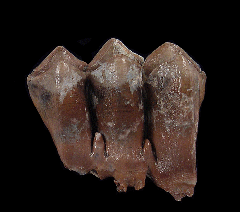
Learn More - Camel - Florida$0.00
A well preserved Camel (Camelops) molar from Hillsborough Co., Florida. The Camelops evolved in the late Pliocene and became extinct at the end of the Pleistocene in North America. This is molar is complete with no wear. Well fossilized. No repair or restoration. Authenticity guaranteed.
X808 Size: 1-1/4" x 1-7/8"
Name: Camel (Camelops) molar
Age: Pleistocene
Location: Hillsborough Co., Florida
Note - Posting 26 mammal and reptile fossils in March 2024. Link to Other Mammals
Learn More - Equus sp. - Florida$325.00
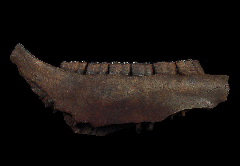
A LARGE, well preserved horse lower jaw (Equus sp. ) from northern Florida. The horse arrived in North America during the late Pliocene and became extinct at the end of the Pleistocene. A nearly complete Lower jaw with 6 top quality molar teeth. Very well fossilized specimen. No repair or restoration. Authenticity guaranteed. My best horse jaw!
XH01 Size: 10"
Name: Equus sp.
Age: Pleistocene
Location: Northern Florida
Note - Posting 13 horse fossils in April 2024. Link to Horse Fossils
Learn More - Otodus angustidens$0.00
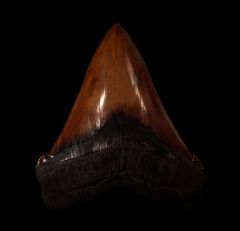
A GORGEOUS, HUGE copper red colored Angustidens tooth - an upper jaw anterior tooth from the Meherrin River in northeastern No. Carolina. An April Fossil of the Month. Incredible rare copper red colors! Highest quality enamel. Excellent red and copper colors - very nice. No enamel peel. The red bourlette is excellent - 80% complete. The serrations are razor sharp with an exceptional tip serration. Excellent side cusps. The root is gorgeous with few cracks on the face. No repair or restoration! An ultra rare Angustidens collector's tooth. Museum quality. Authenticity guaranteed. The finest BIG Red site Angustidens tooth that I have seen. Best of the BEST!
NC161 SIZE: 3-15/16"
Adding 9 new copper red site Angustidens teeth in May 2020. Link to copper red Angustidens teeth.
Learn More - Tyrannosaur tooth$2,475.00
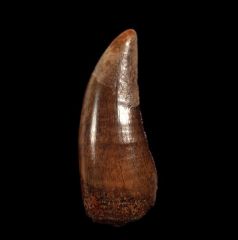
A Top Quality Tyrannosaur tooth from the late Cretaceous (Campanian) in northern North America. An October Fossil of the Month. Please note that this tooth could Gorgosaurus or Daspletosaurus - see Detailed Discussion below. This tooth measures 2-3/8" - an excellent Tyrannosaur tooth. The enamel is high quality with excellent color. Anterior serrations and posterior serrations are excellent. Serrated to the tip. Note - the top has some minor planting etching and there is one natural wear facet on the side (very typical for the Campanian Tyrannosaurs). No cracks, repair or restoration. Legally collected on private land in the Judith River Fm., McCone Co., Montana. Probably an excellent Gorgosaurus tooth based on size and roundness of the tooth cross-section. Also found at a site that produced a Gorgosaurus skeleton. Authenticity guaranteed. An excellent BIG tooth. A Riker display frame is included.
DY04 SIZE: 2-3/8" (Base: 7/8" x 5/8")
Note - Added 14 new Tyrannosaur teeth in October 2021. Link to Tyrannosaur teeth catalog.
Learn More - Capybara$25.00
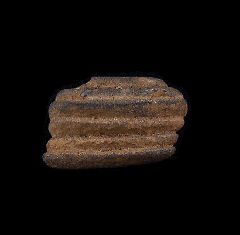
A well preservedextinct Giant Capybara molar from Edisto River, So. Carolina. The Giant Capybara was an oversized rodent that evolved in the Pleistocene and became extinct at the end of the Pleistocene in North America. This is a molar tooth with good cusp detail with little wear. Well fossilized. No repair or restoration. Authenticity guaranteed.
X822 Size: 3/4" x 1/2"
Name: Capybara sp.
Age: Pleistocene
Location: Edisto River, So. Carolina
Note - Posting 26 mammal and reptile fossils in March 2024. Link to Other Mammals
Learn More