Search results for: '2002 check equinox rare good'
- Did you mean
- 2002 creek equinox rays guid
- 2002 creek equinox rana guid
- Related search terms
- good book g3 teeth//
- goods terrestri a none
- good terrestri a none
- good terrestri a none/
- good terrestri a none//
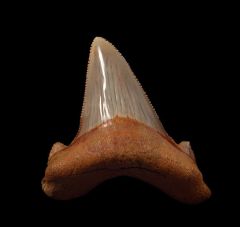
- Carcharocles auriculatus - So. Carolina$0.00
A 3-3/16" GEM Harleyville Auriculatus tooth. A 2nd August Fossil of the Month. An exceptional upper jaw anterior tooth. Gorgeous tan colored crown with a red brown colored bourlette, and red root. Highest quality enamel! Exceptionally colored & preserved. The serrations are large and razor sharp with an good tip serration. The root is complete and well preserved. A killer color tooth from the Lafarge quarry. It is very hard to find these teeth in perfect condition. Museum Quality. A colorful, extra large collector's Harleyville Auriculatus tooth! Best of the BEST! Rare size. Authenticity guaranteed.
SC405 BoP SIZE: 3-3/16"
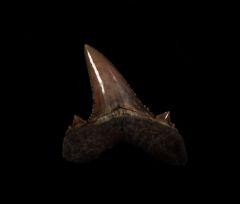
Learn More - Otodus mugodzharicus (Partial serrated)$0.00
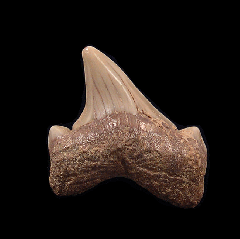
A very rare, early Otodus mugodzharicus upper jaw, lateral tooth from Aktulagay, western Kazakhstan. A transitional tooth leading to C. auriculatus (see detailed discussion below) which leads to Megalodon. The bourlette is complete. Tooth exhibits very fine serrations along the lower 1/3 of crown and micro serrations to the tip. These teeth exhibit very good color, gloss, and preservation. A rare, early Eocene Auriculatus transition tooth. A very challenging tooth to find when building a Megalodon evolutionary set! No repair. Authenticity guaranteed. Note - This western Kazakhstan site is one of the few places in the world where the Otodus to Auriculatus transition can be found in adjacent layers.
K554 SIZE: 1-1/4"
Note - Adding 18 Kazakh Auriuclatus or transition teeth in April 2020. --> Link to Kazakh Auriculatus teeth.
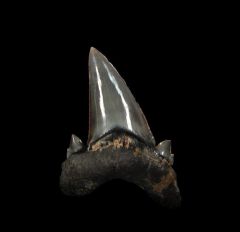
Learn More - Otodus mugodzharicus (Partial serrated)$0.00
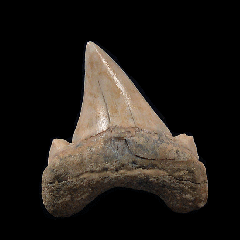
A very rare, early Otodus mugodzharicus upper jaw, lateral tooth from Aktulagay, western Kazakhstan. A transitional tooth leading to C. auriculatus (see detailed discussion below) which leads to Megalodon. The bourlette is complete. Tooth exhibits wavy serrations along the lower 1/3 of crown and small wavy serrations to the tip. These teeth exhibit very good color, gloss, and preservation. A rare, early Eocene Auriculatus transition tooth. A very challenging tooth to find when building a Megalodon evolutionary set! No repair. Authenticity guaranteed. Note - This western Kazakhstan site is one of the few places in the world where the Otodus to Auriculatus transition can be found in adjacent layers.
K553 SIZE: 1-1/2"
Note - Adding 18 Kazakh Auriuclatus or transition teeth in April 2020. --> Link to Kazakh Auriculatus teeth.
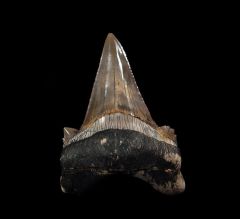
Learn More - Otodus mugodzharicus (Partial serrated)$0.00
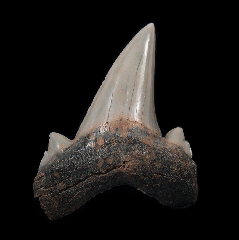
A very rare, early Otodus mugodzharicus upper jaw, anterior tooth from Aktulagay, western Kazakhstan. A transitional tooth leading to C. auriculatus (see detailed discussion below) which leads to Megalodon. The bourlette is complete. Tooth exhibits fine and wavy serrations along the lower 1/3 of crown and no serrations the tip. These teeth exhibit very good color, gloss, and preservation. A rare, early Eocene Auriculatus transition tooth. A very challenging tooth to find when building a Megalodon evolutionary set! No repair. Authenticity guaranteed. Note - This western Kazakhstan site is one of the few places in the world where the Otodus to Auriculatus transition can be found in adjacent layers.
K551 SIZE: 2-1/8"
Note - Adding 18 Kazakh Auriculatus or transition teeth in April 2020. --> Link to Kazakh Auriculatus teeth.
Learn More - Otodus obliquus (not serrated)$95.00
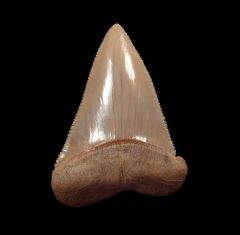
A very rare, early Otodus obliquus anterior tooth from Kzil-Orda Region, Kazakhstan. Otodus obliquus is the ancestor to O. auriculatus (see detailed discussion below) which leads to Megalodon. The bourlette is large and complete. Exhibits no serrations. The starting species to serrated Otodus teeth. These teeth exhibit very good color, gloss, and preservation. A rare, early Eocene (Ypresian) Auriculatus transition tooth. A very challenging tooth to find when building a Megalodon evolutionary set! No repair. Authenticity guaranteed. Note - This western Kazakhstan site is one of the few places in the world where the Otodus obliquus to Otodus auriculatus transition can be found in adjacent early Eocene formation units.
K561 SIZE: 1-1/16"
Note - Adding 24 Kazakh Auriculatus or transition teeth in July 2024. --> Link to Kazakh Auriculatus teeth.
Learn More - Otodus obliquus (not serrated)$135.00
A very rare, early Otodus obliquus anterior tooth from Kzil-Orda Region, Kazakhstan. Otodus obliquus is the ancestor to O. auriculatus (see detailed discussion below) which leads to Megalodon. The bourlette is large and complete. Exhibits no serrations. The starting species to serrated Otodus teeth. These teeth exhibit very good color, gloss, and preservation. A rare, early Eocene (Ypresian) Auriculatus transition tooth. A very challenging tooth to find when building a Megalodon evolutionary set! No repair. Authenticity guaranteed. Note - This western Kazakhstan site is one of the few places in the world where the Otodus obliquus to Otodus auriculatus transition can be found in adjacent early Eocene formation units.
K562 SIZE: 1-1/4"
Note - Adding 24 Kazakh Auriculatus or transition teeth in July 2024. --> Link to Kazakh Auriculatus teeth.
Learn More - Otodus obliquus (not serrated)$200.00
A very rare, early Otodus obliquus anterior tooth from Kzil-Orda Region, Kazakhstan. Otodus obliquus is the ancestor to O. auriculatus (see detailed discussion below) which leads to Megalodon. The bourlette is large and complete. Exhibits no serrations. The starting species to serrated Otodus teeth. These teeth exhibit very good color, gloss, and preservation. A rare, early Eocene (Ypresian) Auriculatus transition tooth. A very challenging tooth to find when building a Megalodon evolutionary set! No repair. Authenticity guaranteed. Note - This western Kazakhstan site is one of the few places in the world where the Otodus obliquus to Otodus auriculatus transition can be found in adjacent early Eocene formation units.
K561 SIZE: 1-1/4"
Note - Adding 24 Kazakh Auriculatus or transition teeth in July 2024. --> Link to Kazakh Auriculatus teeth.
Learn More - Carcharodon carcharias$0.00
An incredibly sized, GEM Great White shark tooth from Chile. My final February 2018 Fossil of the Month.This ULTRA RARE, MONSTER sized Great White tooth measures 2-7/8" - a huge upper jaw PRINCIPAL ANTERIOR tooth. Highest quality enamel! Excellent color. The serrations are exceptional with an excellent tip serration. Incredible, large "gum line". Extra wide root. This was a big shark. Exceptional preservation - note the preserved nutrient hole on the root. Absolutely no repair or restoration.The PERFECT BIG Chilean Great White tooth. My finest remaining exceptionally large tooth. You won't see these big, top quality GW teeth any more. The BEST of the BEST! Authenticity guaranteed.
C1203 Size: 2-7/8" (2-1/16" W)
Note - Posted 31 new Chilean Great White teeth in Feb. 2018 Link to Great White shark teeth
Learn More - Otodus chubutensis$0.00
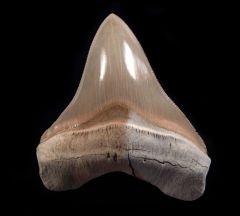
A GEM HUGE, 4-1/4" CLASSIC Lee Creek Carcharocles chubutensis, a C. megalodon predecessor - upper jaw Principal Anterior tooth. LC006 is an absolute monster sized Chubutensis tooth. This tooth was found in the Pungo River Formation (middle Miocene age). Note that the crown exhibits small cusplike bumps at the base of the serrated edge and the root ends also show grooves where the teeth interlocked. These are characteristic traits of the Lee Creek early Meg - C. chubutensis. A gorgeous light tan colored crown with an excellent tan bourlette. The bourlette is 100% complete. No enamel peel. The serrations are long, razor sharp, and essentially complete including a good tip serration. Highest quality enamel! The root is an excellent light tan color and complete. An exceptionally large Chubutensis collector's tooth. NO repair! The BEST of the BEST! One of my favorites. It will be difficult to find another early Meg like this one.
LC006 Size: 4-1/4" (3-11/16" W)
Learn More - Anzu wyliei claw$0.00
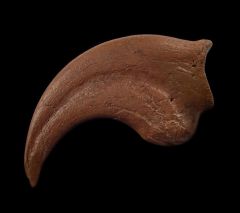
A rare, Top Quality, EXTRA LARGE Anzu wyliei hand (manus) claw from the Hell Creek Fm. of SE Montana. Another June 2018 Fossil of the Month. Anzu is referred to as the "Chicken from Hell". An exceptional manus claw. Highest quality rich brown color and patina. This specimen has incredible perservation with exceptional surfaces - no pitting, nicks or wear - superb surface articulation! There is some professional restoration which is typical for a big Anzu wyliei manus claw. The tip has a small section repaired and the proximal edge has a small triangular area repaired which starts at the center of proximal surface (see photo). A high quality, collector's claw from one of my favorite collecting sites. Note - 2014 Anzu wyleii description paper attached below. Check out our selection of top quality Anzu wyliei claws! Legally collected on private land in the Hell Creek Fm., Powder River Co., Montana. Authenticity guaranteed. Museum Quality. One of my favorites! Note - a Riker frame will be included.
DA01 BoP Size: 3-7/8" (always straightline) (Note - 1-7/8" height at the proximal end!)
Note - Adding four Anzu wyliei claws in June 2018. Link to Anzu wyliei claws.
Learn More - Cave Hyena jaw$0.00
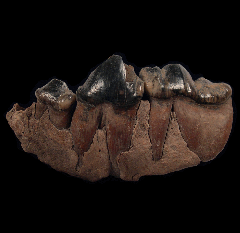
A rare well preserved, Cave Hyena jaw section with three teeth (Crocuta crocuta spelaea) from the Yakutsk Region, Siberia. The Cave Hyena is also known as the Ice Age Spotted Hyena. These extra large hyenas lived in the mountain caves from central Europe to Russia. Excellent teeth with good color. No repair or restoration. Authenticity guaranteed. You can own a rare and wonderful story piece from the Ice Age!
Name: Crocuta crocuta spelaea Age: Late Pleistocene Location: Yakutsk Region, Siberia
R530 SIZE: 3-1/2" Length ; 2-1/8" Wide
Note: Adding 6 new Ice Age fossils in January 2023. Link -> Cave Hyena Fossils
Learn More - Cave Hyena jaw$0.00
A rare well preserved, Cave Hyena jaw section with three teeth (Crocuta crocuta spelaea) from the Yakutsk Region, Siberia. The Cave Hyena is also known as the Ice Age Spotted Hyena. These extra large hyenas lived in the mountain caves from central Europe to Russia. Excellent teeth with good color. No repair or restoration. Authenticity guaranteed. You can own a rare and wonderful story piece from the Ice Age!
Name: Crocuta crocuta spelaea Age: Late Pleistocene Location: Yakutsk Region, Siberia
R529 SIZE: 3-3/4" Length ; 2-3/8" Wide
Note: Adding 6 new Ice Age fossils in January 2023. Link -> Cave Hyena Fossils
Learn More