Search results for: 'wavi line in bed of guid'
- Did you mean
- wardi like in bed of guid
- wardi liop in bed of guid
- Related search terms
- line polk few planus first good
- line palm few planus first good
- guid goods ma01
- guid good manu
- guid good mako
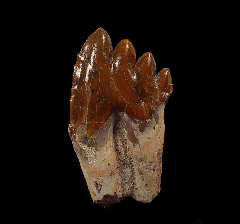
- Basilosaurus isis (Early whale)$675.00
A Rare Basilosaurus isis premolar tooth from Morocco. Basilosaurus was in the Basilosauridae family of early whales. Note - this tooth is a premolar with no wear and most of the root. This material is a new find and represents an early transition form of the whale which was a fully aquatic carnivore. No repair or restoration. This is an opportunity to own an incredibly rare specimen from an early evolutionary stage of the modern whale. A fantastic collector's specimen. Authenticity guaranteed.
M2112 Size: 1-15/16" (straight line)
Late Eocene (Bartonian) age (36 MYA)
Boujdour Basin, West Sahara, Morocco
Note - adding six early whale teeth in August 2023. Link to the early whales.
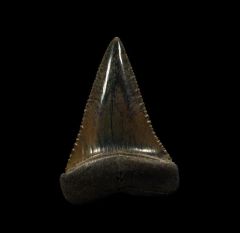
Learn More - Carcharodon carcharias : So. Africa$0.00
A LARGE, colorful Top Quality Great White shark tooth - upper jaw anterior tooth from Western Cape Province, So. Africa. This tooth has a olive green colored crown with charcoal patterning (fountain pattern), a large distinct brown gum line, and a brown root. Fantastic color! Highest quality enamel with no hydration cracks. Serrations are large and complete with an excellent tip serration. Excellent preservation - note nutrient hole on root. No repair or restoration. A Large colorful collector's GW tooth for a rare locality. Authenticity guaranteed.
SA05 Size: 1-13/16"
Note - Adding 7 So. African Great White teeth in August 2020. Link to South African GW teeth Link to Great White shark teeth
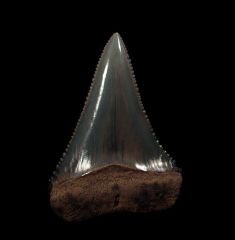
Learn More - Carcharodon carcharias : So. Africa$0.00
A LARGE, Top Quality Great White shark tooth - upper jaw anterior tooth from Western Cape Province, So. Africa. This tooth has a blue colored crown, a large distinct brown gum line, and a brown root. Excellent color! Highest quality enamel with no hydration cracks. Serrations are large and complete with an excellent tip serration. There are also the base seration on each side are pathologic - very cool. Excellent preservation - note nutrient hole on root. No repair or restoration. A Large collector's GW tooth for a rare locality. Authenticity guaranteed.
SA02 Size: 2-1/16"
Note - Adding 7 So. African Great White teeth in August 2020. Link to South African GW teeth Link to Great White shark teeth
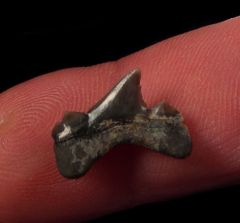
Learn More - Otodus mugodzharicus (Partial serrated)$0.00
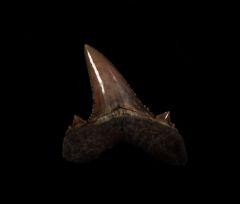
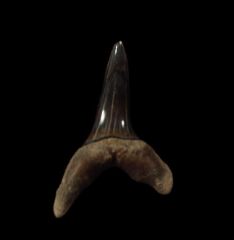
A very rare, early Otodus mugodzharicus upper jaw, posterior tooth from Aktulagay, western Kazakhstan. A transitional tooth leading to C. auriculatus (see detailed discussion below) which leads to Megalodon. The bourlette is complete. Tooth exhibits very fine serrations along the inner curve of the crown only. These teeth exhibit very good color, gloss, and preservation. A rare, early Eocene Auriculatus transition tooth. A very challenging tooth to find when building a Megalodon evolutionary set! No repair. Authenticity guaranteed. Note - This western Kazakhstan site is one of the few places in the world where the Otodus to Auriculatus transition can be found in adjacent layers.
K555 SIZE: 5/8"
Note - Adding 18 Kazakh Auriculatus or transition teeth in April 2020. --> Link to Kazakh Auriculatus teeth.
Learn More - Otodus mugodzharicus (Partial serrated)$0.00
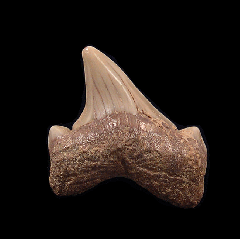
A very rare, early Otodus mugodzharicus upper jaw, lateral tooth from Aktulagay, western Kazakhstan. A transitional tooth leading to C. auriculatus (see detailed discussion below) which leads to Megalodon. The bourlette is complete. Tooth exhibits very fine serrations along the lower 1/3 of crown and micro serrations to the tip. These teeth exhibit very good color, gloss, and preservation. A rare, early Eocene Auriculatus transition tooth. A very challenging tooth to find when building a Megalodon evolutionary set! No repair. Authenticity guaranteed. Note - This western Kazakhstan site is one of the few places in the world where the Otodus to Auriculatus transition can be found in adjacent layers.
K554 SIZE: 1-1/4"
Note - Adding 18 Kazakh Auriuclatus or transition teeth in April 2020. --> Link to Kazakh Auriculatus teeth.
Learn More - Otodus pavlovi$0.00
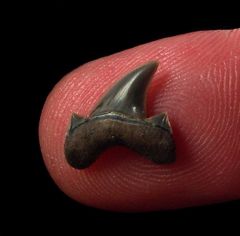
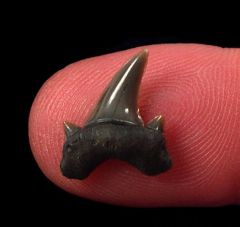
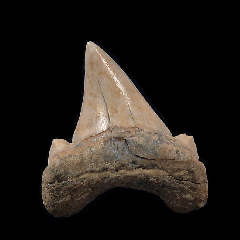
A very rare, early Otodus pavlovi upper jaw, lateral tooth from Aktulagay, western Kazakhstan. Otodus pavlovi was the smaller Otodus shark species present in this early Eocene deposit. The side cusps are large and complete. Exhibits no serrations. These teeth exhibit very good color, gloss, and preservation. No repair. Authenticity guaranteed. Perfect tooth.
K532 SIZE: 11/16"
Note - Adding 18 Kazakh Auriculatus or transition teeth in April 2020. --> Link to Kazakh Auriculatus teeth.
Learn More - Otodus pavlovi$0.00
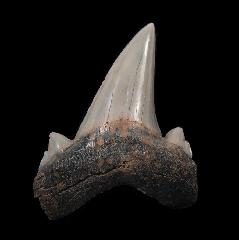
A very rare, early Otodus pavlovi upper jaw, lateral tooth from Aktulagay, western Kazakhstan. Otodus pavlovi was the smaller Otodus shark species present in this early Eocene deposit. The side cusps are large and complete. Exhibits no serrations. These teeth exhibit very good color, gloss, and preservation. No repair. Authenticity guaranteed. Perfect tooth.
K531 SIZE: 13/16"
Note - Adding 18 Kazakh Auriculatus or transition teeth in April 2020. --> Link to Kazakh Auriculatus teeth.
Learn More - Macrorhizodus nolfi$0.00
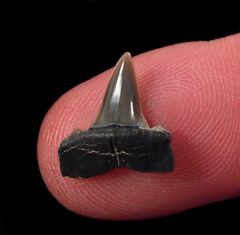
A very rare, early Macrorhizodus nolfi upper jaw, lateral tooth from Aktulagay, western Kazakhstan. Macrorhizodus nolfi is a Lamnidae shark and an early Mako shark (Isurus praecursor) relative in this early Eocene deposit. The side cusps are complete. No repair. Authenticity guaranteed. Perfect tooth.
K572 SIZE: 3/4"
Note - Adding 18 Kazakh Auriculatus or transition teeth in April 2020. --> Link to Kazakh Auriculatus teeth.
Learn More - Macrorhizodus nolfi$0.00
A very rare, early Macrorhizodus nolfi upper jaw, anterior tooth from Aktulagay, western Kazakhstan. Macrorhizodus nolfi is a Lamnidae shark and an early Mako shark (Isurus praecursor) relative in this early Eocene deposit. These teeth exhibit very good color, gloss, and preservation. A rare, early Eocene Macrorhizodus nolfi tooth. No repair. Authenticity guaranteed.
K571 SIZE: 1-3/8"
Note - Adding 18 Kazakh Auriculatus or transition teeth in April 2020. --> Link to Kazakh Auriculatus teeth.
Learn More - Otodus obliquus (not serrated)$95.00
A very rare, early Otodus obliquus anterior tooth from Kzil-Orda Region, Kazakhstan. Otodus obliquus is the ancestor to O. auriculatus (see detailed discussion below) which leads to Megalodon. The bourlette is large and complete. Exhibits no serrations. The starting species to serrated Otodus teeth. These teeth exhibit very good color, gloss, and preservation. A rare, early Eocene (Ypresian) Auriculatus transition tooth. A very challenging tooth to find when building a Megalodon evolutionary set! No repair. Authenticity guaranteed. Note - This western Kazakhstan site is one of the few places in the world where the Otodus obliquus to Otodus auriculatus transition can be found in adjacent early Eocene formation units.
K561 SIZE: 1-1/16"
Note - Adding 24 Kazakh Auriculatus or transition teeth in July 2024. --> Link to Kazakh Auriculatus teeth.
Learn More - Otodus obliquus (not serrated)$135.00
A very rare, early Otodus obliquus anterior tooth from Kzil-Orda Region, Kazakhstan. Otodus obliquus is the ancestor to O. auriculatus (see detailed discussion below) which leads to Megalodon. The bourlette is large and complete. Exhibits no serrations. The starting species to serrated Otodus teeth. These teeth exhibit very good color, gloss, and preservation. A rare, early Eocene (Ypresian) Auriculatus transition tooth. A very challenging tooth to find when building a Megalodon evolutionary set! No repair. Authenticity guaranteed. Note - This western Kazakhstan site is one of the few places in the world where the Otodus obliquus to Otodus auriculatus transition can be found in adjacent early Eocene formation units.
K562 SIZE: 1-1/4"
Note - Adding 24 Kazakh Auriculatus or transition teeth in July 2024. --> Link to Kazakh Auriculatus teeth.
Learn More - Otodus obliquus (not serrated)$200.00
A very rare, early Otodus obliquus anterior tooth from Kzil-Orda Region, Kazakhstan. Otodus obliquus is the ancestor to O. auriculatus (see detailed discussion below) which leads to Megalodon. The bourlette is large and complete. Exhibits no serrations. The starting species to serrated Otodus teeth. These teeth exhibit very good color, gloss, and preservation. A rare, early Eocene (Ypresian) Auriculatus transition tooth. A very challenging tooth to find when building a Megalodon evolutionary set! No repair. Authenticity guaranteed. Note - This western Kazakhstan site is one of the few places in the world where the Otodus obliquus to Otodus auriculatus transition can be found in adjacent early Eocene formation units.
K561 SIZE: 1-1/4"
Note - Adding 24 Kazakh Auriculatus or transition teeth in July 2024. --> Link to Kazakh Auriculatus teeth.
Learn More