Search results for: 'when do the put sloth in manila ofs'
- Related search terms
- the young good
- the age of goods spirits
- the age of good spirits
- these texa good
- the sharks enabl utorrnetu
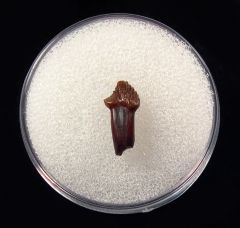
- Pachycephalosaurus$0.00
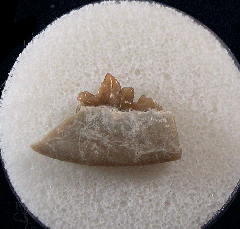
A GEM Pachychephalosaurus wyomingensis maxillary tooth from the late Cretaceous of northern North America. Pachychephalosaurus is the dinosaur which is famous for its large domed head surrounded by spikes. The enamel is excellent quality with excellent color / patina. Typical wear faucet from grinding on opposing teeth. Note - strong high center ridge and assymetry (see Pachy maxillary teeth differentiation discussion below). No cracks or restoration. An ultra rare Pachy maxillary tooth! Legally collected on private land in the Hell Creek Fm., Carter Co., Montana. An excellent collector's quality Pachychephalosaurus tooth. Note - tooth comes with the gem case pictured. Authenticity guaranteed.
DP08 SIZE: 7/16"
Note - Adding 13 new Pachy fossils in July 2018. Link to Pachy fossils catalog
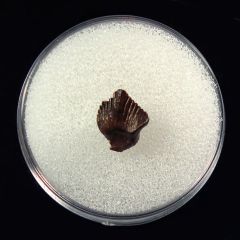
Learn More - Pachycephalosaurus$0.00
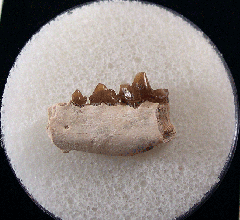
A high quality Pachychephalosaurus wyomingensis maxillary crown from the late Cretaceous of northern North America. Pachychephalosaurus is the dinosaur which is famous for its large domed head surrounded by spikes. The enamel is high quality with excellent color / patina. Typical wear faucet from grinding on opposing teeth. Note - strong high center ridge and assymetry (see Pachy maxillary teeth differentiation discussion below). No cracks or restoration. An ultra rare Pachy maxillary tooth! Legally collected on private land in the Hell Creek Fm., Carter Co., Montana. An excellent collector's quality Pachychephalosaurus tooth. Note - tooth comes with the gem case pictured. Authenticity guaranteed.
DP09 SIZE: 5/16"
Note - Adding 13 new Pachy fossils in July 2018. Link to Pachy fossils catalog
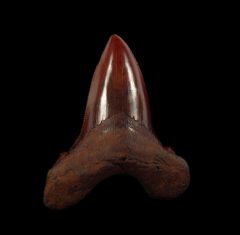
Learn More - Otodus auriculatus$0.00
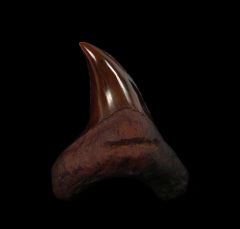
A GORGEOUS GEM, Extra Large red colored Auriculatus tooth - an upper jaw anterior tooth from the Meherrin River in northeastern No. Carolina. Incredible rare deep red colors - the BEST! An April 2019 Fossil of the Month. Highest quality enamel. No enamel peel. The bourlette is excellent. The serrations are sharp and large tip serration. Excellent side cusps. The root is gorgeous with few cracks on the face. No repair! An ultra rare Auriculatus collector's tooth. Definitely a top 1% red site Ric considering size, preservation, and color! Museum Quality. Authenticity guaranteed.
NC102 BoP SIZE: 3-5/8"
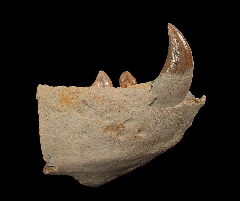
Learn More - Allodesmus kernensis$0.00
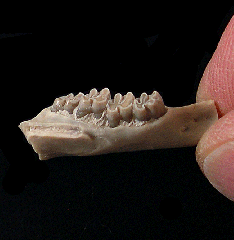
A Top Quality Allodesmus kernensis, primitive sea lion, jaw section with three teeth from the Sharktooth Hill area, near Bakersfield, California. An October Fossil of the Month. This jaw section includes a complete canine and two complete molars. Incredible bone quality. Excellent preservation and excellent color. No repair or restoration. Authenticity guaranteed. Museum quality. My last jaw section Allodesmus jaw specimen from the Ernst collection, and this jaw is as good as they come! The BEST!
ST1001 SIZE: 4" x 3"
Note - Adding 8 rare Sharktooth Hill mammal teeth fossils in October 2023. Link to Allodesmus teeth
Learn More - Edestus heinrichi$1,495.00
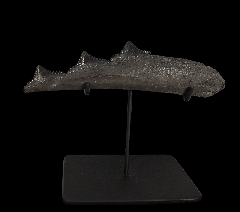
An ultra rare, Top Quality Edestus heinrichi, a complete whorl with three crowns from Herrin, Illinois. A July Fossil of the Month. This is a Paleozoic shark that lived in swamp that our now underground coal deposits. Exceptional preservation, serrations, and serration detail. The Edestus shark would have an upper and lower tooth whorl that are vertically opposed. Research showed that they could use their opposing teeth in a scissor-like motion to cut prey. It is the first animal to cut vertically with linear tooth whorls. A very strange looking and unique acting shark. This whorl is incredibly massive at 6" long with three crowns. The whorl body is well perserved with an excellent bright line of pyrite below the crown enamel. The crowns are large at 1-5/8" wide and look fantastic. Note - One crown tip has a small professional repair (~1/8") which is very common for a whorl. Pennsylvanian age from Illinois. Authenticity guaranteed. The Edestus shark recreation image is credited to Julio Lacerdo. These Edestus whorls are extremely rare. This whorl comes with a custon steel stand and makes a fantastic display piece. My lowest price ever for a complete whorl!
I01 SIZE: 6" whorl (1-5/8"+ crowns) ; Height is 4-1/8" on stand.
Adding 22 Edestus shark teeth in July 2025. Link to Edestus shark.
Learn More - Tethysaurus sp. (Aigialosaur)$0.00
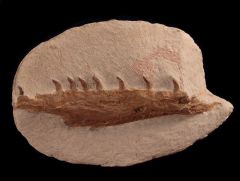
A rare, Tethysaurus (an extinct Aigialosaur Mosasaur) jaw section with eight original teeth in the jaw. Note - the original teeth remaining in the jaw are quite rare. The jaw bone and teeth exhibit exceptional condition and preservation (very rare). This wonderful specimen is very mineralized in a hard sandstone nodule. An incredible display piece and an incredible collector's piece. New find / new area. You will see these jaws very often! Please note this is not one of those six tooth "reconstructed" (fake) Mosasaur jaw sections. This is the real deal! Authenicity guaranteed.
M1091 SIZE: 5-1/4" jaw
Learn More - Parodotus Benedeni$0.00
An Ultra Rare, GEM, EXTRA LARGE copper-red Parotodus benedeni tooth from the Meherrin River, No. Carolina. Rare deep copper red color with exceptional gloss. Highest quality enamel. Exceptional preservation and condition - extra sharp edges and tip - very clean. The root shows very nice detail and is complete. This tooth appears to be a Yorktown Fm., Pliocene age tooth. No repair or restoration. Exceptional color! An exceptional, rare collector's tooth! Museum Quality. Best of the BEST! Authenticity guaranteed. The red site Parotodus teeth are ultra rare! A must have collector's tooth!
NC521 BoP SIZE: 2-11/16"
Learn More - Ischyromys sp.$55.00
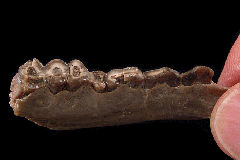
An extinct early ground squirrel jaw (Ischyromys sp.) from Sioux Co., Nebraska. Ischyromys was one of many mammals that thrived in the Early Oligocene in North America. Found in the Brule Fm. (Rupelian) 33 - 30 million years ago. A very well preserved specimen. No repair or restoration. Authenticity guaranteed. This item comes with a 2"x 2" floating frame display.
WR11 Size: 1-1/8"
Name: Ischyromys sp.
Age: Oligocene
Location: Sioux Co., Nebraska
Note - Posting 49 Oligocene Mammal fossils in January 2025. Link to Oligocene Mammal Fossils
Learn More - Hesperocyon gregarius - Extinct Dog-like Canid$75.00
An extinct early Dog-like Canid jaw (Hesperocyon gregarius) from Sioux Co., Nebraska. Hesperocyon gregarius was one of many mammals that thrived in the Early Oligocene in North America. Found in the Brule Fm. (Rupelian) 33 - 30 million years ago. A very well preserved specimen. No repair or restoration. Authenticity guaranteed. Note - this animal was quite old and wore down its teeth.
WR47 Size: 2-3/8"
Name: Hesperocyon gregarius
Age: Oligocene
Location: Sioux Co., Nebraska
Note - Posting 49 Oligocene Mammal fossils in January 2025. Link to Oligocene Mammal Fossils
Learn More - Hesperocyon gregarius - Extinct Dog-like Canid$50.00
An extinct early Dog-like Canid jaw (Hesperocyon gregarius) from Sioux Co., Nebraska. Hesperocyon gregarius was one of many mammals that thrived in the Early Oligocene in North America. Found in the Brule Fm. (Rupelian) 33 - 30 million years ago. A very well preserved specimen. No repair or restoration. Authenticity guaranteed. This item comes witha 2"x 2" floating frame display.
WR46 Size: 15/16"
Name: Hesperocyon gregarius
Age: Oligocene
Location: Sioux Co., Nebraska
Note - Posting 49 Oligocene Mammal fossils in January 2025. Link to Oligocene Mammal Fossils
Learn More - Hesperocyon gregarius - Extinct Dog-like Canid$55.00
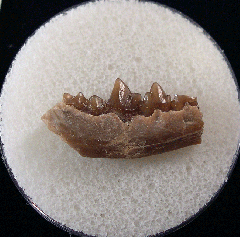
An extinct early Dog-like Canid jaw (Hesperocyon gregarius) from Sioux Co., Nebraska. Hesperocyon gregarius was one of many mammals that thrived in the Early Oligocene in North America. Found in the Brule Fm. (Rupelian) 33 - 30 million years ago. A very well preserved specimen. No repair or restoration. Authenticity guaranteed. This item comes witha 2"x 2" floating frame display.
WR44 Size: 7/8"
Name: Hesperocyon gregarius
Age: Oligocene
Location: Sioux Co., Nebraska
Note - Posting 49 Oligocene Mammal fossils in January 2025. Link to Oligocene Mammal Fossils
Learn More - Hesperocyon gregarius - Extinct Dog-like Canid$55.00
An extinct early Dog-like Canid jaw (Hesperocyon gregarius) from Sioux Co., Nebraska. Hesperocyon gregarius was one of many mammals that thrived in the Early Oligocene in North America. Found in the Brule Fm. (Rupelian) 33 - 30 million years ago. A very well preserved specimen. No repair or restoration. Authenticity guaranteed. This item comes witha 2"x 2" floating frame display.
WR43 Size: 1-1/8"
Name: Hesperocyon gregarius
Age: Oligocene
Location: Sioux Co., Nebraska
Note - Posting 49 Oligocene Mammal fossils in January 2025. Link to Oligocene Mammal Fossils
Learn More