Search results for: 'clam crown bear lower flint teeth fossil'
- Related search terms
- fossil finder's id good
- fossil finger id good
- fossil fischer id good
- fossil fischeuri id good
- fossil first id good
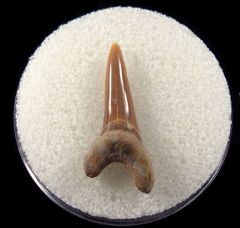
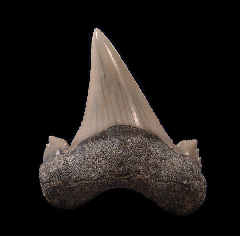
- Cretoxyrhina mantelli$135.00
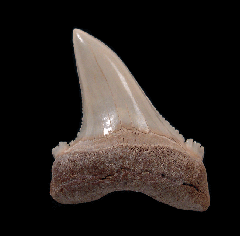
A Top Quality Cretoxyrhina mantelli, an extinct Mackerel (Odontid) shark tooth from Travis Co., Texas. An excellent example of this Late Cretaceous South Bosque Shale (Eagle Ford) Fm. shark. An anterior tooth. Authenticity guaranteed. Perfect tooth.
T064 SIZE: 1-3/16"
Note - Adding 100+ new Texas shark teeth in October 2021. Link to Texas shark teeth
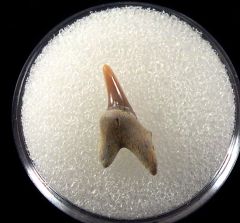
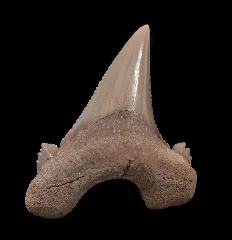
Learn More - Cretoxyrhina mantelli$50.00
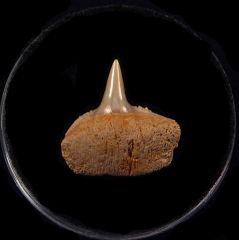
A Top Quality Cretoxyrhina mantelli, an extinct Mackerel (Odontid) shark tooth from Travis Co., Texas. An excellent example of this Late Cretaceous South Bosque Shale (Eagle Ford) Fm. shark. A lateral tooth with two small side cusps. Authenticity guaranteed. Near perfect tooth.
T068 SIZE: 9/16"
Note - Adding 100+ new Texas shark teeth in October 2021. Link to Texas shark teeth
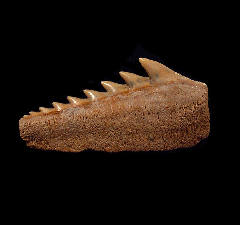
Learn More - Hexanchus gigas - Chile$275.00
A Top Quality Hexanchus griseus tooth from the Caldera Basin of Chile. This is complete lower jaw tooth from a large shark. Superb preservation and color. Eight primary cusps. An excellent root which is very unique & extremely difficult to find! A Perfect rare collector's tooth. Authenticity guaranteed. Unfortunately there are no more teeth coming from this site. This rare piece is from an old collection.
C407L Size: 1-1/2"
Note - Adding 18 new Chilean Hexanchus teeth in February 2024 -> Link to Hexanchus Teeth
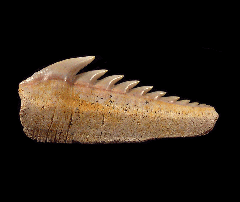
Learn More - Hexanchus gigas - Chile$350.00
A LARGE, Top Quality Hexanchus griseus tooth from the Caldera Basin of Chile. This is complete lower jaw tooth from a large shark. Superb preservation and color. Eleven primary cusps. An excellent root which is very unique & extremely difficult to find! A Perfect rare collector's tooth. Authenticity guaranteed.Unfortunately there are no more teeth coming from this site. This rare piece is from an old collection.
C406L Size: 1-11/16"
Note - Adding 18 new Chilean Hexanchus teeth in February 2024 -> Link to Hexanchus Teeth
Learn More - Edestus heinrichi$195.00
A very rare, Top Quality Edestus heinrichi shark tooth, from Herrin, Illinois. This is a Paleozoic shark that lived in swamps that our now underground coal deposits. An excellent matrix specimen that inludes the opposing tooth mold as well. Excellent preservation, serrations, and serration detail. The Edestus shark would have an upper and lower tooth whorl that are vertically opposed. Research showed that they could use their opposing teeth in a scissor-like motion or a vertical whipping motion to cut prey. It is the first animal to cut vertically. A very strange looking and unique acting shark. Shark recreation image is credited to Julio Lacerdo. These rare teeth are Pennsylvanian age from Illinois. No repair or restoration. Authenticity guaranteed. Note - shipping weight is 1.9 lbs. International "free shipping" will require supplemental postage.
I11 SIZE: 3" w/ root (1-1/2" crown) ; Matrix block is 3.5" x 3.5"
Adding 22 Edestus shark teeth in July 2025. Link to Edestus shark.
Learn More - Edestus heinrichi$175.00
A very rare, LARGE, Top Quality Edestus heinrichi shark tooth, from Herrin, Illinois. This is a Paleozoic shark that lived in swamps that our now underground coal deposits. Note - this tooth has a lot of pyrite and the tip is naturally rounded (polished) which thought to be due to the vertical whipping motion used to slice prey. Excellent preservation, serrations, and serration detail. The Edestus shark would have an upper and lower tooth whorl that are vertically opposed. Research showed that they could use their opposing teeth in a scissor-like motion or a vertical whipping motion to cut prey. It is the first animal to cut vertically. A very strange looking and unique acting shark. Shark recreation image is credited to Julio Lacerdo. These rare teeth are Pennsylvanian age from Illinois. No repair or restoration. Authenticity guaranteed.
I09 SIZE: 4-1/8" w/ root (1-7/8" crown)
Adding 22 Edestus shark teeth in July 2025. Link to Edestus shark.
Learn More - Hexanchus gigas - Chile$350.00
A LARGE, Top Quality Hexanchus griseus tooth from the Caldera Basin of Chile. Fantastic blue color with a red root. This is complete lower jaw tooth from a large shark. Superb preservation and color. Eight primary cusps. An excellent root which is very unique & extremely difficult to find! A Perfect rare collector's tooth. Authenticity guaranteed. Unfortunately there are no more teeth coming from this site. This rare piece is from an old collection.
C405L Size: 1-7/16"
Note - Adding 18 new Chilean Hexanchus teeth in February 2024 -> Link to Hexanchus Teeth
Learn More - Hexanchus gigas - Chile$475.00
An Ultra Rare, Hexanchus griseus symphyseal tooth from the Caldera Basin of Chile. This is complete lower jaw symphyseal tooth. A rare male shark. Superb preservation and color. Nine plus very sharp and one primary cusp surrounded by many small pathologic cusps. An excellent complete root. Authenticity guaranteed. Museum Quality collector's tooth. Unfortunately there are no more teeth coming from this site. This is a piece from an old collection.
C402L Size: 13/16" W (13/16" H)
Note - Adding 22 new Chilean Hexanchus teeth in May 2021 -> Link to Hexanchus Teeth
Learn More - Otodus aksuaticus (Partial serrated)$450.00
A very rare, early Otodus aksuaticus upper jaw, lateral tooth from Kzil-Orda, Kazakhstan. A transitional tooth leading to O. auriculatus (see detailed discussion below) which leads to Megalodon. A July Fossil of the Month. The bourlette is complete. This tooth exhibits small serrations along the lower 1/3 of the crown and micro serrations to the tip. These teeth exhibit excellent color, gloss, and preservation. A rare, early (Ypresian) Eocene Auriculatus transition tooth. A very challenging tooth to find when building a Megalodon evolutionary set! No repair or restoration. Authenticity guaranteed. This western Kazakhstan site is one of the few places in the world where the Otodus obliquus to Otodus auriculatus transition can be found in adjacent geologic layers.
K547 SIZE: 1-15/16"
Note - Adding 24 Kazakh Auriuclatus or transition teeth in July 2024. --> Link to Kazakh Auriculatus teeth.
Learn More - Otodus aksuaticus (Partial serrated)$425.00
A very rare, early Otodus aksuaticus lateral tooth from Kzil-Orda, Kazakhstan. A transitional tooth leading to O. auriculatus (see detailed discussion below) which leads to Megalodon. A July Fossil of the Month.The bourlette is complete. This tooth exhibits small serrations along the lower 1/2 of the crown and micro serrations to the tip. These teeth exhibit excellent color, gloss, and preservation. A rare, early (Ypresian) Eocene Auriculatus transition tooth. A very challenging tooth to find when building a Megalodon evolutionary set! No repair or restoration. Authenticity guaranteed. This western Kazakhstan site is one of the few places in the world where the Otodus obliquus to Otodus auriculatus transition can be found in adjacent geologic layers.
K544 SIZE: 1-3/4"
Note - Adding 24 Kazakh Auriuclatus or transition teeth in July 2024. --> Link to Kazakh Auriculatus teeth.
Learn More - Otodus aksuaticus (Partial serrated)$550.00
A very rare, early Otodus aksuaticus lateral tooth from Kzil-Orda, Kazakhstan. A transitional tooth leading to O. auriculatus (see detailed discussion below) which leads to Megalodon. A July Fossil of the Month. The bourlette is complete. This tooth exhibits small serrations along the lower 1/2 of the crown and micro serrations to the tip. These teeth exhibit excellent color, gloss, and preservation. A rare, early (Ypresian) Eocene Auriculatus transition tooth. A very challenging tooth to find when building a Megalodon evolutionary set! No repair or restoration. Authenticity guaranteed. This western Kazakhstan site is one of the few places in the world where the Otodus obliquus to Otodus auriculatus transition can be found in adjacent geologic layers.
K542 SIZE: 2-1/8"
Note - Adding 24 Kazakh Auriuclatus or transition teeth in July 2024. --> Link to Kazakh Auriculatus teeth.
Learn More - Otodus aksuaticus (Partial serrated)$525.00
A very rare, early Otodus aksuaticus anterior tooth from Kzil-Orda, Kazakhstan. A transitional tooth leading to O. auriculatus (see detailed discussion below) which leads to Megalodon. A July Fossil of the Month. The bourlette is complete. This tooth exhibits small serrations along the lower 1/2 of the crown and micro serrations to the tip. These teeth exhibit excellent color, gloss, and preservation. A rare, early (Ypresian) Eocene Auriculatus transition tooth. A very challenging tooth to find when building a Megalodon evolutionary set! No repair or restoration. Authenticity guaranteed. This western Kazakhstan site is one of the few places in the world where the Otodus obliquus to Otodus auriculatus transition can be found in adjacent geologic layers.
K542 SIZE: 2-3/16"
Note - Adding 24 Kazakh Auriuclatus or transition teeth in July 2024. --> Link to Kazakh Auriculatus teeth.
Learn More