Search results for: 'lion paleozo few planus first guid'
- Related search terms
- planus to good de
- guid goods ma01
- guid good manu
- guid good ma02
- guid good mako
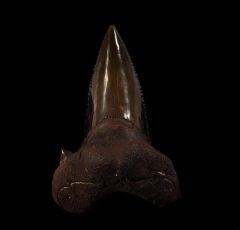
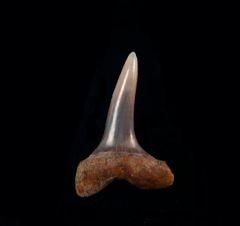
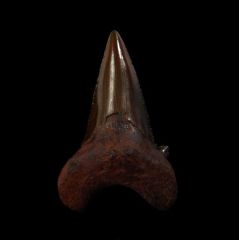
- Otodus auriculatus (Early Eocene form)$0.00
A very rare, Otodus auriculatus tooth from the copper-red site of No. Carolina. The crown has coarse serrations. The side cusps are typical of the Otodus obliquus. Complete root. Early Eocene - Ypresian age. A very rare collector's tooth. Very few Otodus auriculatus teeth (early form) found at this site!
NC253 SIZE: 2-1/2"Note - Adding 9 early NC red site early Rics, transition teeth, and later Rics in June 2020. Link to NC Auriculatus teeth
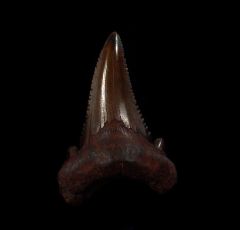
Learn More - Otodus auriculatus (Early Eocene form)$0.00
A very rare, Otodus auriculatus tooth from the copper-red site of No. Carolina. The crown has coarse serrations. The side cusps are typical of the Otodus obliquus. Complete root. Early Eocene - Ypresian age. A very rare collector's tooth. Very few Otodus auriculatus teeth (early form) found at this site!
NC254 SIZE: 2-1/16"Note - Adding 9 early NC red site early Rics, transition teeth, and later Rics in June 2020. Link to NC Auriculatus teeth
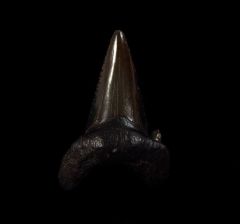
Learn More - Otodus auriculatus (Early Eocene form)$0.00
A very rare, Otodus auriculatus tooth from the copper-red site of No. Carolina. The crown has coarse serrations. The side cusps are typical of the Otodus obliquus. Complete root. Early Eocene - Ypresian age. A very rare collector's tooth. Very few Otodus auriculatus teeth (early form) found at this site!
NC255 SIZE: 1-11/16"Note - Adding 9 early NC red site early Rics, transition teeth, and later Rics in June 2020. Link to NC Auriculatus teeth
Learn More -
-
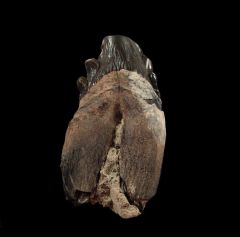
- Zygorhiza kochii (Archaeocete whale)$825.00
A TOP QUALITY, very rare Archaeocete whale, Zygorhiza kochii. A large molar tooth. The first molar has a small width yoke design. An exceptional brown colored crown and root. Nicely articulated. Huge root. Note - enamel tip shows wear pattern on crown from grinding (see photo 3). Whales do not shed their teeth like the sharks so there teeth will wear with age. This tooth has no repair. A great Archaeocete molar from So. Carolina. A very rare collector's tooth.
SC1326 SIZE: 3-1/2"
Note - 14 new Archaeocete whale teeth from So. Carolina added in November 2017. Our largest selection of top quality Archaeocete teeth ever! Archaeocete Whale catalog link.
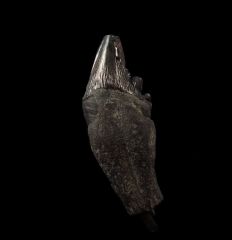
Learn More - Zygorhiza kochii (Archaeocete whale)$825.00
A TOP QUALITY, very rare Archaeocete whale, Zygorhiza kochii. A large molar tooth. The first molar has a small width yoke design. An exceptional brown colored crown and root. Nicely articulated. Huge root. Note - enamel tip shows wear pattern on crown from grinding (see photo 3). Whales do not shed their teeth like the sharks so there teeth will wear with age. This tooth has no repair. A great Archaeocete molar from So. Carolina. A very rare collector's tooth.
SC1327 SIZE: 3-3/4"
Note - 14 new Archaeocete whale teeth from So. Carolina added in November 2017. Our largest selection of top quality Archaeocete teeth ever! Archaeocete Whale catalog link.
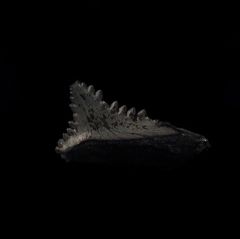
Learn More - Edestus minor$75.00
A very rare Edestus heinrichi shark tooth, from Herrin, Illinois. This is a Paleozoic shark that lived in swamps that our now underground coal deposits. Very good preservation with excellent serrations. The Edestus shark would have an upper and lower tooth whorl that are vertically opposed. Research showed that they could use their opposing teeth in a scissor-like motion to cut prey. It is the first animal to cut vertically. A very strange looking and unique acting shark. Shark recreation image is credited to Julio Lacerdo. These rare teeth are Pennsylvanian age from Illinois. No repair or restoration. Authenticity guaranteed.
I014 SIZE: 7/8"
Adding 15 Edestus shark specimens in April 2021. Link to Edestus shark.
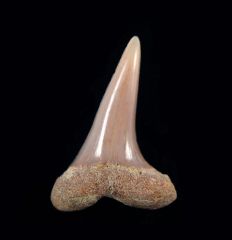
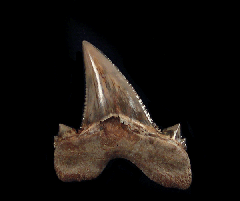
Learn More - Otodus aksuaticus (Early Eocene form)$0.00
A very rare, Otodus aksuaticus tooth from the copper-red site of No. Carolina. The crown has coarse serrations over the lower 2/3 of crown that disappear in the top 1/3 of crown. The side cusps are typical of the Otodus obliquus. Complete root. Early Eocene - Ypresian age. A very rare collector's tooth. Very few Otodus aksuaticus teeth found at this site!
NC252 SIZE: 2-3/8"Note - Adding 9 early NC red site early Rics, transition teeth, and later Rics in June 2020. Link to NC Auriculatus teeth
Learn More - Otodus aksuaticus (Serrated)$0.00
A GEM, very rare Otodus aksuaticus tooth with gray color. Excellent transitional tooth with small serrations covering 3/4 of the crown and side cusps. Found in Tushbiar, Mangyshlak, W. Kazakhstan. This is a GEM quality tooth, but it a pit in the bourlette area. Kazakhstan is one of the few places on earth where the transition series from Ototdus (non-serrated) to Auriculatus (fully serrated) can be found.
K554 SIZE: 1-1/8"+
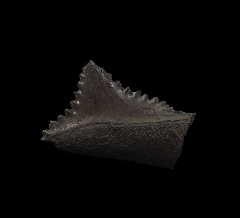
Learn More - Edestus heinrichi$85.00
A very rare, Top Quality Edestus heinrichi shark tooth, from Herrin, Illinois. This is a Paleozoic shark that lived in swamps that our now underground coal deposits. Excellent preservation, serrations, and serration detail. The Edestus shark would have an upper and lower tooth whorl that are vertically opposed. Research showed that they could use their opposing teeth in a scissor-like motion to cut prey. It is the first animal to cut vertically. A very strange looking and unique acting shark. Shark recreation image is credited to Julio Lacerdo. These rare teeth are Pennsylvanian age from Illinois. No repair or restoration. Authenticity guaranteed.
I15 SIZE: 1-1/4"
Adding 14 Edestus shark specimens in January 2023. Link to Edestus shark.
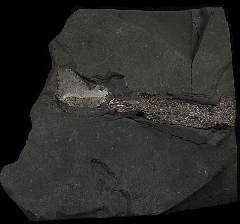
Learn More - Edestus heinrichi$47.50
A very rare, Top Quality Edestus heinrichi shark tooth, from Herrin, Illinois. This is a Paleozoic shark that lived in swamps that our now underground coal deposits. Excellent preservation, serrations, and serration detail. The Edestus shark would have an upper and lower tooth whorl that are vertically opposed. Research showed that they could use their opposing teeth in a scissor-like motion or a vertical whipping motion to cut prey. It is the first animal to cut vertically. A very strange looking and unique acting shark. Shark recreation image is credited to Julio Lacerdo. These rare teeth are Pennsylvanian age from Illinois. No repair or restoration. Authenticity guaranteed.
I24 SIZE: 2-5/8" w/ root
Adding 22 Edestus shark specimens in July 2025. Link to Edestus shark.
Learn More