Search results for: 'new lamna white great with shark 3'
- Related search terms
- shark enameloid enabl intelligence four disaster response it stem
- shark enabled eagl intelligence form disaster response it steg1
- shark enabled eagl intelligence form disaster response it stem
- shark enabl enamel intelligence form disaster response it star
- with tiger is enabl standgebühr in luckenwalde trödelmarkt
- Otodus obliquus (not serrated)$95.00
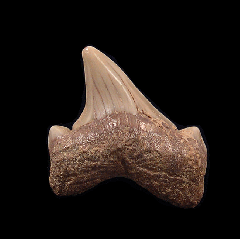
A very rare, early Otodus obliquus anterior tooth from Kzil-Orda Region, Kazakhstan. Otodus obliquus is the ancestor to O. auriculatus (see detailed discussion below) which leads to Megalodon. The bourlette is large and complete. Exhibits no serrations. The starting species to serrated Otodus teeth. These teeth exhibit very good color, gloss, and preservation. A rare, early Eocene (Ypresian) Auriculatus transition tooth. A very challenging tooth to find when building a Megalodon evolutionary set! No repair. Authenticity guaranteed. Note - This western Kazakhstan site is one of the few places in the world where the Otodus obliquus to Otodus auriculatus transition can be found in adjacent early Eocene formation units.
K561 SIZE: 1-1/16"
Note - Adding 24 Kazakh Auriculatus or transition teeth in July 2024. --> Link to Kazakh Auriculatus teeth.
Learn More - Otodus obliquus (not serrated)$135.00
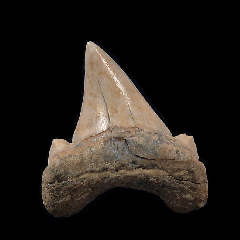
A very rare, early Otodus obliquus anterior tooth from Kzil-Orda Region, Kazakhstan. Otodus obliquus is the ancestor to O. auriculatus (see detailed discussion below) which leads to Megalodon. The bourlette is large and complete. Exhibits no serrations. The starting species to serrated Otodus teeth. These teeth exhibit very good color, gloss, and preservation. A rare, early Eocene (Ypresian) Auriculatus transition tooth. A very challenging tooth to find when building a Megalodon evolutionary set! No repair. Authenticity guaranteed. Note - This western Kazakhstan site is one of the few places in the world where the Otodus obliquus to Otodus auriculatus transition can be found in adjacent early Eocene formation units.
K562 SIZE: 1-1/4"
Note - Adding 24 Kazakh Auriculatus or transition teeth in July 2024. --> Link to Kazakh Auriculatus teeth.
Learn More - Otodus aksuaticus (Partial serrated)$325.00
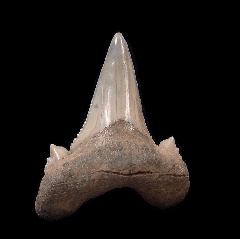
A very rare, early Otodus aksuaticus anterior tooth from Kzil-Orda, Kazakhstan. A transitional tooth leading to O. auriculatus (see detailed discussion below) which leads to Megalodon. The bourlette is complete. This tooth exhibits small serrations along the lower 1/2 of the crown and micro serrations to the tip. These teeth exhibit excellent color, gloss, and preservation. A rare, early (Ypresian) Eocene Auriculatus transition tooth. A very challenging tooth to find when building a Megalodon evolutionary set! No repair or restoration. Authenticity guaranteed. This western Kazakhstan site is one of the few places in the world where the Otodus obliquus to Otodus auriculatus transition can be found in adjacent geologic layers.
K546 SIZE: 1-9/16"
Note - Adding 24 Kazakh Auriuclatus or transition teeth in July 2024. --> Link to Kazakh Auriculatus teeth.
Learn More - Otodus aksuaticus (Partial serrated)$550.00
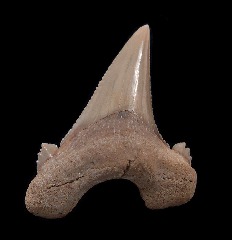
A very rare, early Otodus aksuaticus lateral tooth from Kzil-Orda, Kazakhstan. A transitional tooth leading to O. auriculatus (see detailed discussion below) which leads to Megalodon. A July Fossil of the Month. The bourlette is complete. This tooth exhibits small serrations along the lower 1/2 of the crown and micro serrations to the tip. These teeth exhibit excellent color, gloss, and preservation. A rare, early (Ypresian) Eocene Auriculatus transition tooth. A very challenging tooth to find when building a Megalodon evolutionary set! No repair or restoration. Authenticity guaranteed. This western Kazakhstan site is one of the few places in the world where the Otodus obliquus to Otodus auriculatus transition can be found in adjacent geologic layers.
K542 SIZE: 2-1/8"
Note - Adding 24 Kazakh Auriuclatus or transition teeth in July 2024. --> Link to Kazakh Auriculatus teeth.
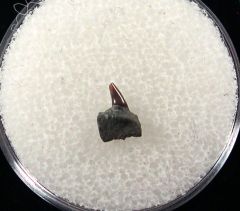
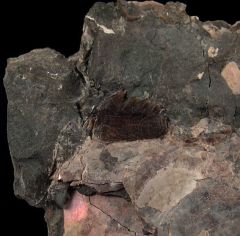
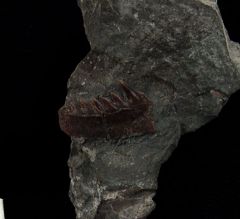
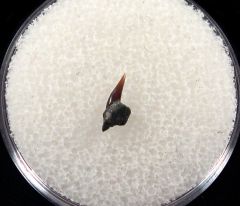
Learn More - Hexanchus microdon$45.00
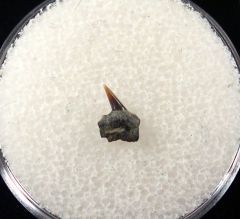
A Very Rare, Quality Hexanchus microdon upper jaw tooth from Hornby Island, British Columbia, Canada. This is a species from the Late Cretaceous deep water Northumberland Formation deposit. A species of Hexanchiforme shark. The crown is damaged and the root is damaged. High quality enamel. No repair. A very difficult tooth to locate and an excellent collector's tooth. Authenticity guaranteed. This incredible specimen is from a 20 year old collection.
CD55 SIZE: 1/4" +
Note - Adding 64 Hornby Island deep water shark teeth. -> Link to Hornby Island shark teeth.
Learn More - Hexanchus microdon$0.00
A Very Rare, Quality Hexanchus microdon lower jaw tooth from Hornby Island, British Columbia, Canada. This is a species from the Late Cretaceous deep water Northumberland Formation deposit. A species of Hexanchiforme shark. The crown is complete with 5 cusplets and the root is complete. High quality enamel. No repair. A very difficult tooth to locate and an excellent collector's tooth. Authenticity guaranteed. This incredible specimen is from a 20 year old collection.
CD59 SIZE: 7/16" Wide
Note - Adding 64 Hornby Island deep water shark teeth. -> Link to Hornby Island shark teeth.
Learn More - Hexanchus microdon$135.00
A Very Rare, Quality Hexanchus microdon upper jaw tooth from Hornby Island, British Columbia, Canada. This is a species from the Late Cretaceous deep water Northumberland Formation deposit. A species of Hexanchiforme shark. The crown is complete with 7 cusplets and the root is complete (cracked). High quality enamel. No repair. A very difficult tooth to locate and an excellent collector's tooth. Authenticity guaranteed. This incredible specimen is from a 20 year old collection.
CD61 SIZE: 1/2" Wide
Note - Adding 64 Hornby Island deep water shark teeth. -> Link to Hornby Island shark teeth.
Learn More - Hexanchus microdon$95.00
A Very Rare, Top Quality Hexanchus microdon upper jaw tooth from Hornby Island, British Columbia, Canada. This is a species from the Late Cretaceous deep water Northumberland Formation deposit. A species of Hexanchiforme shark. The crown is complete and the root is complete. High quality enamel. No repair. A very difficult tooth to locate and an excellent collector's tooth. Authenticity guaranteed. This incredible specimen is from a 20 year old collection.
CD53 SIZE: 5/16"
Note - Adding 64 Hornby Island deep water shark teeth. -> Link to Hornby Island shark teeth.
Learn More - Hexanchus microdon$85.00
A Very Rare, Top Quality Hexanchus microdon upper jaw tooth from Hornby Island, British Columbia, Canada. This is a species from the Late Cretaceous deep water Northumberland Formation deposit. A species of Hexanchiforme shark. The crown is complete and the root is complete. High quality enamel. No repair. A very difficult tooth to locate and an excellent collector's tooth. Authenticity guaranteed. This incredible specimen is from a 20 year old collection.
CD54 SIZE: 5/16"
Note - Adding 64 Hornby Island deep water shark teeth. -> Link to Hornby Island shark teeth.
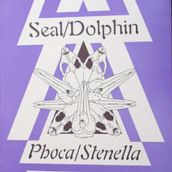
Learn More - Seal / Dolphin - A Skeletal Comparison of Two Marine Mammals By John Timmerman$35.00
The book provides an excellent review of the skeletal remains of two marine mammals commonly found in the Miocene to recent marine deposits. An excellent guide to identifying your fossil mammal finds. Great guide for Lee Creek fossils. Note - an intenational shipping surcharge may be required for qualified free shipping orders.
BB11 Size: 8-1/2" x 11-1/2"
Learn More - Araucaria mirabilis$0.00
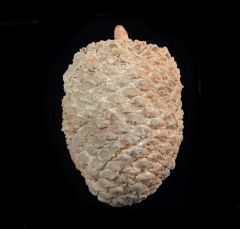
A TOP QUALITY, LARGE rare Araucaria mirabilis pine cone specimen from Argentina. Another May 2018 Fossil of the Month. These Jurassic pine cones are exquisite and known for their high quality and extreme preservation. This cone is large and shows great exterior detail and a small stem (rare). The Araucaria cone has exceptional inflation; not naturally compressed which commonly occurs. This is the best larger pine cone that I had in stock and I will not be getting any more as exports have stopped! Authenticity guaranteed.
X337 Size: 2-3/4" x 1-3/4"
Learn More - Carcharias vorax$25.00
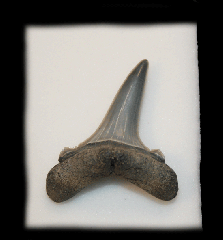
A Top Quality Carcharias vorax, a Sand shark tooth from the "De Kuilen" sand pit, Mill, The Netherlands. This tooth has excellent color and preservation. Sharp cutting edge and tip. The age is late Miocene (approx. 6-8 million years ago). This species is related to Carcharias cuspidata. An excellent collector's tooth. Authenticity guaranteed.
N335 SIZE: 7/8"
Learn More