Search results for: 'agili guid hopei 4'
- Did you mean
- appli guid hopei 4
- agili good hopei 4
- Related search terms
- agilis good hopei 4
- agility good hopei 4
- agili good hopei 4
- agili good hopei 4/
- agili good hopei 4///
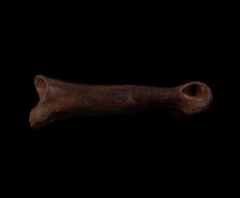
- Anzu wyliei - Hand Bone$0.00
A rare, Top Quality Anzu wyliei hand bone from the Hell Creek Fm. of Montana. Anzu is referred to as the "Chicken from Hell". An excellent hand bone. Note that this is the last digit prior to the claw. Excellent brown color and patina. This specimen has excellent perservation. Note that the hand bones are quite thin and most do not survive. This one is complete. A top quality, collector's hand bone from the Hell Creek of Montana. Note - 2014 Anzu wyliei description paper attached below. Legally collected on private land in the Hell Creek Fm., Powder River Co., Montana. Authenticity guaranteed. Museum Quality. These are rare hand bones to find.
DA17 Size: 3-1/4" ; thickness: 7/16"
Note - Adding 14 Anzu wyliei bones & claws in September 2022. Link to Anzu wyliei claws.
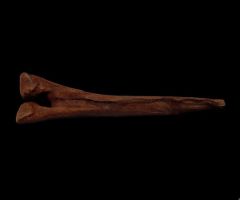
Learn More - Thescelosaurus$475.00
An EXTRA LARGE, Top Quality Thescelosaurus neglectus caudal (tail) vertebra chevron from the late Cretaceous of northern North America. A March Fossil of the Month. Thescelosaurus is a mid-sized dinosaur found in the Hell Creek formation. The chevron is the appendage that resides below the tail vertebra that provides structure to the base of the tail. Chevron bones rarely survive and this one is 99% complete - very rare! This bone quality is excellent with excellent color and patina. No repair or restoration. Legally collected on private land in the Hell Creek Fm., Powder River Co., Montana. An excellent collector's quality Thescelosaurus vertebra chevron. Authenticity guaranteed. Museum Quality. A rare find!
DI52 SIZE: 6-3/4"
Note - Adding 23 new Thescelosarus fossils in March 2022. Link to Thesc fossils catalog
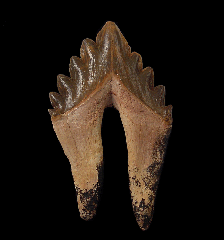
Learn More - Basilosaurus cetoides (Archaeocete whale)$3,850.00
A rare GEM QUALITY Basilosaurus cetoides, an Archaeocete whale tooth found in the Flint River, Georgia. An exceptional molar. An April Fossil of the Month. An excellent green colored crown and light tan root. Nicely articulated. Incredible preservation! Whales do not shed their teeth like the sharks so there teeth will wear with age. An Eocene age tooth (36 MYA) from the Ocala Limestone Fm. No repair or restoration. Authenticity guaranteed. A great Archaeocete tooth from the Flint River, Georgia from an old collection. This tooth is part of a rare three associated tooth set - buy all three teeth and receive a 15% discount! One of my favorites!
G1001 SIZE: 3-3/4" (2-3/16" wide)
Note - Adding three associated Basilosaurus teeth from Georgia in April 2024. Link to Basilosaurus teeth.
Learn More - Ankylosaurus$650.00
An ultra rare, Top Quality Ankylosaurus magniventris rooted tooth from the late Cretaceous of North America. A June Fossil of the Month. Ankylosaurus magniventris was the largest Ankylosaur which grew to 30 feet and 17000 pounds. Note - These incredibly sized dinosaurs had small teeth and this rooted tooth is from a juvenile Ankylosaurus. The enamel is the highest quality with excellent color / patina. The crown has no wear facet. No cracks or restoration. Legally collected on private land in the Hell Creek Fm., Powder River Co., Montana. Authenticity guaranteed. An excellent collector's quality Ankylosaur tooth. Note - tooth comes with the gem case pictured. Rooted Ankylosaurus teeth are quite rare.
DK11 SIZE: 1/4" (1/8" wide)
Note - Adding 9 new Ankylosaur / Nodosaur fossils in June 2024. Link to Ankylosaur fossils catalog.
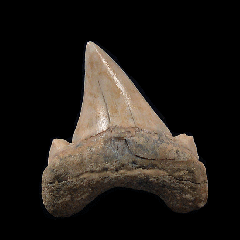
Learn More - Otodus obliquus (not serrated)$135.00
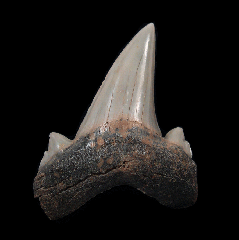
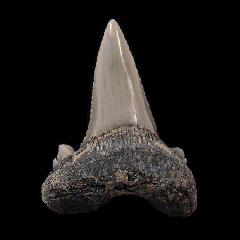
A very rare, early Otodus obliquus anterior tooth from Kzil-Orda Region, Kazakhstan. Otodus obliquus is the ancestor to O. auriculatus (see detailed discussion below) which leads to Megalodon. The bourlette is large and complete. Exhibits no serrations. The starting species to serrated Otodus teeth. These teeth exhibit very good color, gloss, and preservation. A rare, early Eocene (Ypresian) Auriculatus transition tooth. A very challenging tooth to find when building a Megalodon evolutionary set! No repair. Authenticity guaranteed. Note - This western Kazakhstan site is one of the few places in the world where the Otodus obliquus to Otodus auriculatus transition can be found in adjacent early Eocene formation units.
K562 SIZE: 1-1/4"
Note - Adding 24 Kazakh Auriculatus or transition teeth in July 2024. --> Link to Kazakh Auriculatus teeth.
Learn More - Otodus obliquus (not serrated)$200.00
A very rare, early Otodus obliquus anterior tooth from Kzil-Orda Region, Kazakhstan. Otodus obliquus is the ancestor to O. auriculatus (see detailed discussion below) which leads to Megalodon. The bourlette is large and complete. Exhibits no serrations. The starting species to serrated Otodus teeth. These teeth exhibit very good color, gloss, and preservation. A rare, early Eocene (Ypresian) Auriculatus transition tooth. A very challenging tooth to find when building a Megalodon evolutionary set! No repair. Authenticity guaranteed. Note - This western Kazakhstan site is one of the few places in the world where the Otodus obliquus to Otodus auriculatus transition can be found in adjacent early Eocene formation units.
K561 SIZE: 1-1/4"
Note - Adding 24 Kazakh Auriculatus or transition teeth in July 2024. --> Link to Kazakh Auriculatus teeth.
Learn More - Otodus aksuaticus (Partial serrated)$350.00
A very rare, early Otodus aksuaticus anterior tooth from Kzil-Orda, Kazakhstan. A transitional tooth leading to O. auriculatus (see detailed discussion below) which leads to Megalodon. The bourlette is complete. This tooth exhibits small serrations along the lower 1/2 of the crown and micro serrations to the tip. These teeth exhibit excellent color, gloss, and preservation. A rare, early (Ypresian) Eocene Auriculatus transition tooth. A very challenging tooth to find when building a Megalodon evolutionary set! No repair or restoration. Authenticity guaranteed. This western Kazakhstan site is one of the few places in the world where the Otodus obliquus to Otodus auriculatus transition can be found in adjacent geologic layers.
K545 SIZE: 1-3/4"
Note - Adding 24 Kazakh Auriuclatus or transition teeth in July 2024. --> Link to Kazakh Auriculatus teeth.
Learn More - Columbian mammoth$1,395.00
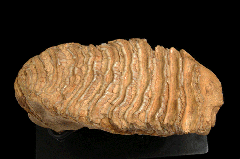
A rare, EXTRA LARGE, Top Quality Columian Mammoth tooth (Mammuthus columbi), an early elephant molar found in Somervell Co., Texas. Mammoths were present in this area during the Late Pleistocene Ice Age. Fantastic natural tan color! An excellent molar with a nicely articulated chewing surface. The molar chewing surface is 8-1/2" in length. A large, complete root. Completely fossilized. Weighs 13.75 lbs. with stand. No repair or restoration. Authenticity guaranteed. An excellent collectors specimen and a very attractive display piece. An incredibly articulated tooth mounted on a custom steel stand. Note: international supplemental shipping cost will be calculated. Please request quote.
X602 Size: 8-1/2" Length x 4" Wide x 7-1/2" Height ; Height on Stand = 9-1/2"
Note - Posting 6 ancestral elephant molars in September2024. Link to Mammoth fossils.
Learn More - Otodus megalodon Copper Red Site$0.00
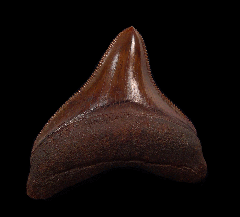
An ultra rare, GEM Quality Red Site Otodus megalodon tooth from the Meherrin River, North Carolina. This Megalodon is an upper jaw posterior tooth from the Meherrin River copper-red site. Exceptional copper red color - deep red color. Best color. The enamel is the highest quality. The serrations and tip are large and sharp. Bourlette is dark brown and complete. The root is complete. A Miocene Meg tooth. No repair or restoration. An old collection piece from the rarest location to find a top quality Megalodon tooth - rarer than Lee Creek, Peru, Bone Valley, etc. Authenticity guaranteed. This tooth has the best color dark cherry red color. Perfect tooth. The BEST!
NC007 SIZE: 2-3/16" (2" wide)
Adding 4 NC Copper-Red Megalodon teeth in January 2025. Link to NC Red Megalodon teeth.
Learn More - Arrhinoceratops Epoccipital - Canada$0.00
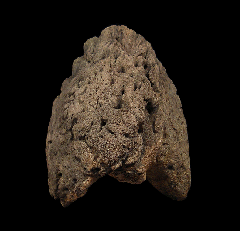
A very rare, Top Quality Arrhinoceratops brachypos epoccipital (frill ornament) from the late Cretaceous of northern North America. Arrhinoceratops was a large ceratopsian dinosaur found in the Horseshoe Canyon formation which has three horns and a large frill protecting its neck. This epoccipital has excellent detail preserved and great color / patina. The epoccipitals were triangular bone ornaments that lined the top of the frill. This epoccipital exhibits incredible detail and is very thick. Complete specimen with minor crack fill. No repair or restoration. Legally collected on private land in Alberta, Canada. Authenticity guaranteed. Disposition number 000028-0000029.
DC67c SIZE: 3-1/8" Height x 2-1/2" Wide x 1-1/4" Thick
Note - Adding 17 Canadian bones & teeth in April 2025. Link to Canadian Dinosaur fossils catalog
Learn More - Erbenochile erbeni$2,495.00
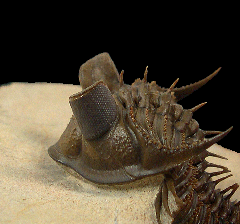
An incredibly prepared, GEM QUALITY Erbenochile erbeni trilobite, the "Big Eyes" trilobite. An April Fossil of the Month. German preparation. A very ornate design with thorax spines and incredible "tower" compound eyes! The massive eyes provided 360 degree visual coverage and allowed this trilobite to see behind itself over the thorax. Excellent shell and spine preservation. Large size. A very rare species! An Early Devonian (410 mya) trilobite from the Jbel Gara el Zguilma area, Atlas Mts., Morocco. Definitely one of my favorites! Authenticity guaranteed. This is a very special spiny trilobite. Note - specimen weights 1.6 lbs. International orders may require supplemental postage. Please inquire.
XM43 Size: 1-3/4" straight line (1-3/16" wide)
Adding 31 quality Moroccan trilobites in April 2025. Link to Moroccan trilobites.
Learn More - Edestus heinrichi$145.00
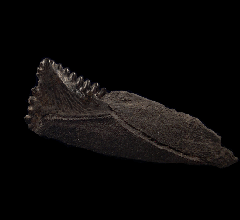
A very rare, Top Quality Edestus heinrichi shark tooth, from Herrin, Illinois. This is a Paleozoic shark that lived in swamps that our now underground coal deposits. Excellent preservation, serrations, and serration detail. The Edestus shark would have an upper and lower tooth whorl that are vertically opposed. Research showed that they could use their opposing teeth in a scissor-like motion or a vertical whipping motion to cut prey. It is the first animal to cut vertically. A very strange looking and unique acting shark. Shark recreation image is credited to Julio Lacerdo. These rare teeth are Pennsylvanian age from Illinois. No repair or restoration. Authenticity guaranteed.
I18 SIZE: 2-1/2" w/ root (1-1/4"crown)
Adding 22 Edestus shark teeth in July 2025. Link to Edestus shark.
Learn More