Search results for: 'pander fossil tooth form sand'
- Related search terms
- fossil finder id good
- fossil fisher id good
- fossil fish id good
- fossil fisher id good/
- fossil fish id good/
- Equus sp. Caleaneus bone$25.00
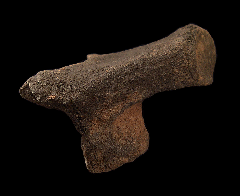
A LARGE, well preserved horse caleaneus bone (Equus sp. ) from Northern Florida. The caleaneus is the heel bone. The horse arrived in North America during the late Pliocene and became extinct at the end of the Pleistocene. A well fossilized specimen. No repair or restoration. Authenticity guaranteed.
XH29 Size: 3-3/4"
Name: Equus sp.
Age: Pleistocene
Location: Northern Florida
Note - Posting 23 horse fossils in December 2024. Link to Horse Fossils
Learn More - Equus sp. Caleaneus bone$35.00
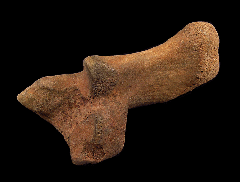
A LARGE, well preserved horse caleaneus bone (Equus sp. ) from Northern Florida. The caleaneus is the heel bone. The horse arrived in North America during the late Pliocene and became extinct at the end of the Pleistocene. A well fossilized specimen. No repair or restoration. Authenticity guaranteed.
XH28 Size: 4-3/4"
Name: Equus sp.
Age: Pleistocene
Location: Northern Florida
Note - Posting 23 horse fossils in December 2024. Link to Horse Fossils
Learn More - Equus sp. Toe bone$22.50
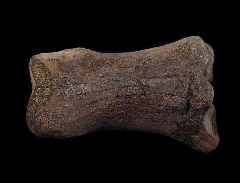
A well preserved horse toe bone (Equus sp. ) from Northern Florida. This is the first toe bone (phalanx). The horse arrived in North America during the late Pliocene and became extinct at the end of the Pleistocene. A well fossilized specimen. No repair or restoration. Authenticity guaranteed.
XH24 Size: 3-7/8"
Name: Equus sp.
Age: Pleistocene
Location: Northern Florida
Note - Posting 23 horse fossils in December 2024. Link to Horse Fossils
Learn More - Equus sp. Toe bone$32.50
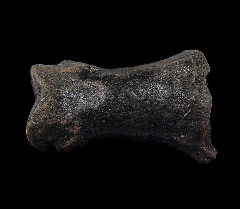
A well preserved horse toe bone (Equus sp. ) from Northern Florida. This is the first toe bone (phalanx). The horse arrived in North America during the late Pliocene and became extinct at the end of the Pleistocene. A well fossilized specimen. No repair or restoration. Authenticity guaranteed.
XH23 Size: 3-7/8"
Name: Equus sp.
Age: Pleistocene
Location: Northern Florida
Note - Posting 23 horse fossils in December 2024. Link to Horse Fossils
Learn More - Carcharodon carcharias - Peru - Museum Quality$0.00
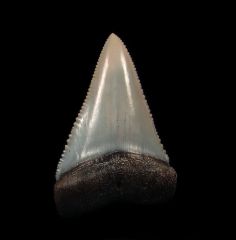
A GEM, LARGE Great White shark tooth with an incredible BLUE colored crown. Upper jaw anterior tooth. An exceptional crown with sharp serrations including the tip! Highest quality enamel. Exceptional color. No repair. Perfect tooth. My BEST large BLUE Peruvian Great White tooth!
P202 SIZE: 2-5/16"
Learn More - Otodus obliquus$0.00
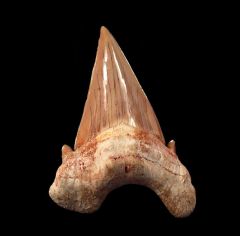
A HUGE Top Quality, Otodus obliquus tooth from the Khouribga phosphate mining area of Morocco. A BIG anterior tooth with an extra wide crown. This tooth has an excellent golden tan color and a white root. Sharp edges and tip. The side cusps are complete. A massive, thick root. Right root lobe appears to be reattached. Great color! One of the earliest ancestors of the Megalodon. An excellent collector's quality tooth. Authenticity guaranteed. You rarely see a top quality tooth this large!
M001 BoP SIZE: 3-13/16"
Note - Adding 20 new Moroccan Otodus teeth in May 2021. -> Otodus Catalog Link
Learn More - Otodus aksuaticus (Partial serrated)$325.00
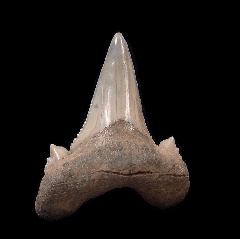
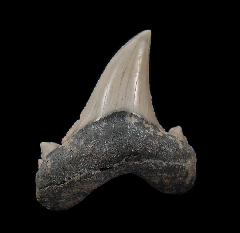
A very rare, early Otodus aksuaticus anterior tooth from Kzil-Orda, Kazakhstan. A transitional tooth leading to O. auriculatus (see detailed discussion below) which leads to Megalodon. The bourlette is complete. This tooth exhibits small serrations along the lower 1/2 of the crown and micro serrations to the tip. These teeth exhibit excellent color, gloss, and preservation. A rare, early (Ypresian) Eocene Auriculatus transition tooth. A very challenging tooth to find when building a Megalodon evolutionary set! No repair or restoration. Authenticity guaranteed. This western Kazakhstan site is one of the few places in the world where the Otodus obliquus to Otodus auriculatus transition can be found in adjacent geologic layers.
K546 SIZE: 1-9/16"
Note - Adding 24 Kazakh Auriuclatus or transition teeth in July 2024. --> Link to Kazakh Auriculatus teeth.
Learn More - Otodus aksuaticus (Partial serrated)$350.00
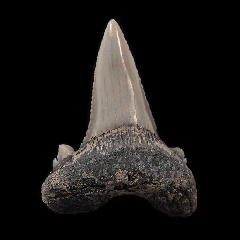
A very rare, early Otodus aksuaticus anterior tooth from Kzil-Orda, Kazakhstan. A transitional tooth leading to O. auriculatus (see detailed discussion below) which leads to Megalodon. The bourlette is complete. This tooth exhibits small serrations along the lower 1/2 of the crown and micro serrations to the tip. These teeth exhibit excellent color, gloss, and preservation. A rare, early (Ypresian) Eocene Auriculatus transition tooth. A very challenging tooth to find when building a Megalodon evolutionary set! No repair or restoration. Authenticity guaranteed. This western Kazakhstan site is one of the few places in the world where the Otodus obliquus to Otodus auriculatus transition can be found in adjacent geologic layers.
K545 SIZE: 1-3/4"
Note - Adding 24 Kazakh Auriuclatus or transition teeth in July 2024. --> Link to Kazakh Auriculatus teeth.
Learn More - Otodus aksuaticus (Partial serrated)$425.00
A very rare, early Otodus aksuaticus lateral tooth from Kzil-Orda, Kazakhstan. A transitional tooth leading to O. auriculatus (see detailed discussion below) which leads to Megalodon. The bourlette is complete. This tooth exhibits small serrations along the lower 1/3 of the crown and micro serrations to the tip. These teeth exhibit excellent color, gloss, and preservation. A rare, early (Ypresian) Eocene Auriculatus transition tooth. A very challenging tooth to find when building a Megalodon evolutionary set! No repair or restoration. Authenticity guaranteed. This western Kazakhstan site is one of the few places in the world where the Otodus obliquus to Otodus auriculatus transition can be found in adjacent geologic layers.
K543 SIZE: 1-7/8"
Note - Adding 24 Kazakh Auriuclatus or transition teeth in July 2024. --> Link to Kazakh Auriculatus teeth.
Learn More - Capybara$47.50
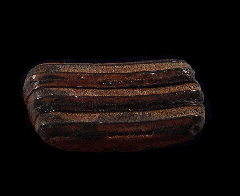
A well preserved extince Giant Capybara molar from Edisto River, So. Carolina. The Giant Capybara was an oversized rodent that evolved in the Pleistocene and became extinct at the end of the Pleistocene in North America. This is a molar tooth with good cusp detail with little wear. Well fossilized. No repair or restoration. Authenticity guaranteed.
X820 Size: 1-1/16" x 1/2"
Name: Capybara sp.
Age: Pleistocene
Location: Edisto River, So. Carolina
Note - Posting 26 mammal and reptile fossils in March 2024. Link to Other Mammals
Learn More - Capybara$65.00
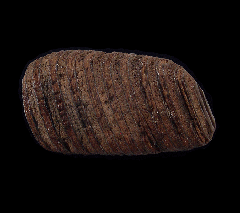
A LARGE, well preserved extinct Giant Capybara molar from Edisto River, So. Carolina. The Giant Capybara was an oversized rodent that evolved in the Pleistocene and became extinct at the end of the Pleistocene in North America. This is a molar tooth with good cusp detail with little wear. Well fossilized. No repair or restoration. Authenticity guaranteed.
X818 Size: 1-1/2" x 13/16"
Name: Capybara sp.
Age: Pleistocene
Location: Edisto River, So. Carolina
Note - Posting 26 mammal and reptile fossils in March 2024. Link to Other Mammals
Learn More - Scaldicetus sp. - Sperm Whale$195.00
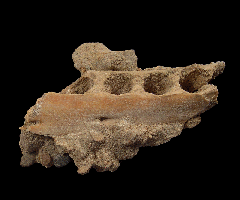
A Scaldicetus sp., a Sperm whale, jaw seation with 5 tooth sockets from the Caldera area of Chile. An incredible late Miocene Sperm whale jaw from the Bahia Inglesa Fm. This jaw section has great preservation and a fantastic brown color This specimen is attached to its original matix. Makes a great display. No repair or restoration. Authenticity guaranteed. Unfortunately there are no fossils coming from this site 19 years!
C718 SIZE: 4-1/2" (1-1/8" wide)
Note - Adding 16 Chilean Sperm whale fossils in March 2025. -> Link to Whale teeth.
Learn More