Search results for: 'allig monster agat partial'
- Did you mean
- allig monster alta partial
- Related search terms
- agat eidetik toed
- allig her cone pinu site 1 83 4
- allig her cone pinu scute 1 83 4
- allig good
- Partial domain adaptation enables cross domain cell type annotation between scRNA-seq and snRNA-seq
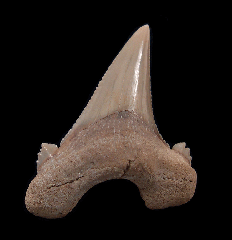
- Otodus aksuaticus (Partial serrated)$325.00
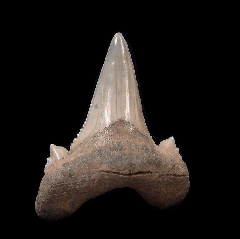
A very rare, early Otodus aksuaticus anterior tooth from Kzil-Orda, Kazakhstan. A transitional tooth leading to O. auriculatus (see detailed discussion below) which leads to Megalodon. The bourlette is complete. This tooth exhibits small serrations along the lower 1/2 of the crown and micro serrations to the tip. These teeth exhibit excellent color, gloss, and preservation. A rare, early (Ypresian) Eocene Auriculatus transition tooth. A very challenging tooth to find when building a Megalodon evolutionary set! No repair or restoration. Authenticity guaranteed. This western Kazakhstan site is one of the few places in the world where the Otodus obliquus to Otodus auriculatus transition can be found in adjacent geologic layers.
K546 SIZE: 1-9/16"
Note - Adding 24 Kazakh Auriuclatus or transition teeth in July 2024. --> Link to Kazakh Auriculatus teeth.
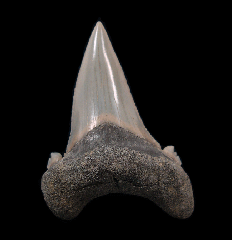
Learn More - Otodus aksuaticus (Partial serrated)$350.00
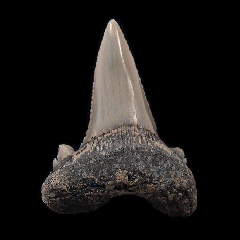
A very rare, early Otodus aksuaticus anterior tooth from Kzil-Orda, Kazakhstan. A transitional tooth leading to O. auriculatus (see detailed discussion below) which leads to Megalodon. The bourlette is complete. This tooth exhibits small serrations along the lower 1/2 of the crown and micro serrations to the tip. These teeth exhibit excellent color, gloss, and preservation. A rare, early (Ypresian) Eocene Auriculatus transition tooth. A very challenging tooth to find when building a Megalodon evolutionary set! No repair or restoration. Authenticity guaranteed. This western Kazakhstan site is one of the few places in the world where the Otodus obliquus to Otodus auriculatus transition can be found in adjacent geologic layers.
K545 SIZE: 1-3/4"
Note - Adding 24 Kazakh Auriuclatus or transition teeth in July 2024. --> Link to Kazakh Auriculatus teeth.
Learn More - Otodus aksuaticus (Partial serrated)$425.00
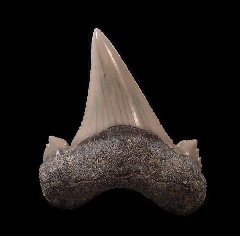
A very rare, early Otodus aksuaticus lateral tooth from Kzil-Orda, Kazakhstan. A transitional tooth leading to O. auriculatus (see detailed discussion below) which leads to Megalodon. A July Fossil of the Month.The bourlette is complete. This tooth exhibits small serrations along the lower 1/2 of the crown and micro serrations to the tip. These teeth exhibit excellent color, gloss, and preservation. A rare, early (Ypresian) Eocene Auriculatus transition tooth. A very challenging tooth to find when building a Megalodon evolutionary set! No repair or restoration. Authenticity guaranteed. This western Kazakhstan site is one of the few places in the world where the Otodus obliquus to Otodus auriculatus transition can be found in adjacent geologic layers.
K544 SIZE: 1-3/4"
Note - Adding 24 Kazakh Auriuclatus or transition teeth in July 2024. --> Link to Kazakh Auriculatus teeth.
Learn More - Otodus aksuaticus (Partial serrated)$425.00
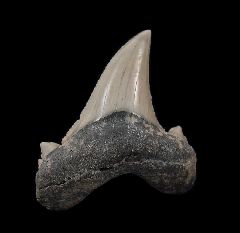
A very rare, early Otodus aksuaticus lateral tooth from Kzil-Orda, Kazakhstan. A transitional tooth leading to O. auriculatus (see detailed discussion below) which leads to Megalodon. The bourlette is complete. This tooth exhibits small serrations along the lower 1/3 of the crown and micro serrations to the tip. These teeth exhibit excellent color, gloss, and preservation. A rare, early (Ypresian) Eocene Auriculatus transition tooth. A very challenging tooth to find when building a Megalodon evolutionary set! No repair or restoration. Authenticity guaranteed. This western Kazakhstan site is one of the few places in the world where the Otodus obliquus to Otodus auriculatus transition can be found in adjacent geologic layers.
K543 SIZE: 1-7/8"
Note - Adding 24 Kazakh Auriuclatus or transition teeth in July 2024. --> Link to Kazakh Auriculatus teeth.
Learn More - Otodus aksuaticus (Partial serrated)$550.00
A very rare, early Otodus aksuaticus lateral tooth from Kzil-Orda, Kazakhstan. A transitional tooth leading to O. auriculatus (see detailed discussion below) which leads to Megalodon. A July Fossil of the Month. The bourlette is complete. This tooth exhibits small serrations along the lower 1/2 of the crown and micro serrations to the tip. These teeth exhibit excellent color, gloss, and preservation. A rare, early (Ypresian) Eocene Auriculatus transition tooth. A very challenging tooth to find when building a Megalodon evolutionary set! No repair or restoration. Authenticity guaranteed. This western Kazakhstan site is one of the few places in the world where the Otodus obliquus to Otodus auriculatus transition can be found in adjacent geologic layers.
K542 SIZE: 2-1/8"
Note - Adding 24 Kazakh Auriuclatus or transition teeth in July 2024. --> Link to Kazakh Auriculatus teeth.
Learn More - Otodus aksuaticus (Partial serrated)$525.00
A very rare, early Otodus aksuaticus anterior tooth from Kzil-Orda, Kazakhstan. A transitional tooth leading to O. auriculatus (see detailed discussion below) which leads to Megalodon. A July Fossil of the Month. The bourlette is complete. This tooth exhibits small serrations along the lower 1/2 of the crown and micro serrations to the tip. These teeth exhibit excellent color, gloss, and preservation. A rare, early (Ypresian) Eocene Auriculatus transition tooth. A very challenging tooth to find when building a Megalodon evolutionary set! No repair or restoration. Authenticity guaranteed. This western Kazakhstan site is one of the few places in the world where the Otodus obliquus to Otodus auriculatus transition can be found in adjacent geologic layers.
K542 SIZE: 2-3/16"
Note - Adding 24 Kazakh Auriuclatus or transition teeth in July 2024. --> Link to Kazakh Auriculatus teeth.
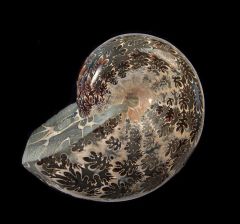
Learn More - Phylloceras sp.$0.00
A Large, incredible polished Phylloceras ammonite showing the intricate external chamber structure from the Cretaceous of Madagascar. The rock is a beautiful agate like material. A gorgeous display item! Authenticity guaranteed.
X210 BoP Size: 3-3/4"
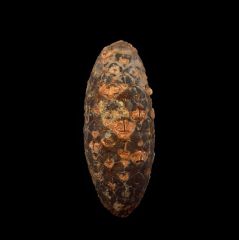
Learn More - New Dicotaledon species$55.00
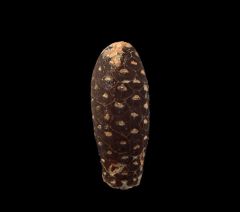
An excellent, rare unidentified Dicotaledon fruit / seed pod specimen from Morocco. The Moroccan "pine cone". Found in the late Eocene sediments in Western Sahara, Morocco. Excellent detail preserved. Note that the interior of the cone is replaced by agate.
X353 Size: 2-1/8"
Note - Adding 20 new pine cone specimens in October 2021. Link to Pine Cone fossils.
Learn More - New Dicotaledon species$60.00
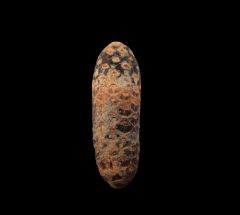
A Top Quality, rare Dicotaledon fruit or seed pod specimen from Morocco. The Moroccan "pine cone". These are found in the late Eocene sediments in Western Sahara, Morocco. Note that the interior of the cone is replaced by agate. Authenticity guaranteed.
X359 Size: 2"
Note - Adding 26 new pine cone specimens in March 2022. Link to Pine Cone fossils.
Learn More - New Dicotaledon species$55.00
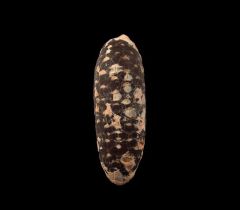
An excellent, rare Dicotaledon fruit or seed pod specimen from Morocco. The Moroccan "pine cone". These are found in the late Eocene sediments in Western Sahara, Morocco. Note that the interior of the cone is replaced by agate. Authenticity guaranteed.
X358 Size: 2-1/8"
Note - Adding 26 new pine cone specimens in March 2022. Link to Pine Cone fossils.
Learn More - New Dicotaledon species$75.00
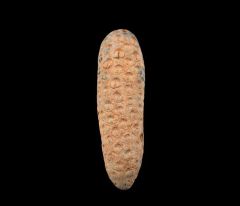
A Top Quality, EXTRA LARGE rare Dicotaledon fruit or seed pod specimen from Morocco. The Moroccan "pine cone". These are found in the late Eocene sediments in Western Sahara, Morocco. Note that the interior of the cone is replaced by agate. Authenticity guaranteed.
X354 Size: 2-1/2"
Note - Adding 26 new pine cone specimens in March 2022. Link to Pine Cone fossils.
Learn More - New Dicotaledon species$85.00
An EXTRA LARGE Top Quality, rare Dicotaledon fruit or seed pod specimen from Morocco. The Moroccan "pine cone". These are found in the late Eocene sediments in Western Sahara, Morocco. Note that the interior of the cone is replaced by agate. Authenticity guaranteed. My largest one!
X351 Size: 2-11/16"
Note - Adding 26 new pine cone specimens in March 2022. Link to Pine Cone fossils.
Learn More